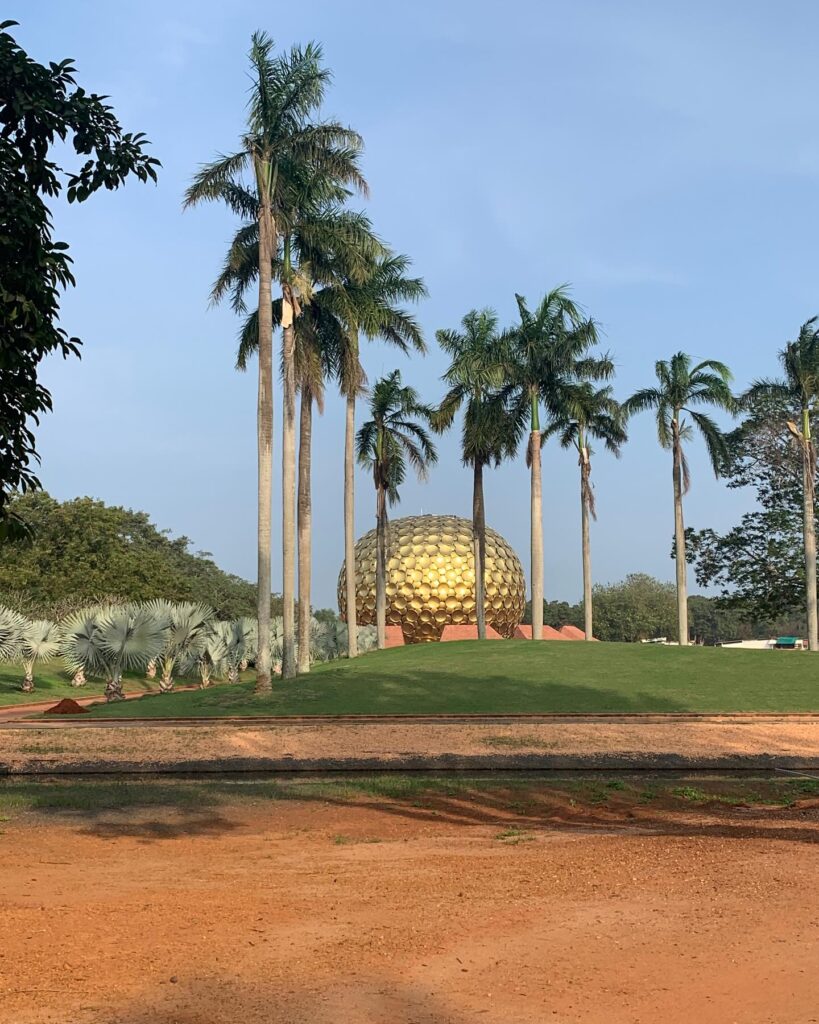
January 22, 2025 - Auroville
It has already been more than 2 weeks since I joyfully and curiously roamed Kerala, a magnificent tropical region bordered by the Arabian Sea. Located in southern India, this heavily wooded area has the coconut tree as its emblem and main wealth.
After a busy and intense spring and summer, I left France in early November to participate in a tantra workshop in the Czech Republic to receive and practice disarmament. A particular technique (detailed on this page) aimed at releasing certain physical and emotional tensions stored in the body.
Thus, relieved of some tensions, I arrived in India for the first time with the intention of staying for 5 months to visit ashrams (those of Amma, Sadhguru, and Sivananda, among others), communities (Auroville), and certain mountains in Tamil Nadu (a neighboring region to Kerala) populated by monkeys, elephants, and tigers. It is not far from these reserves that I plan to organize a fasting and trekking event in February. The magic of life even made me meet by pure chance in the traboules of Kovalam an old trekker!….
I particularly appreciate this country for its mildness (temperature between 25-30 degrees), its excellent exotic fruits, as well as the calm and kindness of the Indians. Already a few surprises like the almost complete absence of trash cans, washing machines, and traffic laws (it seems) despite the very high population density (1.4 billion). This contrasts with the almost complete absence of alcohol, cigarettes, and meat (at least in certain regions), a context that undoubtedly favors the peaceful inclination of this people.
So far, I enjoy being traversed by India and its paradoxes, like finding peace amid the surrounding agitation where wealth and poverty mingle with scents as diverse as varied.
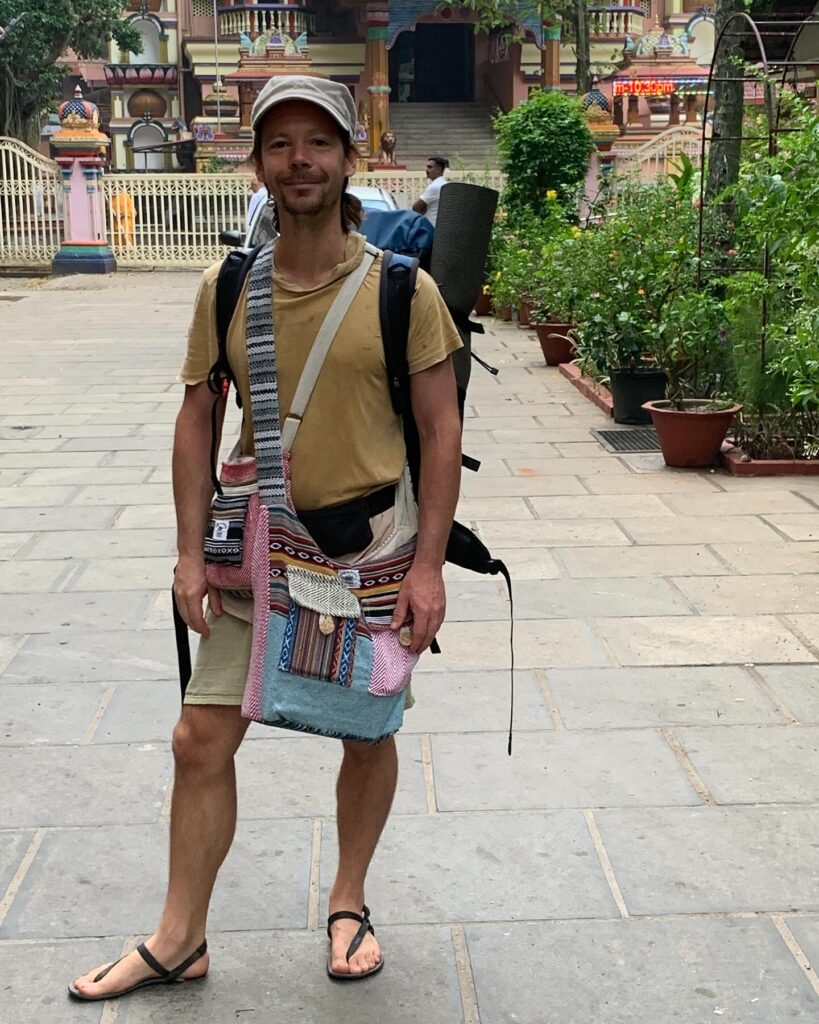

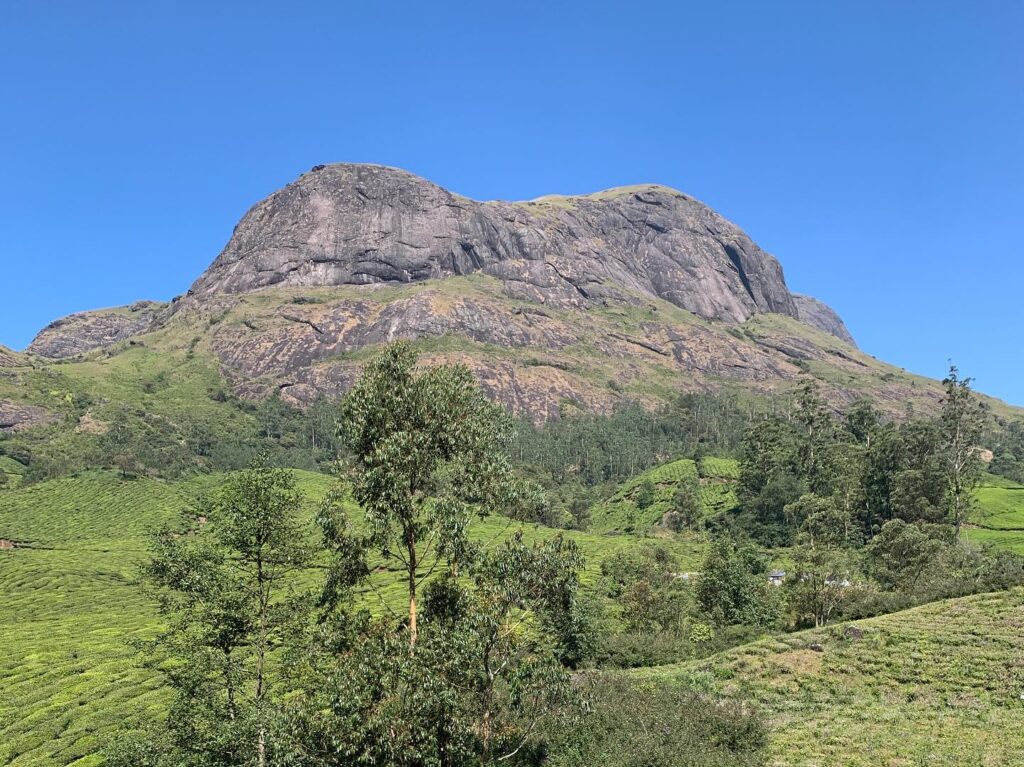
After a 10-day vipassana retreat (read this article to learn more), a meditation technique that consists of seeing what is real, I took an adventurous bus ride towards Munnar, a mountain station, with a view of the second highest peak in India, which is reached at the cost of some road scares and with the help of loud honking.
This mountain range, which peaks at 2700 m, had caught my attention while I was preparing my trip to India from France. The relative isolation of this area, along with the information gathered online, led me to organize a winter fasting and trekking event near this mountain, planning to scout the area a month in advance.
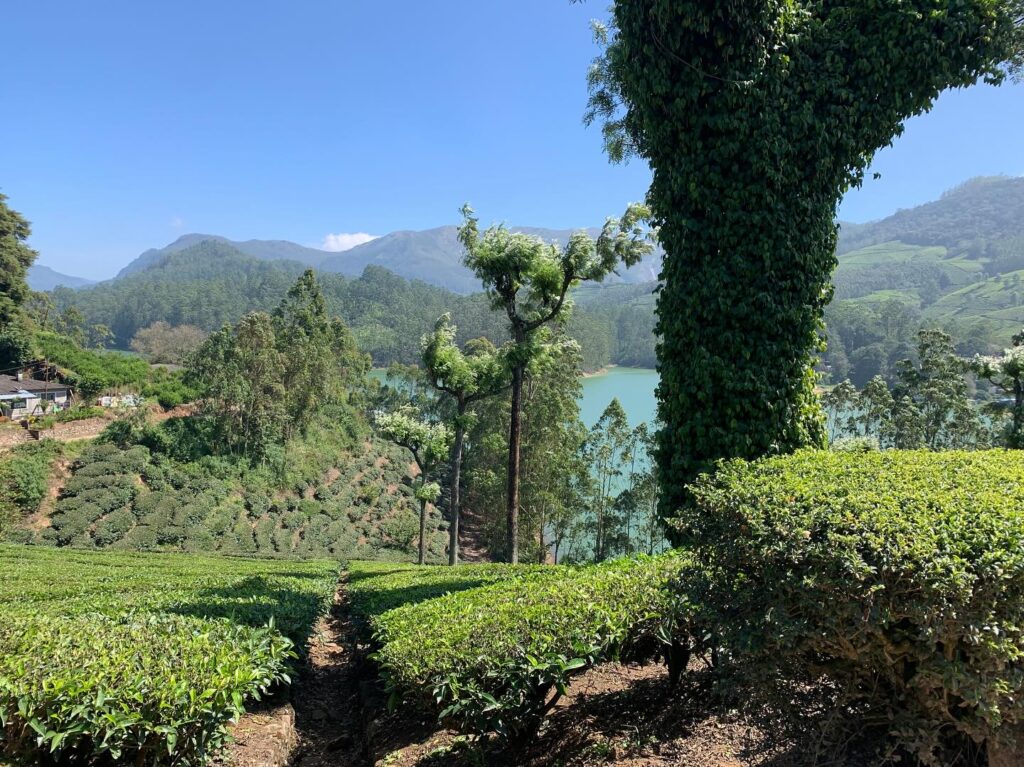
Unfortunately, I did not anticipate the impossibility of obtaining a map of the region and the lack of interest from guides, accustomed to day hikes, to organize a custom trek like mine. In reality, the hills of this range are almost entirely dedicated to tea cultivation, which severely limits walking opportunities. The “Tata Tea” group owns it, and access is regulated in accordance with the natural reserves administration that manages the daily flow of thousands of tourists. There is no room for adventure here, even though the region with its lakes and waterfalls is quite charming.
One might wonder why cultivate so much tea? These shrubs with bitter, unappetizing leaves that contain twice as much caffeine as coffee? It is to counterbalance the morning, noon, and evening consumption of starches (wheat and rice). Indeed, tea (like coffee and alcohol) is a stimulant that compensates for the “heavy effect” or “the heavy fact”!
After the mountains of Munnar and the very relative isolation in the second highest range in India, I took a sleeper bus (an expedition in itself just to find the bus amid the hustle and delays) to the city of Pondicherry and its 1.2 million inhabitants. I usually shy away from the hustle and bustle of big cities and, more generally, tourist spots, but this former French trading post, which has left its mark in many street names, is one of the must-visit places. In the white quarter, clean, calm, and well-treed, one can find the ashram of Sri Aurobindo, one of the two founders (with the Frenchwoman Mirra Alfassa alias “the Mother”) of Auroville.
Elsewhere in Pondicherry, dense agitation and a joyful disorder reign supreme in the crowded streets where, in the absence of sidewalks and amid an uninterrupted concert of honking, pedestrians, two-wheelers, cars, stray dogs, goats, and cows coexist among all kinds of waste. It is in this organized chaos where vigilance is required at every moment that I was able to recover a laptop and get back to work, notably writing an article on Vipassana (see above).
These few days of visiting Pondicherry allowed me to appreciate the calm, cleanliness, and green atmosphere of Auroville at its true value. This small town of 3,500 inhabitants, which welcomes as many visitors from around the world every day, is a true oasis of peace. Born from a vision of Sri Aurobindo and the Mother (whose portraits are displayed in every building) in the 1970s, this city emerged from nowhere in the midst of a desert where 2 million trees have been planted. Today, one can freely cycle along its countless pleasantly shaded paths.
One of Auroville’s unique features is that it does not belong (parliament act) to anyone but to humanity. Created in 1968 following a vision of Sri Aurobindo, this city aims to serve the truth and be a concrete example of human unity. In theory, anyone can reside in this spiritual high place as long as they are a voluntary servant of the divine consciousness.
For less than 10 euros a day, one can stay in minimalist rooms and rent a bike, which is quite appreciated for exploring the many laterite roads and paths winding through the 2000 hectares of this very real utopia. The atmosphere resembles that of a festival focused on ecology, health, and spirituality. Every day, one can participate in yoga workshops, meditation, sound baths, mantra singing, and concerts. There is also a spirulina farm, a plant-based and raw restaurant, and ecstatic dance ceremonies with cacao are offered.
Barely arrived in this oasis of serenity that I see as a happy marriage of the East and the West, I was overwhelmed with new ideas: film project, website redesign, inspiration for writing, community projects, etc. Having spent a lot of time in front of the computer and cycling (20 km every two days to fetch ripe fruits, the great absentees of the city!), the 12 days I stayed there were very insufficient for me to truly discover Auroville. I would have liked to understand its workings, how decisions are made, the established hierarchies, how money is managed, etc., in order to uncover this city and verify that it is not just a copy of other cities with merely a spiritual veneer.
These doubts persisted until the day of the visit to the Matrimandir, a vast golf ball-shaped structure dedicated to meditation, the main attraction of the city. This golden & incongruous sphere sits amid sumptuous gardens, right next to a gigantic banyan tree. In a religious silence, many visitors come and go throughout the day to access this protected place that reminded me of the film “Nosso Lar, Our Home.” During the visit, one is allowed to meditate for 20 minutes in a room specially created for this purpose at the heart of the Matrimandir.
A unique and moving experience that led me to think that there may not be Cartesian mechanisms managing this city but that its destiny is indeed in the hands of the divine.