Introduction
Dearmouring is a body-based support approach designed to facilitate the release of old emotional burdens, particularly those associated with experiences perceived as traumatic.
It relies on the stimulation of specific acupressure points, combined with breathing, movement, and the use of the voice. Depending on the areas of the body engaged, previously contained emotions — fear, anger, sadness, frustration — may rise into awareness, be fully felt, and then gradually release. The objective is not to “force” an emotion, but to create a framework that allows deeply rooted tensions to soften.
When the body and psyche lighten from tensions accumulated over time, greater joy, peace, self-confidence, and vitality naturally restore themselves.
Trauma Mechanisms
An event becomes traumatic when it exceeds the nervous system’s capacity for integration, particularly during childhood when it is still maturing. It then leaves a lasting bodily imprint. Psychotraumatology and affective neuroscience describe conditioned neuromuscular patterns and repeated physiological loops involving the autonomic nervous system.
As Dr. Gabor Maté explains in The Wisdom of Trauma, trauma does not reside in the event itself, but in what happens internally when the event occurs — especially if we are not supported at that moment in speaking about it.
Every emotion (and even every thought) is accompanied by hormonal, muscular, respiratory, and nervous modifications. When an intense emotion cannot be fully experienced, a protective mechanism activates. This may involve emotional distancing, dissociation, or repression. This adaptive strategy protects the organism from physiological and psychological overload that could otherwise lead to bodily harm. The system does not merely suppress the emotion; it also reorganizes self-representation and worldview in order to prevent the situation from recurring. In other words, physiological protection is often accompanied by an unconscious reconfiguration of beliefs.
The body does not use this mechanism only for trauma, but also for all the emotions that trouble us daily and that we refuse to welcome. In spiritual environments, we often hear about acceptance as the sole solution to suffering. This does not mean accepting all life events, but accepting everything happening within us — otherwise we repress it. That is true letting go, not passive resignation.
Even if temporarily cutting off from part of ourselves prevents an emotional manifestation that would be too intense for the system, the experience does not disappear. It remains latent, stored in the organism. Over time, this strategy can become an automatic mode of functioning. It is within this context that many addictive behaviors may appear. Substances, food, screens, overinvestment in work, compulsive sexuality, or entertainment become attempts at emotional anesthesia. Addiction is then not a problem in itself, but an adaptive solution to unresolved suffering.
Repression and Bodily Storage
When an emotion does not reach resolution (expression, action, regulation), chronic muscular tension, restricted breathing patterns, and hypervigilance of the autonomic nervous system may persist.
Muscles, due to their ability to contract and maintain defensive postures, constitute a privileged site of storage. However, these emotional burdens may also embed in the fascia, in the autonomic nervous system, and even in toxins accumulated in tissues.
From this perspective, it is observed that certain forms of anger seem to crystallize in acidic deposits, while certain fears associate with colloidal waste. Physiological terrain and emotional state thus constantly interact.
In general, the following correspondences are frequently observed:
- Anger tends to manifest in the head and jaw.
- Sadness expresses itself in the chest and ribcage.
- Traumas related to survival, domination, or violence anchor in the abdomen and pelvis.
- Shame, guilt, and sexual frustration often localize in the thighs.
These localizations are not random, but relate to the physiological function of the areas involved and their role in fundamental adaptive responses.
Life Scenarios as a Liberation Process
The body naturally tends toward balance. Life itself participates in this regulatory movement, helping us release emotional burdens that diminish our physical and mental health.
As long as an emotional charge remains contained, it continues to manifest in the unconscious sphere. It then repeatedly attracts situations, relationships, or experiences that reactivate it with the aim of releasing it. This mechanism, often referred to as the law of attraction, operates through attachment patterns, unconscious beliefs, implicit expectations, and automatic nervous system responses.
These life scenarios tend to fade once the repressed emotional charge has been recognized, felt, and integrated, and once the underlying limiting beliefs have been identified and reprogrammed. As long as emotions are not consciously accepted, the scenarios intensify. The settings change, the protagonists differ, but the storyline remains the same until it is finally integrated as a constructive experience of being — transforming the inner relationship to what was lived without projecting responsibility onto the outside world.
Becoming Responsible for One’s Emotions
On this path of liberation, one of the main traps is placing responsibility for our emotions on a culprit — whether a person or a situation. An external event may act as a trigger, but the root of the emotion lies in our own history and unmet needs. Emotional responsibility consists in recognizing this reality.
For example: “I am angry because you did that!” amounts to attributing the cause of the emotion to the outside. In reality, the other person is the trigger (stimulus), but the true cause is an unmet need. The three foundational modules of Nonviolent Communication according to Marshall Rosenberg clearly explain these fundamental human mechanisms.
In fact, within NVC, manipulation is considered to begin the moment we make another person responsible for our internal state and seek, explicitly or implicitly, to induce guilt in them in order to obtain change. This does not mean that the other person has no responsibility for their actions. It means that our emotional reaction belongs to us.
Reclaiming this emotional responsibility therefore involves recognizing the emotion, identifying the underlying need, and not escaping through excessive intellectualization or behavioral anesthesia. Systematically attributing the cause of one’s state to an external person or situation maintains projection mechanisms and prevents emotional release. Conversely, fully welcoming what emerges allows emotional stock to gradually empty. Even if the detoxification process may seem endless, the benefits are tangible and become visible as releases occur.
Some emotions calm naturally once acknowledged. Others need to be intensely traversed: shouting when there is anger, crying when there is sadness, trembling when there is fear. The body naturally knows how to regulate itself when given space and permission.
The Link Between Toxemia and Emotional State
Physiological terrain directly influences emotional state. When diet moves away from the laws of life and promotes the accumulation of acids and colloidal substances, the body enters a state of toxemia. This overload affects cellular, nervous, and hormonal functioning.
When a more physiological lifestyle is adopted, the body initiates elimination crises aimed at expelling accumulated waste. These phases may be uncomfortable, but they reflect a beneficial process of self-regulation.
The parallel with emotional detoxification is striking: refusing the elimination crisis (through medication or non-physiological food) prolongs and increases overload. Accepting it allows release, even if here too the process may appear endless.
One may be tempted to believe that it is possible to negotiate with life, but ultimately, even if there is a temporary respite, elimination crises (whether toxemic or emotional) tend to reappear as long as the terrain has not been truly cleansed. That said, we also have the choice to resist these natural mechanisms — until the body imposes its own regulation.
Dismantling the Armour
All these mechanisms of avoidance, protection, and denial of emotional responsibility form an armour. This armour was necessary. It enabled survival at the time of trauma, within a context very different from the one in which we now live.
But as consciousness evolves, the armour becomes too restrictive. It limits spontaneity, vital impulse, and the capacity to feel fully alive.
Several paths allow this armour to be dismantled:
- By allowing life to unfold, resistances to accepting what is will eventually loosen.
- Practicing emotional release techniques.
- Engaging in an observation meditation such as Vipassana, which simultaneously develops awareness of sensations (preventing denial or avoidance) and equanimity (allowing emotional welcoming and release).
- Experiencing dearmouring.
In this analogy, dearmouring is to emotions what purging is to toxins: an intensive elimination process. As with bodily detoxification, the undertaking is substantial, and nothing will be resolved in two or three sessions — nor even in two or three years. Hence the importance of cultivating trust in life and remaining consistent in one’s efforts.
The Course of a Dearmouring Session
Upstream, a protocol including dietary and hygienic advice is proposed to support energetic and nervous availability. During the session, the person lies down and is invited to use breathing, movement, and voice to deeply mobilize the body and encourage catharsis. At the same time, the practitioner applies targeted pressure to certain muscle groups known to maintain defensive contractions.
When these tensions release, the autonomic nervous system can exit chronic defense and allow emotional and nervous regulation. The experience is often powerful, and one emerges with a sense of liberation and calm. In its intensity, it may evoke a form of exorcism, trance, or Kundalini rising that releases what had been held back.
The modern Western conceptualization of “dearmouring” emerged in the 1930s from the work of Wilhelm Reich. Trained in psychoanalysis under Sigmund Freud, he was among the first to describe “character armour” — these chronic tensions embedded in the body — and to propose methods aimed at their release. His research profoundly influenced the development of contemporary body-oriented psychotherapies. Certain traditional practices involving trance or bodily catharsis display similarities, although no direct historical lineage can be established and their theoretical frameworks differ significantly.
The Example of the Psoas
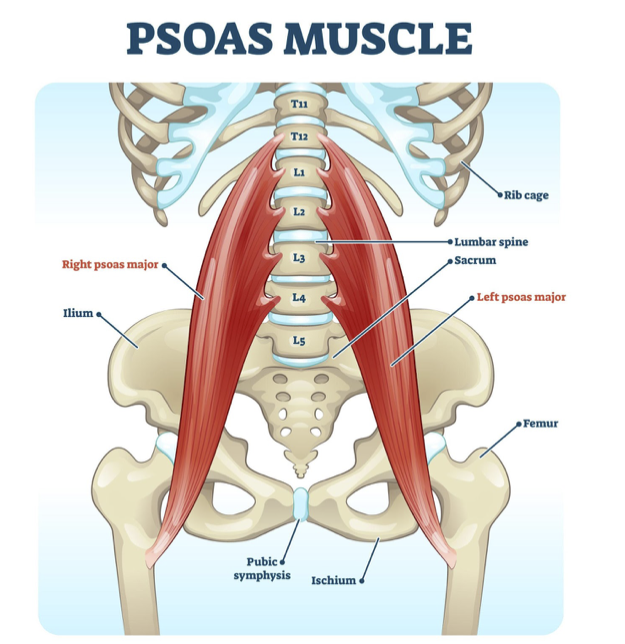
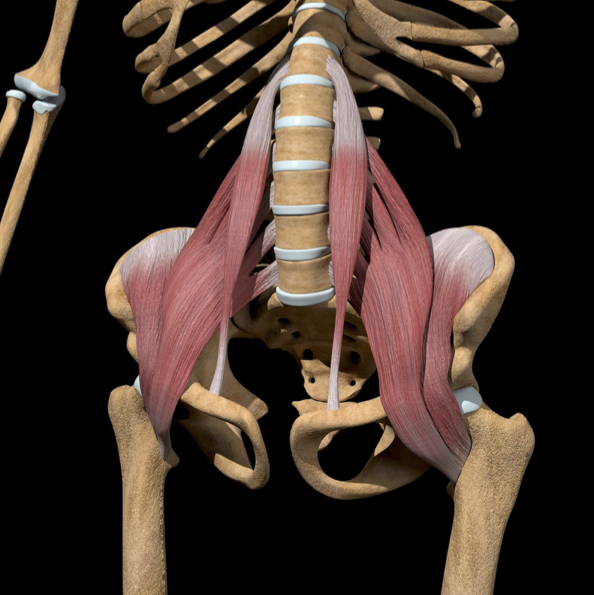
The psoas is the primary hip flexor muscle. It plays a central role in fight-or-flight responses, which is why it is one of the most commonly burdened muscles. When a situation of danger allows neither escape nor confrontation, activation remains incomplete. Tension persists, and through repetition, the muscle may shorten, stiffen, or even become painful. During a dearmouring session, relaxation of this muscle may therefore facilitate the release of emotional burdens related to survival.
Transcending Desire and Aversion
When several bodily areas are freed, the body gradually regains its capacity to feel fully — like a child before conditioning teaches suppression of emotional expression. Vibrational frequency and level of consciousness may rise, and experiences of ecstasy may occur.
Moreover, the ordinary perception of pain transforms through equanimous welcoming of sensations, which modifies their subjective tone. Certain states of consciousness (sometimes called absorption states) developed through Vipassana meditation may reappear.
In subjective experience, pain arises when the mind (conscious or unconscious) associates a given sensation with aversion. Suffering appears when resistance to pain emerges.
Beyond emotional release, the value of dearmouring lies in the space it offers the body to experience non-reactivity toward sensations, regardless of their intensity. The subjective component at the origin of pain dissolves; it is transcended by simple awareness of sensation, freed from the polarity of pleasant/unpleasant. The experience thus allows one to fully reclaim emotional responsibility, recognizing that the pain did not originate from the practitioner’s fingers (the stimulus), but from inner resistance to the experience itself. This non-dual state opens the possibility of connecting to the very nature of consciousness, whose intrinsic quality is ecstasy.
Conclusion
Dearmouring fits within a vision of the body as an intelligent system oriented toward balance and liberation. It is not a miracle solution, but a progressive process of dismantling emotional armour.
While this work requires a certain level of commitment and trust, it is also possible to prepare the body with Thai massage, which acts as a warm-up by gently awakening muscular tensions carrying emotional charges. In certain Thai massage traditions, such as dynamic styles, emotional releases are common.