Introduction
According to the WHO, one third of the global population has vision disorders. Among them, we can mention: myopia, hyperopia, astigmatism, presbyopia, cataracts, glaucoma, and macular degeneration.
Personally, I have worn glasses since the age of 12 due to myopia. Then, in my teenage years, my myopia increased and astigmatism was added. Subsequently, every 2-3 years until the age of 30, my vision deteriorated slowly but progressively. In 2016, during the trans-Canadian expedition America Extrema, I had a feeling that soon, I would no longer need to wear glasses. Yet, at that time, I wore them daily and they were essential for driving and working. It was this intuition that motivated all the investigations and experiments I conducted later on the subject.
10 years later, what I can testify to is that after applying as best as possible the advice I share below, my vision has significantly improved and my myopia has almost disappeared. I have not needed glasses since 2018, which makes me say that in life, I see more clearly than before, and I hope that will be the case for you too after reading this mind-blowing article!
Anatomy of the eye
The eye is made up of six main extraocular muscles that control its movements and allow the gaze to be directed in all directions.
This information is interesting because 3 of the eye disorders (myopia, hyperopia, and astigmatism) are directly linked to a deformation of the eyeball due to tensions in the extraocular muscles that can no longer fully relax.
This means that by promoting the relaxation of these muscles, through specific eye exercises and reforming certain bad habits, it would theoretically be possible to reverse some vision disorders. A regenerative possibility that concerns billions of people worldwide… Let’s see what good habits and reflexes to adopt to take care of our eyes and even improve our vision!
What are the origins of vision disorders?
International studies conducted on the subject (cf “The History of the Human Body” by Daniel Lieberman) agree that the number one cause of vision disorders is the lack of exposure to daylight. The other major problem highlighted concerns the gaze fixed on a fixed plane, such as a screen or a book. Normally, our eyes should constantly adjust their focus according to the objects we look at, whether they are near or far. When this variation is neglected (as during prolonged fixation on an object), it leads to tension and fatigue in the eye.
What the eye needs to function well
To function well, our eyes need:
- To be sufficiently exposed to daylight. This means spending several hours a day outside without wearing sunglasses and opening the shutters and curtains wide in the house during the day.
- To look at objects at different distances, which happens naturally when we are outside. If this outdoor time is insufficient, exercises, like those found in the BATES method, allow for alternating focus between near and far to relax the eyes and improve their flexibility.
- More generally, a good lifestyle with sufficient sleep (fatigue has a direct impact on the quality of vision), regular fasting, and a diet based on raw fruits and vegetables naturally promotes good eye health.
Some good habits and reflexes to adopt to improve vision
In addition to the 3 previous points, we can add:
If you spend time in front of screens:
- Adjust the brightness, hue (avoid blue light, especially in the evening), and contrast of the screen (in the settings or with software) so that it tires your eyes as little as possible.
- Position the back of your computer facing a window (which will already bring in natural light) and regularly look outside at objects at different distances to force the eye to focus. For example, there is the 20-20-20 rule: Every 20 minutes, look at something 20 feet away (about 6 meters) for 20 seconds to avoid eye fatigue caused by the screen or a book.
- Regularly do digital detoxes.
My tip: More generally, I have noticed that walking and especially running barefoot are very effective for developing eye flexibility. Indeed, when barefoot, we look carefully at the ground just in front of us, then a bit further to anticipate any sharp objects, and finally, even further to admire the landscape before returning just in front of us, etc. This natural exercise forces the eyes to focus on objects at varying distances.

Some unconventional methods to improve vision
Eye yoga
I am not a fan of eye methods or yoga because I find they take too much time, but some exercises yield good results, such as:
- Cross your eyes while looking at the tip of your nose and then between your eyebrows. Then, perform slow rotations with maximum amplitude of the eyes in one direction and then the other. If these exercises are painful, it means there is interesting room for improvement, so continue day after day until it becomes easy.
- Rub your palms vigorously for about fifteen seconds and then gently place them on your closed eyes for 1 to 2 minutes, focusing all your awareness (without distracting thoughts) on your eye sensations (phosphenes, tingling, etc.). This exercise is called palming. Practice it whenever your eyes are painful.
- Once palming is done, gently massage your eyes with your palms.
More broadly, meditation, yoga, or even deep breathing techniques can improve blood circulation and thus reduce eye fatigue.
If you wear glasses or contact lenses:
- They are like crutches for your eyes, so it is better to wear them as little as possible to avoid weakening the eye and its muscles (cf the law of economy).
- If they are really essential, prefer the lowest possible correction to engage the extraocular muscles.
It is quite possible that the absence of glasses (if it is really not possible, have their correction reduced) gives you headaches. This is due to the mind desperately trying to receive the information it lacks. Cultivate letting go (being sure that what your eyes show you is all you need to see, at least from a spiritual perspective) and you will see that the headaches will eventually disappear. If they are too bothersome, wear your glasses more often and find the rhythm that suits you. Do not try to force it!
Note: Contact lenses can damage the cornea.
Cleanses even for the eyes…
In some tribes in South America, like the Matsés in Peru, a liquid preparation called Sananga is used, extracted from a tree, the Tabernaemontana undulata. Applying Sananga to the retina causes a strong burning sensation that stimulates tear production and, apparently, helps detoxify the pineal gland (notably from excess fluoride). Its traditional use concerns improving visual abilities (to aid hunting) and treating eye conditions.
On another continent, Ayurveda is not left behind with another traditional technique that involves applying lemon juice to the eyes. Like Sananga, the cleanse occurs through stimulation of the tear glands. Moreover, lemon is a fruit considered to have purifying, detoxifying, and revitalizing properties.
The benefits of the sun
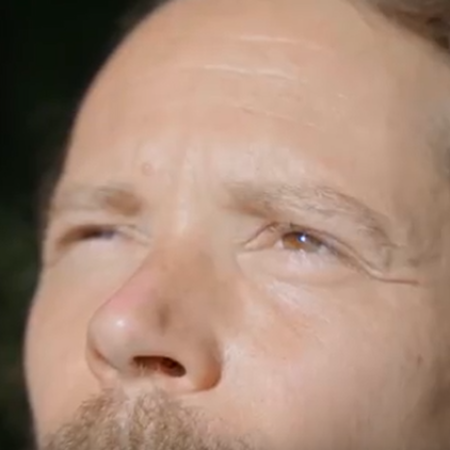
The sun is the source of all life on this planet, and no animal protects its eyes from this vital radiation. Furthermore, as we saw earlier, daylight is crucial for good eye health. Know that if sunlight bothers you, that is not normal, and the color of your iris is not to blame. This unpleasant burning sensation is simply due to an excess of acidity. With a healthy diet and good lifestyle habits that help reduce excess acidity, daylight, even in full sun, is not bothersome. Moreover, it is necessary to restore some truths about UVs.
False beliefs about ultraviolet (UV) radiation accused of causing cancers
Did you know that the skin cancer rate is higher in Nordic countries than elsewhere? That UV radiation has generally decreased in recent decades? That the city closest to the ozone layer thinning (which is not a hole but a thinning) does not record more cases of skin cancer? That we are less exposed to the sun than before (due to sedentary lifestyles) and yet the number of skin cancers has significantly increased? That skin cancer can manifest on areas not exposed to light, such as the soles of the feet of Africans who work with pesticides?
False beliefs about sunscreens that are actually toxic
Did you know that sunscreens contain toxic substances that alter DNA and decrease vitamin D production while skin cancer is correlated with a deficiency in vitamin D? Did you know that sunscreens primarily block UVB (the ones that cause sunburn) which leads to dangerous overexposure to UVA (which, unlike UVB, does not signal itself by causing a burning sensation)?
Heliotherapy and the benefits of UV
Did you know that Danish doctor and researcher Niels Finsen received the Nobel Prize in Medicine in 1903 for treating tuberculosis and certain skin diseases thanks to the benefits of UV? Did you know that at the beginning of the 20th century, Swiss Dr. Auguste Rollier used sunlight to cure various ailments such as tuberculosis, certain skin diseases, and respiratory disorders? The success of heliotherapy (sun therapy) was such at the time that this doctor established 36 clinics and sanatoriums in high altitudes (to have more UV).
Did you know that UVs contribute to the proper functioning of the immune and hormonal systems, reduce stress and depression while improving mood, strengthen the skin, increase energy (by stimulating the thyroid gland), and regulate blood pressure and menstrual cycles?
The harms of sunglasses
Did you know that the pioneers of heliotherapy noticed that this light therapy does not work if you wear sunglasses? That’s where I wanted to go… In reality, the entire spectrum of light emitted by the sun plays an important role in the body via, among other things, the pineal gland, which translates the different wavelengths of sunlight into hormones. The absence of light also has an impact; it triggers the production of melatonin (the so-called sleep hormone) which promotes sleep when it is dark. Conversely, looking at screens that produce blue light (the color of dawn) in the evening hinders melatonin production.
Note: Windows and prescription glasses do not let UVB through but sometimes (depending on quality) let UVA through. So even if it is very beneficial to live in a bright house, it does not replace exposure to outdoor light. This is also one more reason to wear your prescription glasses (they filter UV even if they are not tinted) as little as possible. The same goes for contact lenses that absorb certain UVs.
Sun gazing to strengthen vision
First appearing in India over two thousand years ago, the technique of looking at the sun is called sungazing. If practiced regularly, sungazing offers health benefits: anxiety and nervousness calm down, and the quality of sleep and vision improves. For more information on this subject, see the Chou Brave video. (Translation note: this video is currently in French, but you can activate YouTube’s auto-generated subtitles in English while we work on providing a dedicated English version.)
Here is an overview of the practice of sungazing: One hour before sunset or one hour after sunrise, simply observe the sun directly with a relaxed gaze. Remember to remove your glasses during practice and be barefoot on the ground. Start slowly (less than a minute) and then gradually increase each day while listening to your sensations. Do not prolong exposure when they become uncomfortable.
Translation note: this video is currently in French, but you can activate YouTube’s auto-generated subtitles in English while we work on providing a dedicated English version.
The emotional symbolism of vision problems
Literature offers many possible interpretations of vision problems, which often contradict each other. Personally, I believe that life always brings us what we need and that diseases are a symbolic manifestation of our psychological dysfunctions. From this perspective, if we do not see clearly without glasses, it means there are aspects of ourselves and life that are not seen clearly, especially since the corrections are strong.
More precisely, if we have difficulty seeing far away, as is the case with myopia, it is because we worry too much about the future and life invites us to focus on the present and what is right in front of us. Conversely, if we have trouble seeing close up, as is the case with hyperopia and presbyopia, it is because we care too much about details and life invites us to broaden our perspectives and develop a wider vision. All this to say that the more we free ourselves from our emotional baggage that causes us suffering, the more willing we will be to regain better sight.
Furthermore, what I have also observed is that mild vision problems help, in some cases, to reveal a more subtle world. For example, not seeing perfectly far away allows me to observe special shapes in the trees that I would pass by without noticing if my vision were too Cartesian. Vision problems can therefore manifest when the two hemispheres of the brain do not function in a balanced way.
Crying is good for the eyes
What I have been able to observe over the last 10 years is that my vision declines when I unconsciously hold back emotions of sadness and prevent myself from crying. Conversely, as soon as I am ready to welcome an emotion that wanted to surface and the tears flow, my vision improves right after. This also happens when I am moved; my eyes become moist and I temporarily regain perfect vision, which makes me say that I see clearly in life only when I am moved by its love and beauty.
The correlation between tears and improvement in vision can therefore be explained both emotionally and biologically. Indeed, the eyes are excretory organs through which glues (think of the discharge from pets fed on grains) but especially acids (since they are water-soluble) can exit. If emotional tensions cause tears to rise that we hold back, then an internal tension rises (as in the case of glaucoma) and acids can accumulate. This disrupts the functioning of the 6 extraocular muscles, leading to vision problems. In extreme cases, the accumulating acids can even burn the optic nerve and cause blindness, as happened to Ray Charles, who could not cry for the death of his brother, for whom he felt responsible.
Moreover, tears contain oxytocin, a hormone known as the love hormone of trust and connection. Thus, crying can be seen as a biological mechanism not only to release an emotional response but also to provide physical relief. That is why one should not wipe away tears, let alone hold them back.
CONCLUSION
I am aware that this article goes against many beliefs, whether regarding the harmfulness of glasses (both prescription and sunglasses) and, conversely, about the benefits of the sun. And it is precisely for these reasons that, despite the health measures in place, vision problems continue to increase, all with the sad complicity of the press that gives a voice to “specialists” corrupted by financial interests (glasses are very profitable) or sadly remarkable for their ignorance of natural laws. Alas, there is no one more blind than the one who does not want to see… However, vision problems are not a fatality. Moreover, in India, particularly in Auroville, there are institutes that teach how to improve one’s vision.
To go further
- “Perfect Sight Without Glasses: The Cure of Imperfect Sight by Treatment Without Glasses” by Dr. William H. Bates
- “Timeless Secrets of Health And Rejuvenation” by Andreas Moritz
- “The Story of the Human Body: Evolution, Health, and Disease” by Daniel E. Lieberman
- https://auroville.org/page/auro-centre-for-perfect-vision
- https://www.youtube.com/watch?v=jX0IdeXslyc