The benefits of lactofermentation
Lactofermentation involves preserving food in a salty, oxygen-free environment. Under these anaerobic conditions, lactic acid bacteria break down carbohydrates from vegetables to produce lactic acid. In addition to developing beneficial lactic acid bacteria (naturally present in our mucous membranes), this process prevents the growth of mold through the acidification of the environment caused by lactic acid. Thus, foods can be preserved raw for years, and as we will see below, their benefits are amplified. This is an ancient method used to preserve food, particularly vegetables, with salt.
Lactofermentation offers numerous health benefits as it contains probiotics (which positively seed the microbiota with good bacteria) and prebiotics (the fibers nourish the intestinal microbiota). By integrating them into our diet, they help to cleanse, support, and strengthen our digestive and immune systems (which are 80% located in the intestines). For comparison, lactofermented foods can contain up to 500 different strains of pre- and probiotics compared to only one to five strains of bacteria in a probiotic dietary supplement.
The quality of our digestion largely depends on the quality of the intestinal microbiota, also known as the second brain. This microbiota encompasses all the bacteria, viruses, yeasts, and other microorganisms that live on and in our bodies, totaling over one hundred trillion microorganisms divided into more than 3,000 species. These microorganisms live in symbiosis with our bodies and ensure numerous biological processes. They can produce antioxidants, vitamins, amino acids (the building blocks of proteins), and reduce inflammatory states as well as food allergies. Furthermore, the microbiota plays a key role in the human body’s defense system, in regulating blood pressure, and in digesting food. It can even influence our behaviors, moods, psychological well-being, and food choices. It is, in fact, our microbiota that rewards us with a secretion of serotonin when we eat the living foods we need. That’s why eating fruits makes us happy. It’s its way of saying thank you to encourage us to consume foods that are beneficial to it.
Fermentation, by breaking down large molecules, also makes the nutrients present in vegetables more accessible, a mechanism known as ‘bioavailability.’ The action of lactic acid bacteria indeed involves pre-digesting the food, so lipids are broken down into fatty acids and proteins into amino acids. Moreover, this pre-digestion makes dietary fibers less irritating for those with damaged intestines.

That’s not all; the microorganisms that proliferate during fermentation also produce various nutrients such as vitamin C, B vitamins (including B12), and vitamin K. In summary, not only does the quantity of vitamins increase significantly, but they are also more easily absorbed by the body.
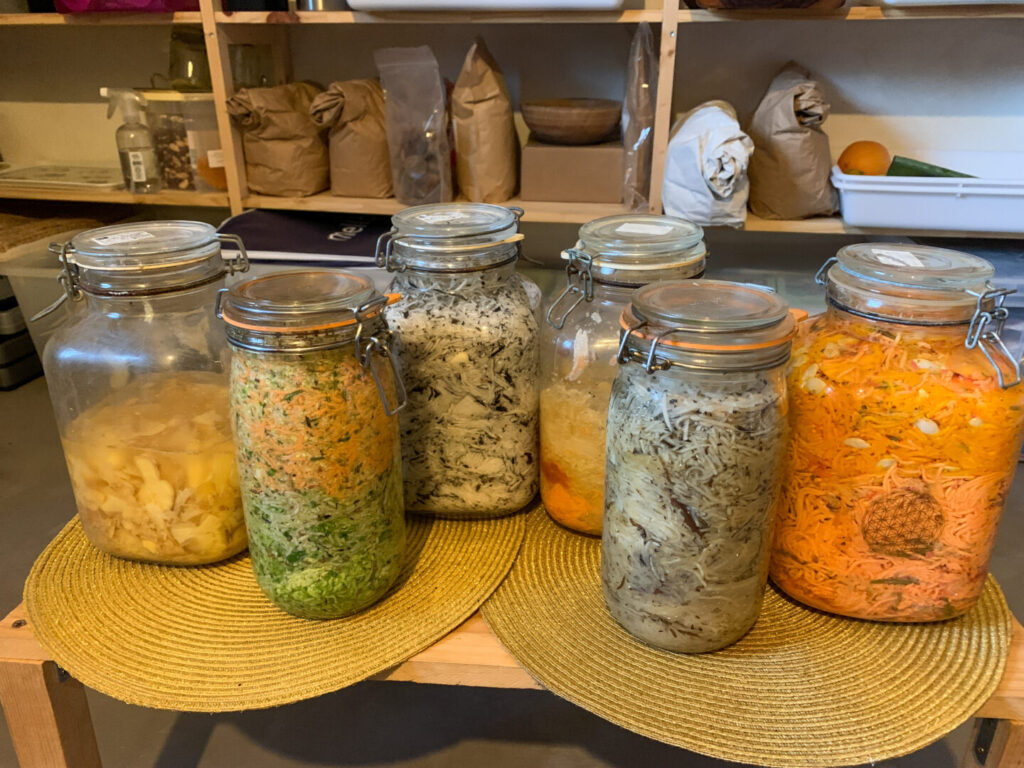
Studies have also shown that iron and zinc are more easily absorbed in lactofermented vegetables. More generally, eating lactofermented foods at the beginning of a meal helps to better absorb nutrients from other foods due to the notable presence of enzymes. Lactofermentation can also destroy or neutralize several toxic substances such as cyanide, phytates, saponins, nitrates, and nitrites. For all the reasons mentioned above, it is remarkable to observe that lactic fermentation is a transformation that not only preserves food but also increases its nutritional value. In summary, it has the multiple advantages of making food more nutritious, more digestible, of better quality, and enhancing its flavor over time. The perfect opportunity to create vintage lactofermentations like some do with wine… Except that you definitely won’t leave them in the cellar (it’s too cold for the bacteria) and they can beautifully adorn a corner of your room with their lovely colors.
In summary, consuming lactofermented vegetables strengthens the immune system, restores the digestive system, facilitates digestion, and remineralizes. Just that! That’s why we talk about it so much! 🙂
Making your own lactofermentations
Even though you can easily find quality raw and inexpensive cabbage lactofermentation in health food stores, it is enjoyable to make your own recipes at home.
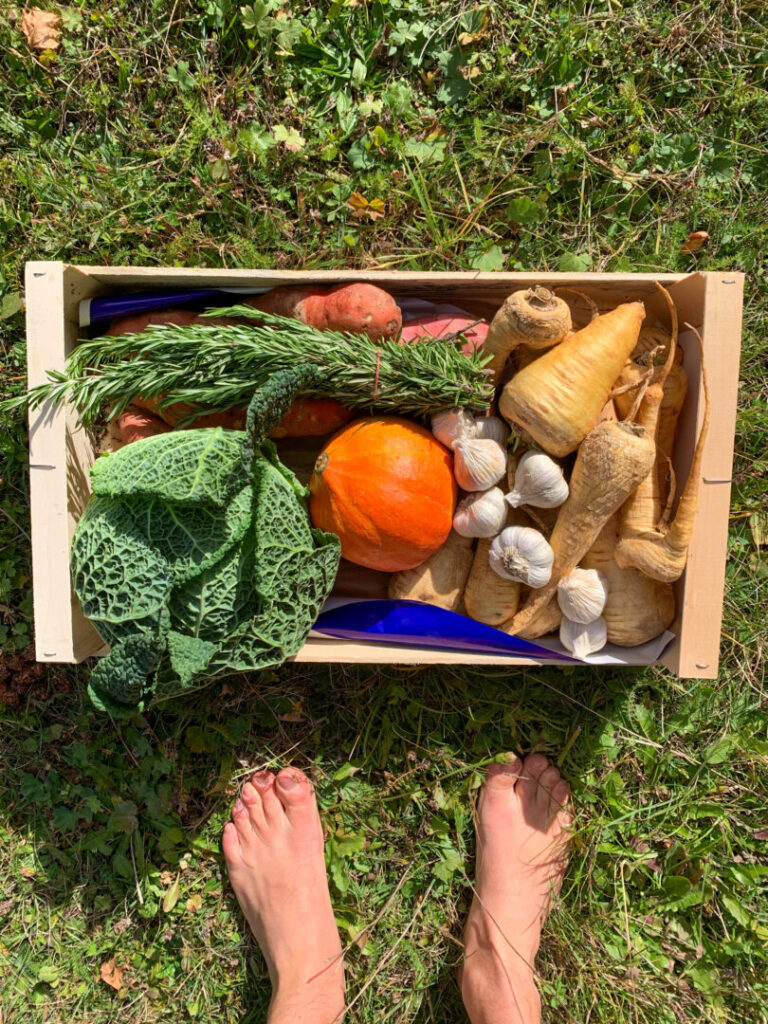
The protocol below works perfectly with all non-sweet vegetables and fruits: cabbage (red, white, green), cauliflower, red beet, bell pepper, turnip, parsnip, zucchini, cucumbers, carrots, shallots, onions, garlic, celery, leeks, sweet potatoes, pink and black radishes, pickles, etc.
The only exceptions concern sweet fruits that produce alcohol when they ferment (alcoholic fermentation rather than lactic) and should therefore be excluded. I also recommend setting aside beans and eggplants, which are generally not digestible raw (unless your body craves them). All other vegetables can be lactofermented without restriction.
Simplified protocol suggestion
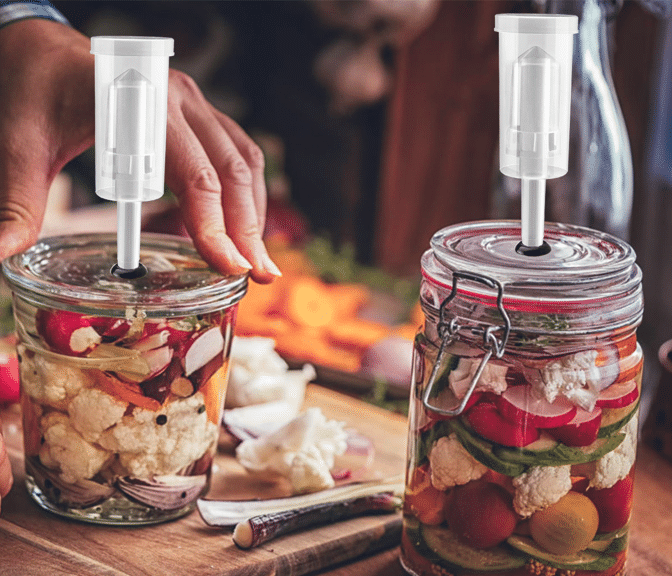
- The important thing when choosing your container is that air can escape when pressure increases inside due to fermentation. That’s why closures with a rubber seal (like ‘Le parfait’ jars) are ideal. The other option is to use sealed lids but with a fermentation valve.
2. Boil the jar to destroy any germs that could cause mold. Unless your jar already contained lactofermentation, in which case leave a bit of juice or vegetables at the bottom so your next batch ferments faster.
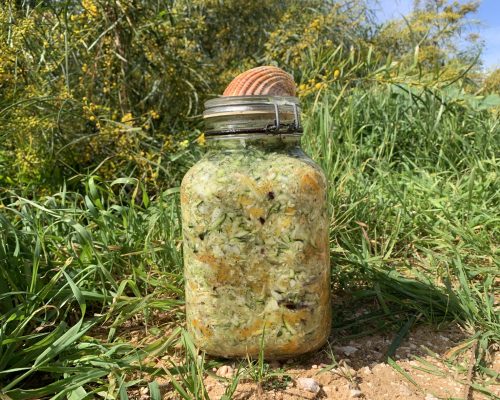
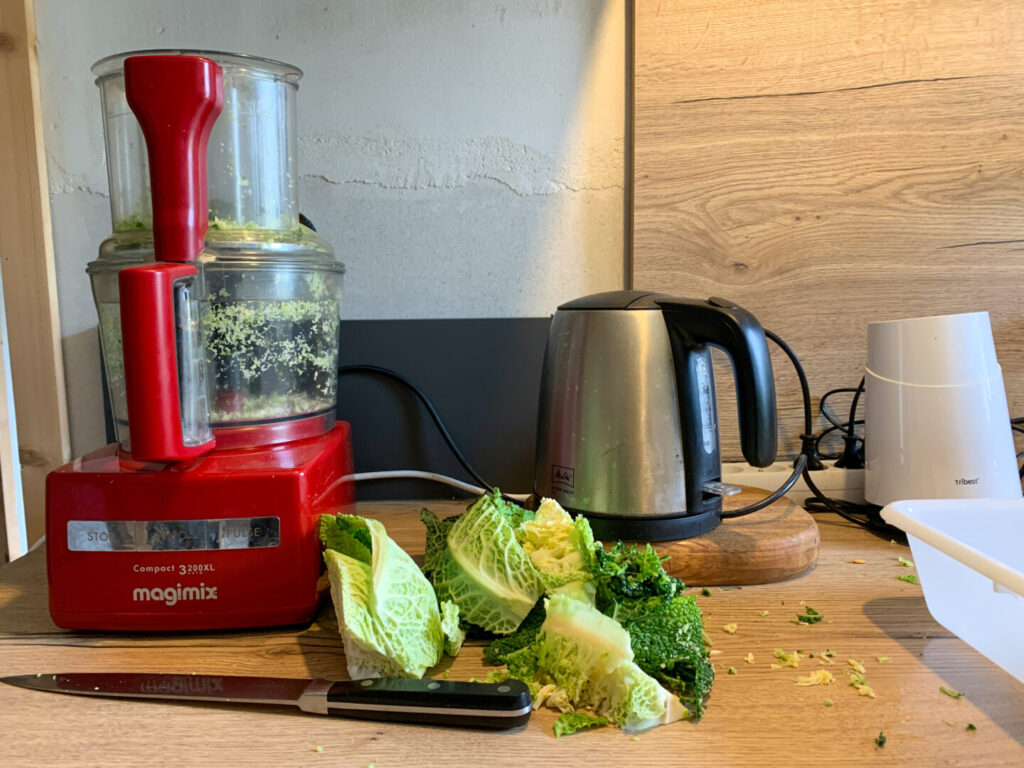
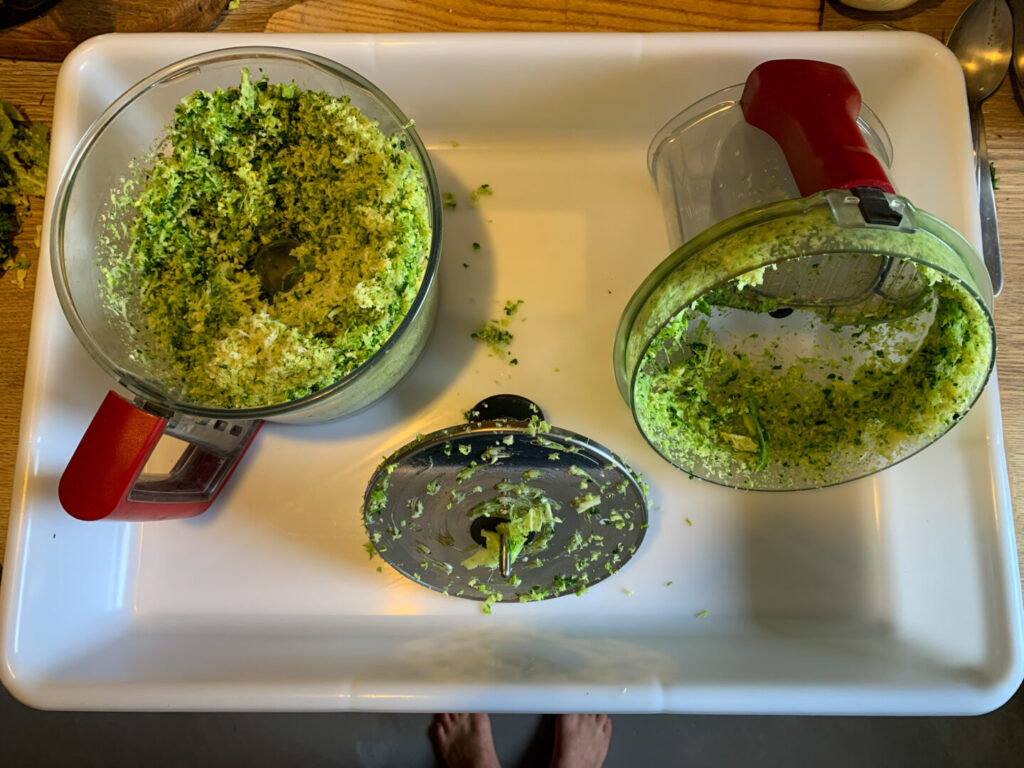
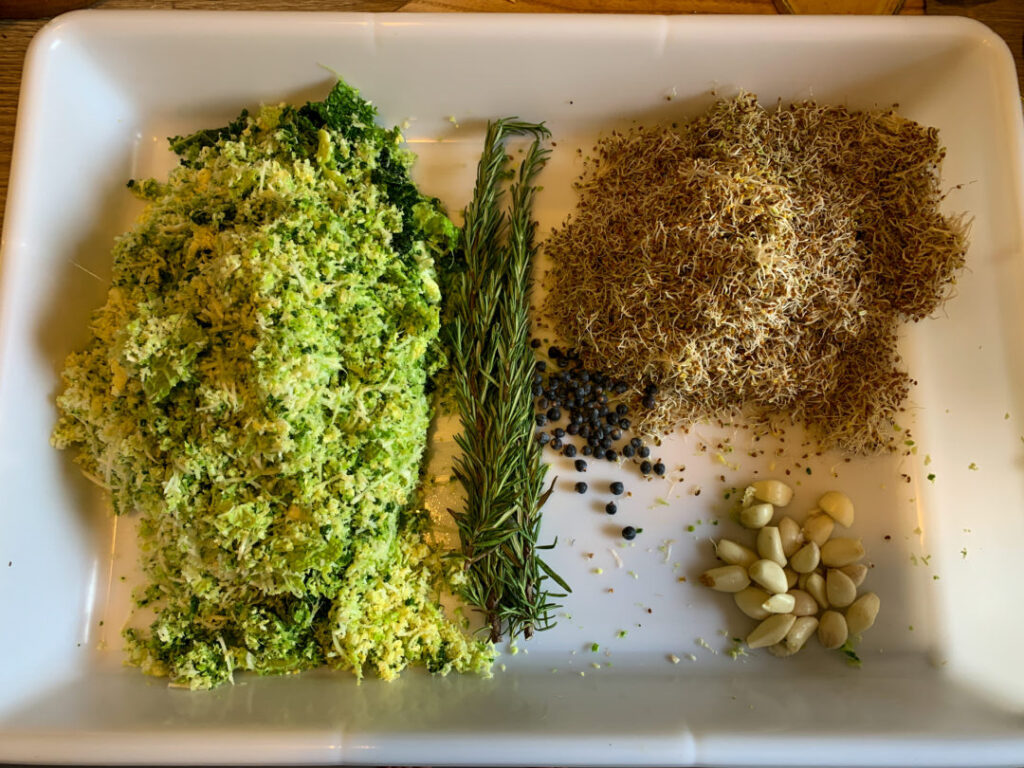
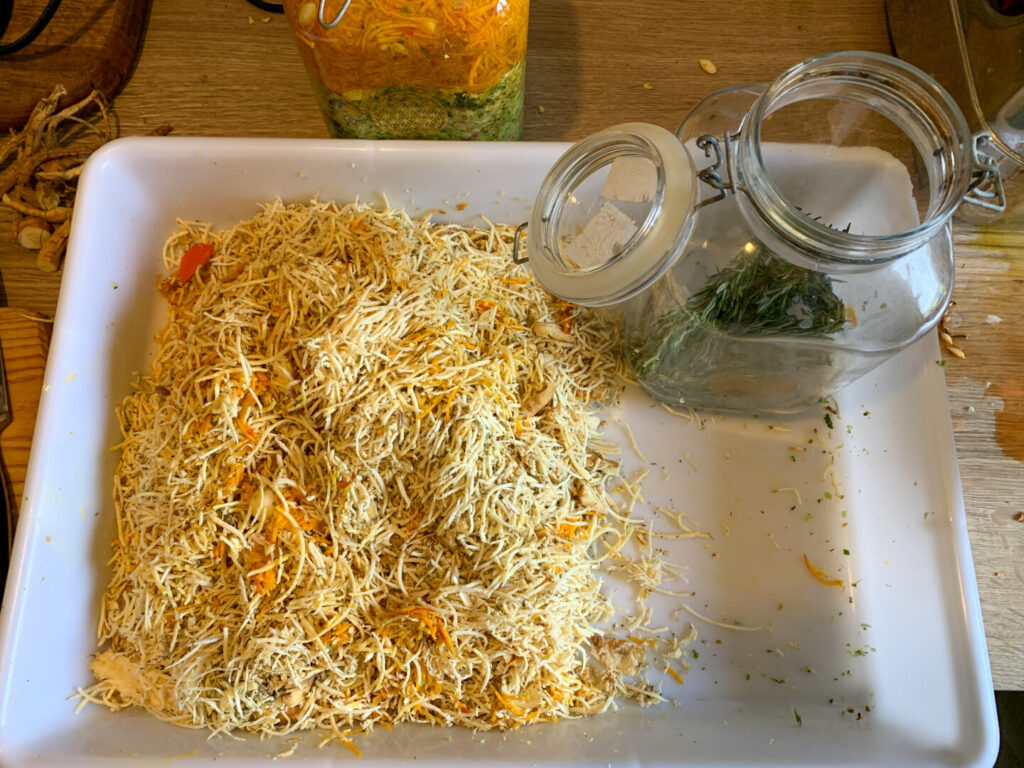
3. Grate, slice, cube, or stick the vegetables (not necessarily of a single variety) or leave them whole according to your preference. I prefer finely grated vegetables (for root vegetables) as it allows for much more to be packed into the jar. Then place the grated or cut vegetables at the bottom of the jar, pressing them down well if they are not whole. For a better taste result, add all kinds of herbs to your vegetables (those that appeal to you!). Leave at least 4 cm between the pressed vegetables and the top edge of the jar.
At this point, you have several formulas depending on how the vegetables are prepared:
- If the vegetables are grated and packed in the jar: pour seawater into the jar to cover the grated vegetables by at least 2 cm OR add two tablespoons (30g) of unrefined salt (refined salt is toxic) in one liter of fresh water that you will pour over the vegetables in the same way as with seawater.
- If the vegetables are whole or cut into large pieces: pour seawater to isotonic level up to 2 cm from the edge of the jar OR add two teaspoons (10g) of unrefined salt (refined salt is toxic) in one liter of fresh water that you will pour over the vegetables in the same way as with seawater to isotonic level.
- In the case of grated or cut vegetables, a third option is to massage them with unrefined salt (at least 1g of salt for 100g of vegetables) until they release juice before placing them in the jar. If you choose this third option, only add fresh water (or very lightly salted) to fill the jar up to 2 cm from the edge.
In all cases, press down well and tilt the container to bring up air bubbles: the goal is to have as few as possible to avoid spoilage. If your vegetables float in the brine and are slightly exposed to air, it doesn’t matter. However, it is possible to place a weight (like a stone) on the vegetables to keep them submerged, or to use a concave plastic support designed for this purpose.
Close the jar, without tightening if you don’t have a valve, and leave it at room temperature (in the shade or light but not in the cold, as fermentation is significantly slowed down) for fermentation to begin.
The fuller you fill it, the more risk of leaks (plan a towel or a shallow container to place the jars!). That’s why one way to do it is to temporarily store them on your sink. If, during this phase, your jar loses too much brine, you can add more. Then, after about a week, when the risk of leaks is eliminated, you can store them (now safely) wherever you like. Your production is ready after three or four weeks, but it’s best to let it sit a little longer: it will be even better.
How much to consume?
In general, it is recommended to consume a little (one to two tablespoons or even much more) of lactofermentation every day in salads or to pass through a juice extractor.
Important: Avoid contact with heat to prevent destroying the enzymes and microorganisms produced by this type of fermentation: they are very beneficial to your body.
Reuse the juice from the lactofermentation once the vegetables are eaten: to drink (diluted with water if desired, it’s very acidic!) as is or mixed with vegetable juice, to replace vinegar in a sauce, or to reseed new lactofermentations.
Is it possible to fail at lactofermentation?
This most often happens when a piece of rotting vegetable has been introduced into the jar and/or the filling water (the brine) was not salty enough. Indeed, the almost complete absence of air in the jar (which should be filled up to 2 cm from the edge before closing, unless you have a valve, in which case you can fill it to the top with brine) as well as the presence of salt means that the germs that usually decompose food do not develop anymore.
It is therefore important to be vigilant about the condition of the vegetables you introduce, to fill the jar properly, and to use enough salt. While also ensuring not to store the jar in a place that is too cold (below 15°C), otherwise the lactic bacteria will develop too slowly to allow for food preservation.
Is salt in lactofermentations a problem?
If you find the lactofermentation too salty, don’t force yourself to eat it as is. To avoid this inconvenience, at the time of preparation, replace the crystallized salt with seawater (read this article on the benefits of seawater) in your preparations. If that doesn’t change your perception, dilute your brine further. The salt is there only to prevent the vegetables from rotting (by inhibiting the bacteria and molds responsible for rotting in favor of lactic bacteria that acidify the environment), so the idea is to use as little as possible (at least 1g of salt for 100g of vegetables) without ruining it! And if despite these precautions you still find it too salty, there is always the option to rinse your lactofermented vegetables before consuming them. Or to not consume lacto at all! 😉
Sometimes, we think we have failed because a white film covers the surface of the vegetables. This is just harmless yeast that, I find, gives the food a better taste. Moreover, these yeasts create a film that isolates the food from the air inside the jar. Don’t be too concerned if you find it doesn’t look appetizing at first glance. Know that your sense of smell is reliable, and if your lactofermentation is really spoiled, the smell will be truly repulsive. If you’re wondering, it’s very likely that it’s not spoiled!… 😉
Storing your lactofermentation after opening
Once your jar is opened, there is no need to keep it cool. It can remain at room temperature even if it has been opened and air has entered. In this case, if you wait too long, yeasts will develop, but they will not spoil the food. That said, nothing prevents you from storing your lactofermentation in the fridge after opening to avoid this phenomenon.
Recipe ideas
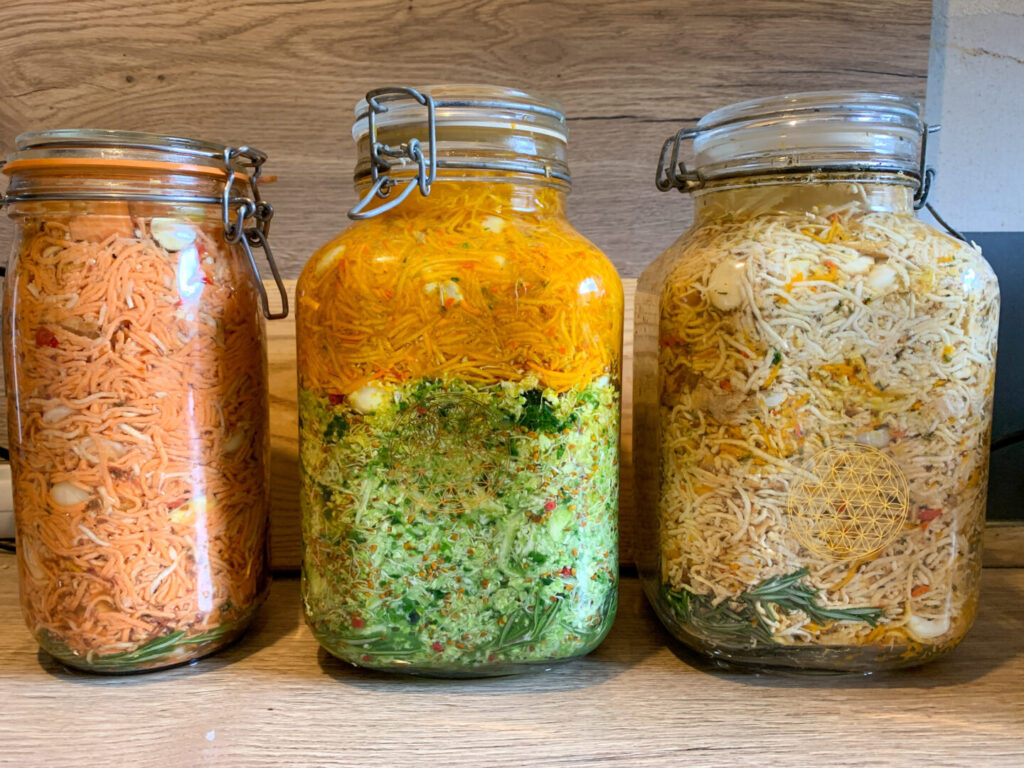
- Grated sweet potato with garlic and pink berries.
- Red cabbage with star anise.
- Pumpkin with garlic and curry.
- White cabbage with garlic and herbs de Provence.
- The famous Kimchi: cabbage, radish, carrot, onion, chili, ginger, and garlic.
It should be noted that the presence of sulfur in cabbage, turnip, or black radish, for example, gives these lactofermented vegetables healing properties specifically aimed at respiratory issues but also against dysfunctions resulting from poor bile circulation.
To learn more about lactofermentation
- “The Art of Fermentation: An In-Depth Exploration of Essential Concepts and Processes from Around the World”, by Katz, Sandor Ellix.