“Theory is when you know everything and nothing works. Practice is when everything works and no one knows why.”
Albert Einstein
Introduction
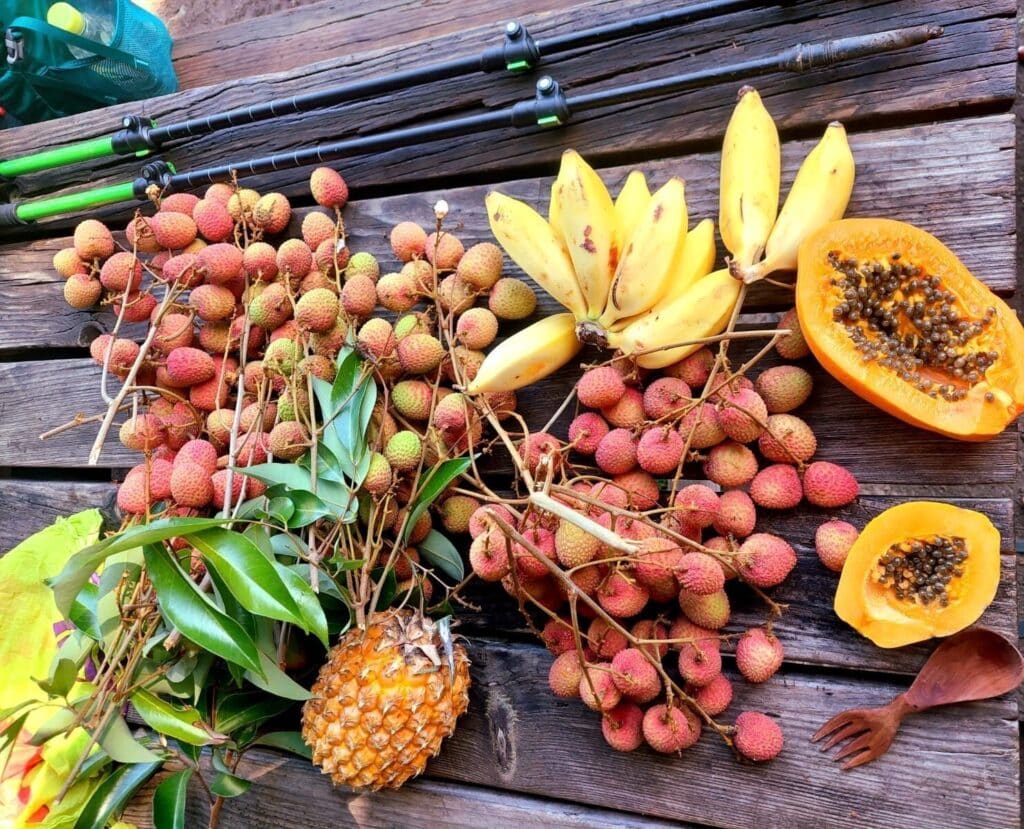
The desire to write this article came to me while traveling on the island of Réunion when, several times, locals seeing me eat fruits told me that I was going to get diabetes. How Homo Sapiens Sapiens, this living being belonging to the family of great apes, with its frugivore digestive system (see this article on ideal nutrition), has come to distrust fruits? The population is so confused about its dietary needs that Google is consulted to tell us what to eat. Humans, proud of their science (I am also curious to read the AI’s nutritional recommendations), are the only living beings that need specialists to know how to nourish themselves.
The reason is simple but it shakes some official dogmas: we are all made to eat the raw foods we can catch with our bare hands in nature and that we love to consume. This principle applies to all species on Earth. Nature should be our only nutritionist, dietitian, doctor, teacher, etc. Any other theory on nutrition is just pure speculation that distances us from common sense.
But to know our nutritional needs, we must first clear our minds of false ideas, like those we will see about sugar, and (re)learn to listen to our feelings. A natural impulse that, as children, we were not encouraged to follow since it was primarily about eating at fixed times and finishing our plates. It is a whole journey to restore this connection, and I sincerely hope that this article will contribute to it.
First, it is important to define in a simple yet rigorous way what we mean by “sugar” as well as the different forms in which we find it in food. For the sake of simplification but also to spare us some mechanisms and obscure notions, I will deliberately simplify my presentation so that it leads us, guided by common sense, to take a step back rather than dive into endless biochemical complexities. Complexities, I emphasize, mastered by no human being, however knowledgeable they may be. I will therefore get to the point by talking about the two main types of sugars: simple sugars (those that the body can assimilate very easily) and complex sugars (those that the body can assimilate provided they are digested by means of enzymes).
Two types of sugars:
- The main simple sugars (or monosaccharides) in food are: glucose, fructose, and galactose. These simple sugars are very easily assimilated by the body.
- The main complex sugars (or polysaccharides) in food are starch (a chain of glucose in alpha linkages), sucrose (one molecule of fructose and one of glucose), cellulose (a chain of glucose in beta linkages), and lactose (galactose + glucose). These so-called complex sugars (because they are assemblies of simple sugars) must be hydrolyzed (that is, broken down into simple sugars) to be assimilated by the body.
Sugar in foods
- Fruits contain varying proportions of fructose and glucose.
- Corn syrup, wheat, etc., contain only fructose.
- Honey contains ⅓ fructose, ⅓ glucose, and the rest in the form of other sugars.
- White and brown sugar contain sucrose.
- Milk contains lactose.
- Starchy foods, cereals, legumes, and root vegetables contain starch. This starch (a chain of glucose in alpha linkages) is broken down into glucose by an enzyme called amylase.
- All fruits, vegetables, and the seed coats contain insoluble fibers made of cellulose (a chain of glucose in beta linkages) that cannot be assimilated by humans because we lack Beta Amylase (the enzyme that breaks down cellulose into glucose), unlike herbivores and certain insects and fungi that digest the cellulose contained in plant stems, wood, and tree bark. The plant kingdom can therefore be seen as a vast stock of sugar!
In summary, it is the entire animal kingdom that feeds on sugar, including herbivores, insects, and fungi!
Sugar is vital for our cells!
Moreover, our body needs simple sugars to function, and not just any: only glucose! Nerve cells (thus our brain) have an imperative need for glucose as an energy source. As for the other simple sugars, fructose and galactose (which are only found in milk and honey), the liver converts them into glucose so that they can be used by the cells (via the Krebs cycle) to produce energy (ATP). And in case of sugar shortages, such as during a ketogenic diet, or, more simply, during a fast, the body produces the glucose it needs (from lipids and proteins) through a mechanism called gluconeogenesis.
What science says about fructose:
- When it comes from fruits, fructose enters the blood more slowly than glucose thanks to the presence of water, fibers, and phytophenols.
“The absorption of fructose is slower than that of glucose. Fructose is absorbed in the intestines, through a mechanism different from that of glucose: its transport into the intestinal mucosal cells results from a process of passive facilitated diffusion, while glucose is actively transported.” Wikipedia (Fructose)
“Fructose from fruits does not have the same nutritional effects as industrial fructose because while the molecules are the same, they are accompanied in fruits by other nutrients, such as phytophenols, which counterbalance the harmful effects of pure fructose.” Wikipedia (Fructose) - Fructose is primarily metabolized into glucose (and glycogen) by the liver, which then redistributes it at its own pace in the form of glucose.
“The liver captures most of the fructose on the first pass thanks to the high efficiency of the enzymes fructokinase and aldolase B. The remaining fructose appears in low concentration in the blood.” Wikipedia (Fructose) - Fructose has a sweetness power twice that of glucose. This means that eating a sweet-tasting fruit does not necessarily imply that one ingests more sugar than by eating rice (for example).
- Fructose from fruits does not cause hyperglycemia (even when taken in juice form) and, unlike glucose, it does not lead to an immediate and significant secretion of insulin after ingestion.
“Fructose provides slowly used energy and helps avoid blood sugar spikes often associated with high consumption of glucose or sucrose. Fructose also does not cause the effects associated with hyperglycemia, such as hyper-excitation.” Wikipedia (Fructose)
So why can we read so many criticisms about this natural sugar, fructose? Simply because the studies conducted on the subject have been done using pure fructose (like in corn syrup) which has nothing to do with the fructose from fruits associated with a completely different context with water, fibers, micronutrients, phytophenols, etc., and a sensory stop (see this article on sensory nutrition). Everything in nature and in the human body works through synergies, and it is just as absurd to conduct studies on pure fructose as it is to conduct studies on pure oxygen to deduce whether it is good or not to breathe!
“According to Anne-Françoise Burnol, a biologist and research director at the CNRS, opinions are “not unanimous on the existence of specific toxic effects of fructose in humans. While studies conducted on laboratory animals unambiguously show that high doses of fructose lead to harmful consequences on energy metabolism regulation, obesity, and type 2 diabetes, it is much more difficult to draw such clear conclusions from studies conducted on humans.” According to her, the existence of “huge” financial interests at stake may have consequences on the relevance of the conclusions of the studies.” Wikipedia (Fructose)
Confusion is maintained between the harms of refined sugar and the natural sugar from fruits. The latter is immersed in a “context” with fibers, water, and molecules that warn the liver (the storage site for fructose) that fructose will arrive so that it can prepare to receive it. Furthermore, fructose from fruits is released gradually from the fibers and thus arrives gently at the liver. This is absolutely not the case with fructose syrups (like corn syrup) which contain only fructose and are therefore very harmful to the liver (risk of hepatic steatosis).

What about other sugars?
1) Cooked starch
Taking a sugar out of its context is not the only bias to consider in order to properly interpret the so-called “studies.” Cooked starch (found in bread, potatoes, rice, cereals, legumes, tubers, etc.) which has so far provided humanity with most of its calories is in itself a very bad sugar, for several reasons (see this article on starchy foods) :
- On one hand, starch becomes sticky after cooking (see this article) and generates mucus with deleterious effects on health.
- On the other hand, this unnatural sugar (because it is cooked and most often stripped of all or part of its fibers that slow down glucose absorption) causes hyperglycemia and, furthermore, it is (most often) demineralizing (due to lack of minerals and/or due to the presence of anti-nutrients such as phytates, lectins, enzyme inhibitors, etc).
It is therefore not a coincidence that the first cavities that humanity experienced began 12,000 years ago, when humans started consuming cooked starches in quantity. That said, raw starch (as in bananas) does not present these disadvantages and can be consumed without moderation, except for that dictated by your sensory stop (see this article on sensory eating), as with all raw foods from the plant kingdom.
2) Refined sugars
Refined sugars (white or brown table sugar, corn syrup, etc.) contain empty calories devoid of micronutrients, they are acidifying, cause spikes in blood sugar, and are addictive. There are also synthetic substances with a sweet taste (like aspartame) whose deleterious effects are not negligible even if they do not contain sugar. By default, any molecule isolated from its context or any synthetic molecule should attract our attention and distrust because consuming them is like playing with fire…
Simple carbohydrates come in two forms: refined sugars (extracted from fruits, grains, tubers, and sugar cane) and intrinsic sugars (those naturally found in fresh, whole plant foods, mainly in fruits). Both types have a sweet taste. Unfortunately, due to misinformation and widespread ignorance, most people believe that simple carbohydrates are refined sugars, which are nutritionally poor. People do not realize that the naturally occurring sugar found in fruits is completely different from the sugar extracted from foods. These misinformed consumers lump all simple carbohydrates together and avoid them completely. Government recommendations and misguided nutritionists perpetuate this overgeneralization and strongly advise us to avoid simple sugars. |
Excerpt from the book: “The 80/10/10 Diet” by Douglas Graham
Blood sugar spike
The blood sugar spike is normal after the ingestion of fruits, but it does not cause hyperglycemia and, moreover, it drops quite quickly. It is enough to check it with a glucometer to be convinced. Furthermore, fruits do not cause hypoglycemia in the hours following their ingestion, additional proof that there was no hyperglycemia beforehand. This is not the case with so-called “fast” sugars, nor even with those called “slow” that contain cooked starch (thus glucose).
It is important to consider that hypoglycemia is not a normal phenomenon but the aftermath of hyperglycemia caused by bad sugar (refined or cooked starch). I experienced it every day before my dietary transition, and it gave me the false feeling of being hungry (see this article on social life and meal frequency) when in reality I was daily suffering from a mechanical and pathological reaction due to a non-physiological diet. The current meal rhythm (breakfast, snack, lunch, snack, dinner) is therefore based on chain hypoglycemias, not on physiological needs. Moreover, since I have been eating plant-based and living (see this article on why eat plant-based and living), I was able to complete a 14-day trek and 360 km without eating in Canada and did so without suffering from hypoglycemia.
What about the ketogenic diet?
If we demonize all sugars instead of exercising discernment, we logically end up wanting to eliminate them and eat mainly proteins and fats. This is the approach proposed by the ketogenic diet, composed of about 5% carbohydrates, 15% proteins, and 80% fats.
This diet forces the body to produce its own sugar, through a mechanism called gluconeogenesis. The ketogenic diet can yield encouraging results at first because people stop consuming everything that contains refined sugar (thus stopping a good number of industrial foods), starches, cereals, and legumes, which is very beneficial. However, as they consume more proteins (which is problematic if they are of animal origin as it leads to uric acid production and blood overload) and fats (which tires the liver and thickens the blood if these fats are not plant-based and unheated), the detoxification capacities (which are essential for changing a terrain and moving towards regeneration) of the body are severely limited.
From my point of view, this diet does not yield conclusive results in the long term (when it does yield results in the short term) and, due to the heavy digestion it involves, is not optimal for having vitality on a daily basis. It seems much more sensible to address the root causes of type 2 diabetes rather than depriving oneself of good sugar! Not to mention that, as we will see below, it is this overly fatty and protein-rich diet that is at the origin of diabetes, which is ironic! Read this article to learn more about the harms of excess lipids.
Myth: The problem of diabetes is sugar!
As we have just seen, it all depends on which sugar we are talking about and in what form it is ingested! Natural sugar (raw and unrefined) is not only good for health but is even necessary for the optimal functioning of our body. As for other sugars (cooked or refined), they trigger addictive mechanisms related, in part, to the hyperglycemia they cause. However, even this unnatural sugar is not directly responsible for type 2 diabetes. According to Dr. Neal D. Barnard (American author, clinical researcher, and founding president of the Physicians Committee for Responsible Medicine), an international diabetes specialist (see the documentary “What the Health” in the video above on the left and also in the series “Well on Your Plate” on Netflix), this disease is primarily caused by saturated fatty acids found in animal products and overheated vegetable fats. These poor-quality fats thicken the blood, settle around the organs (visceral fats which are recognized to greatly promote diabetes beyond 2 kg), and ultimately prevent insulin (the hormone that regulates blood sugar by allowing glucose to enter cells) from doing its job; this is what is called insulin resistance. Glucose then accumulates in the blood, blood sugar rises, and if this situation persists, type 2 diabetes sets in. Read this article to learn more about the harms of excess lipids.
In parallel with this mechanism highlighted by diabetes specialists, one can simply note that if the functioning of the liver and pancreas (two key organs in regulating blood sugar) is impaired by too many toxins and bad fats, this can only be a predisposing factor for diabetes. It is for these reasons that Dr. Vivini observed in his patients with type 2 diabetes that fasting yielded very good results, provided that it was followed by a physiological diet.
Whether it is Dr. Vivini in France or Dr. Gabriel Cousens in the USA (see his book “Healing Diabetes in 21 Days” and the video above on the right), experience shows on their patients that with detox phases (fasts, cleanses, etc.), coupled with the cessation or drastic reduction of animal proteins to move towards a predominantly plant-based and raw diet, they achieve excellent results on type 2 diabetes.
“At one time, fructose was recommended for diabetics, as fructose has a low impact on blood glucose levels. Relying on this characteristic, a scientific opinion from the EFSA led the European Union to authorize in 2013 a health claim on fructose. But the reputation of fructose then deteriorated. Simone Lemieux from the Institute of Nutraceuticals and Functional Foods (INAF) states that “when consumed in large quantities, fructose increases the level of triglycerides in the blood, which is a factor for cardiovascular disease and insulin resistance.” Wikipedia (Fructose)
As previously stated by Anne-Françoise Burnol, it is legitimate to wonder whether this tarnished reputation of fructose is due to biased experiments conducted with pure fructose or if it is due to economic reasons!
In conclusion
Sugar is not directly responsible for type 2 diabetes, nor is it directly responsible for cavities (see this article on dental hygiene). Furthermore, according to some international specialists (mentioned earlier) on type 2 diabetes: it is possible to treat it by reforming one’s lifestyle (especially dietary) and significantly limiting animal-derived foods as well as all foods cooked at high temperatures (barbecue, frying, etc).
Often, fruits have a bad reputation (in the medical field but also in naturopathy and hygiene) due to their highly detoxifying properties that can provoke acidosis crises (excess acid circulating in the blood). But fruits only come to release toxins (mucus and acids) already present in the body. They only bring life, and it is this living energy that cleans up if needed. Fruits are no more directly responsible for diabetes (or other health problems) than the sun is directly responsible for skin problems.
However, it is also not about doing anything under the pretext that it is natural (see this article on the limits of hygiene). Underestimating detox is really not a good idea! Hence the crucial importance of properly remineralizing (juices, seawater, and superfoods) daily when one primarily draws energy from fruit sugars and spends time in the sun. In parallel with this remineralization, following long-term fasting periods with detox techniques is equally important. To avoid overly strong detox crises, some may choose to continue eating a bit of cooked food while maintaining a good base of living foods.
The fear of fruit is one of the most malevolent ideas one can put in their head because it is our basic food, the one for which we are made. Do not be afraid to eat fruits, for fruits (from Latin, “fructus”, “to enjoy”) are life! It is up to each person to choose whether they want to take a seat at the banquet and serve themselves the choice foods that life offers us or to settle for the crumbs that fall to the ground and make one sick! As my grandfather said: “What is good about your diet is that you are always at dessert!” This is also the opinion of Dr. Douglas Graham who popularized the 80/10/10 method to describe a diet composed of 80% carbohydrates, 10% proteins, and 10% fats. It is towards these proportions that I have gradually directed myself after several years of dietary transition and that I indeed find ideal.
A few reminders for properly digesting fruits:
To enjoy all the benefits of sweet fruits, it is important to:
- Consume them ripe (local and organic is not the most important in my eyes, see this article on local and organic).
- Between meals or at the beginning of a meal as they only digest in the intestines.
- Not mix them with fat.
- Not mix them with acidic fruits.
Read this article to learn more about food combinations.
And if you follow these few simple rules, you can enjoy your favorite fruits to your heart’s content for the greatest happiness of your cells that will thank you!
To go further
“Conscious Eating”, by Gabriel Cousens