
Until the mastery of fire, about 1 million years ago, humans ate raw food. The evolution of dietary habits has been much faster than our genetic evolution, and the consumption of “glues”, toxic products, and Maillard bodies, largely related to cooking methods, has become significant. With the advent of modern nutrition, our bodies face a growing mismatch between the products consumed and the biological capacities to digest, absorb, utilize, and eliminate them.
Cooking is referred to as soon as the food is exposed to a temperature above 42°C. Because beyond 42°C, enzymes degrade and the food gradually loses its nutritional and therapeutic qualities.
The creation of colloidal waste
As soon as we heat a food, chemical reactions occur between proteins, carbohydrates, and lipids. These reactions create new compounds that do not exist in their natural state and that the human body struggles to eliminate because they have the property of being viscous and sticky. This is why we say that cooking generates “glues”. They are particularly present in starch (see this article on starches) when heated because chemical reactions modify the bonds in the carbohydrate chain (cross-linking phenomenon), making it partially indigestible and a source of many sticky residues. A similar phenomenon occurs with dairy products. Moreover, the industry uses starch and casein from milk to make glues. So it is not a metaphor.
The problems caused by glues:
Cooking food also generates glues as soon as sugars react with proteins under the effect of heat. However, glues are mainly generated by the consumption of anything containing cooked starch (gluten or not) and heated dairy products (like U.H.T milk).
It is important to distinguish between “glues” and endogenous mucus, which is produced naturally to protect the mucous membranes. This mucus, although natural, can be produced in excess by the body in response to inflammation caused by acidification of the body, the presence of foreign proteins, or pollutants.
The body evacuates these glues and excess mucus in the form of phlegm, viscosities, and discharges known as colloidal waste.
Glues are the main problem for the body before acids and pollutants because they can settle anywhere in the body, paralyzing the immune system and its self-cleaning abilities. This is for several reasons:
- They slow down the circulation of lymph, which is responsible for transporting cellular waste to the excretory organs.
- They attach to the elimination or filtration organs, hindering the proper functioning of the excretory organs and the immune system.
- When they accumulate in the kidneys, they indirectly cause acidification (since the kidneys are supposed to eliminate acidity).
- They make us more sensitive to all other forms of pollution (water, air, waves, pesticides, etc.) because our immune system functions less well and accumulates pollutants.
Glues can also promote or exacerbate states of anxiety, depression, fear, shyness, and decrease brain plasticity, which can result in increased difficulty in changing habits and beliefs.
It is through the intestines that glues are mainly evacuated, but when there are too many or when the intestines no longer do their job properly, the skin, mucous membranes, sebaceous glands, and lungs take over. This promotes the appearance of cysts, acne, oily skin, boils, abscesses, seborrheic dermatitis, oozing eczema, asthma, white discharge, bloating, bronchitis, sinusitis, excess earwax, serous otitis, colds, diarrhea, allergies, white tongue, etc.
Maillard bodies
A French chemist, Louis-Camille Maillard, discovered in 1911 that amino acids (the basic building blocks of proteins) in the presence of sugars and at high temperatures turn brown. He presented this discovery to the Academy of Sciences and then in a book published in 1913. This chemical reaction has since been called the Maillard reaction.
All this would be just insignificant theories if this glycation of amino acids (which means caramelization of proteins) were not produced daily by bakers, pastry chefs, chocolatiers, caterers, cooks, and roasters. It indeed results in an appetizing browning of foods and the appearance of characteristic flavors often appreciated (the crust of bread, roasting of poultry, aromas of roasted coffee, etc.). Unfortunately, it is nutritionally detrimental because it causes a loss of quality in the ingested proteins and the production of insoluble and indigestible substances.
The Maillard reaction occurs when a mixture of proteins and sugars is heated to a temperature above 55°C. Knowing that the higher the temperature, the more numerous the chemical reactions will be and the more detrimental to health.
Among the Maillard bodies, acrylamide is formed during the high cooking of starchy foods containing asparagine. Acrylamide is particularly present in chips and breakfast cereals, coffee powders, chicory, and all foods that are heavily grilled or cooked above 120°C. Its carcinogenic and toxic power for reproductive and nervous system cells is recognized.
There are at least three other types of toxic compounds:
- PAHs (polycyclic aromatic hydrocarbons) are formed by heat or incomplete combustion of organic matter. Grilled and smoked foods, heated vegetable oils and fats contain a large number of PAHs.
- Heterocyclic amines form during the high-temperature cooking of meats and fish. Thus, grilled meats and fish, as well as cooking exudates, are the main sources of heterocyclic amines.
- Carboxymethyl lysine is a pro-oxidant substance. It is responsible for the creation of free radicals and micro-inflammations.
The destruction of enzymes and nutrients
Enzymes are specialized proteins that enable chemical reactions within our body; they are also called biocatalysts because they accelerate chemical reactions.
Our body hosts hundreds of thousands of enzymes that are essential for life because they carry out all cellular processes: DNA repair, molecule production in the cell, transformation of sugars into fat, message transmission, etc. In summary, enzymes allow us to breathe, digest, regenerate, and detoxify. The enzymes present in raw, living, and unprocessed foods participate in the digestion process. They relieve and complement the work of the body’s enzymatic secretions, which consist of breaking down ingested food into very small molecules. Enzymes will transform macronutrients (lipids, proteins, complex sugars) into fatty acids, amino acids, and simple sugars. Without them, we can hardly assimilate the nutrients contained in our foods.
However, these enzymes are extremely sensitive to heat and are destroyed beyond 42 degrees. Hence the importance of consuming as many living foods as possible daily to preserve our basic enzymatic capital. The more we consume pasteurized, cooked, and overheated foods, the more we will draw from our own enzymatic capital to digest them, and the less effective the assimilation of nutrients (when they are not also destroyed by cooking) will be. On the contrary, the more we consume living foods that are already rich in enzymes, the better we digest food and the more we preserve our basic enzymatic capital and thus our vital energy. Because enzymes are catalysts that accelerate chemical processes, there is therefore an energy cost to drawing from endogenous reserves. Eating living food thus provides a surplus of energy that allows us to detoxify and regenerate ourselves.
Digestive leukocytosis
When you start your meal with a cooked or processed food, whether by a culinary or industrial process, your body does not recognize it because the information contained and decoded by the olfactory (see this article on sensory nutrition) and digestive systems is (partially) destroyed. It considers it an intruder, undesirable and toxic. An alert is then given: the immune system reacts and an army of white blood cells rushes to neutralize the unidentified content of the food bolus. This is what is called digestive leukocytosis. Except that this army has moved for nothing, which, over time, exhausts the immune system. Moreover, it is diverted from its primary task, which is to clean the body of toxins that hinder its proper functioning.
The loss of information and energy
Every living food contains energy (prana) as well as the information of what it contains. When we ingest a living food, our body absorbs this energy and knows how to read the information it contains. Even if our mind does not know the list of nutrients contained in a particular food (unless we have read a study), our body knows whether there is iron, calcium, vitamins, etc. Our body also knows whether we need the nutrients contained in a particular food. In reality, if you love a living plant food, it is not related to a trait of your personality; it is because you need it. Otherwise, in the majority of cases, you would not like it. It is through the pleasure of taste that the body leads us to eat what we need. For example, if we need iron, our body will draw us towards iron-rich foods like parsley or thyme. When our body is satisfied with that food, it will send us the necessary signals so that we no longer desire it.
Conversely, the body’s intelligence works in reverse when we consume cooked foods because energy and information are lost, and the body is no longer able to understand what is given to it.
Our stomach is composed of two types of sensors:
- Those that inform about the dilation of the stomach.
- Those that indicate the nutritional quality of the ingested foods (provided they are not cooked).
When we eat cooked food, the only signals we can then receive are those of satiety when our stomach is full. Whereas with a living food bolus, we also receive information about the nutritional quality of what we eat. We can then feel full with fewer calories as long as these foods have filled us with micronutrients. Conversely, we can eat to satiety during a cooked meal and, as soon as the stomach is empty, feel hungry again even if the caloric intake was high. This happens when the needs for minerals, vitamins, trace elements, antioxidants, etc., have not been met. Eating cooked (or dead) foods makes us consume empty calories (of active vitamins, enzymes, and bioavailable minerals), which requires a lot of energy from the body to compensate for these deficiencies, assimilate this food, and recycle it.
Pollutants and cooking
Pesticides have been designed to be hydrophobic and have a great affinity for sticking to fibers. This is so they are not washed away by the slightest rain. Thus, when we consume raw fruits or vegetables, pesticides mostly remain attached to the insoluble fibers (made of cellulose) that we do not digest and that serve only as a substrate for our microbiota and to accompany intestinal transit by sweeping it along. This is why pesticides from fruits and vegetables are mostly not absorbed by the body if eaten raw.
On the other hand, when we cook foods, pesticides become soluble and are then absorbable by the body.
More generally, most synthetic agents and pollutants also have a great affinity for insoluble fibers that behave like sponges.
If organic produces foods of better quality for health, it is still preferable to eat living foods from conventional agriculture than to eat cooked foods, even if they have the organic label. Read this article to learn more about the limits of local and organic.
The need for stimulants to compensate
In summary, cooking:
- Deprives us of the life energy (prana) contained in the food.
- Forces us to draw from our enzymatic reserves to digest (which leads to a loss of energy).
- Unnecessarily solicits the immune system (leukocytosis).
It is for these reasons that after a meal of mostly cooked foods, we feel the need to take a nap and/or consume stimulants: tea, coffee, or alcohol to compensate for the energy loss caused by a (in)digestion that is laborious, heavy, and yet repeated several times a day.
Whereas after a meal of living foods, the postprandial slump does not exist!


What are the advantages of cooking?
In a survival context, as humans experienced when they discovered the mastery of fire, cooking vegetables has several advantages:
- By breaking down soluble fibers, it makes foods more caloric (but not richer in assimilable micronutrients).
- By softening insoluble fibers, cooking allows for the consumption of more plant foods by facilitating the chewing process.
In our time, when one can obtain the fruits of the entire Earth wherever one is on the planet, cooking no longer holds these benefits. On the contrary, having been trivialized without awareness of its drawbacks, we have greatly weakened our bodies to the point that, very often, we can no longer digest raw foods.
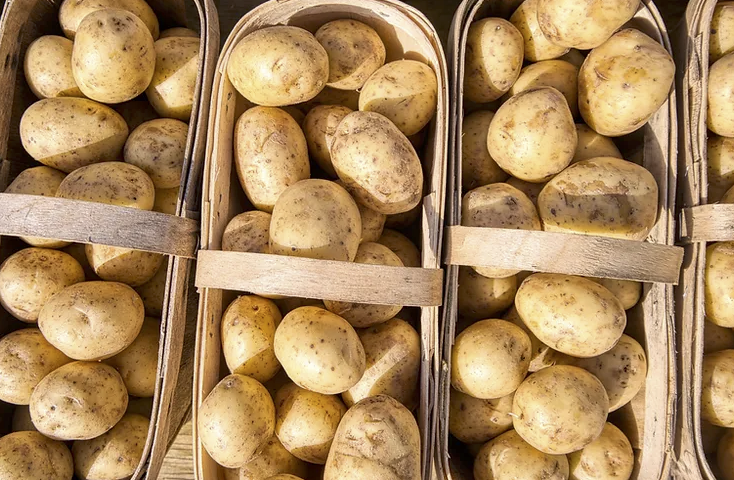
It is because our bodies have been weakened by decades of non-physiological eating that the return to Living Nutrition, by boosting the body’s eliminations which will enter detox (sometimes strongly), poses a problem if not done gradually. Thus, during the transition phase to living foods, it is wise to still consume some cooked or animal products (in small quantities) and to gradually decrease this percentage. To do this, all industrial food and any food cooked at high temperatures (barbecue, fryer, etc.) will be banned, and foods that produce both glues and harmful compounds (gluten and lectins for example) such as cereals (especially wheat), legumes, and dairy products will be avoided. Instead, we will prefer low-temperature cooking of tubers (sweet potato, potato), vegetables, or fruits. Among all cooking methods, steaming is the least damaging for cooking food. Indeed, it preserves to some extent the properties, texture, and flavor of the food. Moreover, steaming is very easy to do as you will not need to add oil or other products containing fat.
Furthermore, we will systematically eat living foods before consuming cooked foods. This will reduce digestive leukocytosis and allow the body to conserve its endogenous digestive enzymes. A principle summarized by the following phrase: “We nourish ourselves before we fill up.”
Conclusion
Cooking food holds no interest in our time. On the contrary, it:
- Creates sticky and toxic residues that poison the body.
- Reduces the presence of active vitamins and bioavailable minerals.
- Depletes our enzymatic reserves and makes nutrient assimilation less effective.
- Depletes, via digestive leukocytosis, our immune system.
- Promotes the absorption of pollutants, pesticides, etc.
- Prevents the sensors in our stomach from informing us about the nutritional qualities of what we have ingested.
- Prevents our instinct from guiding us towards the foods we need.
- Disrupts the intestinal microbiota.
- Encourages the consumption of stimulants to compensate for the fatigue caused.
That said, when one is used to eating ‘everything’, it is not necessarily a good idea to want to eat everything raw (see this article: “What is the right % of living nutrition for everyone”) overnight. It is better to proceed gradually to avoid too strong detoxes and to give the body time to adapt.