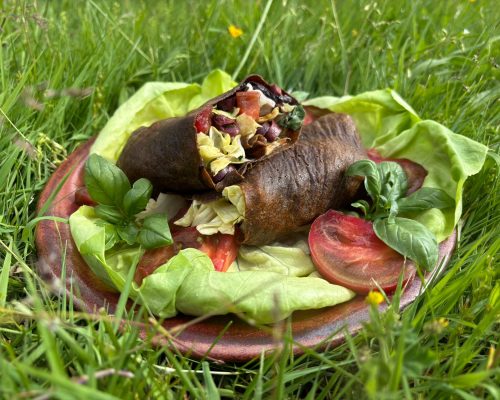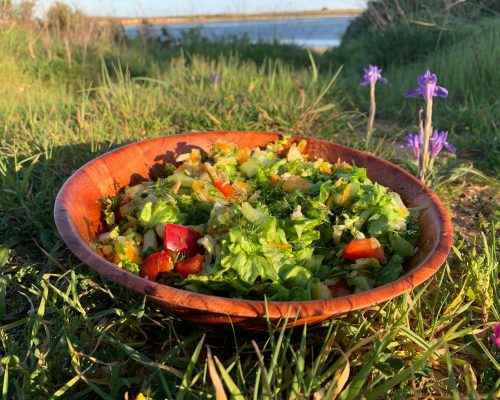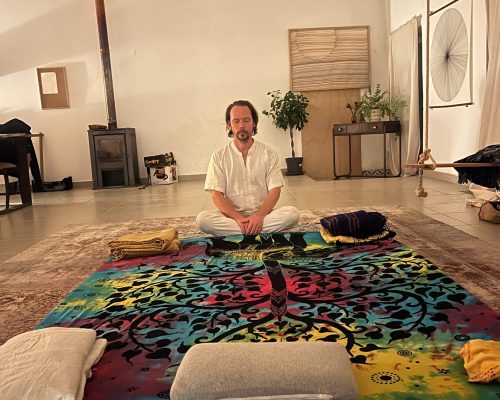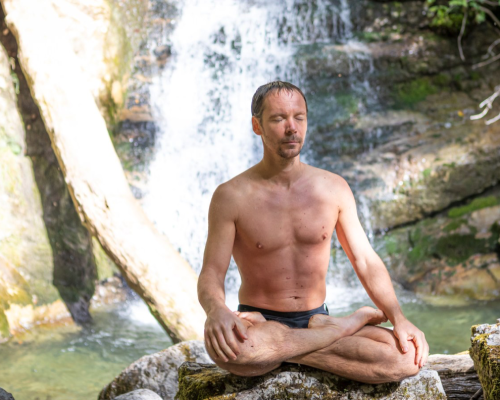
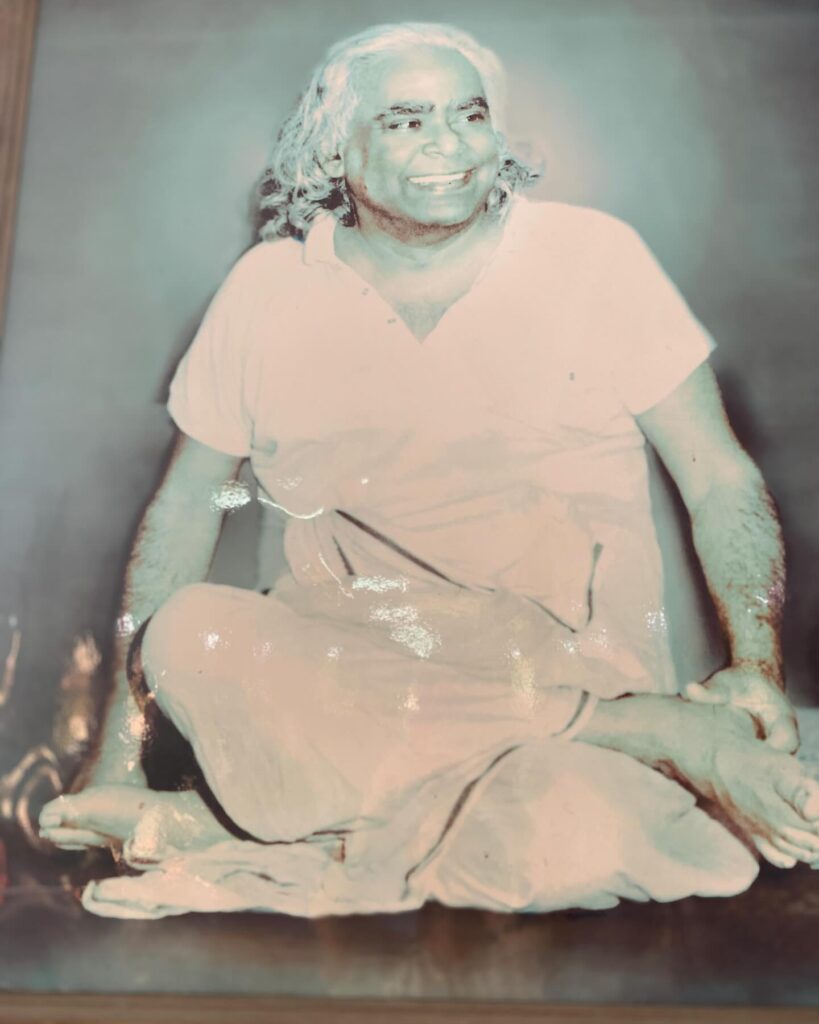
“Only when nutritious and pure food is taken will pranayama bestow its glorious fruits upon the practitioner.”
Vishnudevananda
“Health is wealth. Peace of mind is happiness. Yoga shows the way.”
Sivananda
“Do you not know that your body is the temple of the Holy Spirit who is in you, whom you have received from God?”
Corinthians 6:19
In this article, you will find a summary of my learnings in India as well as the vision of the practical school of Living Nutrition that I nurture. Enjoy your reading!
Introduction
Yoga (from the Sanskrit “union, yoke, method”, “rest”) is a philosophy that has been linked since its origin to the practice of Jainism or Jinism (from the Sanskrit jina, “victor” and mata “doctrine”), a religion that is believed to have begun to appear around the 10th century BC. Yoga is a discipline or practice common to several eras and currents, aiming, through meditation, asceticism, and physical exercises, to achieve the unification of the human being with the cosmos, to realize the Self, and to free oneself from the cycle of rebirths, samsara. Over the centuries, the philosophy of yoga has gradually been codified in several reference texts such as the Yoga-sutras, the Bhagavad-Gita, the Vedas, and the Upanishads. These sacred writings have influenced many thinkers and are, to a large extent, the source of inspiration for the renewal of spirituality in the West. Among other things, they are responsible for the concept of non-duality and the law of impermanence.
The 4 Traditional Paths of Yoga
There are four major traditional paths of yoga: karma yoga, bhakti yoga, raja yoga, and jnana yoga.
Karma Yoga – the Yoga of Selfless Action
Karma yoga is based on two main principles: first, a deep respect for the work undertaken; second, a complete indifference to its fruits. Any idea of obtaining something in return for the work done hinders spiritual development and ultimately brings suffering.
In addition to this detachment from the results of actions taken, the karma-yogin should not consider themselves the author of the action, but act as an instrument in the work, impartially and impersonally, with the erasure of their ego and equanimity. The ultimate goal of karma yoga is the liberation from all karma through non-attachment to action and its fruits.
Bhakti Yoga – the Yoga of Devotion
In the Bhagavad-Gita, the practice of karma yoga is combined with that of bhakti yoga, which is a spiritual path based on love, faith, and total surrender to a deity (such as Krishna, Rama, Shiva, Vishnu, or the Divine Mother). The central idea is that, through pure and selfless love for the divine, one can unite with it. Devotion in its broadest sense also includes faith and gratitude towards spiritual teachers and their teachings.
Practitioners of bhakti yoga seek to connect with the divine through prayers, devotional singing, recitation of mantras or names of God, pujas, satsangs, offerings, services, charity, celebrations of rituals, meditations on a sacred image, etc.
Note: Some branches of Jainism reject idol worship, just as the teachings of Buddha do.
Raja Yoga – the Yoga of Meditation and Mastery of the Mind
Raja yoga (which means “royal” yoga) is also called ashtanga yoga (“yoga of eight limbs”). It is in this yoga that we find the moral code that represents the prerequisite for any yogic practice, namely:
- Do not kill and consider all forms of life.
- Do not steal and refrain from taking what is not given.
- Do not lie and have impeccable speech.
- Moderation of the senses and have a healthy and respectful sexuality.
- Refrain from consuming intoxicants (drugs, alcohol, and any other addictive substance).
It is to Raja Yoga that we owe practices such as asanas, pranayamas, and meditation. It also emphasizes the importance of developing certain virtues such as equanimity, detachment, purity, surrender, non-possessiveness, non-violence, contentment, and self-knowledge.
Jnana Yoga – the Yoga of Wisdom and Self-Knowledge
Jnana yoga is an introspective and philosophical path that leads to liberation (moksha) through direct knowledge of the Self (Atman) and its non-separation from the absolute (Brahman). It is the yoga of those who seek the truth through reflection, contemplation, and intellectual discrimination between the real and the unreal (maya). The perception of this reality is obscured in humans by the false idea they have of themselves and the world, preventing them from experiencing the fullness of unity.
Pure Consciousness, called Brahman (the universal Self), is presented as the substrate of the universe, from which the world and also individualized consciousness appear. The whole world is not what it seems: it has no independent existence, it is the manifestation of an ultimate reality, it is a mere appearance, and it arises through the play of maya, the creative power inherent in Brahman.
The Weaknesses of Integral Yoga
The Physical Body Clothing
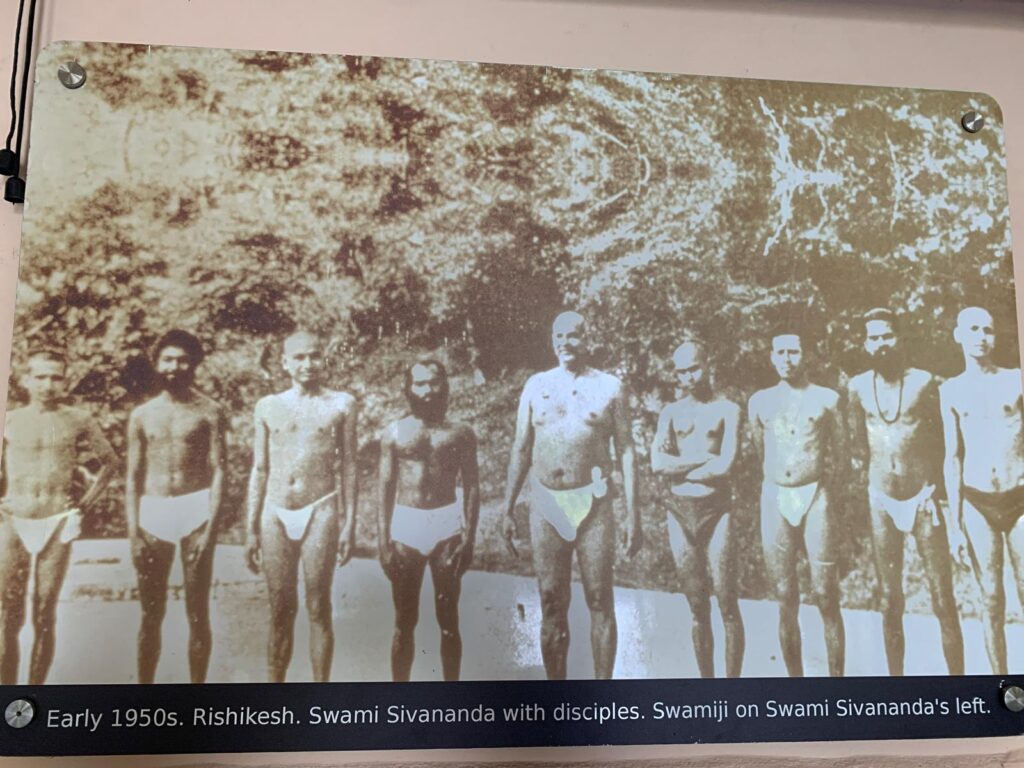
All ashrams have monastic rules to maintain a certain order and ensure an atmosphere conducive to study and learning. One of the common rules in all ashrams is related to clothing. Everyone is required to wear pants (not tight) and a top with sleeves (without a neckline) regardless of the heat. The major problem with this rule is that the skin is very little exposed to light, and for those residing on-site for several weeks or months, this leads to vitamin D deficiencies.
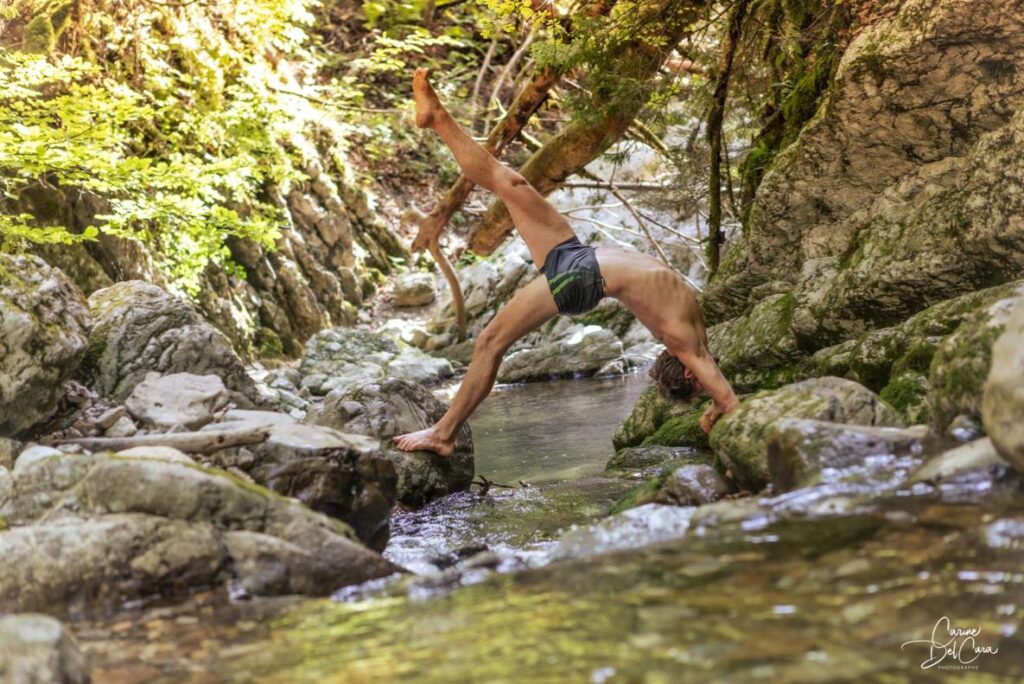
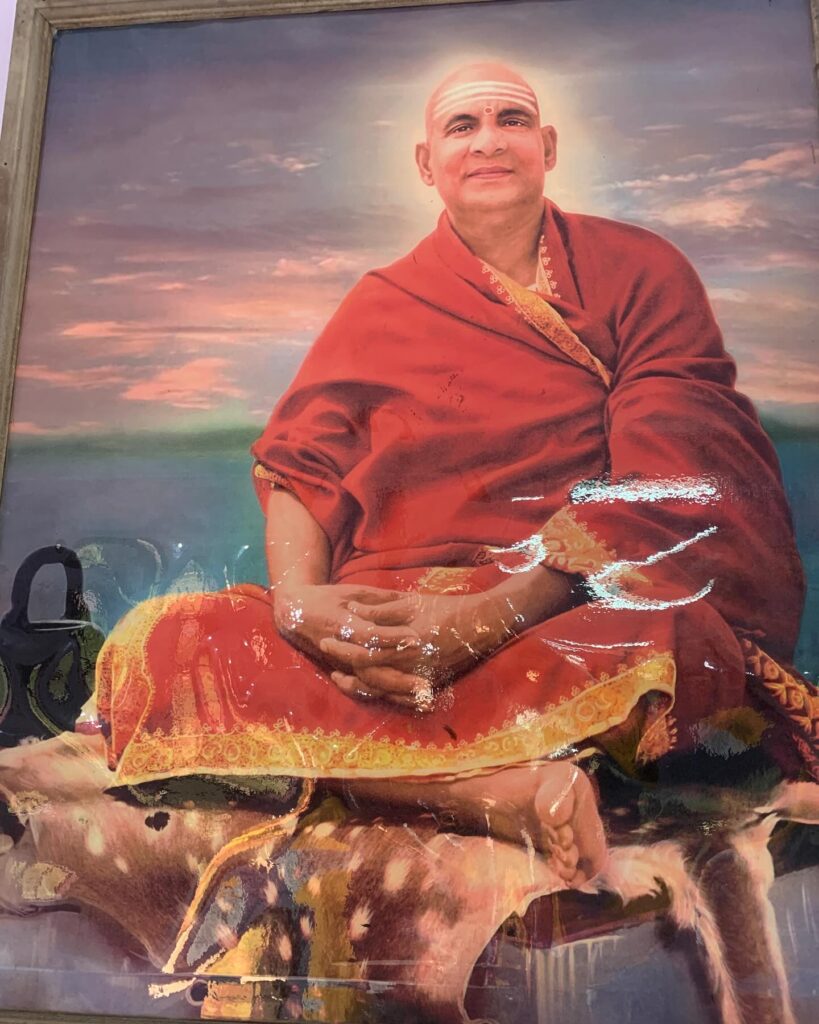
Yet, originally, yogis like Sivananda practiced sun salutations facing the sun (when it is close to the horizon) and in shorts (see photo). The asanas of the salutation lasted about 15-20 minutes, a time calculated for the body to receive its daily quota of vitamin D. A practice unfortunately fallen into oblivion.
Food
It consists of 95% cooked foods, mainly starches with spicy sauces and cooked vegetables. Raw fruits and vegetables, which are the quintessential sattvic food, are merely decorative in the dishes. As I have observed many times, those who primarily consume starchy foods that generate glues (see this article on the harms of starches) end up frequently coughing and spitting. Moreover, many visitors in the ashrams seek fruits and vegetables, proof that the need for fresh foods is not met by the offered food, whether labeled Ayurvedic or not (see this article on traditional medicines).
The yogic tradition has understood the importance of having the purest possible diet, but overall, yogis do not shine, despite all their practices, in terms of good health and longevity. In contrast, Gandhi, who had a plant-based and raw diet, and fasted regularly (see his autobiography), was still very physically active at the age of 78 at the time of his assassination.
Human beings deemed saints or awakened often have the reputation of taking on the ills of humanity, which would justify their poor state of health and early death. I see here the limits of devotion that prevent the faithful from questioning certain aspects of the teachings. It is this critical mindset, far from all dogmatism and idolatry, that would have been taught by Buddha (see this article on the teachings of Vipassana). For his part, Jesus would have recommended a plant-based and raw diet (see “The Essene Gospels of Peace” by Bordeaux Szekely) and taking care of the body as the temple of the Spirit. And according to the Bible, spirituality and connection to the divine do not prevent one from reaching great ages…
Some will still object that the Spirit is ascendant over the body, and that is true! But should we only rely on miracles and prayer to heal (see the video on the insolence of miracles)? Even if one can transcend illness through awakening, is that a reason to neglect the body, this temple of the spirit? Throughout the ages, for about 2 million years, humans have gradually turned away from the frugivorous diet and lifestyle for which they are originally designed. Our genetics, with its remarkable adaptability, has reached its limits as seen with various epidemics, and it is time to reconnect with the original diet (see this article on the origin of Living Nutrition).
Movement & Strengthening
The asanas as taught in Integral Yoga form a divinely orchestrated sequence to re-harmonize the body and prepare it for long hours of meditation. However, we do not only meditate in life; we also move! Some contemporary methods excel in the art of movement and open new horizons in terms of mobility and Optimal Health. Among them, we can mention: animal flow, Primal Parkour, or certain movement schools (see Ido Portal and Roye Gold).
More generally, physical activity and exposure to the elements (see this article on hormesis) are part of our biological needs and contribute significantly to feeling good physically and psychologically.
Touch
Another need absent from integral yoga is touch. Whether therapeutic, magnetic, or simply filled with good intentions, we all need to be physically touched.
Sexuality
It is regrettable that sexuality, a prerequisite for the birth of all life, and a sensual art that we owe to our 800,000 sensory receptors on the skin, is not part of the teachings of a yoga that claims to be integral. Whether at the Sivananda ashram or the Isha Yoga Center, sexuality is seen as a compulsion that drains energy and distracts from the ultimate goal: the realization of the Self. This sexual energy, which is even denied in yoga, is viewed as a sacred creative energy in tantra, tao, and the famous Kama Sutra. Osho also highlighted it in his teachings, and the man was no less spiritual than his contemporaries.
Yet there is so much to say about sexuality and sexual energy (an article will be dedicated to these topics during the year). Such as the fact that ejaculation is an addiction due to unresolved traumas and that it is possible to overcome it through seminal retention techniques that allow one not to waste this precious creative energy.
We need to understand the user manual of the human body in all its aspects, including the most intimate, rather than brushing them aside or, worse, shaming carnal pleasures and masturbation as religions have done, which has only resulted in disconnecting humans further from themselves and creating perversions.
The meditation technique
The meditation technique taught in Integral Yoga consists of using breathing, mantra repetition, sounds, and visualizations to promote concentration of the mind. I used this meditation technique for 10 years until I discovered another technique that is much more effective and profound: Vipassana meditation (which means “seeing what is”) attributed to the Buddha. According to his teachings, only Vipassana meditation, which employs no artifices like visualizations, is capable of profoundly changing the mind and bringing about lasting changes.
To learn more, read this article on Vipassana and how to remedy suffering with meditation.
Faith and devotion
The manifestations of faith and devotion found in bhakti yoga often involve adherence to a religious cult and can dull critical thinking. Sometimes, in temples, I wondered where devotion ended and fanaticism began. Faith and devotion should primarily manifest in the diligence to follow teachings and to become one’s own master.
Moreover, in Vipassana retreats that closely follow the Buddha’s teachings, all rituals are prohibited in order to detach the practice from any religion and make it universal. It is said during these retreats that: “Faith and devotion become enemies if they are blind. They must be accompanied by wisdom. Devotion is like the legs to move along the path, and wisdom is the eyes to move in the right direction.”
In Auroville (see this article from Rawd Trip) there is also no place for religion and rituals. The center of the city is simply marked by the presence of a very old banyan fig tree surrounded by the inscription: “The city in the service of truth.” And in the Matrimandir, a highly spiritual place where thousands of visitors come each day, one meditates in silence in a white room around a spherical crystal illuminated by the sun.
Shamanism seems to me to be an adequate complement to replace religious chants and ceremonies with others that are universal, dedicated to nature, to Gaia, and the beings that inhabit it.
Towards a yoga of nature
Every passing century sees humanity disconnecting more and more from nature and weakening. It is now clear to everyone that it is necessary to learn a new way of living, thinking, communicating, cultivating the land, etc. What if the time has come to unite these monuments of wisdom that are yoga, hygiene, tantra, and shamanism to create a new art of living that is simple, harmonious, and universal? May the ultimate goal not only be awakening but also Optimal Health on all levels, the realization of the Self combined with optimal health. In short, to regain a sound mind in a sound body. It is this union between these master disciplines, which could be called yoga of nature that I wish to create within the practical school of living.