Translation note: this video is currently in French, but you can activate YouTube’s auto-generated subtitles in English while we work on providing a dedicated English version.
Introduction
In 2019, after meeting Irène Grosjean and incorporating cleanses as a new hygienist ritual, they definitively weaned me off the attraction to cooked food. Filled with gratitude and feeling inspired to share my experience, I summarized the main stages of the dietary transition that I went through in the following diagram:
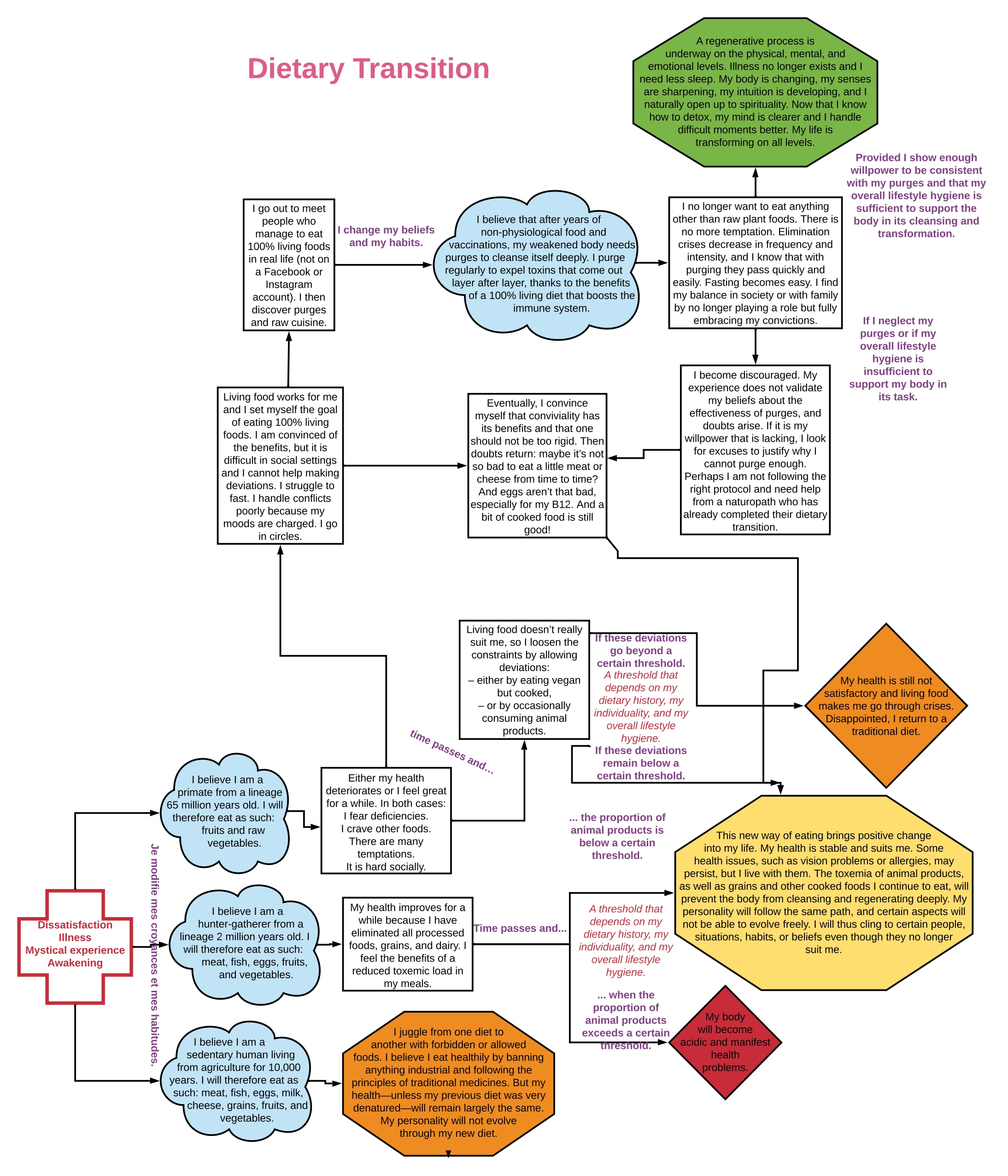
Five years have passed since then, and the hundreds of people I have accompanied in the meantime on the paths of Living Nutrition have clearly shown me that it is not as simple as this diagram suggests, even when motivation is strong and purgatives are used. Furthermore, I have observed many inconsistencies, such as worrying about an “acceptable” food combination (see below the combination diagram) while industrial food is still regularly consumed. The difficulties and confusions encountered on this path can lead to guilt, frustration, or even eating disorders that can discourage and divert one from this wonderful journey. It was while reading the hygienist Désiré Mérien and his stages of dietary descent towards fasting that the idea came to me to define the concept of the stages of dietary transition, which I have defined in 6 steps:
- Detoxification
- Hypotoxic Diet
- Hygienist Diet
- Living Nutrition
- Frugivore Diet
- The Gates of Pranism
The User Manual for the Stages of Transition
The logic of these stages is to gradually remove the most toxic foods and food combinations by replacing them with more physiological ones. This step-by-step approach (like in diving) allows for the gradual release of toxins, weaning off certain addictive substances, rebalancing the intestinal microbiota, and thus improving the terrain, and therefore the overall state of health. Even though, in itself, there are no absolute rules other than the uniqueness of the path for each individual, following this stepwise transition will facilitate the maintenance of a stable goal, bring coherence to the approach, and provide solid foundations that will support the mind in establishing new references and the emotional aspect in stabilizing.
How to find the stage you are in and what to do next?
To clearly identify the stage you are in, it is necessary to read the diagrams completely, starting from number 1 to the 14th. We will call stage A the first stage where you do not validate all the recommendations listed in the orange boxes. And we will call stage B the one for which you do not follow (more or less) any of the recommendations.
You can then estimate that your current diet is somewhere between stage A and stage B. Next, between stages A and B, you write down on a piece of paper all the recommendations (those listed in the orange boxes) that you do not follow. You then have a program to implement to reach stage B.
When to move to the next stages?
There are 3 scenarios:
- When you are well established in a stage, your weight is stable or excessive, and you want change. You can then move to stage B+1.
- When you want to do a detox cure lasting from a few days to a few weeks. In this case, you can choose the stage of your choice (like a water fast, stage 13) if your adaptability allows it.
- When you are not satisfied with your state of health or when old symptoms reappear. You can then move to stage B+1.
Note: It may be necessary to go back if you have moved too quickly in the transition (for example, on a whim). In all other cases, it is not advisable to do so.
The dietary transition, the path of a lifetime
Any easing of the diet (by changing stages) greatly promotes the improvement of health. This lasts until the toxic level of the terrain balances with the level of toxins brought by the diet of the stage you are in. This explains why some diets (like the ketogenic) that are far from the principles of Living Nutrition still yield results for a given time. The reappearance of certain symptoms or diseases is a sign that you have reached a state of balance and that it is time to move to the next stage. It is therefore up to each individual to find their own rhythm and dynamic of dietary easing.
The 15 stages of dietary transition
Click on the diagrams to download them.
1 & 2. The two phases of detoxification
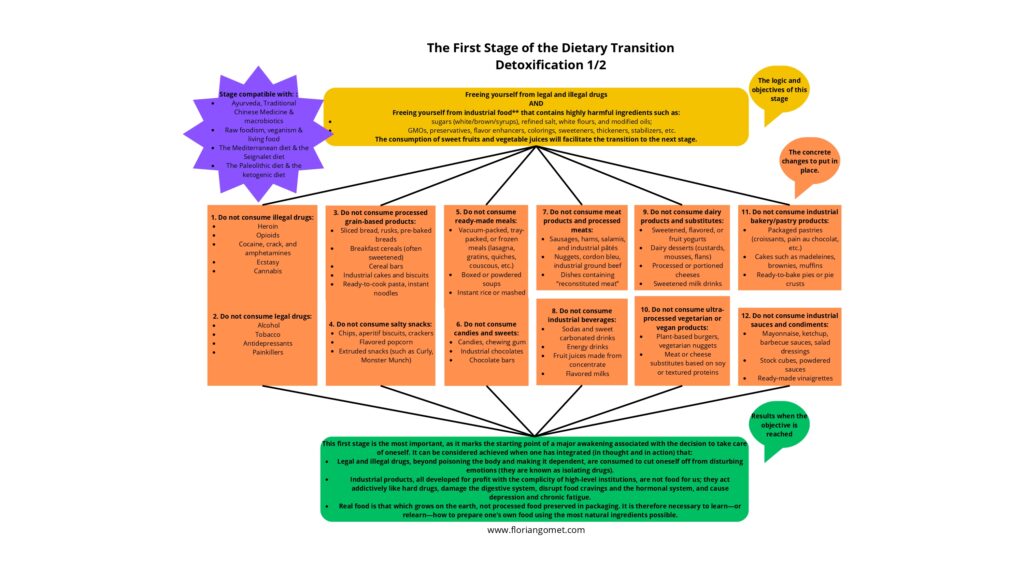
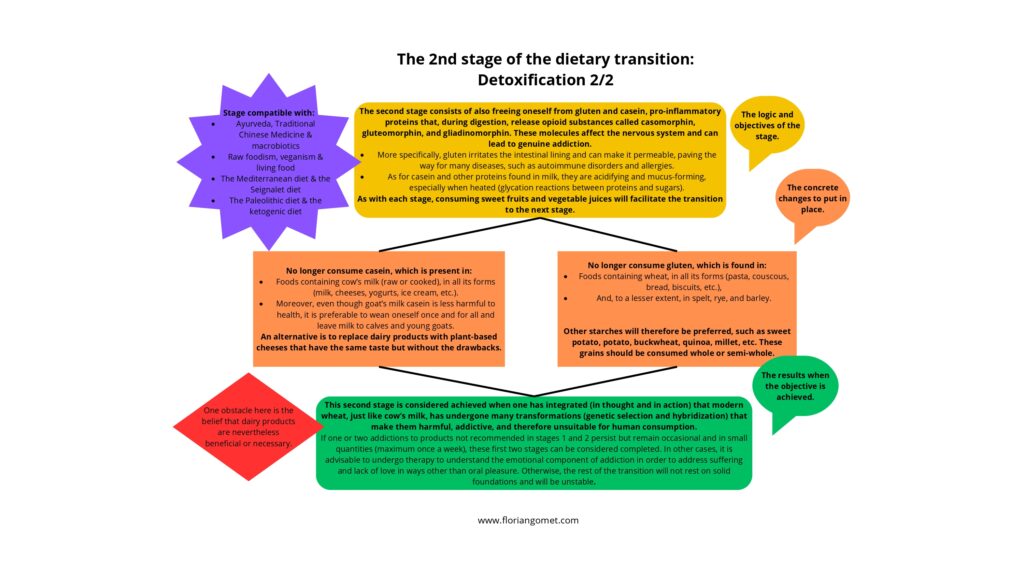
3 & 4. The two phases of the hypotoxic diet
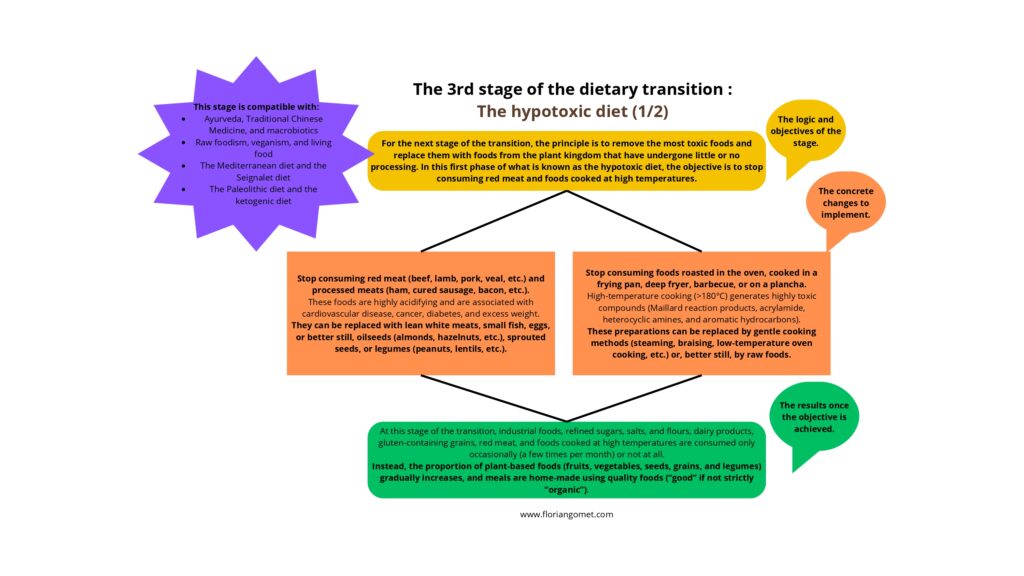
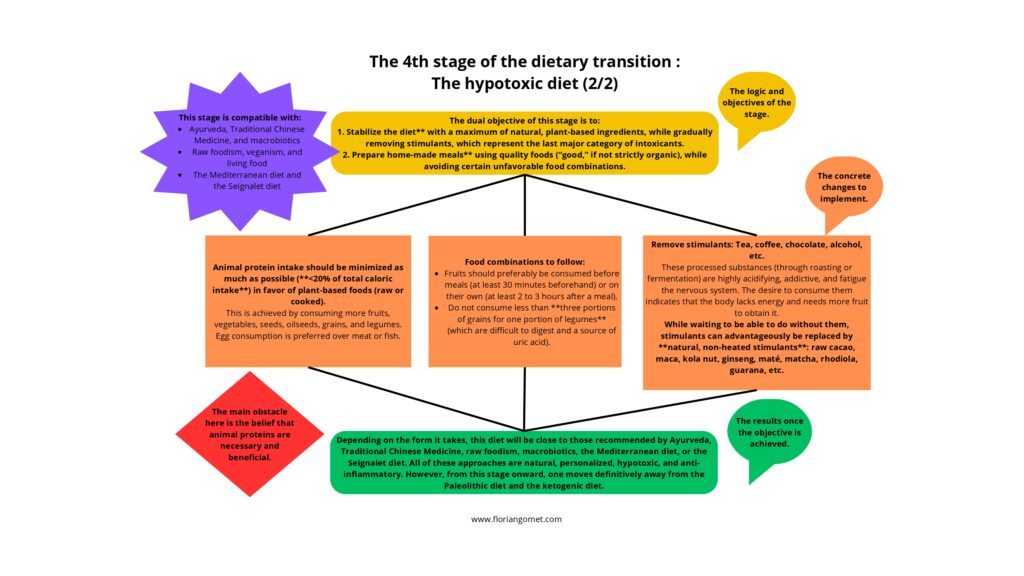
5 & 6. The two phases of the hygienist diet
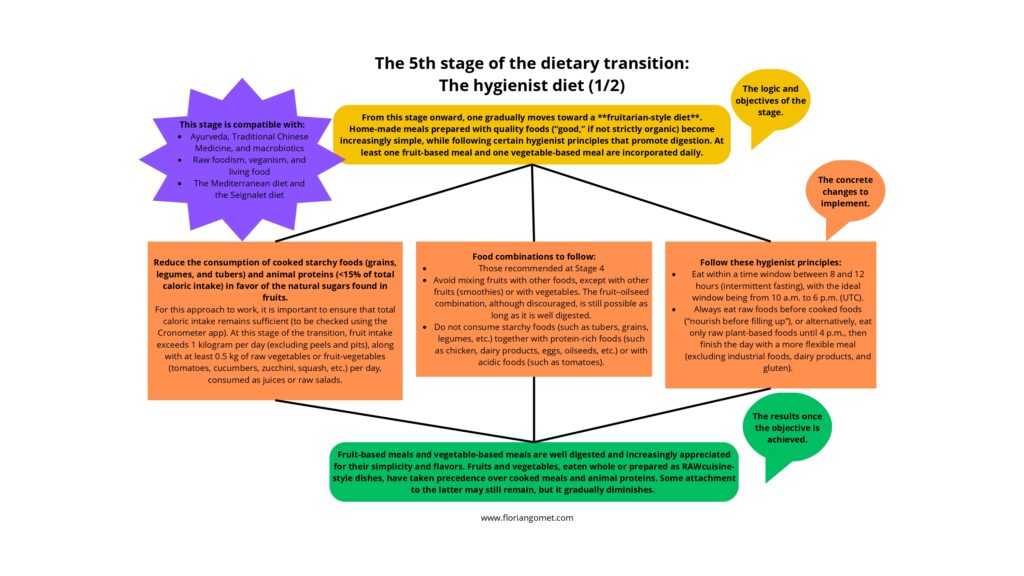
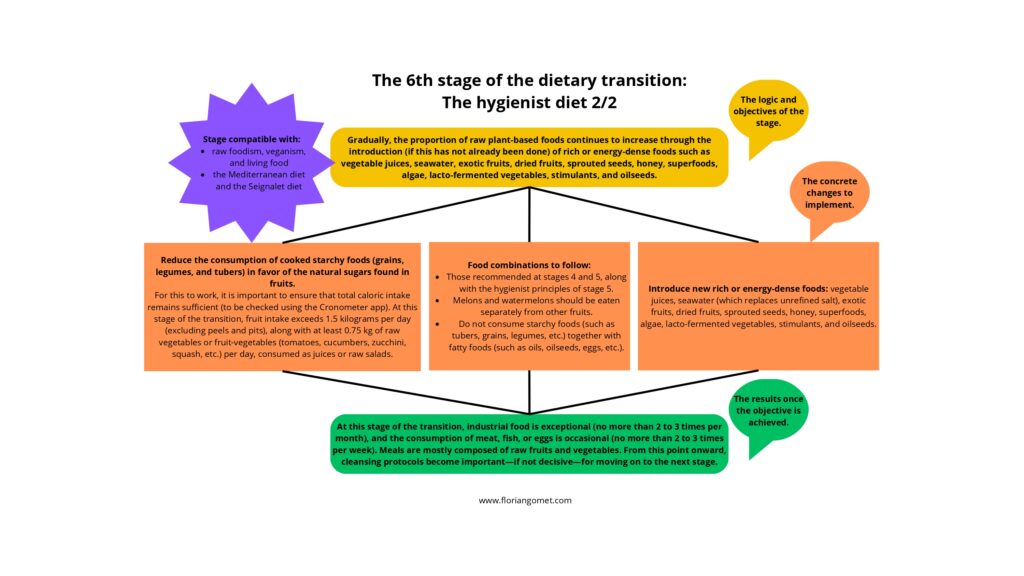
7 & 8. The two phases of Living Nutrition
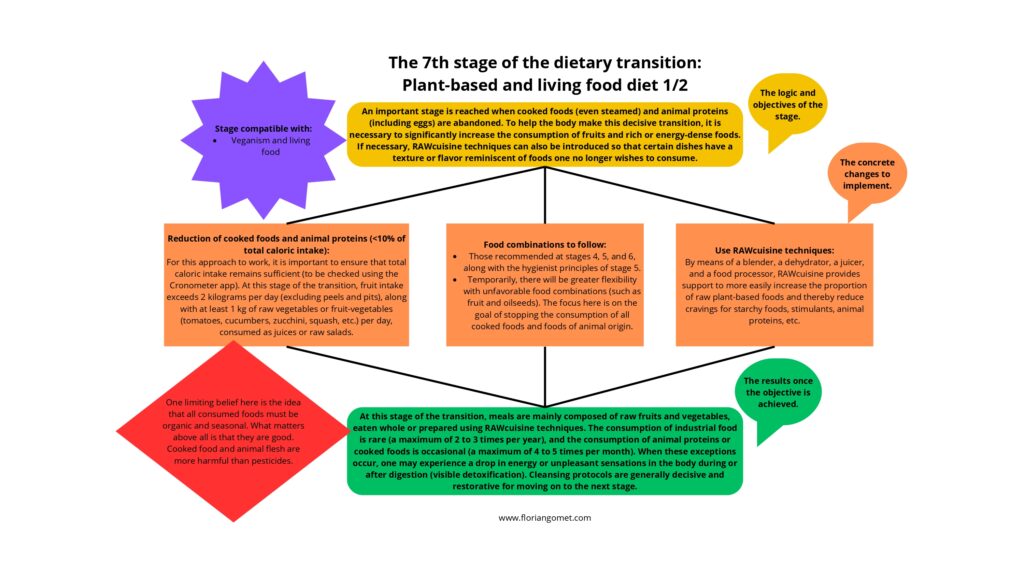
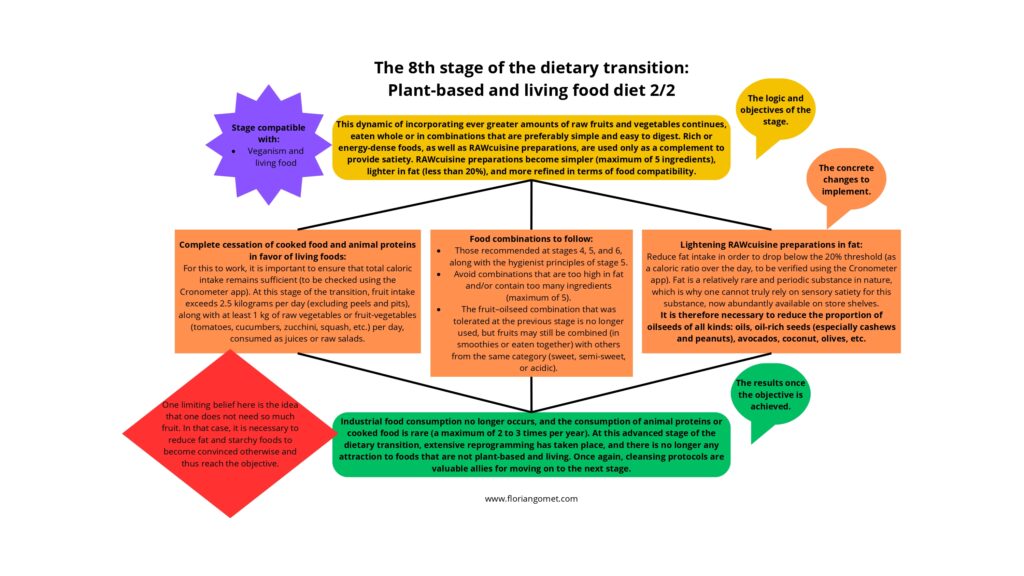
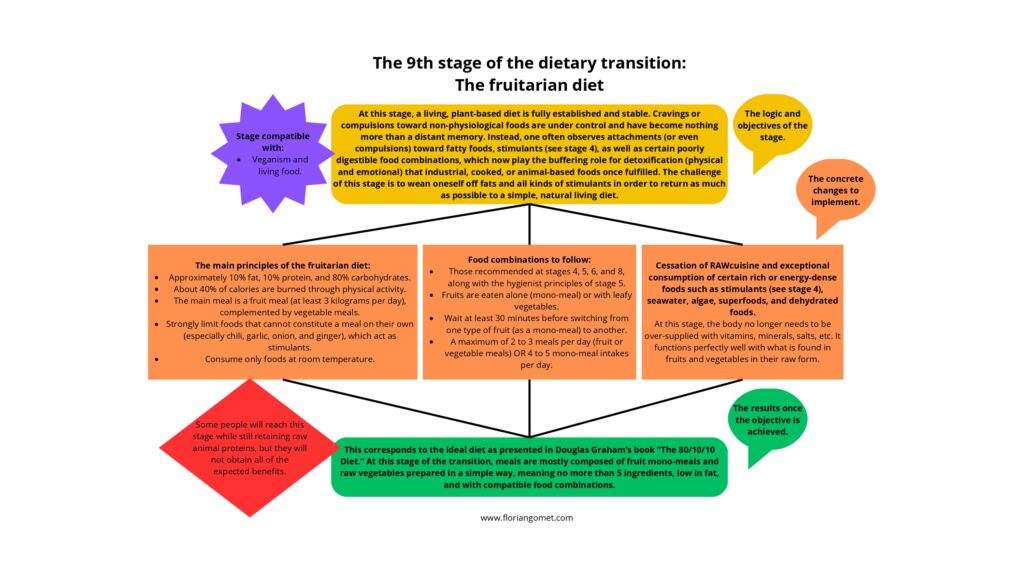
9. The frugivore diet
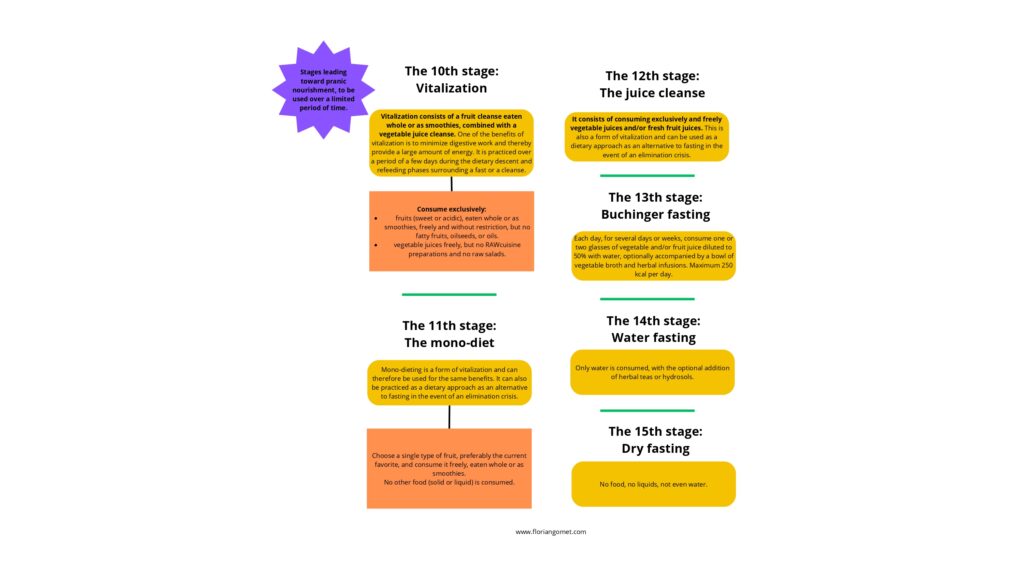
10, 11, 12, 13, 14 & 15. The gates of Pranism
How to successfully transition from one stage to another?
This can happen spontaneously, intuitively, naturally, and that is ideal. In other cases, it is all a matter of a decision-making process which, according to neuroscience, finds its source not in the neocortex (seat of thought) but in the reptilian brain (related to survival) and the limbic brain (related to emotions). The neocortex can only come in as support, once the decision is made, to justify our choices, maintain the course, and find strategies.
1. Motivation
Decision-making related to the reptilian brain can be: healing or surviving an illness, living longer, limiting one’s ecological footprint, not intentionally poisoning oneself, etc.
Decision-making related to the limbic brain can be: taking care of oneself, having more energy, compassion for the animals we kill for food, expanding one’s feelings and consciousness, feeling more peace, love, and joy, etc.
2. Understanding and promoting the mechanisms at work
a) The hormonal axis: Transforming pleasure (dopamine) into joy (serotonin)
Our intestinal microbiota alone produces 95% of the serotonin (the happiness hormone) in the body, which is why the intestines play a key role in regulating mood and the feeling of well-being. When the balance of the intestinal microbiota is disturbed (dysbiosis) — for example, due to a non-physiological diet, the use of medications, lack of plant fibers, etc. — this can contribute to emotional imbalance or exacerbate a depressive terrain. This is why a plant-based and raw diet, by improving the state of our intestinal flora, becomes a natural source of joy.
In the absence of serotonin to regulate well-being, the body will compensate with dopamine, a hormone associated with pleasure, motivation, reward, and reinforcement of behaviors. This dopamine will be produced in quantity by the consumption of drugs, industrial food, pornography, social networks, and video games. These uses then lead to a cycle of habituation that encourages more consumption to achieve the same effect. In this regard, industrial food is specially designed to produce an ecstatic shock to the brain (it sees this food as an exceptional reward) through the presence, among other things, of salt, sugar, and refined fats. These vital substances for survival, which in nature are never found in refined form and in such proportions, trigger a strong positive response from the reptilian brain. Industrial food thus creates dependencies by hacking the reward circuit (dopaminergic) and deteriorating the intestinal flora. Natural food also induces activation of the reward circuit (dopamine) but not with the same intensity (thanks to the presence of fibers and unrefined nutrients), which is why it is difficult to have an appetite for fruits and vegetables as long as one eats industrial goods. In summary, eating healthier allows for a favorable exchange of the artificial, addictive, and unhealthy pleasure of junk food (sex, games, and networks) for the natural and beneficial joy of natural foods, without taking away the pleasure of eating.
b) The physical axis: Releasing toxins
It is important to know that the human body consists of about 5 liters of circulating lymph. A vital fluid whose main role is to recover cellular waste and transport it along the lymphatic channels to the excretory organs for elimination from the body. The lymphatic system, whose flow ranges from 3 to 20 liters per day depending on physical activity, can therefore be seen as the sewage system of the body. This lymph, which the ancients called humors, passes through the brain, which is why it can cause bad moods when it is loaded or slowed in its circulation.
When one lightens their diet, the lymph naturally becomes loaded with toxins, a highly beneficial mechanism known as detox. However, the free flow of this lymph is most often hindered by a lack of physical activity and excessive viscosity due to an excess of lipids and colloidal waste. As a result, the lymph becomes loaded faster than it is filtered by the excretory organs, which themselves are often clogged and weakened by too many toxins (acids and glues). It is primarily this loaded lymph (along with an imbalanced intestinal flora) that triggers elimination crises and creates cravings for non-physiological foods or the consumption of indigestible food combinations (see diagram below) that themselves provide toxins.
For these reasons, the dietary transition is facilitated by the use of lymphatic drainage and detox tools that will participate in cleaning and improving lymph circulation. Among these tools, we can mention fasting, mono-diets, cures, enemas, purges, saunas, cold baths, physical activity, conscious breathing, alternative baths, dry skin brushing, etc. They are beneficial for reducing the desire to consume non-physiological foods (reminder: anything that is not plant-based and raw) and to break free from certain addictions. To learn more about this topic, read this article on purges.
Moreover, plants, all having emunctory properties (which promote the work of the excretory organs), revitalizing, anti-putrefactive, anti-infectious (without altering the intestinal flora), or regenerating, will also provide invaluable help from all branches of phytotherapy: aromatherapy, hydrolatherapy, gemmotherapy, Bach flowers, etc.
c) The psychological axis: Releasing repressed emotions
The transition from one stage to another also induces emotional detoxes that can be felt more or less intensely. Memories (information) and energies (tensions) related to repressed emotions & traumas in the body are stored in tissues, muscles, but also within the very toxins circulating in the body. In this regard, acid crystals mainly store memories of anger, while glues mainly store fears. This partly explains why one may binge on industrial or cooked food when experiencing strong emotions, as part of these emotions will be absorbed by the toxins. Hence the emotional anesthetic effect of non-physiological food. This is why any change of stage and any detox can be linked to emotional releases that were previously anesthetized by non-physiological food.
It is therefore important to accept a phase of imbalance, potential eating disorders (certainly already present but unrecognized…) and more or less uncomfortable detoxes while the body finds a new balance by freeing itself from what weighs it down the most. If this natural process called homeostasis is difficult to experience, it is preferable to seek help from therapists; otherwise, the dietary transition may risk going in circles.
It is interesting to be aware that addictions/obsessions/compulsions, whether dietary or not, are always to be correlated with a feeling of emptiness, sadness, a slump, or a lack of love, a lack of joy that one will try to compensate for with sensory pleasures. The solution to break free from these dependencies is simply to welcome uncomfortable sensations without fear. Listen to this video by Pierre and Gérald to learn more about this topic. Translation note: this video is currently in French, but you can activate YouTube’s auto-generated subtitles in English while we work on providing a dedicated English version.
d) The instinctive axis: Reconnecting with the animal within
We need to relearn to listen to our instinct, the one that perfectly guides all animals in their food choices. It has been distorted by processed food (industrial or cooked) and the conditioning that pushes us since childhood to eat at fixed times, to finish our plates, to eat to please or under duress, to have dessert as a reward if we have been “good,” etc. To recalibrate our instinct, it is necessary to integrate into our cells the following natural law:As long as it is plant-based and raw, our instinct is always right. What we crave corresponds to what we need. Therefore, one should just eat everything they love in desired quantities, until sensory satiety (fullness).
That said, some nuances and clarifications need to be made:
- The above natural law also applies to mushrooms and seaweeds.
- To properly exercise one’s instinct, the food one chooses to test sensorially must first be consumed alone. Then, depending on the response of the palate and the olfactory system (pleasant or unpleasant), it can then be mixed with other foods while adjusting the quantities. To learn more about this topic, read this article on sensory eating and this other one on “How to choose wild plants?”
- When one “eats their emotions,” they may eat too much or not enough of a food they like because their instinct is clouded by the strong emotions they are experiencing.
- This natural law only applies to foods that can be obtained by hand in nature, thus excluding animal proteins, or only in very small quantities (less than 5% of caloric ratio).
- Furthermore, one cannot fully listen to their cravings for fats (even raw) because it is a macronutrient that is quite rare and seasonal in nature. This is why it is necessary to restrain cravings for fats to less than 20% (caloric ratio) in a contemporary context where they are abundantly available all year round. To learn more, read this article on our lipid needs
- As for superfoods (most often consumed in powder form), one can easily consume too much if mixed with other foods that mask their taste.
Even though “eating whatever you want” as long as it is plant-based and raw seems simple, experience shows that the complete integration (not just intellectual) of this principle takes years because it contradicts all our old habits and unconscious references. For example, the idea we have of the volume and normal quantity of food per meal. Eating 2 to 3 kilos of fruit per day is nothing extraordinary for a raw foodist but may seem excessive to another. The reprogramming of what is natural thus occurs step by step by relearning to listen to one’s bodily sensations and not their head to choose what they will eat.
On this path of self-listening, there are two main pitfalls:
- Overcoming the (unconscious) belief that it is necessary to restrict one’s cravings. This makes sense if one consumes alcohol, desserts, chocolate, cold cuts, etc., but in Living Nutrition, it is the opposite; one must relearn to eat until satiated what they love most. In this regard, it is telling to consider that the word fruit comes from the Latin fructus which means “to enjoy.” Knowing that a stomach accustomed to eating cooked food (which is dense, low in fiber and water) has atrophied over the years, it is important to be patient while the stomach dilates to regain a normal size. It will then be easy to welcome a fruit meal. or a vegetable meal that will leave you satisfied for hours.
- Believing that you must eat everything organic to regenerate. Experience shows that the most important thing is to eat well before eating organic, and that the body can regenerate very well even with fruits and vegetables from conventional agriculture. The consumption of cooked food and animal proteins is much more harmful than pesticides. Read this article on “Where to buy your fruits and vegetables?” to learn more about this topic.
Note: The intelligence of life that manifests through our instinct works in reverse with cooked food, for which we are attracted to what poisons us the most. The art of dietary transition therefore consists of increasingly relying on one’s instinct while allowing the mind (aware of natural laws) to monitor that the instinct does not go astray.
e) The methodological axis
To increase the share of raw plant food at the beginning of the dietary transition, there are at least three strategies that can be combined. Here they are in ascending order of commitment:
- Principle A:“We start by adding”. Which translates to: Add vegetable and fruit juices to regular meals.
- Principle B:“Eat before filling up”. This means starting each meal with raw plant food. This can be fruits, a vegetable juice, or raw vegetables.
- Principle C:“Only raw plant food until 4 PM.”
3. Other keys to changing levels
a) The essential practice of hormesis
As Pierre Valentin Marchesseau (the father of naturopathy in France) said:“Wanting to be healthy without muscle exercise is just as impossible as wanting life without the air we breathe or day without sunlight.” What is true for muscle exercise (or physical activity) is also true for exposure to cold and heat, conscious breathing exercises (like Wim Hof and Buteyko), and, of course, for the practice of fasting. This quintet of practices called hormesis naturally stimulates and strengthens the body. It greatly contributes (notably thanks to lymphatic drainage which is up to 7 times more important between a sedentary person and an active person) to supporting the 3 previous axes. To learn more about this, read this article on the law of hormesis.
b) Improving the way we think and live
Our way of living, thinking, our references & habits, our desires & aversions are tuned to the same frequency as our diet or, in other words, the nature of our diet is a reflection of our inner self. For this reason, it is not really possible to eat healthily in an environment (family, social, professional, etc.) that is not healthy. The prerequisite for life to bring us something new and good is, therefore, primarily to make space by letting go of parts of ourselves that no longer need to be (conditioning, false beliefs, judgments, habits, etc).
Moreover, everything we cannot let go of in terms of non-physiological food is linked to a toxic behavior/thought/habit/belief that we also cannot shake off. When one lets go (or relaxes), the other does too. To eat more healthily, it is therefore necessary to raise the vibration of our way of living and thinking as well as our environment (social circles, work conditions, living space, television programs, language, etc). Like the hormonal axis, the idea is to trade pleasure (which can be bought) for joy (which cannot be bought).
Read the article on living nutrition and vibrational frequency to learn more.
c) Reevaluating the nature of our dietary needs and adopting new culinary habits
To develop the instinctive axis in depth, it is necessary to mentally reprogram certain beliefs about: 1) Proteins: we do not need a lot, and those from the plant kingdom are perfect for us (see this article on proteins). 2) Carbohydrates: the sugar from fruits is good for health and can be consumed freely (see this article on sugar). 3) Lipids: raw foodists tend to consume excessive amounts (see this article on our lipid needs).
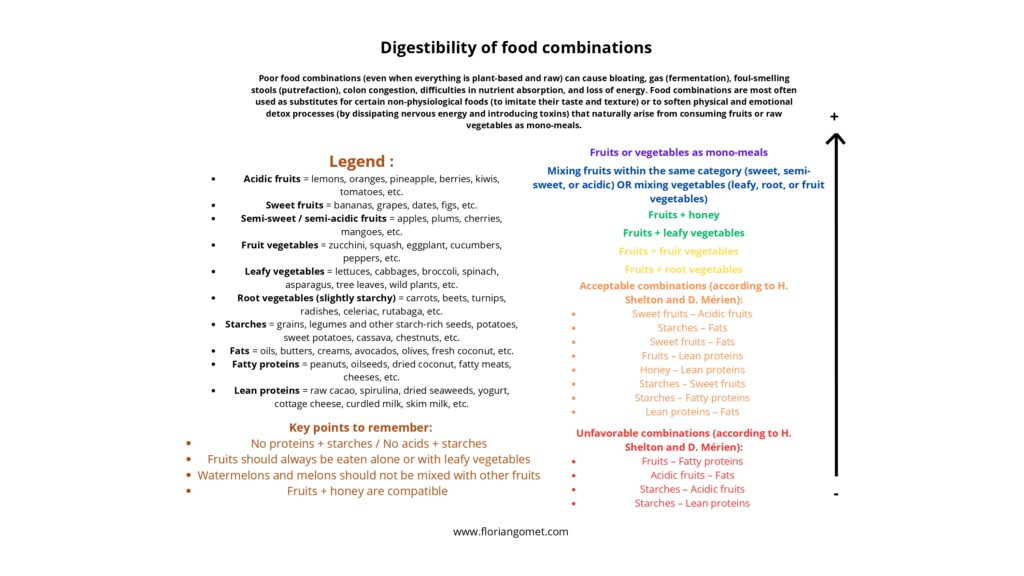
At the beginning of the transition, up to level 7, when the body is still used to eating dense and mixed foods, it is very useful to learn the art of RAWcuisine as it helps to find satiety with raw plant food. Afterwards, it is preferable to mix foods less, or even eat them raw, as taught by sensory nutrition. In the meantime, you can use the following diagram that summarizes the logic of food combinations.
d) Nourishing all the senses
Our 5 senses, gateways to the mind, are hearing, touch, smell, taste, and sight. To reduce the importance of the need for stimulation at the taste level, it is advisable to stimulate the other senses more, especially touch (through massages) which is generally underutilized.
Example of my dietary transition that spanned 20 years
1) From 0 to 18 years: unconscious eating
I nourished myself for 18 years with a diet consisting of:
- UHT cow’s milk with cocoa powder and biscuits for breakfast and snack.
- raw vegetables or soup as a starter, hot dish with starches, cooked vegetables, and animal proteins, cheese (like Laughing Cow) and dessert (like Flamby) for lunch and dinner.
I never really consumed sodas, industrial meals, chocolate bars, cold cuts, fries, chips, etc. Moreover, I ate little meat, little bread, and I did not like cakes. This was quite a good starting base.
Then, from 18 to 20 years, with the stress and fatigue of preparatory classes, I drank large bowls of coffee, ate in the cafeteria for lunch and dinner, and began to regularly consume alcohol on weekends. I then experienced the first appearance of cysts as well as allergies to pollen and cat hair.
2) Between 20 and 29 years: The 1st level
At the age of 20, I stopped preparatory classes and became passionate about triathlon. To perform in this sport and avoid injuries, I decided to stop drinking alcohol altogether. At the same time, I gradually moved towards the healthiest diet possible according to official standards, that is to say, with homemade dishes made from organic and local natural products. I then settled in the countryside to work as a lumberjack and produced half of my food with a vegetable garden, an orchard, and a chicken coop. Even though I no longer consumed any industrial food, chocolate, cold cuts, barbecues, pizzas, etc., I gradually consumed more and more organic dairy products (butter, raw milk, and Cantal cheese). It was during this time that my allergies to pollen and cat hair intensified, my vision deteriorated, I often had severe colds, and I suffered from sciatica while, in addition to a healthy diet, I lived stress-free in the countryside while exercising.
Read this article on organic, local, and seasonal food to understand why these criteria are not sufficient for optimal health.
3) Between 29 and 34 years: Leap from the 2nd to the 7th level
While I was kayaking down the Loire, I experienced a severe sunstroke that left me bedridden in my tent with a high fever for 48 hours during which I did not eat or drink (nor take medication!). Once I recovered from this detox, I felt in great shape while my body refused to eat for a week. Used to hearty meals 4 times a day, I was intensely questioning this spontaneous fast that I had never experienced before. This is how I was led to read “What if we stopped eating from time to time…” by Bernard Clavière. This book gave me the trigger and great enthusiasm to embark on the adventure of living nutrition overnight. The difficulties were there, but I managed to eat only raw plant food 6 days a week, with cravings (unintentional but obsessive) one day a week for pastries and cheese. At the same time, I intuitively began to practice self-taught meditation, yoga, cold baths, barefoot running, and conscious breathing. I then reaped the first benefits with the definitive healing of my sciatica, a significant improvement in my vision (which allowed me to do without glasses), and a marked decrease in my colds and allergies. Additionally, I achieved 2 world firsts: America Extrema and The Fasting Walk. Read this article on my life transition to learn more.
4) From 34 to 40 years: Transition to the 8th level
After 5 years of experiencing weekly cravings after which I felt unwell, I discovered cleanses thanks to Irène Grosjean and Miguel Barthéléry. This powerful detox tool allowed me to break free from this vicious cycle overnight. I then opened up to spiritual or esoteric fields such as shamanism, tantra, magnetism, radiesthesia, sylvotherapy, etc. At the same time, my residual health issues like colds, allergies, and myopia continued to decrease, and I achieved another world first: The Imprint. The transformations I experienced naturally led me to share my lifestyle and support people on the paths of living nutrition. Then, at 38, I went through a significant period of stress in my personal and professional life that caused cavities, skin problems, hair loss, and a decline in my vision. The hygienist practices and cleanses I diligently practiced did nothing, and I then reflected on the limits of hygienism.
5) At 40 years: Transition to the 9th level
2 years later, the sources of stress I had experienced were resolved, and I transitioned from sedentary to nomadic, an adventure I call the “Rawd Trip in 3H”. But this was not enough, and the previously described symptoms were still present, albeit diminished. It was after seeing an old trainee transformed physically (a neuro-arthritic profile who gained 10 kilos of muscle) through “The 80/10/10 Diet” by Douglas Graham that I decided to try low-fat plant-based living nutrition. A process I supported with a deepening of my practice of Vipassana meditation and hatha yoga. After 6 more or less easy months of fat withdrawal, I stabilized at this new level and completely resolved my skin problems and hair loss. Moreover, my hair has regrown and my vision has improved.
To this day, the only residual health issues I observe are vision that has not returned to 10/10 and slight pollen allergies that manifest a few weeks a year. Since I turned 35, I also explore levels 13 and 14 for 40 to 60 days a year.
To go further
Read the article: “What is the right diet?”