A juicy story
The earliest known written records of the use of fresh juice date back to ancient civilizations (Egyptian, Roman, and Sumerian) which, through rudimentary methods, extracted juice from certain fruits (such as grapes and pomegranates) for religious or medicinal purposes. A practice considered beneficial for health and longevity that is also found among the Essenes (around 100 BC), a Jewish community known for living and eating according to hygienist principles. Later, in the Middle Ages, some writings from the 15th century reveal that vegetable juices (notably beet juice) were occasionally used for their purifying, digestive, anti-inflammatory, and restorative virtues. Then, it wasn’t until the 17th century that orange juice made its appearance in certain royal courts (France, England, Netherlands) as a luxury drink and a remedy against scurvy.
Before the invention of modern machines, vegetable juices were prepared by finely grating the vegetables and then wrapping the pulp in a cloth or towel to press it by hand and extract the juice. It wasn’t until the 1920s that the first mechanical juice extractors appeared, making the practice more accessible and common.
The rise of juices with Max Gerson
It was in the 20th century with the German doctor Max Gerson (1881-1959) that fresh juices experienced a true boom, becoming a much more intensive therapeutic tool (several liters of juice spread throughout the day) than the traditional practices that had been limited and sporadic until then.
It was because he suffered from persistent migraines that Gerson, finding no remedy for his ailments in the pharmacopoeia of his time, turned to experimenting with raw fruit and vegetable diets, particularly in the form of fresh juice. His conclusive personal experiments led him to systematically study the effects of juices on health and body regeneration. He observed that, when consumed in large quantities and regularly, fresh juices have the ability to stimulate self-healing, improve digestion, strengthen cellular metabolism, stimulate the liver, alkalinize the blood, and provide antioxidants.
Little by little, his work led him to develop a therapy based on a vegan diet rich in fresh vegetable juices with precise combinations and dosages. Initially intended to treat tuberculosis, his therapy was later applied to cancer and other chronic diseases. His approach popularized the idea that fresh juices can detoxify and regenerate an organism through a massive intake of nutrients (essential vitamins, minerals, salts, fibers, and other phytonutrients known to fight diseases) concentrated in the juices.
Norman Walker (1886-1985) and Ann Wigmore (1909-1994) democratize vegetable juices
The story of juices continues with Norman Walker, a British naturopath who popularized the idea that fresh juices can be included in daily nutrition as a health and prevention tool, rather than being reserved for therapies or occasional supplements. At that time, juices were laboriously made using a grinder and a hydraulic press. To make fresh juices more accessible to the public, Norman invented, in the 1930s, the first mechanical juice machine (the Norwalk). In parallel, in his practical works, such as “Fresh Fruit and Vegetable Juices”, he shares juice recipes, each with the observed physiological benefits.
A little later, in the 1940s, it was Ann Wigmore’s turn, a Lithuanian-American naturopath and teacher, to highlight fresh juices as a health tool. Influenced by Maximilian Bircher-Benner’s theories of “return to nature,” she believed that plants concentrate more solar energy than animals, and that wheatgrass (rich in chlorophyll) consumed in the form of fresh juice has the power to purify the blood and strengthen the body. Furthermore, her contribution was to promote in the United States, through the Hippocrates Institute, therapeutic programs based on living nutrition, fresh vegetable juices, and sprouting (a concentrated source of nutrients and enzymes) to detoxify the body and help it heal.
Thus, in the 1960s and 1970s in the United States, fresh juices gradually gained the trust of the public and the health community. The first juice bars opened their doors, and some doctors and naturopaths began to promote them as concentrates of vitamins and minerals. Juices then found their place both in the Raw Food community and among those who maintained a more traditional diet.


Juicer VS Extractor
The juicer uses a fast-spinning blade to shred fruits and vegetables and centrifugal force to separate the juice from the pulp. This high-speed process generates heat and oxidation, which destroys some vitamins and enzymes present in the juice. Moreover, the juicer does not recover all the liquids contained in plant cells, particularly those in the cytoplasm, which are the richest in nutrients (chlorophyll, polyphenols, enzymes, antioxidants, etc.) and also in chloroplasts and mitochondria, which are rich in magnesium and iron, respectively.
As for cold extraction and slow rotation, it is done using a screw that completely bursts the plant cells without producing heat. For these reasons, juices extracted with a screw are richer in assimilable nutrients than those produced by a juicer because they recover all the nutritional value of the plant, without oxidation.
Why drink fresh vegetable juices?
1) To better digest raw foods and heal the body
All raw fruits and vegetables have therapeutic properties. Foods from the plant kingdom have the ability to cleanse the intestines thanks to their fibers and certain phytoactive principles like chlorophyll. This cleansing sometimes triggers mild disturbances such as gas, bloating, diarrhea, or even irritations. These discomforts occur when the intestines are overloaded with toxins, colonized by an unbalanced flora, or in an inflammatory state. Read this article on the keys to good digestion to learn more.
Moreover, we are primarily made to consume fruits (whose fibers are gentle) and not large quantities of raw vegetables (whose fibers are rougher, especially for root vegetables). However, while fruits are particularly revitalizing and detoxifying, only vegetables have the power to rebuild and regenerate the human body due to their richness in vitamins, salts, and minerals, which are also in soluble form and in the right proportions for proper absorption.
Therefore, if you have intestinal or absorption issues, it is preferable, at first, not to consume large quantities of vegetables (grated or raw), but rather to take them in juice form to facilitate their digestion and absorption. Juice extractors were invented for this purpose, and they truly allow for healing the intestines, deeply nourishing the body, and promoting the development of a healthy and balanced intestinal flora thanks to the presence of prebiotics. That is why drinking fresh juices has positive repercussions on the entire body: better nutrient absorption, improved transit (by stimulating peristalsis), autonomous production of fatty acids and vitamins (K and B group) by the microbiota, regulation of inflammation, and improvement of immunity.
That said, the benefits of drinking fresh vegetable juices do not stop there. As Hippocrates stated, our foods are here to nourish and heal us. Vegetable juices, due to their richness in nutrients, are particularly alkalizing and anti-inflammatory, making them capable of detoxifying and regenerating all the organs of the human body as well as the nervous, glandular, immune, and skeletal systems.
2) To remineralize, hydrate well, and boost energy
Drinking fresh juices rich in enzymes but devoid (or almost) of insoluble fibers allows for the assimilation of a large amount of essential and revitalizing nutrients in just a few minutes, and almost without effort! Furthermore, the energy contained in fruits and vegetables transfers to the human body in the form of electric charge, enzymes, biophotons, and prana, while saving the energy usually spent during digestion to separate nutrients from fibers. That is why fresh juices provide a lasting energy boost without the drawbacks (addiction, acidification, and hypoglycemia) associated with stimulants (like coffee) or sugary drinks.
“A juice from the extractor significantly increases the possible intake of minerals and nutrients. For example, a whole raw carrot digests in 3-5 hours for a nutrition of 20% of what is available in that root, while fresh carrot juice leaves the stomach in 15 minutes (no digestion effort) and restores nearly 70% of the nutrition of that same carrot. Nutritional intake is multiplied by 3.5 by dividing the digestion time by 12 or even 20 by simply drinking a vegetable juice instead of eating the vegetable. The extractor literally “chews” the work for us! “The Zen Detox Aromatic Cure Volume 1, Nelly Grosjean and Miguel Barthéléry
Moreover, fresh juices contain energized and informed water perfectly suited for hydrating the human body, the best they can consume.
“Fresh juices contain the living essence of fruits and vegetables, freed from their coarse fiber. It is the most directly assimilable form of food.” Norman Walker
The preservation of fresh juices
To fully benefit from the nutritional benefits of fruit and vegetable juices, they must be consumed immediately after extraction, at the latest within the hour that follows. Indeed, the nutrients contained in fresh juices oxidize quickly upon contact with air, react to light, and certain enzymes released by extraction oxidize and degrade some nutrients with which they were not in contact within the plant cell.
The most sensitive known nutrients to degradation are: vitamins C and E, folates, chlorophyll, carotenoids, polyphenols, flavonoids, anthocyanins, and unsaturated fatty acids. These are the ones that give the juice its color, taste, and antioxidant value, but also those that degrade first upon contact with air.
More generally, the juices richest in sugar or chlorophyll are the least preserved. On one hand, because sugars ferment, and on the other hand, because chlorophyll is particularly sensitive to air (oxidation), light (photodegradation), and active enzymes released by extraction.
However, there are some useful principles to promote the preservation of juices by reducing oxidation and enzymatic activity:
- Store the juice in an airtight container that will be filled or vacuumed to minimize the presence of air.
- Lower its temperature by keeping it in the fridge.
- Slightly lower its pH by adding lemon juice.
If these good storage conditions are met, a vegetable juice containing little sugar and chlorophyll can be preserved for about 48 hours. It is also possible to let a vegetable juice (without sweet fruits) ferment. To do this, simply protect it from air and add a little salt (or seawater) as one would do to prepare lacto-fermented vegetables (see this article on lacto fermentation to learn more). After a few days, it will naturally transform into a lacto-fermented juice beneficial for intestinal balance and the production of B vitamins by the microbiota.
Fresh juice VS commercial juice
Apart from lacto-fermented juices, all commercial juices are sold pasteurized, meaning heated and thus oxidized. Their nutritional value is incomparably lower than that of fresh juices. Moreover, these pasteurized juices are devoid of enzymes (completely destroyed above 50°C) which are proteins charged with solar energy whose action is crucial for allowing the body to digest and assimilate food.
A few reminders on the differences between a living food and a cooked food:
- First of all, only living foods naturally contain enzymes that facilitate digestion (without which there can be no assimilation) and spare the entire digestive system from having to produce them itself, when it is capable of doing so.
- Beyond its listed nutrients, a living food contains an electric charge, the energy of the sun, biophotons, and prana that transmit to the body and recharge it, like a battery.
- A living food contains a synergy of molecules (whose hydrogen atoms vibrate as they move from one bond to another) that interact and transform according to the consumer’s terrain. Consequently, a living food acts in the body with its own intelligence, that of the living, uniquely for each individual.
All these differences mean that the nutrients from living foods are soluble and thus much more assimilable and usable by cells than those from dead (cooked) or synthetic foods that are more or less inert. To learn more about this, read this article on how to fill your deficiencies?
Organic juice VS non-organic juice
Norman Walker was the first to observe that pesticides from fruits and vegetables (which are mostly insoluble in water) mostly remain attached (we speak of adsorption) to insoluble fibers (made of cellulose that we do not digest) due to their affinity for organic compounds. This is why the majority of pesticide residues present in a fruit or vegetable are found in the pulp container after extraction and not in the juice. Read this study to learn more about this.
That is why it is reasonable (since an extractor extracts up to 3 times more juice than the digestive system) to extrapolate that pesticides from raw fruits and vegetables are mostly not absorbed by the intestines but eliminated in the toilet. However, if they are cooked, pesticides enter solution under the effect of heat and diffuse even more easily if fats are present. That is why, in terms of health, it is preferable for a raw foodist, in the absence of organic fruits and vegetables, to consume fruits and vegetables from conventional agriculture rather than no fruits and vegetables at all. That said, a non-organic vegetable juice will be less nutritious than an organic vegetable juice. Read this article on local, organic, and seasonal to learn more about this.
5 principles for preparing good juices
- Do not mix more than 3 or 4 vegetables. This helps balance flavors without overloading the digestive system.
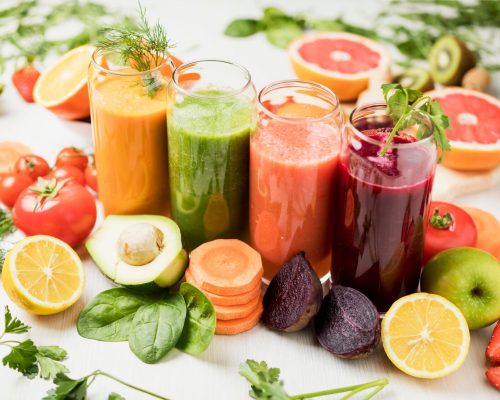
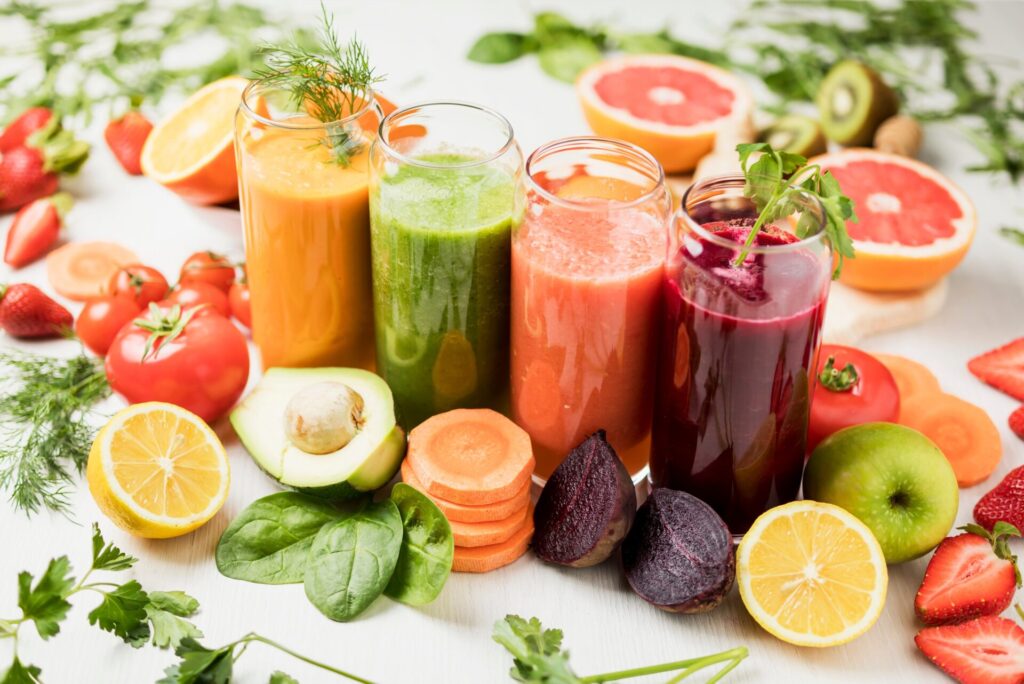
- Make juices by color: green, red, yellow, orange, purple, etc. The color of fruits and vegetables reflects their composition in micronutrients and antioxidants. Thus, besides the aesthetic effect of colored juices, they allow targeting certain bioactive compounds. Experience also shows that they taste better.
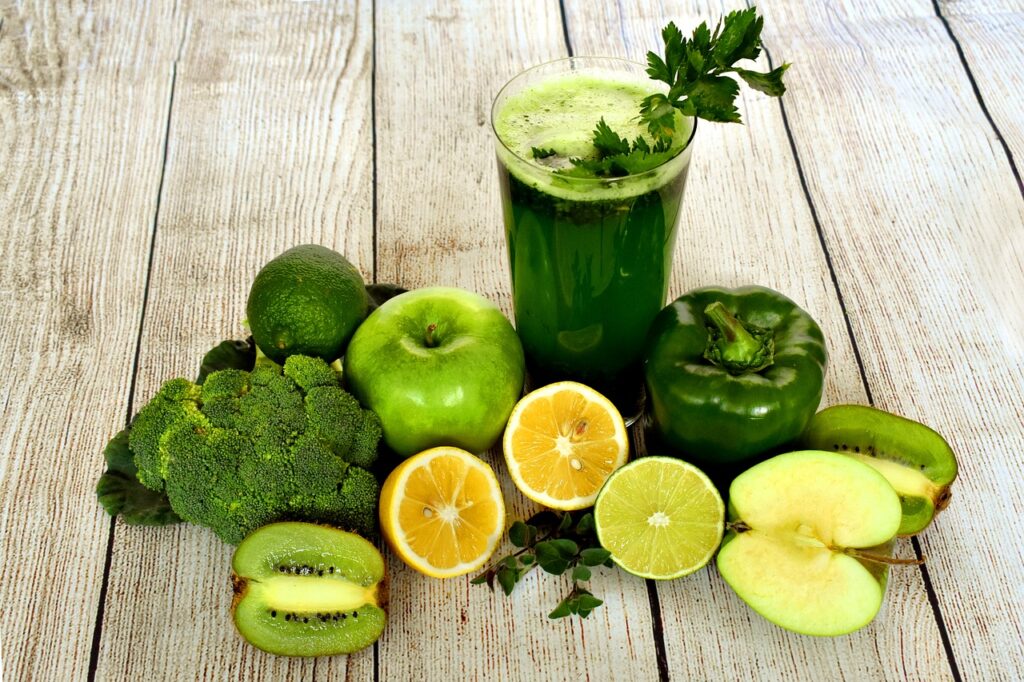
- Introduce up to 20% fruits (apple, grape, lemon, etc.) for taste and digestibility. It is also nice to add some herbs (coriander, mint, ginger, turmeric, etc.) and a pinch of seawater.
- Important reminder: the vegetables you need most are the ones you love the most (see the principle of alliesthesia). Indeed, our taste buds and olfactory system know better than our head what our body really needs. Therefore, forget the nutritional content of foods and focus on the combinations of vegetables that you enjoy drinking! Read thisarticle on sensory nutritionto learn more about this topic.
- Drink at least 0.5 L of fresh juice per day to feel the benefits.
Some remarkable fresh juices:
- Carrot juice, due to its richness in vitamins (notably beta-carotene), is a versatile juice that restores the entire body: bones, teeth, digestion, kidneys, skin, eyes, and even the reproductive system. It is also reputed in cases of cancer and ulcers. It can be mixed with other vegetables that are too strong to be consumed alone, such as beetroot, parsley, celery, fennel, dandelion, etc.
- Green juices (spinach, parsley, coriander, lettuce, sorrel, celery, cabbage, nettle, dandelion, etc.), due to their richness in chlorophyll, are blood cleansers, alkalizers, and fluidifiers that improve circulation and regenerate the blood (production of red blood cells).
- Beet juice is also known for purifying the blood, stimulating blood circulation, and supporting the liver. It can be combined with carrot to soften its earthy taste.
- Celery juice is rich in sodium, magnesium, and iron. It fluidifies the blood, regulates blood pressure, and dissolves calcium deposits. It provides a source of salt compatible with the human body (unlike crystallized salt, whether refined or not). Moreover, it is an ideal drink to refresh in summer.
- Cabbage juice is beneficial in cases of heartburn, ulcers, and constipation.
- Lettuce juice is rich in potassium, iron, magnesium, phosphorus, silicon, and calcium. This makes it particularly beneficial for the nervous, muscular, skeletal systems, and hair.
- Spinach juice is rich in chlorophyll and is known for its ability to regenerate the digestive system.
- Garlic or onion juice acts as a mucolytic, digestive, and antiparasitic. These are two powerful detoxifiers.
- Sweet potato juice is an antacid rich in calcium and silicon.
- Pepper juice is rich in silicon and vitamin C. It is beneficial for the skin and the digestive system.
It is possible to combine these juices to balance their properties and flavors. Here are three classic blends:
- Carrot juice + beet + celery + apple. This is the standard preparation (because it is versatile) found in the Gerson therapy.
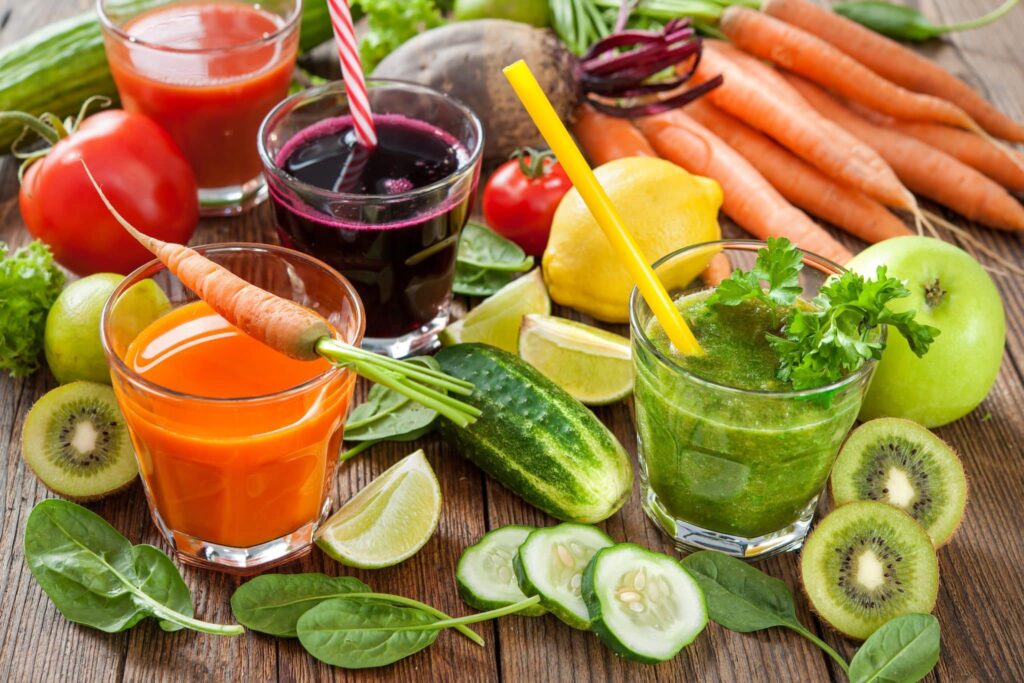
- Cucumber juice + carrot + spinach, reputed to be beneficial for hair, teeth, rheumatism, and in cases of hypertension or hypotension.
- Beet juice + carrot + cucumber to regenerate the kidneys, liver, gallbladder, and prostate.
If you are lacking inspiration, you can easily find recipes online or in ths book:
- “Juices: Nature’s Cure-All for Health and Vitality” by Jan Castorina & Dimitra Strais
Once again, these recipes are interesting for giving ideas, but the most important thing is to make juices that you enjoy. In Living Nutrition, on the contrary to cooked food, pleasure rhymes with health!
What about oxalic acid?
In food, oxalic acid (oxalate) is mainly found in spinach, Swiss chard, beet greens, parsley, sorrel, kale, rhubarb, etc. It is accused of easily binding to minerals like calcium, magnesium, or iron, forming insoluble salts (calcium oxalates, for example), which can reduce their absorption and, in some people, promote the formation of kidney stones.
According to Norman Walker, a pioneer of fresh juices, oxalic acid only poses a problem when consumed cooked; it is then that it can bind to minerals (like calcium) and form stones. Moreover, oxalic acid, by its ability to stimulate peristalsis, promotes good transit when consumed raw. To learn more about this, read this article on the carnivore diet and watch this video on the safety of oxalates.
Could fresh juices be too concentrated in nutrients, and therefore poorly absorbed or even irritating to the digestive system?
Norman Walker explains in his books that fresh juices are not chemical extracts but complete and natural foods, whose nutrients are still biologically organized. That is why the body perfectly absorbs these nutrients (minerals bound to organic acids, active enzymes, intact vitamins) which are not isolated as in supplements. Furthermore, the body only absorbs what it needs, the rest being eliminated naturally.
“If a more convincing fact is needed to dispel the false assertion that, due to ‘concentration’ (or for any other reason), these juices would be dangerous, compare carrot juice to fresh, undiluted cow’s milk. We find that, in their natural chemical composition, the water content of these two products is almost identical in volume.” Norman Walker


How to choose your juice extractor?
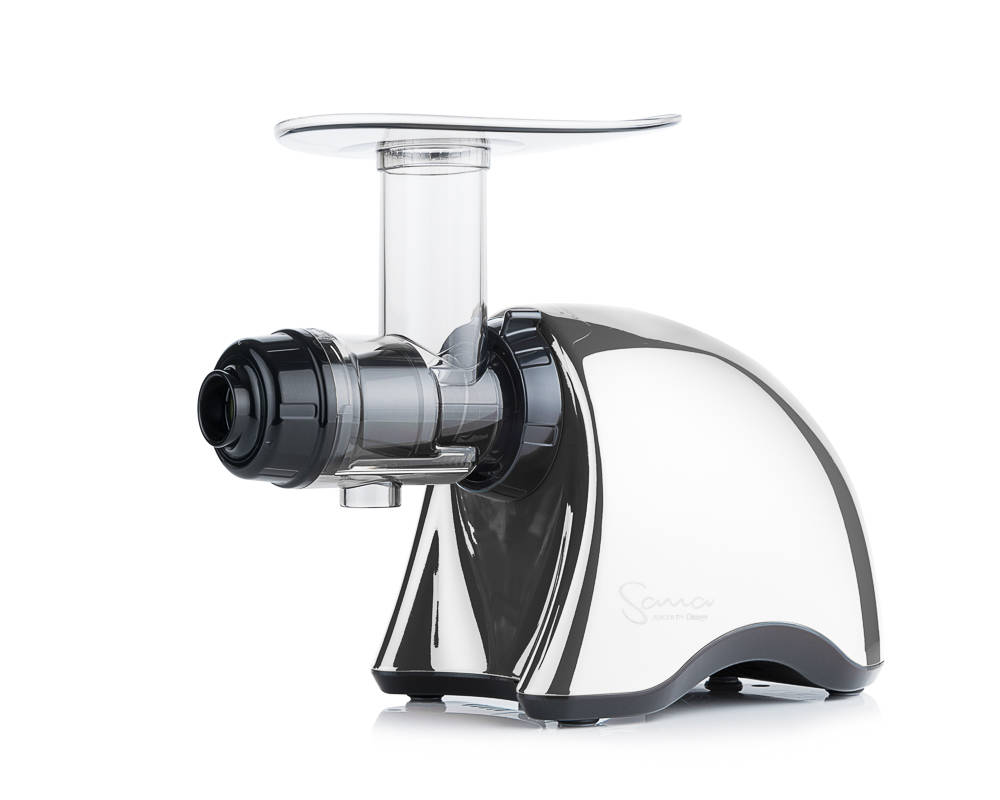
You will have understood by the end of this article that centrifuges are not interesting, especially since there is now a wide choice of cold-press juicers. Here are the 3 models I have tested and recommend:
1. The horizontal single-screw juicer from the brand Sana
Pros: It is easily found second-hand, as are the spare parts. It is easy to handle and clean.
Cons: The parts are quite fragile and the yield is low for fibrous vegetables.
2. The horizontal twin-screw juicer from the brand Angel
Pros: Reliable long-term device with very robust parts. 25% higher yield for fibrous vegetables.
Cons: Significant investment: €1400 for the entry-level model. An adjustment period is necessary to handle the machine and clean it without spending too much time.
3. The vertical single-screw juicers from the brand Hurom
Pros:€600 for a reliable and robust machine which offers very good value for money. Handling and cleaning are easy. Time-saving during extraction thanks to the autonomous pressing once the vegetable container is full. 10% discount with the code “FGOMET10”
Cons: The yield is lower than twin-screw devices.
To go further
Articles:
- “What about fresh fruit juices?”
- The history of juices: https://www.hurom.com/blogs/reviews/history-of-juicing
- Juices in the Middle Ages: https://sfnottingham.blogspot.com/2018/02/beetroot-6-health-and-nutrition.html
- The benefits of juices: https://www.hurom.com/pages/benefits-of-juicing
- About pesticides in juices: https://pubmed.ncbi.nlm.nih.gov/9534872/
Books:
- “Fresh Fruit and Vegetable Juices” by Norman Walker
- “Juices: Nature’s Cure-All for Health and Vitality” by Jan Castorina & Dimitra Strais