In bath:
Seawater has been used in thalassotherapy since Antiquity for its numerous therapeutic properties. Seawater is rich in minerals and trace elements, which is good for the skin and hair. A simple fifteen-minute sea bath each day is enough to recharge the body. Its benefits:
- It revives tired organisms.
- It promotes healing and improves skin quality.
- It effectively repairs a fracture.
- It decongests the respiratory tract.
- It prevents many diseases.
- It cleanses the scalp.
- It also cleanses the body of accumulated emotional tensions and negative energies.
Internally:
History:
In 1897, the French biologist René Quinton highlighted similarities between the mineral composition of seawater and that of the interstitial medium and blood plasma. He deduced that the human body would certainly respond well to treatments and preparations containing substances derived from the sea.
Definitions:
- The term “Quinton” or “hypertonic Quinton” refers to seawater that has been collected from vortices, far from any source of pollution, and in an environment rich in phytoplankton. This water is then cold-filtered and without radiation before being bottled.
- The term “Quinton Plasma” or “isotonic Quinton” refers to seawater brought to the molecular concentration of blood plasma by dilution with distilled water.
Quinton versus seawater:
Due to the high cost of Quinton (20 euros per liter), one can more simply buy seawater as long as it has been collected from an environment rich in phytoplankton (otherwise the minerals are less well assimilable), far from pollution sources, several meters below the water surface, and then filtered at 0.22 microns cold and without radiation. Seawater harvested under these conditions can be consumed orally.
If it is for injection use, it is preferable to use filtered seawater (0.22 microns) then ultra-filtered (0.01 microns) and collected at a depth of 25m with tests to verify the water quality. Seawater collected under these conditions is called marine plasma and is of equivalent quality to Quinton water except that it does not have certification.
These favorable conditions for the collection and filtration of seawater are met at naturitas.co.uk
Seawater versus freshwater:
Contrary to what one might think, it is very beneficial to drink seawater or Quinton. It contains, in a form assimilable by the body (thanks to the presence of phytoplankton), all the minerals and trace elements present on Earth, unlike freshwater whose minerals are less diverse and not bioavailable. This is why, in bottles, spring waters (low dry residue rate) are preferred over mineral waters (high dry residue rate) which can cause calcifications and kidney stones.
If you collect your own seawater, do so at some distance from pollution sources and at least one meter below the surface (to avoid floating oils). Before consuming it, this water must first be filtered to eliminate micropollutants.
Drinking seawater has many benefits, it:
- Stimulates metabolism
- Prevents chronic constipation
- Limits adrenal fatigue
- Detoxifies, remineralizes, and revitalizes the body
- Strengthens the nervous system due to the presence of magnesium
- Reduces inflammatory states
- Regulates estrogen production
- Reduces nasal congestion and cleanses the sinuses (to be used in aerosol or with a neti pot)
- Contains vitamin B12
What quantity to consume?
Seawater is an alkaline food particularly recommended in cases of body acidification or deficiencies. Moreover, it improves kidney function. You can drink it every day as much as you want by diluting it to your liking, so that you find it pleasant to taste. Seawater is a living food, and therefore your taste, and only it, can indicate the daily quantities your body needs.
Refined salt versus seawater:
The salt contained in seawater is very different from refined salt, which has lost all its beneficial properties and is harmful to health, just like refined sugar. Refined salt causes:
- inflammation of tissues and water retention (due to its high chlorine content),
- damage to blood vessels, thickening of the blood, and increased blood pressure,
- stomach irritation (directly linked to stomach cancer) and an imbalance in intestinal flora,
- overeating, calcium loss, and dehydration,
- kidney fatigue, and promotes the development of kidney stones.
On the other hand, magnesium and potassium, which are abundant in seawater, are hypotensive agents. This is why avoiding good salt (seawater or unrefined salt) is not good for your health, as the body needs the minerals it provides for the proper functioning of the kidneys and heart.

Unrefined salt versus seawater:
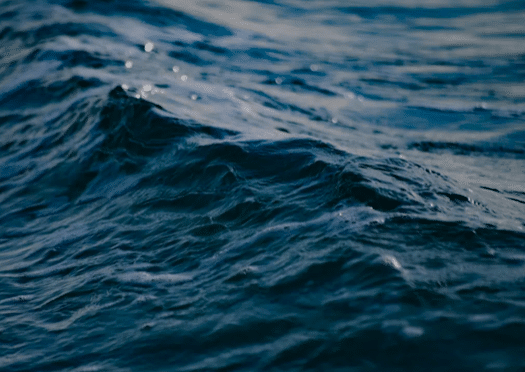
Even though seawater tastes salty, it does not contain salt (NaCl, sodium chloride) but minerals in ionic form, which makes all the difference because the body can more easily use or eliminate them as it sees fit. In addition, seawater contains more volatile minerals such as iodine than unrefined sea salt (such as Guérande or Himalayan salt).
Personally, I am very sensitive to salt, whether refined or unrefined, as it causes water retention and unpleasant sensations in my body, whereas seawater does not cause me any problems, even though my body requires about 1 liter per week.
It should be noted:
- To properly absorb vitamins, the body needs to be adequately mineralized. If there is a single mineral missing in the body, then certain vitamins will not be absorbed. And if there is too much of one mineral, it blocks the absorption of other minerals. For example, too much calcium blocks the absorption of phosphorus, which is why calcium supplementation may not improve bone quality since they also contain phosphorus). The advantage of seawater is that it will harmoniously remineralize (in quantity and quality) the body better than any supplement.
- Minerals are bioavailable to humans only if we absorb them through an animal, a plant, a fungus, or an alga. The minerals in seawater are bioavailable because they are contained in phytoplankton, hence the importance of collecting seawater where there is a sufficient concentration of phytoplankton.
- Long before we were humans or even primates, we were marine organisms (think of the different stages of human fetal evolution), moreover, it is in the sea that the first forms of life appeared. It is a primordial liquid!
- Seawater is a living food, and if heated, it loses its remineralizing and healing properties.
To learn more:
- https://www.youtube.com/watch?v=HJdmwHWOGd4
Please note: this video is currently in French, but you can activate YouTube’s auto-generated subtitles in English while we work on providing a dedicated English version. - “Quinton the serum of life” by Jean-Claude Rodet and Maxence Layet
- “Drinking seawater” by Fransisco Martin