
"Grant me the strength to accept what cannot be changed and the courage to change what can be, but also the wisdom to distinguish between the two."
Emperor Marcus Aurelius
"Even when we have been led to believe that if we let go, we will find ourselves empty-handed, life itself constantly reveals the opposite: letting go is the path to true freedom."
Sogyal Rinpoche
“At twenty, I had only one prayer: “My God, help me change this sick world.” For twenty years, I fought like a lion only to find that in the end, nothing had changed.
At forty, I had only one prayer: “My God, help me change my wife, my parents, and my children!” For twenty years, I struggled like a beast only to find that in the end, nothing had changed.
Now, at sixty, I have only one prayer: “My God, help me change myself… and – oh miracle! – the world changes around me!”
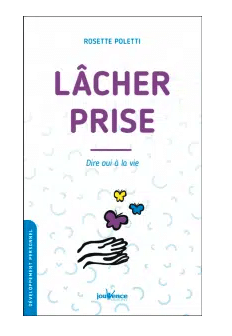
Letting go is not something we can do; it is something that happens when certain conditions are met. We will see which ones in this article, in order to foster that state of being we sometimes desperately aspire to without it manifesting! To do this, we will summarize an excellent book: « Lâcher prise – Dire oui à la vie » de Rosette Poletti, which unfortunately does not exist in English.
"Letting go is not just about staying calm, accepting the elements; it is much more than that! First, it is accepting the idea that we are, in a way, programmed by our education, our culture, our religion, our professional training. It is accepting to open up to what comes, to change our perspective, to modify our interpretation; it is also sometimes mourning something we held dear, and it is forgiving and focusing our attention on what is here and now."
Rosette Poletti
What are the internal mechanisms that prevent us from letting go?
Learning to accept and love oneself, two prerequisites for letting go, require that we are ready to let go of our illusions and modify our mental programming.
Our educational influences have led us to develop three major illusions:
- Believing that we can live up to what we think we should be.
- Believing that we can make others happy, that we can be loved by all, that we can live without conflicts and “succeed” in our relationships, the education of our children, our personal and professional lives.
- Desiring happiness as a right, as the just reward for our efforts and actions.
It is when we can abandon these three illusions that it becomes possible to truly let go.
“Letting go is accepting finitude and impermanence; it is changing the way we look at ourselves, others, and events; it is saying yes to what is, not to resign ourselves to it, but to ask ourselves the following two questions:
- What can I do with what is happening?
- What can I learn from it for the rest of my life?
Answering these two questions is to stop the ruminations, the brooding, and the resentment; it is the heart of letting go, it is exercising our freedom to choose our interpretation in the face of events.”
The obstacles to letting go:
- Our beliefs and habits.
- Making happiness dependent on external circumstances.
- Codependency (believing that someone can bring us joy).
- Attachment to the goals we set for ourselves.
- The “negative” emotions we nurture, most often without realizing it.
- The impossibility of finishing situations, of leaving behind what no longer needs to be.
How to transcend these internal mechanisms?
Overcoming obstacles 1 & 2: Identifying our internal patterns and finding the solution within ourselves
To overcome these obstacles, which are barriers preventing letting go from manifesting, there are potentially 12 prohibitions that we have internalized during childhood that hinder us:
- The 4 prohibitions concerning the dimension of being: Do not exist / Do not be a child / Do not grow up / Do not be yourself
- The 4 prohibitions concerning feelings: Do not express what you feel / You do not have the right to express this or that feeling / Do not be close (intimate) / Do not have pleasure
- The 4 prohibitions concerning action: Do not act / Do not succeed / Do not know / Do not think
To these 12 potentially inculcated prohibitions during childhood, can be added 5 constraining social moral values:
- Be strong
- Be perfect
- Persevere
- Hurry up
- Please others
The path to reclaiming one’s free will is done in three steps:
- Identify your own prohibitions and moral values.
- Give yourself new permissions, let go of certain prohibitions. Only new experiences allow us to abandon the mental chains that kept us imprisoned.
- Seek external help: a personal development group or a therapist.
It is important to always keep in mind that letting go is primarily a matter of perspective on events; it is a matter of interpretation. It is the images of reality that affect us, not reality itself. Moreover, it is by experimenting with new permissions that we modify the thought chains at the root of our rigidities.
“At the moment I give myself the freedom not to have to be perfect, to be strong, to persevere, to please at all costs, or to hurry, I can look calmly at the circumstances of life. I do not have to be anything other than what I am; my only responsibility is to live fully and harmoniously.”
Overcoming obstacle 3: freeing oneself from codependency
One of the biggest obstacles to letting go is giving the responsibility for our life and happiness to the people around us. The first step to breaking free from codependency is to become aware of this condition.
Overcoming obstacle 4: Letting go of outdated goals
It is not having goals that is problematic, but the strength of attachment to these goals, the identification with the goals we pursue. Holding onto our goals more than anything else makes us fragile. Anxiety and fear can creep into the mind, peace no longer reigns, and happiness fades away. It is necessary to be open to the possibility that we may need to modify our goals, to let go of our goals, to change them. Paradoxically, letting go of a goal sometimes leads to better achieving it, in welcoming and being open to what comes.
The principle is to not be dependent on the achievement of our goals but to have chosen them as preferences whose realization or not does not create tension.


Overcoming obstacle 5: Letting go of negative emotions
The 4 steps on the path to this liberation are:
- Identify the negative emotions that inhabit us and name them.
- Realize that these negative feelings are within us and have nothing to do with reality, so it is useless to want to change it.
- Do not identify with the negative feeling.
- Change oneself, let go of the desire to see others change.
“Realize that it is not when those we are close to have changed that we will feel better, it is when we have changed the way we look at them, when we have let go of the desire to see them become different.”
“Nothing in the world can ‘make’ us unhappy, neither an event, nor a situation, nor a person; it is ourselves, because of our expectations, because we cling to our illusions, to unrealistic goals, that make us unhappy.”
Overcoming obstacle 6: Letting go of resentment
“He who lives the pain of having suffered the offense can only achieve inner peace through the letting go that represents the path of forgiveness. It helps avoid perpetuating the harm suffered within oneself and in others, and also avoids remaining stuck in the past and living in constant resentment.”
What holds offended people back from moving forward on the path of forgiveness are often the following erroneous beliefs:
- Forgiving would mean forgetting. On the contrary, it is to set aside the desire for revenge, to no longer react emotionally while remembering the offense in order to avoid finding oneself in a similar situation.
- Forgiving would mean reconciling. Forgiving does not mean returning to the way things were before the offense.
- Forgiving would mean giving up one’s rights. Upholding one’s rights is an important aspect of self-respect. Forgiving does not mean excusing, denying the offense, or that the offense continues.
The letting go that forgiveness represents contains the seed of healing for the one who has been offended, regardless of the attitude of the offender.
The 12 steps of forgiveness:
- Decide not to take revenge and stop the offensive actions.
- Acknowledge your wound.
- Share your wound with someone.
- Clearly identify the loss to mourn it.
- Accept your anger and desire for revenge.
- Forgive yourself.
- Start to understand your offender.
- Find the meaning of the wound in your life.
- Knowing oneself worthy of forgiveness is already forgiving.
- Stop insisting on wanting to forgive.
- Open yourself to the grace of forgiving.
- Decide to end the relationship or renew it.
5 principles to change limiting beliefs that hinder letting go
- Once your beliefs are identified (thanks to the above), set intentions to transform them. Where your thoughts go, your energy goes!
- Leave your old limiting habits behind by focusing on what you desire.
- Through visualization, let go of the anger and bitterness that connect us to a dead past, and then send love to the people involved.
- Choose your words carefully as they carry energy.
- Stay focused on what you want rather than on what you want to let go of.
We live the life we have imagined living and attract to ourselves the fruit of our thoughts. If we truly want to let go of something that causes us pain, we can start doing so in this moment, by thinking that we can do it, by setting an intention that aligns with what we desire. To learn more about how to set affirmations: read the article: “How to Set Intentions?”. To learn how to visualize what we want and materialize it, read the article: “The Law of Attraction and the Power of Thought”.
However, what must be clearly understood is that an affirmation does not change a core belief; that is not its purpose; rather, it positively changes the emotional feeling related to that belief. Letting go then becomes much more achievable in a positive emotional feeling.
Rituals to facilitate letting go
“Rituals have existed in our society since the dawn of time. They help give meaning to the events of life. They offer moments and spaces during which humans have the opportunity to stop and meditate on the transformations in their lives. They are a central part of our lives. They connect us to the past, define our present, and show us the way to the future.”
The various rituals that exist contribute to changing our perception of reality, which is what our happiness depends on. Some researchers postulate that resistance to change likely stems from the absence of rituals facilitating change. It is up to us to use ancient rituals or invent our own.
There are a few main rituals:
- Funeral rituals
- Divorce rituals
- Rituals for regrets
- Rituals for major changes
In conclusion
Among the means to move towards letting go, we will remember:
- Awareness and responsibility.
- Recognizing limiting beliefs.
- Changing them with affirmations and visualizations.
- Create rites that facilitate change.
Let us also keep in mind that it is essential to let go of the concerns of our existential being to access spirituality. It is by gently letting go of everything that is not essential that the spiritual dimension within us can gradually grow and develop.
“To be in contact with one’s essential being, it is essential to let go of all these categories, of all these value judgments. The other, my partner, my friend, my colleague, my neighbor, is another; I have no rights over him. My only responsibility towards him is to welcome him with the greatest open-mindedness, encouraging him to live his path, even if that path is not mine and I do not understand his journey. No one is more right than the other! Each person has the responsibility for their own life.”