
Whether you are traveling, a nomad, have not yet acquired a juice extractor, or due to a lack of time, here are some tips to remineralize yourself very simply using a few kitchen utensils and 4 major principles.
Fruits VS vegetables
Although all fruits are remineralizing, vegetables generally contain more alkaline minerals – such as calcium, magnesium, and iron – than fruits. They also contain more natural mineral salts – such as sodium, potassium, and phosphorus in ionic form – which regulate blood pH by neutralizing excess acids and contribute to the proper functioning of the nervous system. Furthermore, green plants contain chlorophyll, which is detoxifying, antioxidant, anticoagulant, and which, due to its structure similar to hemoglobin, may facilitate the production of red blood cells (useful in cases of anemia). The right proportion of fruits and vegetables in the diet is simply achieved by listening to your cravings so that you feel satisfied and fulfilled after a meal, without feeling heavy or tired.
The benefits of vegetable juices
In addition to being vitalizing and detoxifying, vegetable juices provide a large amount of minerals, antioxidants, vitamins, and other phytoactive principles with minimal digestive work. However, when one cannot drink them to remineralize, it may be necessary to consume a good amount of vegetables without overloading the digestive system with bulky and indigestible fibers. Here are some principles to achieve this.

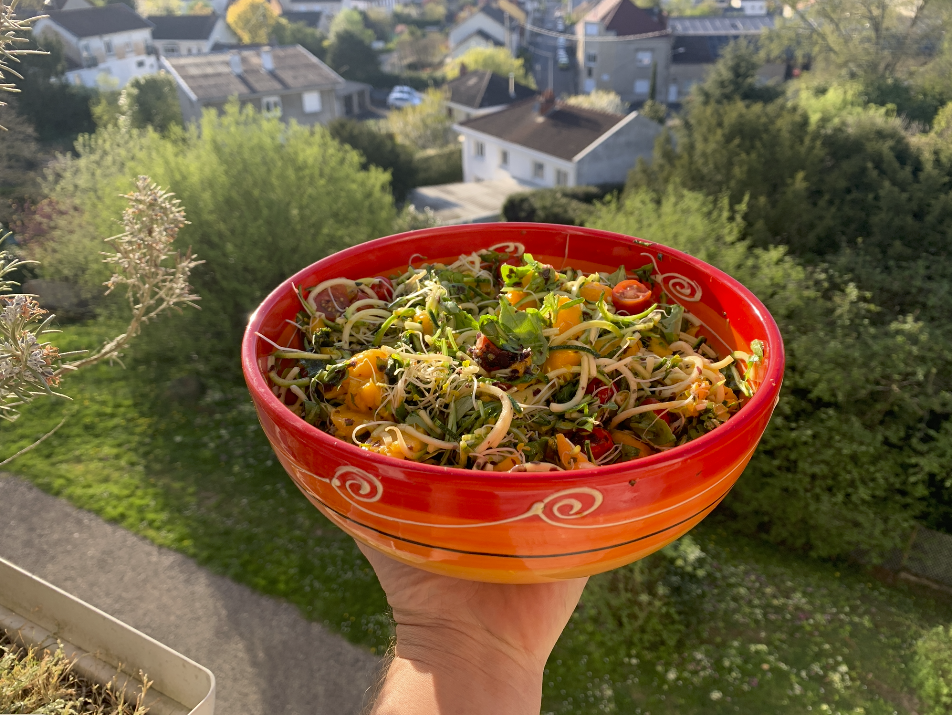
Remineralizing without a juice extractor, instructions:
Principle #1 : Favor leafy vegetables and sweet fruits
All vegetables contain soluble fibers (such as oligosaccharides, pectins, and inulin, which are prebiotics) and insoluble fibers (such as cellulose) necessary for intestinal flora and transit. However, we are not made to digest large quantities of insoluble fibers like those found abundantly in root vegetables (carrots, beets, sweet potatoes, etc.). Therefore, it is advisable to favor leafy vegetables (spinach, which is among the most nourishing, lettuce, celery, cabbage, etc.), flower vegetables (broccoli, cauliflower, etc.), and sweet fruits (tomatoes, cucumbers, zucchini, squash, peppers, etc).
Note: As long as they are well digested, one can consume root vegetables freely. But if this poses a problem, it will suffice to limit their consumption or to take them in lactofermented form (see this article on lactofermentation).
Principle #2 : Cut vegetables into very small pieces
This will reduce the volume of food, facilitate digestive work, and improve absorption by breaking down fibers as much as possible. To do this, it is very useful to have a spiralizer and a multi-blade scissors, a simple scissors, and a knife (see main image). A good grater is also welcome to complete the toolkit. Examples of use:
– With the spiralizer, you can reduce zucchini, cucumbers, etc., into spaghetti form.
– With the multi-blade scissors, finely chop lettuce, spinach, peppers, aromatic herbs, celery, cabbage, etc.
– With the simple scissors, you can further cut everything to reduce the volume.
– The grater can be used instead of a spiralizer or to break down hard foods like dried coconut, root vegetables, or ginger.
Principle #3 : Let sweet fruits ripen and eat fresh
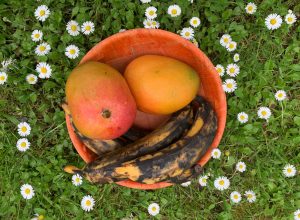
By allowing sweet fruits to ripen at room temperature – like sweet fruits that do not belong in a fridge – and waiting until they are “just right,” they will be more nourishing and better tasting. It is also advisable to cut vegetables just before eating them, as some vitamins, like C, are very sensitive to oxidation and degrade quickly when exposed to air.
Principle #4 : Consume large quantities of vegetables every day
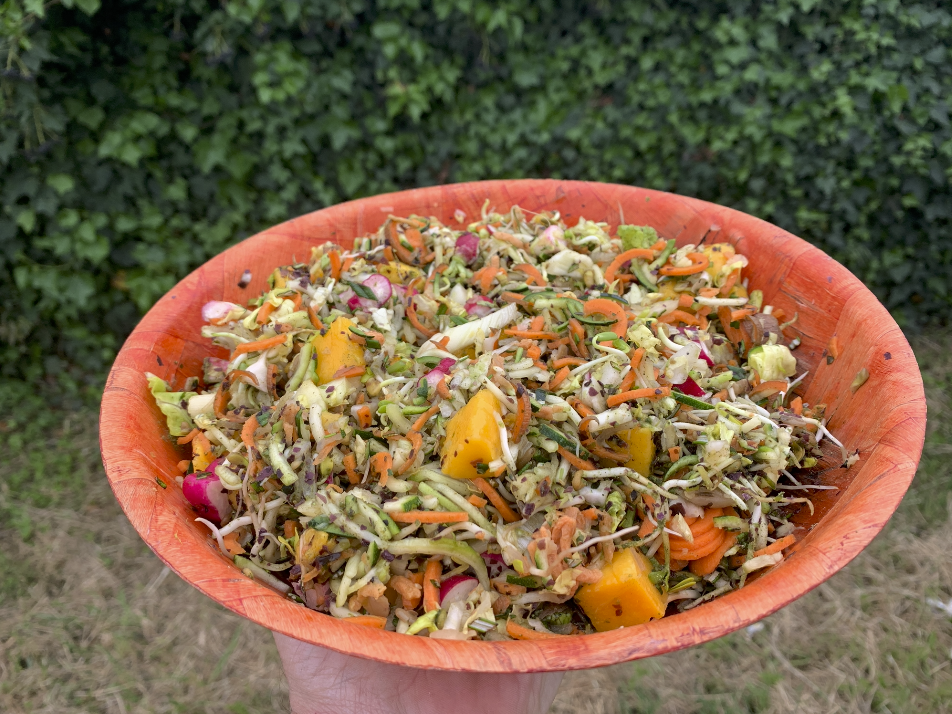
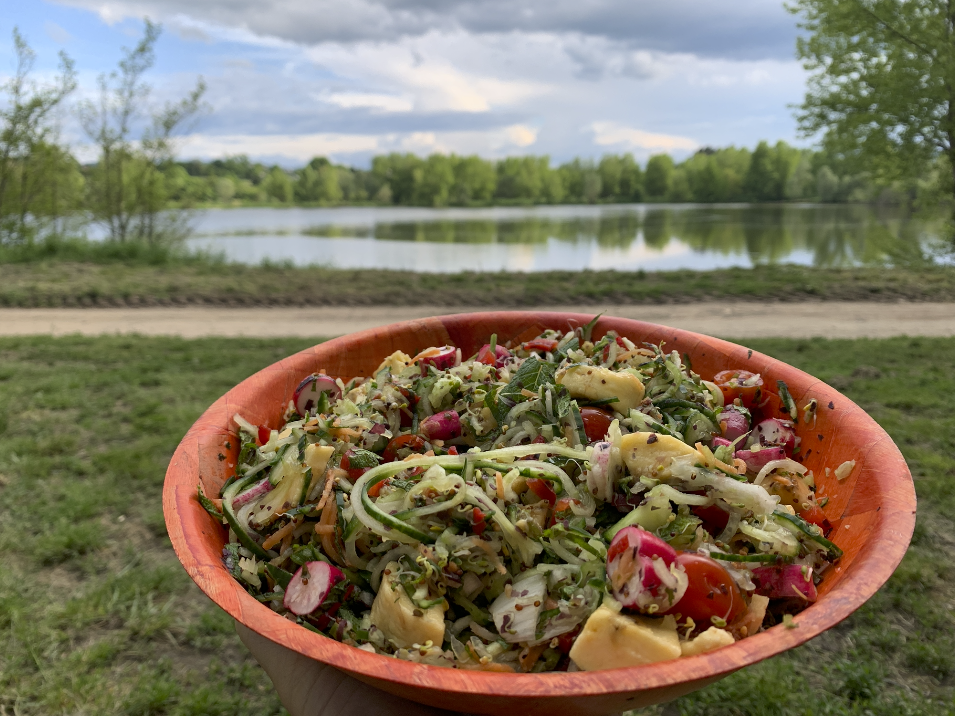
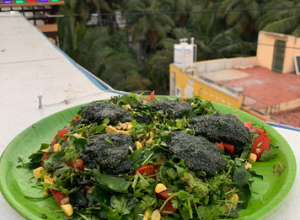
Thanks to principles #1 and #2, it becomes easy to consume, in one meal, a zucchini, a cucumber, a pepper, several large leaves of lettuce, about twenty cherry tomatoes, and a handful of sprouted seeds. To this base of vegetables, you can add sweet fruits (mangoes, bananas, figs, etc.) or fatty fruits (coconut, avocado, olives, etc.) also cut into small pieces with a knife.
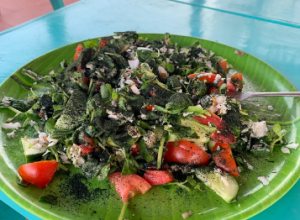
Examples of recipes:
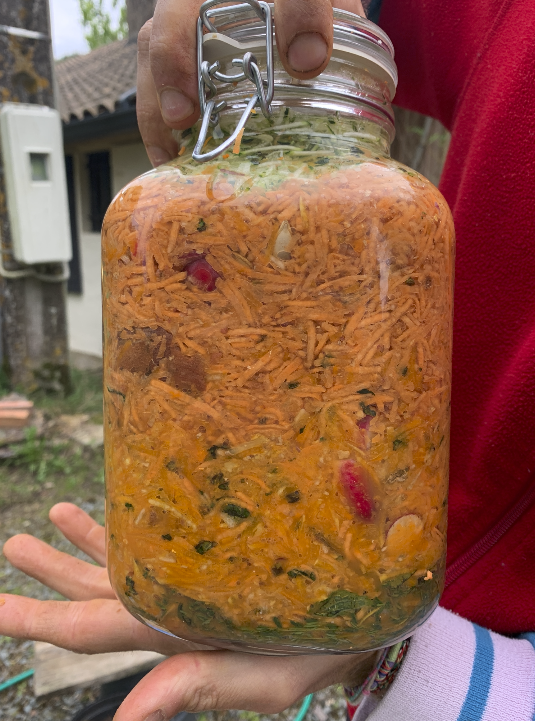
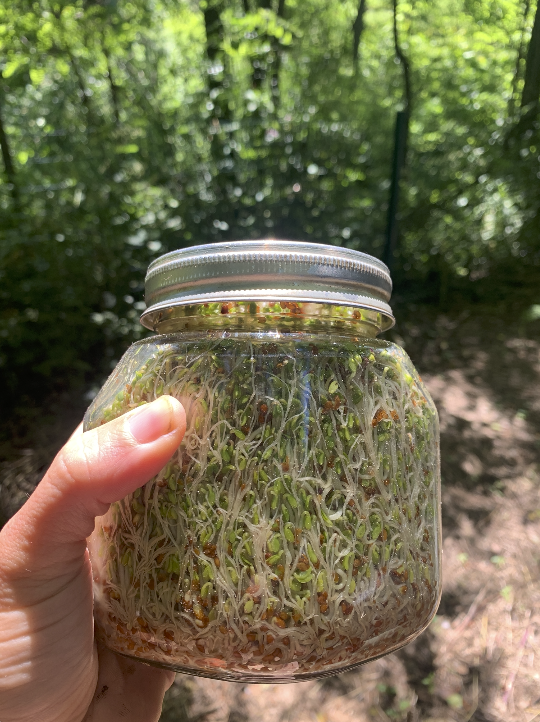
Other tips for preparing vegetable meals that are good, digestible, and nourishing:
- If it’s not salty enough for your taste, consider adding cucumber, celery, or lactofermented vegetables. Otherwise, add seaweed or a bit of seawater (see this article on the benefits of seawater).
- If it’s not dense enough for your taste, consider adding spinach or sprouted seeds. Otherwise, add a bit of spirulina, chlorella, or powdered barley grass, which have the advantage of being highly remineralizing.
- Replace store greens with wild plants. Read this article on how to choose wild plants to learn more.
- If it’s not acidic enough for your taste, add lactofermented vegetables or lemon or orange juice. Read this article on the acidity of citrus fruits to learn more.
- If it’s not fatty enough for your taste, preferably add a source of fresh fat (as it is more digestible) like avocado, olives (rinse beforehand to remove excess salt), coconut (fresh or dried), or, if not, a small handful of nuts of your choice. Read this article on our lipid needs to learn more and avoid consuming too much.
- If it’s not spicy enough for your taste, add ginger, turmeric, pepper, pink berries, or chili.
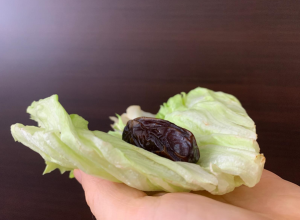
- If it’s not sweet enough for your taste, add dried fruits cut with the multi-blade scissors.
- Fatty or sweet, you must choose, as both together are not compatible in terms of digestion and absorption. Read this article on food combinations to learn more.
- If you have difficulty digesting raw vegetables, read this article on the keys to good digestion.
Note:
Purists will say that vegetables should be eaten as a single food like fruits, which is feasible except that we eat less than when we prepare them, whereas the goal here is to remineralize by emphasizing vegetables. Another possibility, for those who are bothered by the vegetable-fruit mix, is to prepare meals consisting solely of vegetables. To make these salads more appealing, simply incorporate, in addition to finely chopped fresh vegetables, lactofermented vegetables and seaweed.
Here you go, you now have all the elements in hand to fill up on minerals with vegetable meals! Complete them with fruit meals to also recharge your energy. These are the only two types of meals we really need, with a balance of: one or two fruit meals for one vegetable meal.