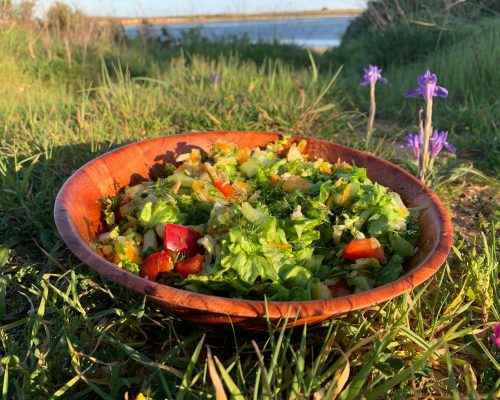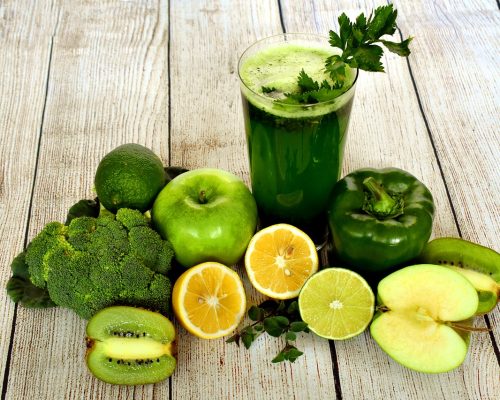

One of the seasonal difficulties one may encounter on the path to Living Nutrition is sensitivity to cold, especially in winter. In this article, we will explore where it comes from and how to remedy it in all seasons.
From a purely thermodynamic perspective, if we no longer put heated foods into our bodies, it receives less heat. For this reason, one might feel that Living Nutrition cools the body and is only suitable for summer or warm regions of the planet, or that it is reserved for those with ‘yang’ or ‘sanguine’ temperaments. From there to conclude that Living Nutrition is only suitable for certain seasons or climates, and for certain constitutions, is a small step… That would be jumping to conclusions, and we will see why.
First of all, we can observe that the entire animal kingdom eats raw and seems to adapt very well, even in winter, except for domestic animals that are given cooked, processed foods that are incompatible with their digestive system (for example: grains and cow’s milk for cats) and who, ‘strangely’, suffer from the same diseases as humans. It is true that depending on our terrain, temperament, and constitution (terms taken in their naturopathic sense), we will not all be equal in the face of sensitivity to cold. The good news is that this is not a fatality because the terrain can be cleansed, the temperament (which is a classification of pathologies and not of people) can evolve, and, to a certain extent, the constitution can regenerate.
Let’s try to look beyond clichés to understand the causes of sensitivity to cold, how to boost thermogenesis (this innate ability of the human body to produce heat), and, along the way, some tips to stay warm while eating raw, even in winter.
The causes of sensitivity to cold
- Too much water! Indeed, an excessive presence of water in the diet leads to the dilution of blood and cools the body. Therefore, it is advisable to limit the consumption of watery fruits, certain water-rich vegetables (like celery), and vegetable juices, unless, of course, you enjoy them and the cooling effects do not bother you.
- Deceptive stimulants! The absence of consumption of stimulants such as tea, coffee, roasted cocoa, alcohol, soda, refined sugar, animal proteins, etc., confronts us with our true energy level, which may not be optimal if, for example, our nervous and/or glandular system is exhausted. The consumption of stimulants (is a check without funds, as Irène Grosjean would say 😉) helps the body release energy by tapping into reserves that are not eternal. And when they are depleted, it leads to depression or burnout!
- A lighter digestion! When we eat everything (cooked, processed, mixed foods, omnivorous, etc.), the daily indigestions that the digestive system must face cost, according to estimates, 50% of the daily energy we expend. When we eat foods compatible with our physiology, this percentage decreases for the greater good of our vitality. This digestive economy has the collateral effect of significantly lowering the heat production generated by the digestive system. Those who have experienced fasting have been able to observe this phenomenon.
- An adaptation period! We must give the body time (one to two years on average) to function in winter without crutches (heated foods and stimulants) so that it regains natural and effective thermogenesis. In the meantime, add an extra layer and follow the advice in this article!

Although animals living in cold areas are content to eat raw, one might argue that since we are designed to live in the tropics, it is normal to consume cooked foods and animal products to compensate for an environment that is not ours. So wait until you read the rest…
How to boost thermogenesis at the bodily level
- By developing muscle! 40% of body heat comes from muscle. And the best way to build muscle is not to eat ‘protein-rich’ foods but to make them work through sports or any other physical activity that requires effort.
- By improving the terrain! Improving one’s lifestyle (see the article “Definitions of Hygiene”), and cleansing one’s ‘terrain’ (see the article “Cleanses, the Keystone of Hygiene”) allows for better blood and lymphatic circulation which, in turn, enables heat to diffuse better throughout the body.
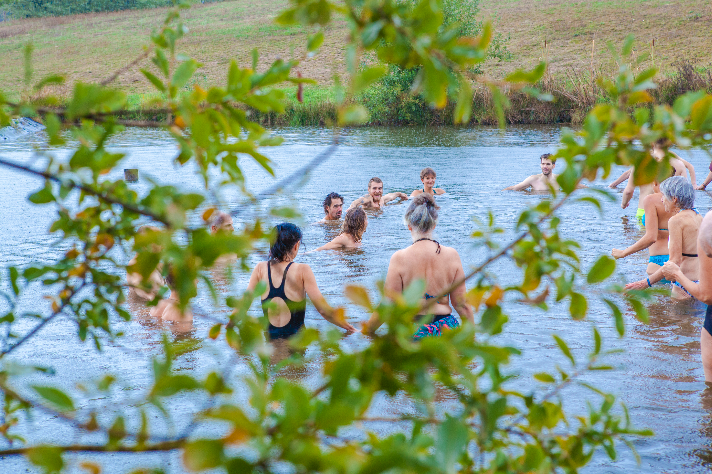
- Exposing oneself to the cold! For our body to function well, it needs to be regularly confronted with natural stresses: this is called hormesis (see the article on the law of hormesis). Naturally, the more we expose ourselves to the cold (see the article on cold hormesis), the less sensitive to cold we become thanks to very interesting adaptive mechanisms such as the production of brown fat and an improvement in the vascular system. This can be done in several ways: cold baths, cold showers, differential baths, dressing less, avoiding underwear, but also through dry brushing of the skin, massages, etc.
- Breathe better! Nasal, slow (8 cycles per minute on average), silent, and diaphragmatic breathing daily allows blood to circulate better thanks to the vasodilatory effects of nitric oxide produced by nasal breathing and thanks to a better tolerance to CO2, which is also vasodilatory. Practicing breathing exercises daily or almost daily (like those in this article: “Meditate and Breathe”) also helps retrain one’s breathing.
Know that being resistant to cold is not necessarily a sign of good health. Acidified individuals, those in an inflammatory state, nervous or angry people will find in exposure to cold a salvific antidote. France Guillain (see her method; translation note: this link leads to a page in French. To read it in English or another language, simply copy the URL and paste it into Google Translate https://translate.google.com/?sl=fr&tl=it&op=translate) has demonstrated that the average body temperature has increased by about 1°C over the last 60 years due to a generalized inflammatory state, linked in particular to an industrial diet and excessive protein intake. Moreover, know that the primary cause of cracks in winter is not the cold but the acidification of the body (partly due to an excess of animal proteins (see the article “Vitamin B12 and Animal Proteins in Living Nutrition”) in food and a lack of minerals (see the article “Filling Nutritional Gaps with Living Nutrition”)), as with vascular problems. Indeed, according to the famous German naturopath Andreas Moritz, the excess animal proteins we ingest and that the body cannot eliminate are partly stored in the walls of blood vessels, leading to their hardening and, consequently, less efficient blood circulation (see his book: “The Incredible Liver and Gallbladder Cleanse”). Just like the thickening of the blood due to the consumption of bad fats (animal or heated) or overloaded moods.
“Today, the average body temperature is between 37°C and 37.2°C. Sixty years ago, it ranged between 36°C and 36.6°C. When a child arrived at school with 37.2°C, they were quickly sent to the doctor because a primary infection was suspected. Today, it is the norm. Look for the error... The problem is our change in lifestyle: tight jeans, tights, hair removal, industrial food, a less active lifestyle, not to mention electromagnetic waves, etc. All of this raises internal temperature. We are collectively in a state of chronic inflammatory response. And the inflammatory state triggers degenerative diseases. Several universities in Russia, Japan, the Netherlands, Germany, and Finland have published studies on the importance of body temperature for health. One of them, published in 2008, states that we should not exceed 36.6°C.”
France Guillain

How to boost thermogenesis at the dietary level
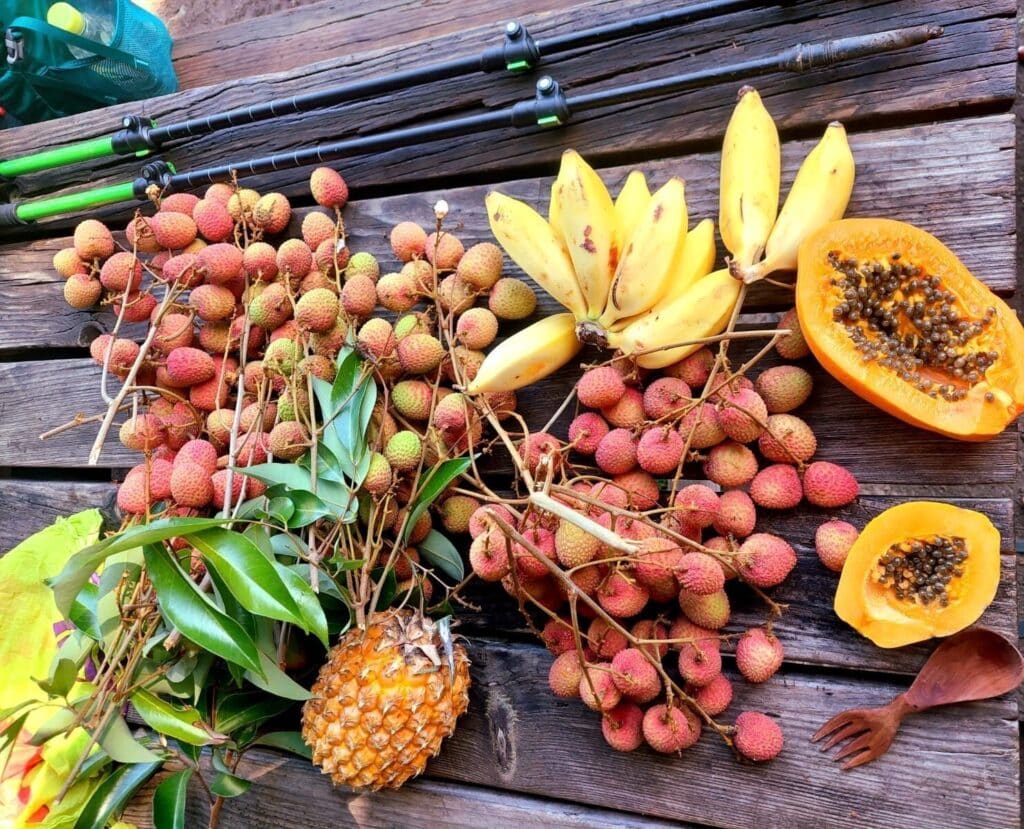
- Dense foods! Without forcing and always listening to one’s cravings, we will favor the consumption of dense foods such as dry nuts, avocado, coconut, olives, oils (organic and cold-pressed, except sunflower), sweet and dried fruits, honey, and all fresh or dehydrated superfoods (like spirulina, barley grass, etc.). However, be careful not to exceed 20% (in caloric ratio) of lipids. Read this article to learn more about our lipid needs. Moreover, it has been shown that thermogenesis is more stimulated by the digestion of fructose than glucose (see “The Campbell Study” by T. Colin Campbell).
- Yang foods! Without forcing and always listening to one’s cravings, we will favor the consumption of yang foods such as chili, herbs, turmeric, ginger, etc.
- Salty and mineral-rich foods! Without forcing and always listening to one’s cravings, we will favor the consumption of salty and mineral-rich foods such as seawater (see the article “Seawater and Its Benefits”), seaweeds, and lacto-fermentation (see the article “The Essentials of Lacto-Fermentation”).
More generally, do not forget to eat sufficient quantities of sugar, fat, and salt (in their natural form, of course!), as this is often the first mistake made in Living Nutrition. A period of re-education is necessary for our minds to reassess what a normal quantity of food is, in volume and mass. You will then see that eating 2 kilos of fruit a day is nothing extraordinary!
Some tips to avoid sensitivity to cold
- Seasonal foods! To not miss out on the benefits of vegetable juices in winter, one can focus on root vegetables (sweet potato, beetroot, parsnip, carrot, etc).
- Food at room temperature! For foods that are stored in the fridge, get into the habit of taking them out at least an hour before consuming them.
- Raw does not rhyme with cold! As long as your foods do not exceed 42°C, their nutritional and therapeutic olfactory properties do not degrade (see the article “Living Nutrition VS sensory nutrition”). You can therefore make raw soups (by putting your vegetables and boiling water in a blender. Rest assured, the soup will cool down quickly once blended even if the water introduced is brought to a boil. Another option: do everything cold and then heat gently.) Other possible drinks: Herbal teas (those you need, to see in radiesthesia, see hygienist accompaniments) with honey; warm and nourishing drinks like cocoa + dates + soaked nuts (optional) + hot water, to blend in a blender and filter (optional) through a strainer.
- Not just local! Our body, even if it’s cold outside, will appreciate exotic fruits if they are dense enough (as we saw earlier). What about pollution? Read these articles:“The impact of living nutrition on the environment” and “Local and organic in living nutrition”.
We are designed to live in a climate where we do not need heating in winter. So if we are not going to the fruits, it will be the fruits that come to us! That said, you may be wondering if it is physiological in winter to eat dried fruits or, worse, fresh exotic fruits that grow where it is warm. Here’s what science and my experience on this subject say.
Translation note: this video is currently in French, but you can activate YouTube’s auto-generated subtitles in English while we work on providing a dedicated English version.

What science says
In “The China Study. The Most Comprehensive Study of Nutrition Ever Conducted and the Startling Implications for Diet, Weight Loss, and Long-Term Health”, by T. Colin Campbell & Thomas M. Campbell II, it is scientifically demonstrated that a plant-based diet is the one that most promotes thermogenesis. Eating plants therefore contributes, in the long run, to greater heat production.
What experience says
During America Extrema, I experienced my first Canadian winter with temperatures of -40°C. I notably achieved a world first (the crossing of the Mackenzie Mountains in Canada, alone and without motorized means in winter) while eating vegan and without suffering from frostbite, cracks, or chilliness. The locals were even amazed (see this press article) that I generally handled the cold better than they did with my exclusively plant-based diet.
In conclusion
Personally, the main “tools” that allowed me to successfully transition my diet, including in winter, are:
- Eating enough plant fat daily (see this article on plant fat and food combinations in living nutrition) so as not to melt away like snow in the sun.
- Eating dried fruits when I feel cold during the day and making nourishing hot drinks (see those mentioned earlier).
- Practicing hormesis with cold.
Not forgetting regular periods of fasting and detox (see this article “Cleanses, the keystone of hygienism”) that allow, in the long term, to cleanse the terrain and help the body to gradually regenerate. With these considerations, I wish you all a beautiful and joyful winter!!!