Fasting & Trekking Stories
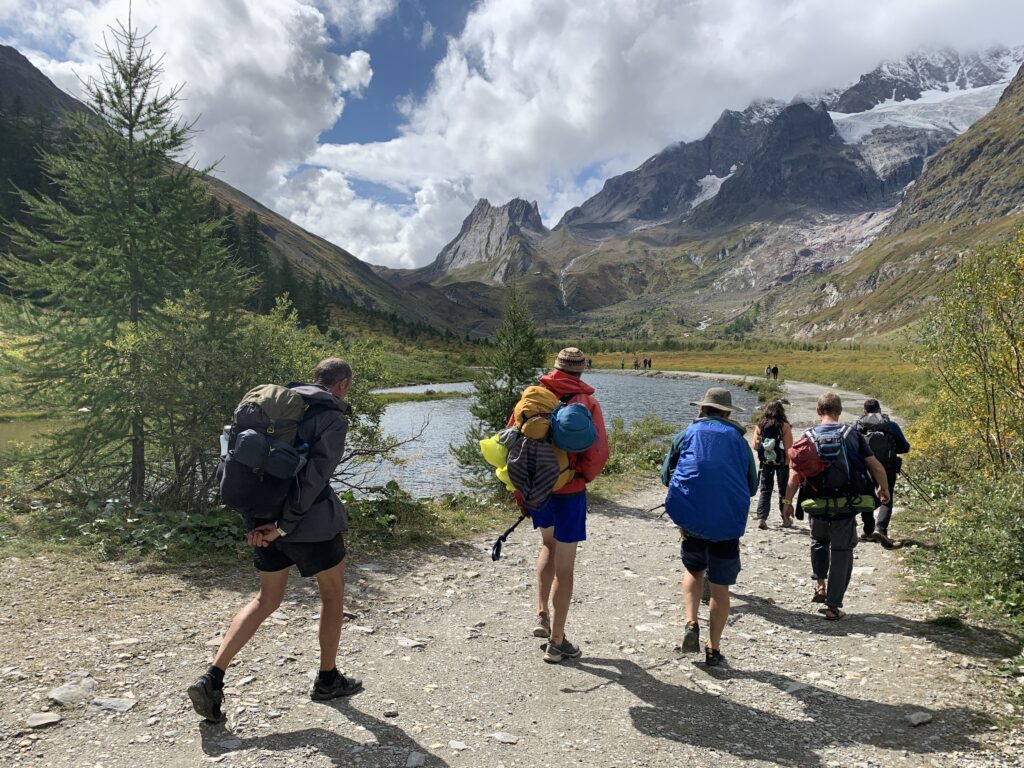
Genesis of the concept: The Fasting Walk, a 360 km trek without eating in Canada in August 2018 DO YOU HAVE ANY DIFFICULTIES FASTING EVEN THOUGH YOU KNOW IT WOULD BE GOOD FOR YOU?! This is why Florian developed a simple solution: to go in a group with backpacks to trek in nature. One might think that during a fast, physical strength would be lacking and that it would not be wise, nor even possible, to walk all day. And yet… It all started when Florian began his transition to raw food in 2014, following a spontaneous fast (naturally imposed by his body) during which he experienced a period of great physical well-being. Troubled by this experience that contradicted his beliefs, particularly the one that says we need to eat to have energy, he researched raw food and then reevaluated everything he thought he knew about the subject. Awed by this pranic experience that fell from the sky, he wished to replicate it, in vain: all the fasts attempted afterward were difficult, and he could not relive the state of grace he had tasted. The idea then came to him to return to Canada, a country he had crossed by non-motorized means in 2015-2016 (read the account of the America Extrema expedition). Florian thought that by being in nature and walking all day, he would no longer think about eating and would relive that fluidity of body and mind. Thus, in August 2018, Florian returned to the Mackenzie Mountains with filmmaker Damien Artero to create the documentary ‘The Fasting Walk’ about a particular experience: 2 weeks and 360 km of trekking without eating in one of the wildest environments: grizzly bear mountains under the Arctic Circle and dozens of glacial rivers to cross. It was a revelation as it amazed Florian about the seemingly limitless capabilities of the human body and the benefits it brought him on physical, mental, and spiritual levels. So much so that upon his return to France, he could only think about replicating the experience, but closer to home. Thus was born the concept of Fasting and Trekking: to offer 7-day treks while fasting to groups of a maximum of 20 people. Please note: this video is currently in French, but you can activate YouTube’s auto-generated subtitles in English while we work on providing a dedicated English version. Account of JT n°1 in April 2019 / Beaujolais It had been a long time since the Haut-Beaujolais mountains had seen pilgrims walk for several days without eating. This unusual event took place from April 29 to May 3, 2019. Where pilgrims who did not believe in God but in life set out, not for a holy land, but for better health. Geoffrey, Anne, Christian, Agnès, Jérôme, Florence, Mickaël, and Marine, aged 26 to 60 and coming from all corners of France (and even Germany) gathered at my place in Gibles (71) on April 28, the day before departure. All driven by the desire to discover the charms of Brionnais and Haut-Beaujolais in minimalist attire, with just a few kilos of gear on their backs to camp. An ultra-light trek made possible by the absence of food, which frees movement and temporarily liberates from the constraint of eating. After a collective castor oil purge taken on the morning of departure, we set off into the cool fog towards St Cyr (771 m), the highest point in Southern Burgundy, where a journalist from the Journal de Saône-et-Loire awaited us. For we live in a strange time where it is enough to humbly do what one is genetically programmed to do to make it into the newspaper. It was time for the first abandonment. The 18% slopes of St Cyr had exhausted Anne, who was dropped off at my place by the journalist to continue fasting in more comfortable conditions. The remaining 8 participants are motivated and in good shape, we continue smoothly on the GR 7 towards Mont Saint-Rigaud. With about 35 km for 800m of positive elevation, it is the most demanding stage of the journey but not the most exhausting thanks to our state of freshness. Just before reaching the summit of Saint-Rigaud (1009 m), we drink from the so-called “miraculous” water source where there are about a hundred makeshift crosses made of branches taken from the site, as tradition dictates for wishes to come true. We then set up camp at the foot of the belvedere, where, in ancient times, the Romans had erected an altar to Jupiter. Up there, the night is cool (3°C) and few have slept well, but the morning laughter testifies to the strength of the group and the walk quickly warms us up. We take advantage of a clearing in the underbrush to shower under the waterfall before resuming the GR 7. With the significant elevation, the first signs of fatigue appear and we shorten the stage after only 25 km. We then camp in a meadow with a magnificent view of the Azergues valley and practice kirtan kriya meditation facing our God: the Sun! The next day, on the 3rd day, we visit the largest Douglas firs in Europe located in the municipality of Claveisolles, right next to two small ponds. It is the most beautiful day of the trek, sunny with 18°C in the afternoon, but an 8 km ascent with 500m of positive elevation is a tough blow for the group, which multiplies stops. Nevertheless, we all arrive together at the ridge line where we take a break in the sun to recharge our batteries and dry tents and sleeping bags. As we descend towards the lake of the Pines, I sense discomfort in the group and Mickaël, who interviews them one by one for a report, confirms it to me. We still manage to cover 30 km during the day to camp on the shores of the lake of the Pines. An evening circle of words is necessary and we redefine the program. I promise that
The Story of Fasting & Trek
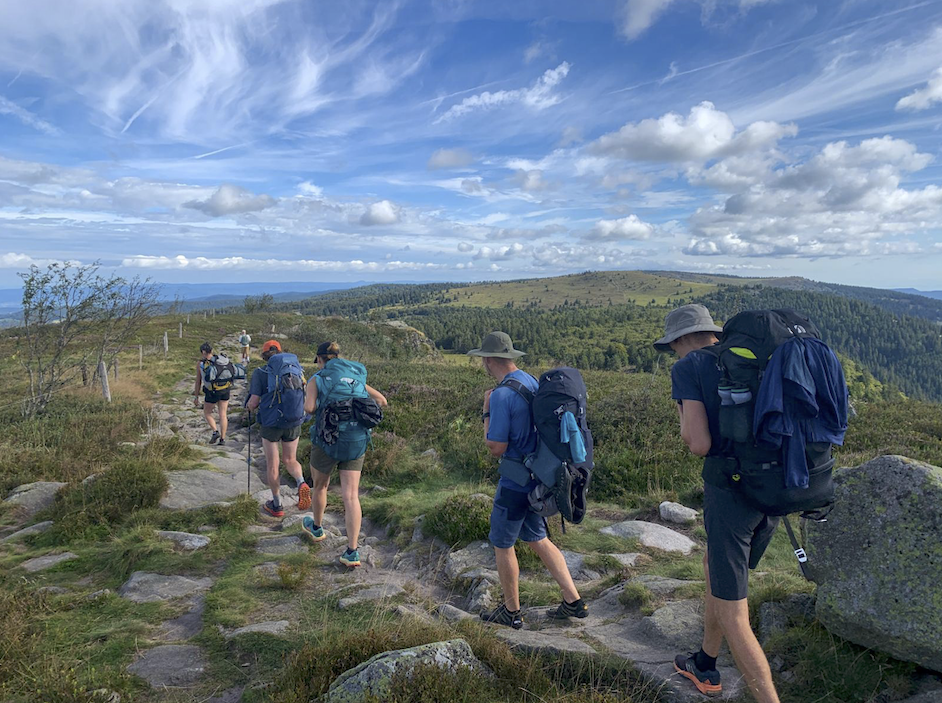
DO YOU STRUGGLE TO FAST EVEN THOUGH YOU KNOW IT WOULD BE GOOD FOR YOU?! This is precisely why Florian developed a simple solution: setting off with a group, backpack on, to trek in the heart of nature. One might think that while fasting, physical strength would wane, making it unwise, or even impossible, to walk all day. And yet… It all began when Florian started his transition to a raw food diet in 2014, following a spontaneous fast (imposed naturally by his body) during which he experienced a period of peak physical condition. Perplexed by this experience which contradicted his beliefs, particularly the idea that we need to eat to have energy, he researched raw nutrition and completely revised everything he thought he knew on the subject. Amazed by this pranic experience that fell from the sky, he wanted to replicate it, but in vain: all the fasts he attempted afterwards were difficult, and he couldn’t recapture that state of grace he had once tasted. The idea then came to him to return to Canada, a country he had crossed by non-motorized means in 2015-2016 (read the story of the America Extrema expedition). Florian thought that by being in nature and walking all day, he would stop thinking about food and relive that fluidity of body and mind. And so, in August 2018, Florian returned to the Mackenzie Mountains accompanied by filmmaker Damien Artero to create the documentary “La Marche Sans Faim” (“The Walk Without Hunger”). It documented a unique experience: 2 weeks and 360 km of trekking without food in one of the wildest settings possible: grizzly bear mountains below the Arctic Circle and dozens of glacial rivers to cross. It was a revelation, astounding Florian with the seemingly limitless capabilities of the human body and the benefits it brought him on physical, mental, and spiritual levels. So much so that upon returning to France, he could think of nothing but repeating the experience, but closer to home. This is how the Fasting & Trekking concept was born: offering 7-day fasting treks to groups of a maximum of 20 people.
3H, the new hygienism
“As long as there are men who will not obey their reason alone, who receive their opinions from an outside opinion, all chains would have been broken in vain, humanity will remain divided into two classes: that of men who reason and that of men who believe, that of masters and that of slaves.” Nicolas de Condorcet “To reach the truth, one must once in life rid oneself of all the opinions one has received, and rebuild the entire system of one’s knowledge.” René Descartes “Do not believe what you are told: experiment with it!” Krishnamurti “The only healing that matters, the true one, is to choose love.” Florian Gomet Before reading this article, I advise you to consult beforehand: The definitions of hygienism Optimal Health The limits of hygienism Nothing predisposed me one day to take a close interest in lifestyle hygiene and the origin of diseases. However, I carried within me the very seed of the hygienist approach, namely that I did not consider it normal to see so much suffering and disease in this world. The commonly accepted explanation that this is the consequence of pollution and the increase in life expectancy has always seemed false to me, or at least incomplete. At the time of my transition, in 2014, I was doing forestry work after being a math teacher. It was the realization that there are people on Earth living very well by primarily eating fruits, vegetables, and nuts that triggered my awakening. As if I had been waiting for this, my habits and beliefs on the subject underwent an unprecedented revolution. At that time, the idea did not occur to me to have indisputable scientific evidence on the benefits of so-called ‘living’ food before adopting it. Fortunately, because I would still be waiting… The energy and enthusiasm that radiated from those who spoke about it passionately was enough to make me want to try. Drawing inspiration from great principles to find one’s truth I was unaware then that living food, as I later realized, does not work for everyone and that there are many pitfalls. However, for my part, it has always seemed strange to me that such a natural diet, close to our physiological needs, could suit some but not others. And the commonly accepted explanations regarding the different profiles of people did not sound right to my ears. Indeed, within a species, all members eat well raw and in the same way. So why would humans escape this rule? It was with this awareness that the necessity to develop the 3H: holistic and humanist hygienism became evident to break free from the rut of dogmatism and connect with other dimensions of human experience: the mental, emotional, energetic, and spiritual. Between those who eat ‘paleo’ and vegans, between proponents of all-raw without mixing and fans of raw cuisine, between the ketogenic diet and fruitarians, there is indeed enough to lose one’s Latin if one wants to follow THE right method or find THE truth; simply because there isn’t one! It is up to all of us to carve our own path in the food jungle. It is up to all of us to understand the great principles and then adapt them to our unique situation. Undoubtedly, the great current confusion that reigns is there for us to learn to seek our truth by ourselves without waiting for someone to tell us how we should eat, live, heal, think, etc. As if life considered it more important for us to be in a sincere search for our truth rather than to follow choices, even if enlightened, that have been imposed on us. The necessity to return to a predominantly plant-based and raw diet Nevertheless, the industrial food that has become widespread and the increase in epidemics of all kinds clearly show that humans have reached the limits of their adaptive capacities and that it is time to return to a more natural and physiological diet and lifestyle. That is why I believe that each of us will gain significant benefits from introducing more raw plant-based foods into our plates and using certain simple and accessible hygienist practices (such as intermittent fasting, grounding, cold showers, conscious breathing, etc.). Fascinated by the exhilarating experience I was having with living food and hygienism, I diligently researched and trained to understand all the facets that determine the quality of our health. Amidst all the existing theories on the subject, I let my intuition and many experiences guide me, the basis for validating or not a theory. Not having been shaped by academic teaching allowed me to approach this topic with as few preconceived notions as possible. It is in this way that I assembled, like the pieces of a puzzle, a set of knowledge and observations that allow us to understand our physiological needs and explain the benefits of living food and, more generally, hygienism. Hygienism as a spiritual path The holistic and humanist hygienism (the 3H) that I wish to develop is and will never be just a pretext to give oneself love (consciously!), a way to reconnect with oneself and with life; it is not a manual for healing a specific pathology. But this reconnection to the living, in its biological as well as spiritual dimension, often offers, as a collateral benefit, a significant improvement in health status. It is also important to understand that Optimal Health is only a theoretical state that we cannot currently reach (see this article on the limits of hygienism) due to our toxic legacy (the one received at birth), several decades of conventional eating (for most of us), pollution (of air, water, and food), and our difficulty in managing our ‘negative’ emotions (sources of toxins and dysfunctions within the body itself). That is why hygienist techniques can only aim to optimize our health by providing more energy to our body, improving the quality of our fluids and organic tissues, strengthening our immune system, and enhancing our eliminatory functions. Even though