Introduction
Do you know what the most widespread disease in the world is despite all our efforts to eradicate it? The one that can perforate the hardest part of the human body and cause intense pain? The one that can disfigure our smile and make it difficult for us to eat?
You probably guessed it, it is dental caries, a disease that can have significant negative consequences on health if we do not intervene to treat them. But it is not the only one; between malocclusion issues and gum recession, our dentition suffers more and more ailments even though technologies are increasingly developed and omnipresent.
What if we put words to these ailments? It is all the more legitimate to take an interest in them when we realize that teeth are a reflection of our iDENTity. When did this process of dental degeneration begin and why? It is to these questions that we will attempt to respond in this article.
Personally, this is a subject I have closely examined following dental problems that arose after 10 years of hygienism. Not that my hygienist practices are responsible for my dental issues (which I would have had sooner or later anyway) but simply to clarify that it would be a mistake to believe that a good lifestyle protects us from all ailments. From this unpleasant surprise, which was a source of questioning, I have drawn rich lessons that I am pleased to share here so that you take care of your teeth as best as possible and do not relax your dental hygiene even if you eat better than before.
Nature as a Model
Observing nature has much to teach us about dental problems because animals have no issues without having to brush their teeth or worry about not eating between meals. If we observe the animals closest to us, those that make up the great ape family, they eat (according to specialists who have studied them) between 95 and 100% raw fruits and vegetables without any specific dental hygiene while maintaining healthy and aligned teeth.
Yet, in the face of the global public health problem that caries represent, our healthcare system simply warns us against excessive sugar consumption. That’s it. An astonishing conclusion when one thinks of the frugivorous diet of chimpanzees (99.4% of genes in common with humans). But give refined sugar, cereals, sodas, cookies, etc., to any animal, domestic or wild, and it is highly likely that problems will arise…
The Origin of Caries
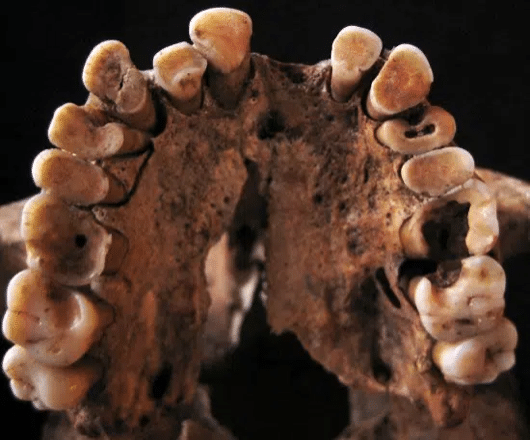
Indeed, not all sugars are equal (I will discuss this further below) and the true cause of caries is not directly related to the mere presence of sugar. For proof, they appeared roughly in the Neolithic (the advent of agriculture about 12,000 years ago), when humans began to consume large quantities of cooked cereals or starches. Whereas among gatherers (who primarily consume fruits) and hunter-gatherers, no dental problems have been detected. (Note: this link leads to a website in French. To read it in English or another language, simply copy the URL and paste it into Google Translate https://translate.google.com/?sl=fr&tl=it&op=translate)
The various dental problems increasingly encountered in modern humans:
- Caries (the largest source of infection in the world)
- Occlusion problems (misaligned teeth)
- Periodontal diseases (receding gums)
Although I am neither a doctor nor a dentist, I have conducted my own investigation into oral health. The personal conclusions below are informed by various readings (see our sources at the bottom of the page), personal reflections, and experiences shared with dentists and hygienists.

The origin of dental problems viewed from a biological angle
1. Regarding caries
The terrain is everything
This bacterial infection that can even perforate tooth enamel and create cavities cannot, as we mentioned earlier, have its sole origin in sugar consumption; otherwise, great apes would have caries, and anthropologists would have found caries on the skeletons of humans before the Neolithic (or before humans began to consume large quantities of cooked starches). The other, more plausible hypothesis put forward by some holistic dentists is that it is an excessive acidity in the oral sphere (oral flora + saliva + biofilm on the teeth) that creates a favorable environment for the development of certain bacteria (Streptococcus mutans) responsible for caries.
Parenthesis: From a hygienist’s point of view, there are no good or bad bacteria. The bacteria we call “pathogenic” can only develop when the terrain is unbalanced.
Moreover, an overly acidic terrain forces the body to draw from certain mineral reserves (notably calcium and magnesium) stored in the skeleton, which will serve as a buffer system to neutralize acidity and thus rebalance the pH of the blood and cells. Consequently, acidification of the body can indirectly lead to demineralization of enamel (and the entire skeleton), making teeth more sensitive to attacks from these Streptococcus mutans, which, it is true, feed on sugar but can only act on weakened teeth (by the acidity of saliva and/or demineralization) and in an acidic environment.
This reasoning explains why more and more children have decayed baby teeth even before they have erupted from the gums. It also explains why some caries start from inside the tooth. This is merely a reflection of an acidified body.
There is “sugar” and “sugar”
In this case, why do so many studies demonize sugar and conclude that it is responsible for caries? For several reasons, the first being that the distinction is not made between the sugar in fruits and refined sugar in all its forms: white, brown, in white flours (since starch is a chain of glucose, thus sugar), fructose syrup, etc. All these refined sugars, devoid of (or almost) minerals, enter the blood too quickly compared to the sugar from fruits (which are mixed with fibers, water, vitamins, enzymes, antioxidants, minerals, etc.), creating a harmful blood sugar spike.
Another problem with refined sugars: The body needs minerals to convert sugars into energy. If these minerals are absent from the consumed food (which is the case in so-called refined food but not with fruits), then the body will draw from its own mineral reserves. In the long term, the consumption of refined sugars will therefore lead to demineralization, which, consequently, will disrupt the acid-base balance (since the body uses minerals to buffer acidity). This is why refined sugars and flours are particularly acidifying (because they are low in minerals), just like animal proteins which, during digestion, produce acidic waste such as uric acid.
As for whole or semi-whole flours, we now know that the seed coat contains, among other things, phytates and lectins whose role is to trap positive ions (particularly iron, calcium, magnesium, zinc, and selenium; it is therefore not surprising that these deficiencies are common) so that the seed accumulates nutrients. This is why phytates and lectins, partially destroyed by germination or cooking, make the consumption of seeds (cereals, legumes, or others) inappropriate for humans as they can be potentially demineralizing. Furthermore, we also know that seeds produce a number of toxic substances (some are there to protect the seed from predators), such as gluten, trypsin inhibitors, saponins, isoflavones, etc., which can increase intestinal permeability, thus promoting autoimmune diseases.
Moreover, the viscosity of cooked starch contained in seeds or tubers increases the risk of food deposits in contact with the teeth, thus increasing the risk of caries. This explains why the first caries appeared when humanity began to consume starches in large quantities.
To learn more about sugar: read this article on Living Nutrition and sugar.
Sugar is Vital
We have just seen why not all sugars are equal. And fortunately, because sugar is the main fuel for our body (the brain only functions on glucose) and it is better not to see it as an enemy because it is, in various forms, almost everywhere: fruits, honey, cereals, legumes, tubers, etc., and unless you follow a ketogenic diet (about 80% fat, 5% carbohydrates, 15% protein; a diet with many drawbacks), you cannot live without sugar. Moreover, sugar is omnipresent in nature. Cellulose, which we cannot digest but which some insects and herbivores consume, is a chain of glucose with so-called beta bonds. This is why trees and plants can, from a certain angle, be seen as immense stores of sugar.
What about acidic fruits?
It is often said that acidic fruits, particularly citrus fruits, are harmful to teeth. To properly understand the issue, it is important to realize that in Living Nutrition, we are always drawn to what we need. And acidic fruits, which contain weak acids, have the ability to dissolve the acid crystals (which are strong acids) that the body has stored in the tissues. The organic acids in fruits are therefore alkalizing (read this article to learn more). The craving we may feel for acidic fruits is thus a reflection of our acidification. In summary, the more acidified we are, the more we love acidic fruits that act as an antidote by solubilizing the crystallized acids that can then be eliminated (generally through the kidneys). However, this transition from solid (in crystal form) to liquid (via the action of the weak acids contained in acidic fruits) can damage tissues if the body does not have sufficient mineral reserves to buffer the acidity being reintroduced for elimination. This is why some conclude a bit too quickly that acidic fruits acidify the body and damage teeth.
From my point of view, the solution is therefore not to stop consuming acidic fruits (since they are the antidote, remember: “Let your food be your medicine” as Hippocrates said) but to emphasize remineralization (see article on how to address deficiencies with Living Nutrition) with vegetable juices, seawater, superfoods, wild plants (everything rich in calcium, silica, phosphorus, and magnesium is good for teeth and the skeleton), algae, etc., and the use of naturopathic detox techniques (like the garlic-lemon cure, purges, etc.) to help the body rid itself of the acids that burden it. That said, the question remains open as to whether the acidity of fruits damages tooth enamel or not, and if so, to what extent. A measure that depends, in any case, on the state of acidosis and mineralization of the body. Personally, I believe that consuming acidic fruits (like lemon) that briefly contact tooth enamel is much less harmful than acidic saliva on a daily basis in which teeth are bathed 24/7. Furthermore, according to some sources, saliva (if sufficiently mineralized) has the ability to maintain and regenerate enamel. To learn more, read this article on the acidity of citrus fruits.
In general, fruits being very detoxifying, we may tend to blame them for all sorts of discomforts (digestive issues, caries, pain, various detox reactions) when they only support the body’s natural detox mechanisms. This is why, in the context of a dietary transition (which concerns everyone), it is important to properly remineralize in parallel.
What about food combinations and dental plaque?
The microorganisms living naturally on food that facilitate its degradation in the mouth are called “commensal flora.” Eating raw mono-food meals (without mixing) helps minimize food residues in the mouth, as these are more easily degraded by the commensal flora, and this, without producing much waste (which otherwise ends up on dental plaque). If we consume raw food, the commensal flora will be somewhat less effective in its degradation work, especially if we mix foods with different pH levels (as the commensal flora specific to one food can only act effectively within its preferred terrain).
On the other hand, when we consume cooked and mixed foods, the commensal flora that will develop in the mouth in contact with the mix of these mixed foods will be versatile and opportunistic (meaning that the microorganisms specific to a particular food will not be favored). This flora will not be the most beneficial as it will produce numerous waste products that will promote the appearance of what is called dental plaque. Dental plaque, also called biofilm, is a thin film that forms on the surface of our teeth. Appearing whitish or yellowish, dental plaque is composed of saliva, bacteria, and food residues that remain in our mouth after meals. This dental plaque weakens teeth and thus promotes the appearance of caries.
What about interdental spaces?
Ideally developed jaws have spaced teeth that do not touch. This is why no food should normally stagnate. Insufficient interdental spaces or, worse, overlapping teeth (as seen in modern dentitions) can cause food debris to get stuck and promote the development of germs that will weaken teeth and gums. This is the subject of the second point.

2. Regarding occlusion problems (misaligned teeth)
The proper development of jaws and teeth depends on several important parameters:
- A well-positioned tongue, pressed against the palate (the micro-stimulations induced favor the proper development of jaws and teeth).
- Nasal breathing and not mouth breathing (otherwise the tongue is poorly positioned and the induced dry mouth decreases the protective effects of saliva, which increases the risk of cavities).
- Sucking during breastfeeding that cannot be replaced, due to its stimulating effects, by any pacifier.
- Sufficient chewing while avoiding too many blended or soft foods.
When our jaws have not been sufficiently exercised in this way during childhood, there are various consequences:
- Appearance of impacted teeth (often wisdom teeth).
- Overlapping teeth.
- Teeth that are too tight. Ideally, the gap between all teeth should not allow food to get stuck (which promotes cavities).
- Dental malocclusion (the upper teeth do not fit well with the lower teeth). This can lead to poor chewing (a source of digestive and absorption problems) and overuse of certain teeth (premature aging, again increasing the risk of cavities).
- Repercussions on the entire skeleton, particularly the proper position of the spine.
3. Regarding periodontal diseases
In his book “Ending the Loss of Your Teeth (En finir avec la perte de vos dents)”, Dr. Jean-Michel Pelé puts forward the following hypothesis: Periodontal diseases (receding gums and loosening teeth) would be due to a natural mechanism induced by the body when the teeth lose their seal and become entry points for bacteria and viruses. The body then decides to expel the non-sealed tooth or teeth in order to close the wound. According to Jean-Michel Pelé, this natural process, which is generally beneficial for the organism, would begin with a progressive retraction of the gums.
How to take care of your teeth?
- Regarding cavities
The number one cause being acidity, the solution is to remineralize with vegetable juices and seawater, and limit everything that is acidifying: stimulants (tea, coffee, alcohol, tobacco), preservatives, sugars and refined flours, cereals, legumes, and animal proteins.
The number two cause being food deposits, the solution is to prefer the consumption of raw mono foods and limit the consumption of cooked and/or industrial food that promotes food deposits (due to the sticky nature of cooked food, especially if it contains starch) and dental plaque. In parallel, it is essential to adopt good dental hygiene (see below).
- Regarding dental occlusion problems
Depending on the degree of malocclusion, there are different methods. Starting from the least invasive, here are the existing solutions:
1) The use of an activator, also called a machouyou, to be worn for 1 hour a day and all night. A gentle method recommended in dentosophy. Pros: realigns the jaws and teeth, repositions the tongue upwards, forces nasal breathing. Cons: cumbersome to wear, uncomfortable for sleeping, results take a long time (several years).
2) The intermediate solution consists of wearing aligners. Pros: very effective with results in about a year on average. Cons: must wear aligners 24/7 and expensive.
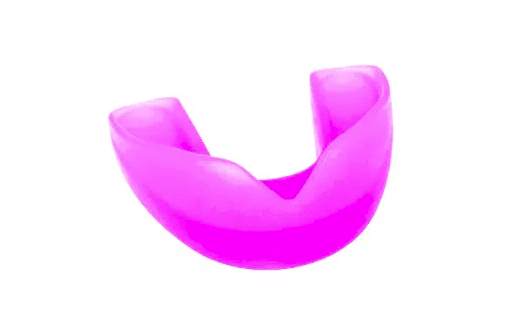
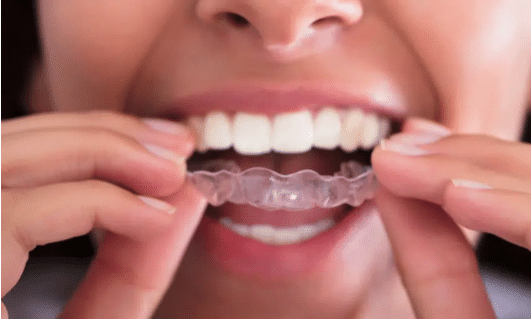
3) As a last resort, if the previous two solutions are not suitable (for example, in cases where palatine expansion is necessary), traditional orthodontics with expanders and braces.
- Regarding periodontal problems
According to Dr. Jean-Michel Pelé, cleaning the dental roots with oxygen helps neutralize anaerobic bacteria that have infiltrated between the tooth and the gum. Once this cleaning is done, the body stops the process of expelling the teeth and the gum returns to its normal position.
When to brush your teeth?
- Upon waking: During the night, the body expels toxins through the tongue and gums, hence the importance of using a tongue scraper and brushing your teeth before eating anything in the morning. Otherwise, the expelled toxins in the oral cavity return to the body.
- After each meal, it is important to brush your teeth to eliminate food deposits that are sources of yellowing teeth, tartar, and cavities. Important: Wait 20 minutes after the last bite before brushing your teeth because this is the time needed for the oral mucosa to expel some of the acids produced during digestion (all foods produce them, only the quantity changes). Indeed, the pH of the mouth naturally decreases after a meal and it may be interesting to measure it with pH paper to see its evolution depending on what you consume.
How to brush your teeth properly?
To be done in this order:
- Roughly clean with a dental jet that expels food waste between the teeth.
- Finish this task with interdental brushes and/or dental floss.
- With or without toothpaste, brush your teeth with soft bristles and without going against the gums (to avoid damaging them and causing teeth to loosen). An electric toothbrush is very effective for ensuring quality brushing.
- Rinse your mouth with seawater (do not spit it out as it is beneficial for the body) to alkalinize the pH of the mouth and remineralize the teeth.
- Take one to two drops of essential oil (such as mint, tea tree, pine, eucalyptus, citrus, etc.) in your mouth. They all have the property of being orthobiotic. That is to say, they help the body restore a symbiotic or commensal bacterial balance at the expense of pathogenic bacteria.
- If it’s evening, you can do a mouthwash with non-heated clay diluted in a little water. Do not spit this water out but drink it (for its internal virtues). You can also apply a clay poultice where you have damaged/painful teeth/gums.
This may seem cumbersome but the effort is worth it, even if you already have cavities. According to some studies, 50% of decayed teeth can regenerate themselves.
Tip: In addition to these daily care routines, I have learned to recognize the sensation of acidity when it occurs in my mouth. When it manifests, I spit and then rinse my mouth with water (fresh or, better, seawater) until the sensation disappears. This reflex is important for preserving dental health because it is the acidity produced that is responsible for the dissolution of enamel as well as the development of bacteria that cause cavities.
What about toothpaste?
Toothpaste is not necessary and can be replaced by simply a few drops of water. It is also possible to make your own from clay, baking soda, or activated charcoal.
If you use a commercial toothpaste, it is important that it is free from fluoride and detergents like those from the Meswak or Cattier brands. Indeed, even though fluoride helps eliminate the so-called “responsible” bacteria for cavities, excess fluoride in the body leads to harmful effects that go against its primary use. Thus, instead of strengthening and protecting the teeth, it can make them fragile and porous.
Fluorosis is a common disease that affects teeth due to excess fluoride. Overconsumption of fluoride can also cause diseases such as osteoporosis, thyroid diseases, brain degeneration, and neurological disorders. Furthermore, fluoride is said to be responsible for thyroid problems and the calcification of the pineal gland, which secretes melatonin and thus plays a central role in regulating biological rhythms (wake/sleep and seasonal).
More generally, all preparations that contain Sodium Lauryl Sulfate (detergent) and Triclosan (bactericide) should be avoided.
Other complementary care
- Once or twice a week, brush your teeth with activated charcoal powder. Like clay, it helps whiten teeth and absorb toxins.
- Brush your teeth with a little baking soda mixed with a few drops (2 or 3) of hydrogen peroxide (at 10 volumes) instead of toothpaste. Do this a maximum of twice a week as it is a bit corrosive for the teeth. This preparation helps whiten teeth, alkalinize the oral cavity (which slows the development of so-called “pathogenic” bacteria), alleviate periodontal pain, and prevent tooth loosening. It is a care recommended by dentists and is suitable for people with fragile teeth and gums.
- In case of gum inflammation or bleeding, do a mouthwash with oil (sesame, olive, or coconut) in the morning on an empty stomach for several minutes and then spit out the oil.
- An annual check-up at the dentist and possibly a scaling (normally there should be no tartar if you eat living foods). If small cavities have appeared since the last visit, it is advisable to follow the dental hygiene and remineralization recommendations in this article to stop the degradation process of the tooth. If the cavities continue to progress and the dentin (the part of the tooth that contains nerves) is at risk of being attacked, it is wise to have it “treated” and replace the hole with a resin before it is too late.
- Listen to specific polymorphic frequencies twice a day specific to the gums and to the teeth available on the Youtube channel Sapien Medicine.
- Remove mercury amalgams if you have them and they are causing problems.
All these tips, even if followed to the letter, do not guarantee that you will never have problems, but they limit them as much as possible. Another important fact to integrate is that even if your current lifestyle is impeccable, as long as your body is capable of detoxing (especially acids), you are likely to have dental problems.
What to do when it is too late to treat damaged teeth naturally?
- Doing nothing is not without consequences as the risk of infection and inflammation is significant and it can have dangerous repercussions on the entire body (it is an open wound).
- Having teeth extracted, a practice often banned by dentists. Pros: inexpensive and natural care. Cons: It can unbalance a jaw, decrease the bone mass of the jaw, cause other teeth to shift, put more strain on other teeth (risk of tiring other teeth or chewing only on one side or chewing food less well) and it is not very aesthetic.
- Resorting to traditional endodontics by having teeth devitalized. A very common practice but increasingly controversial (see the film on Netflix “Root Cause”) as teeth would eventually necrose at the level of the micro dental canals (which allow veins and small diameter nerves to pass) that are not sealed during a root canal treatment. This can become a breeding ground for bacteria, which can lead to more or less serious oral infections in the medium or long term (according to social security, only 30% of devitalized teeth do not have problems after 5 years).
- Resorting to advanced endodontics that devitalizes teeth under a microscope and performs more precise work. Pros: the risks of necrosis in the long term are minimized, it allows delaying the moment when an implant will be needed. Cons: treatments are not reimbursed by social security.
- Having teeth extracted and replaced with zirconia implants (the safest material to date). Pros: no risk of necrosis and interactions. Cons: risk of infection still possible, having a foreign body inside, the cost.
The origin of dental problems viewed from a psycho-emotional angle
Human beings are obviously not animals like others and our emotions play a determining role in the quality of our health.
Whether in psychology, esotericism, or spirituality, some consider that teeth are a reflection of:
- Our identity
- Our defenses
- Our foundational beliefs
Having dental problems is therefore not trivial from a symbolic point of view when we consider that our body speaks to us in metaphors (the unspoken). Thus, when we are troubled by stress (decrease or overexpression of our defenses), when we devalue ourselves (loss of identity), or when it is time for us to abandon one or more limiting foundational beliefs, dental problems may arise.
The loss of one or more teeth can then be seen as fuses blowing to counterbalance certain tensions and help us in our psycho-emotional transformation.
Addresses of holistic dentists:
- Florent Masson in Lyon: +33 4 78 42 18 06