
For a good year
Good resolutions — from the Latin resolutio, which means ‘to untie’ — are commitments to oneself that can be made every day of the year. It is about making the right choices, those that free us from suffering, as soon as we understand that we have everything to gain by abandoning certain habits rooted in false beliefs. When we think we have understood a truth or a principle but do not apply it, or only partially, it means that we have not yet integrated it in all its depth. Indeed, there is no real disadvantage to freeing ourselves from old toxic habits to reconnect with our authentic nature and true needs.
These general considerations lead me to talk about fruits because, in reality, we are all — regardless of naturopathic or Ayurvedic profile, blood type, and other classifications — made to primarily consume fruits. That is why any dietary change that does not give them a central place is doomed, in the short or medium term, to reveal its limits. Another major reason to emphasize fruits is that, beyond their beneficial effects on health, they have the power to make us fully alive, awakening parts of ourselves that have long been asleep or repressed.
Why are we made to eat fruits?
Like all primates, we have an anatomical constitution of frugivores (see the chapter 1 of Optimal Health, book to be published in 2027).
One of the laws of the living is that we are biologically designed to eat what we can catch with our bare hands and enjoy without artifices (sauces, spices, cooking, etc.). In this regard, it is interesting to note that the word metacarpus (the bones of the hand) means ‘behind the fruit’ in Greek. Furthermore, the word fruit comes from the Latin fructus, which means ‘enjoyment’ or ‘that from which we profit’. And in Greek mythology, it is said that Demeter, the goddess of fertility, carried a cornucopia filled with fruits and vegetables symbolizing the generosity of the earth and the prosperity it offered.
If you do not seek your energy in the sugar of fruits, you will seek it:
- in starches, which are a source of colloidal waste (see this article on starches);
- in stimulants (coffee, chocolate, alcohol, refined sugar, etc.), which generate acidity;
- or in fat, which slows lymphatic circulation and hinders the assimilation of sugars (see this article on our lipid needs).
In this regard, the ideal average consumption of lipids is estimated at about 10% of total caloric intake. Beyond that, excess fat promotes elimination crises (due to the slowing of lymph), as well as a decrease in cognitive and physical performance.
Fruits are the foods that provide the most energy for a minimum of digestive work (about two hours), as they naturally contain digestive enzymes and the right dosage of fiber compared to vegetables. Moreover, the fructose they contain can be assimilated without direct intervention from insulin.
Contrary to popular belief, fruits neither make you lose weight nor gain weight, nor do they cause diabetes. On the contrary, they lead the body towards its ideal weight. When weight loss occurs with a predominantly frugivorous diet, it is most often because caloric intake is insufficient. Conversely, weight gain is never attributable to the fruits themselves, but to what accompanies them. Finally, regarding type 2 diabetes, the main contributing factor is excess fat, much more than sugar consumption (see this article on our sugar needs).
What are the benefits of eating fruits?
- They are a major source of vitality, joy, and pleasure, provided you learn to choose and consume them properly.
- They improve transit — going to the bathroom at least twice a day is a physiological benchmark — and, more broadly, the entire digestion, provided certain rules are respected.
- By gradually awakening different dimensions of being, they can transform life on physical, emotional, and psychological levels.
- They are one of the simplest and quickest meals to prepare (see this article on fruit meals).

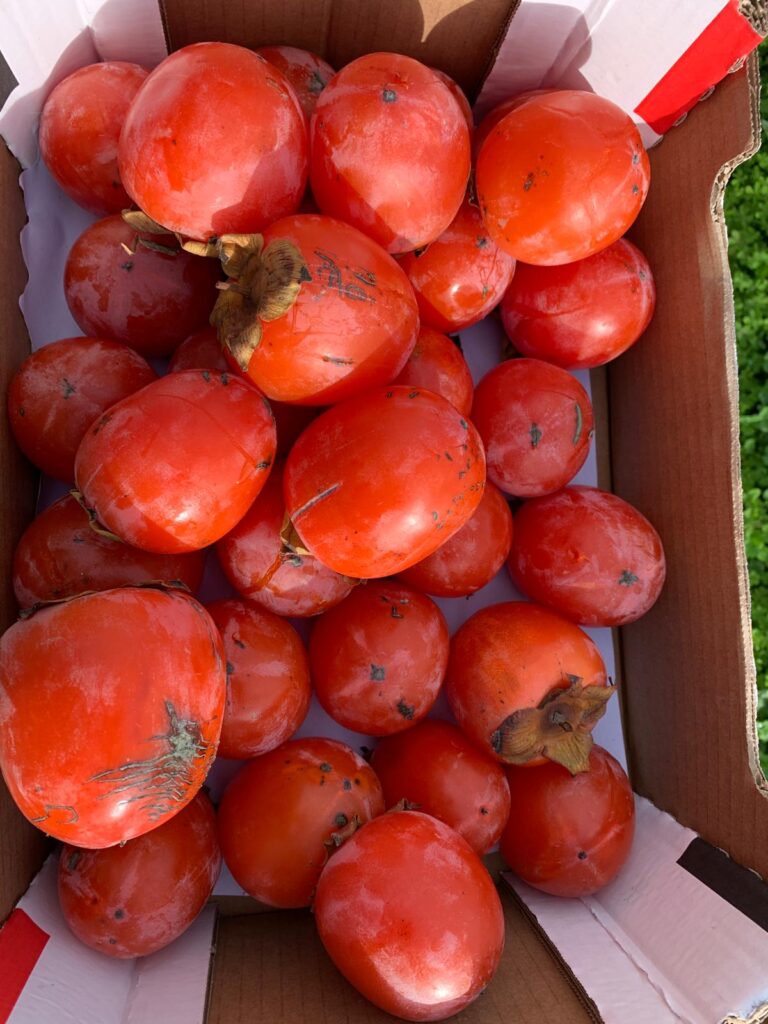
What are the major obstacles to consuming fruits?
- The fear of consuming too much sugar, fueled by erroneous beliefs. The idea that there are ‘savory beaks’ and ‘sweet beaks’ is misleading: all cells in the body function on glucose. Therefore, biologically, there are only ‘sweet beaks’. Some people are simply more attracted to savory due to increased mineral needs.
- The cost of fruits. It is true that they are more expensive than a bag of rice, but it is an investment in health. The essential question then becomes: what price do we place on our vitality? In this regard, read this article on where to buy your fruits?
- Unfavorable food combinations, such as fruits and nuts, or acidic fruits and very sweet fruits, which can lead to fermentation and make digestion difficult. To learn more about this, read this article on food combinations.
- The consumption of fruits at the end of a meal or after meals rich in fats and proteins, whose complete digestion requires six to twelve hours. This is why a heavy dinner can make breakfast fruits indigestible.
As my grandfather noted — ‘what’s good about your diet is that you’re always at dessert’ — reveals a deep conditioning: eating at fixed times, reserving sweetness for the end of the meal and considering it a reward. This conditioning, repeated thousands of times during childhood, installs the idea that it is not legitimate to fully listen to one’s desires and that pleasure must be earned. The abundant consumption of fruits highlights this belief and can, in this regard, generate discomfort (see this article on meal frequency).
And this is precisely the only real contraindication to fruits: preferring that certain parts of oneself remain unexpressed.
Ten tips to make fruit consumption ecstatic

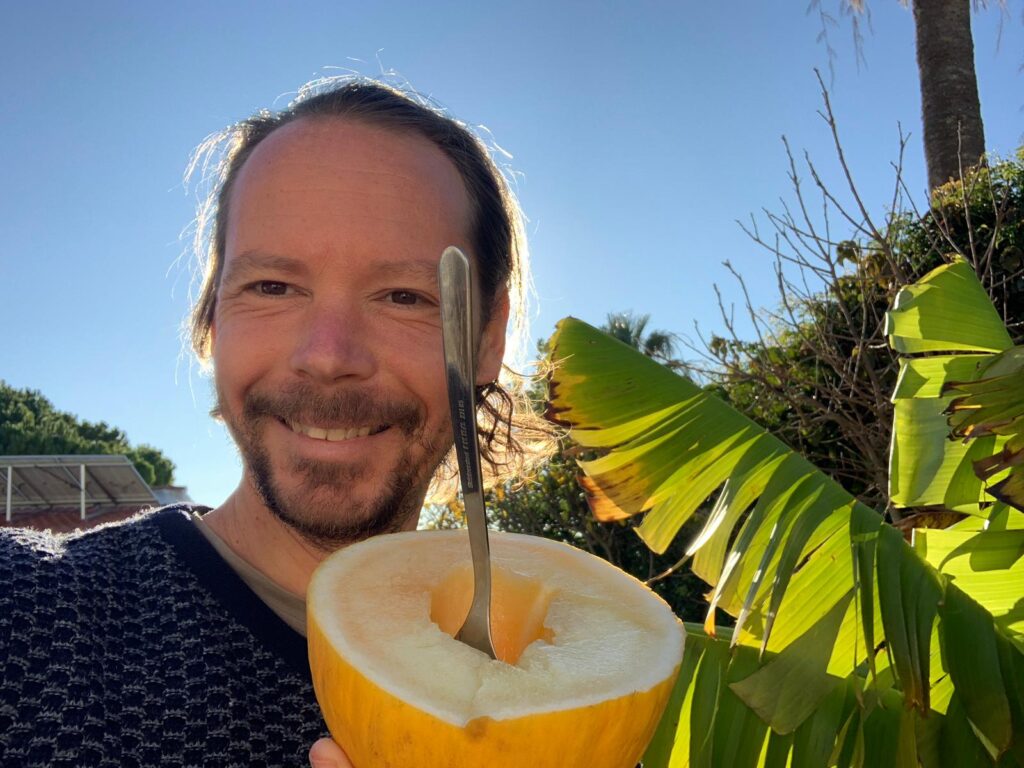
- Obtain quality fruits from reliable suppliers. To learn more, read this article on organic and local, as well as the one on where to buy your fruits?
- Learn to distinguish ripe fruits from those that are not, and to recognize those that can ripen at home.
- Let fruits ripen in a dedicated, visible, and temperate space to stimulate desire.
- Wait for true hunger, possibly by practicing intermittent fasting (preferably during the eating window from 10 am to 6 pm). To learn more, read this article on intermittent fasting.
- Only consume ripe fruits, at room temperature, and that are enjoyed taste-wise. Do not force yourself if you do not like them, find others. Good fruits always come to those who seek them.
- Avoid mixing too many different fruits; favor mono-food or simple and compatible combinations. To learn more about this, read this article on food combinations and this article on sensory nutrition.
- Limit yourself to four species of fruits per day and wait at least 30 minutes before moving from one to another to optimize digestion. The idea is then to wisely vary the textures and flavors of the fruits to reach satiety. This involves learning to accurately identify one’s desires and respond appropriately.
- Consume fruits as the first meal of the day, or after a vegetable juice, but never after a meal rich in fats or proteins.
- Plan for vegetable meals after fruit meals to balance savory cravings.
- Limit the share of lipids to a maximum of 20% of daily calories, 10% being generally sufficient (see this article on our lipid needs). You will then observe that digestion, energy levels, and the fluidity of detox will significantly improve.
What does the fruit challenge consist of?
It consists of gradually increasing the share of fruits in the diet until reaching at least one kilogram per day of non-fat fruits. The crucial point is that these fruits are consumed on an empty stomach or, at a pinch, after a vegetable juice, but never after coffee, toast, or fatty foods.
Note: The kilogram of fruits corresponds to what is actually eaten, once all non-edible parts are removed (peels, pits, etc.).
What to do if the hunger for fruits does not come?
If the hunger for fruits does not manifest at the first meal, it is possible to start with a vegetable juice or wait for this hunger to appear. Being hungry without a desire for fruits generally indicates that eating reflexes have been conditioned in a non-physiological way. This response can be retrained by maintaining fruits as the first meal, even if it requires effort and an adjustment period. As long as this challenge is not met, it is difficult to talk about truly living or physiological nutrition, even in the absence of industrial products. The good news, if you are not there yet, is that you have a great margin for improvement ahead of you to enhance digestion, health, and energy levels.
Once the kilogram of fruits per day is well tolerated, you can gradually increase the quantities of fruits while reducing the share of lipids. With an average caloric density of about 60 kcal per 100 g, a frugivorous organism can easily consume up to three kilograms of fruits per day.
Finally, when possible, the daily addition of at least half a liter of vegetable juice, before or after the fruits, helps to strengthen remineralization, tissue reconstruction, and limit cravings for non-physiological foods.
You now have all the keys in hand to enjoy this new year as the first of the most beautiful years that await you…
To go further
Read this article on the stages of dietary transition.