
“Let your food be your medicine.”
Hippocrates
"Let your plaque come out with a kit."
Hypocrite
Anatomy of the intestines
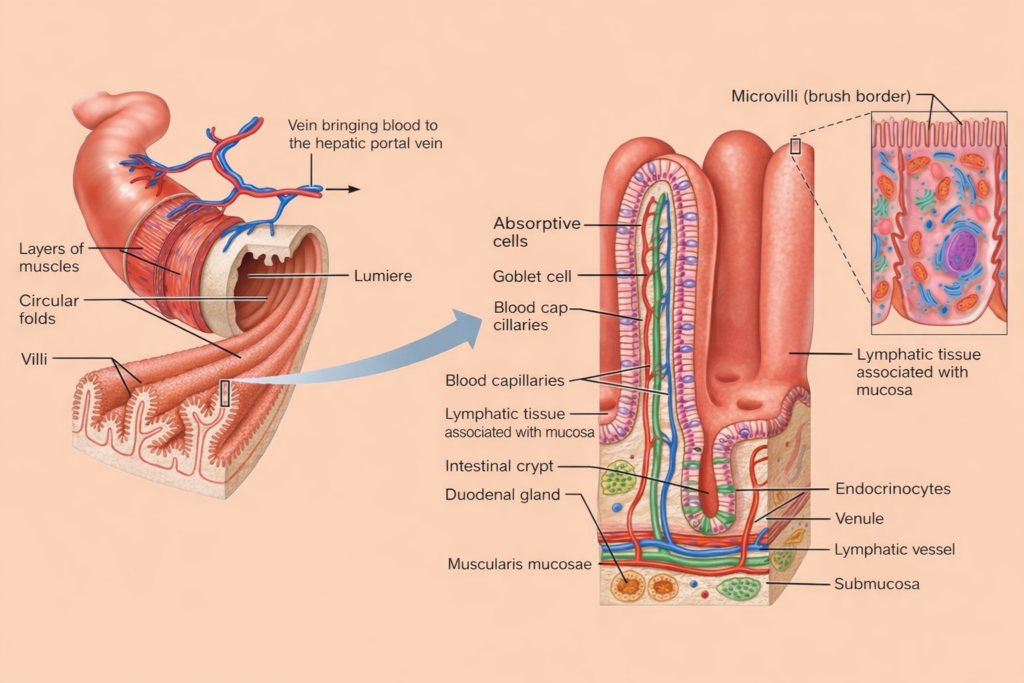
Before wanting to cleanse the intestines, it is important to know the characteristics of the surface in question. We have a cylindrical intestine about 10 meters long (of which 8 m is small intestine with an average diameter of 3 cm followed by 1.5 m of colon with an average diameter of 6 cm) lined with a mucosa whose surface is around 50m2. Furthermore, this digestive tube that links the outside and the inside is inhabited by about 10 trillion bacteria, viruses, and fungi essential for our survival.
The mucosa that completely covers the intestines is composed of 3 superimposed layers:
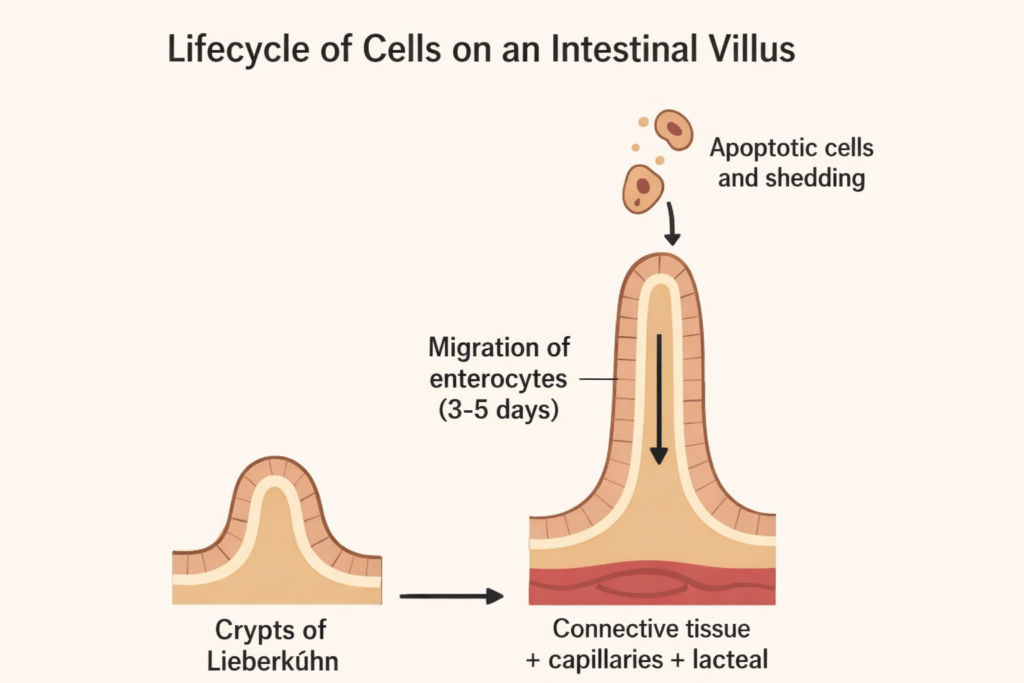
- It is formed by a first layer of adjacent cells called intestinal epithelium. This has the particularity of being folded by the presence of valves (circular folds) and 10 million intestinal villi (small fingers of 1 mm by 0.1 mm rich in capillaries and lymphatic vessels) which themselves have microvilli. These 3 levels of folds allow the intestine to multiply its absorption surface by 10. Structurally, the epithelium is composed of several types of cells: enterocytes (absorption), goblet cells (mucus secretion), endocrine cells (hormone secretion), and Paneth cells (antimicrobial defense). Epithelial cells are born in the crypts of Lieberkühn (at the base of the villi) and gradually migrate to the top of the villus in 3–5 days. Upon reaching the end, they die (apoptosis) and detach into the intestinal lumen. The villi, however, remain in place; only the superficial layer of cells is continuously renewed.
- Just below this epithelium is the connective tissue which serves to support, protect other body tissues, and ensure the management of functional tissues such as nutrient supply and waste elimination.
- And even below, a thin layer of muscle fibers called muscularis mucosae.
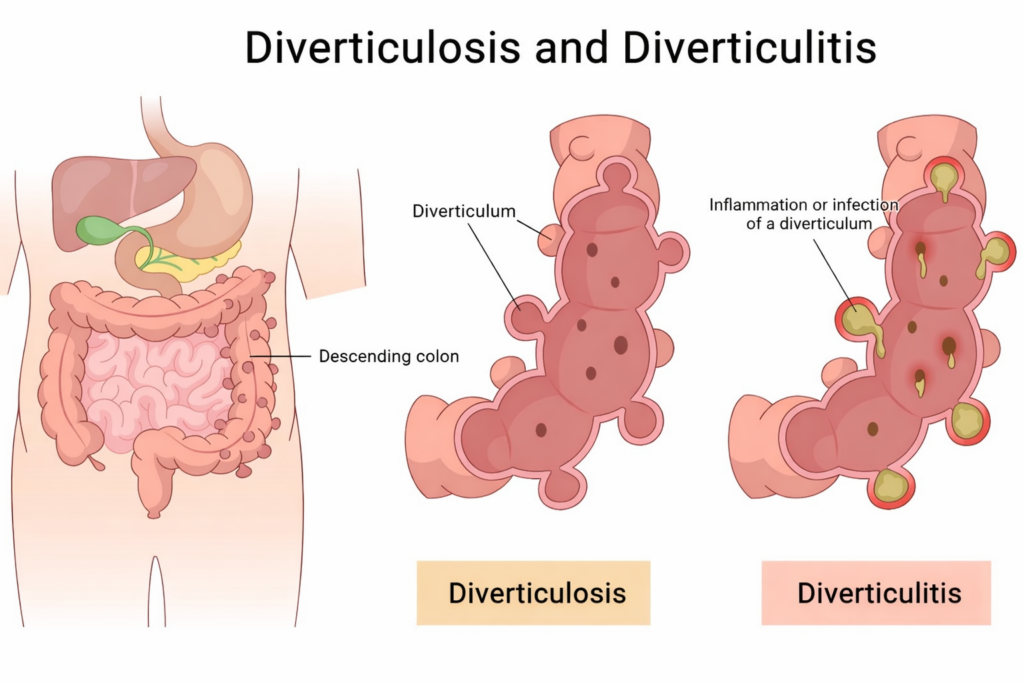
This finely folded intestinal mucosa, which should generally be cylindrical in shape, can be deformed in the colon by the presence of diverticula (small pouches protruding) when transit is too slow and/or when the diet is too low in fiber.
The different sources of intestinal clogging
Intestinal clogging can have various origins:
- Digestion which naturally produces more or less toxic waste depending on the nature of the foods (such as uric acid from the digestion of animal proteins). Similarly, lymph and mucus naturally release toxins through the intestines, which is one of the body’s emunctories.
- Foods, air, and water polluted by pesticides, heavy metals, etc.
- An unbalanced intestinal flora (dysbiosis) due to a non-physiological diet and/or the consumption of intoxicants (medications, alcohol, tobacco, drugs, etc.) that can release metabolic toxins (ammonia, phenols, amines), gases (methane, hydrogen, carbon dioxide), and endotoxins promoting intestinal and systemic inflammation.
- Poorly digested foods due to inadequate chewing, poor food combinations, or dysbiosis (an imbalance in the population of bacteria in the microbiome).
- A too slow intestinal transit (i.e., if one does not go to the bathroom at least 2 times a day) promotes the development of fermentations and putrefactions that become a source of self-intoxication. This process is exacerbated when consuming foods that are not designed for our digestive system.
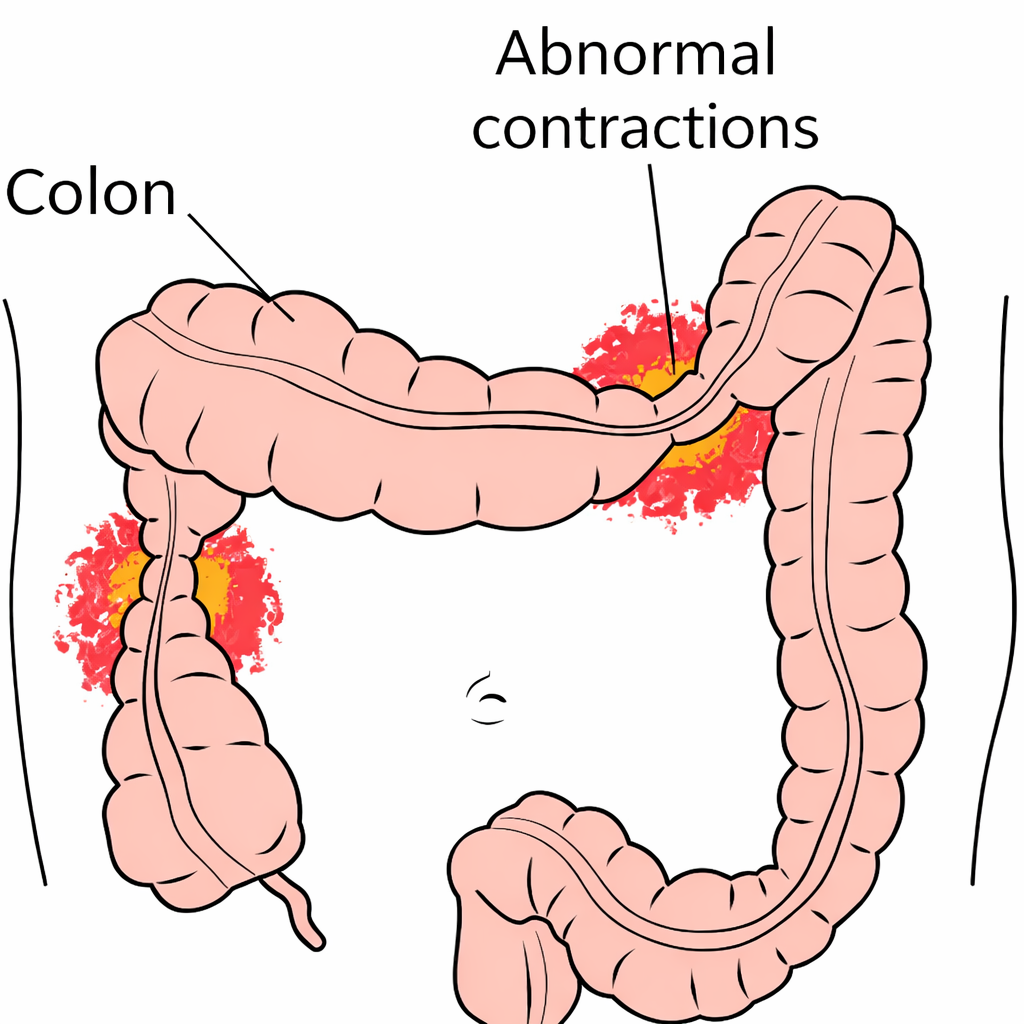
- Digestive waste stagnating in diverticula (see image below).
Notes: Fermentations produce gases and organic acids; putrefactions (degradation of proteins by certain bacteria) produce ammonia, phenols, indoles, skatoles, sulfides, and biogenic amines. These harmful and irritating substances beyond a certain threshold are responsible for abdominal bloating and flatulence. Furthermore, they alter the quality of the intestinal flora and fatigue the liver.
For all these reasons, intestinal clogging contributes to digestive disorders, malabsorption of nutrients, inflammation of the mucosa, dysbiosis, weakening of the immune system, and potentially to intestinal hyperpermeability which is linked to neurological diseases (Parkinson’s, MS, etc).
The best and simplest way to naturally maintain the intestines is to:
- Primarily eat raw foods from the plant kingdom for their richness in water, fiber (which serves as an intestinal broom, stimulates peristalsis, and the development of a beneficial microbiota), digestive enzymes (which break down macronutrients), alkaline micronutrients, etc.
- Practice simple and natural gestures to promote good digestion. Information can be found in this article on the keys to good digestion.
- Regularly use natural tools to cleanse and regenerate the digestive system. Information can be found in this article on the keys to good digestion.
Mucoid plaque, reality or salads?
Naturopath Richard Anderson introduced the concept of mucoid plaque in his book “Cleanse and Purify Thyself” published in 1987. He describes it as a harmful accumulation of mucus, undigested food, and waste lining the intestines that can be eliminated through fasting and various detox kits he developed himself. Since then, this mucoid plaque has been seen as the cause of many health problems, blocking nutrient absorption and obstructing the intestines.
Theory VS experience
The problem with Richard Anderson’s mucoid plaque theory is that it is not confirmed by experience. Indeed, the countless colonoscopies performed by gastroenterologists, as well as the thousands of autopsies, reveal no trace of mucoid plaque even in very sick patients with poor diets. This is why doctors, many of whom are renowned hygienists, believe that mucoid plaque simply does not exist. This viewpoint is shared by Dr. Alan Goldhamer (founder of the TrueNorth Health Institute), who has supervised over 20,000 fasts; by Dr. Areli K. Cuevas-Ocampo, who has carefully examined hundreds of digestive tracts without finding the slightest trace of this alleged accumulation; and by Dr. Douglas Graham (author of the 80/10/10 diet), who consulted many surgeons who have removed colons and sections of intestines, as well as one of his medical professors who has autopsied thousands of corpses.
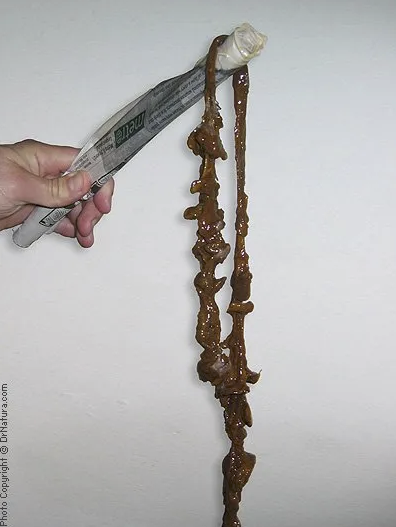
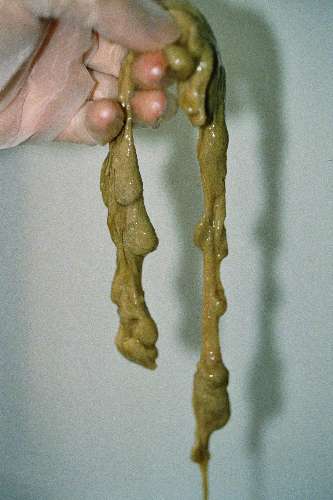
This is why medical experts and pathologists, including Dr. Areli, believe that the spectacular ‘snakes’ sometimes observed are not decades-old toxins, but a mixture of fibers, mucus, bile, and intestinal cells excreted, sometimes colored or shaped by the products of the detox kits themselves. See the video above to learn more about this.
Without putting his opinion in the hands of specialists, one can simply use common sense and ask the following question:
What could the mucoid plaque adhere to?
To answer this question, it is important to understand that the intestinal epithelium continuously produces mucus that is essential for protecting the intestinal wall from aggression and facilitating transit. It is worth noting that the term ‘mucoid plaque’ is an oxymoron since mucus, from the common Indo-European ‘meug’ meaning ‘slippery’, cannot be fixed into a ‘plaque’.
Moreover, the various cells of the epithelium (the cells lining the mucosa) are renewed every 3 to 5 days through apoptosis (see image below). Therefore, it is difficult to imagine a plaque that adheres to cells lubricated by mucus and that are both in motion (peristalsis) and in perpetual renewal (apoptosis). In fact, it is simply not possible. One might then imagine that this plaque is stuck under this epithelium, at the level of the connective tissue. But in this case, the epithelium would be damaged, and the tissue underneath would trigger an immediate inflammatory reaction, with a risk of bleeding, infection, and intestinal hyperpermeability. In conclusion, the fixation of this plaque is based on nothing solid! So how to interpret the testimonials that attest (with photos) to the effectiveness of cleaning kits to remove this so-called ‘mucoid plaque’?
The mucoid plaque cleaning kits
I tested the intestinal cleaning kit called ‘ZenCleanz One’. This protocol consists, roughly speaking, of consuming fruit powders and enzymes diluted in water every hour for a day, which are supposed to remove the mucoid plaque (if there is any!). On that cleaning day, I had planned a several-hour walk, so I prepared a ration (water + powder + enzymes) in a sealed mug rather than preparing the mixture at the last moment as recommended. However, when I wanted to drink it, it was not in liquid form but completely gelled. I then suspected that what comes out of the intestines after cleaning is not the expected mucoid plaque but simply the soluble fibers (pectin, psyllium, gums, and other mucilages) soaked in water that are contained in the kit powders. This suspicion became evident the next day when I eliminated a long, well-formed stool of 4-5 cm in diameter and orange in color (like the fruit powders). Nothing resembling a ‘mucoid plaque’ but rather a ‘mucilaginous plaque’…
If a person wants to verify whether or not the cleaning kit actually removes the mucoid plaque, they just need to do it twice in a row a few days apart. If the famous plaque came out the first time, it should logically be absent the next time…
What is the nature of the strange eliminations observed?
a) With the cleaning kits
What many confuse with mucoid plaque is actually formed by the ingredients of cleaning kits such as: soluble fibers (like psyllium husks) and bentonite clay. These compounds expand massively when mixed with water, forming thick, rubbery, cord-like structures that can resemble old waste. Furthermore, some cleaning products contain laxatives and intestinal stimulants like cascara sagrada, senna, and cayenne pepper that stimulate the intestinal production of mucus.
That said, it is quite reasonable to think that the ingredients of these kits act as a mucosal cleaner and that they flush out any waste that may have accumulated in the diverticula. The long serpent eliminated should then be seen more as a sponge passed through the internal plumbing rather than as a hypothetical plaque.
b) With vegetable juices
Some testimonials also mention that a mucoid plaque came out during a juice cleanse. The principle is the same as with the cleaning kit since the juices still contain many soluble and insoluble fibers that accumulate in the intestines before coming out in the form of a long filament that some call mucoid plaque.
c) During a fast
One might think that the elimination of a mucoid plaque during a fast is irrefutable proof of its existence. Again, the long filament that comes out originates from the accumulation of fecal matter that the body has retained prior to the fast and that it expels by producing mucus.
How to explain the tortuous shapes of the mucoid plaque?
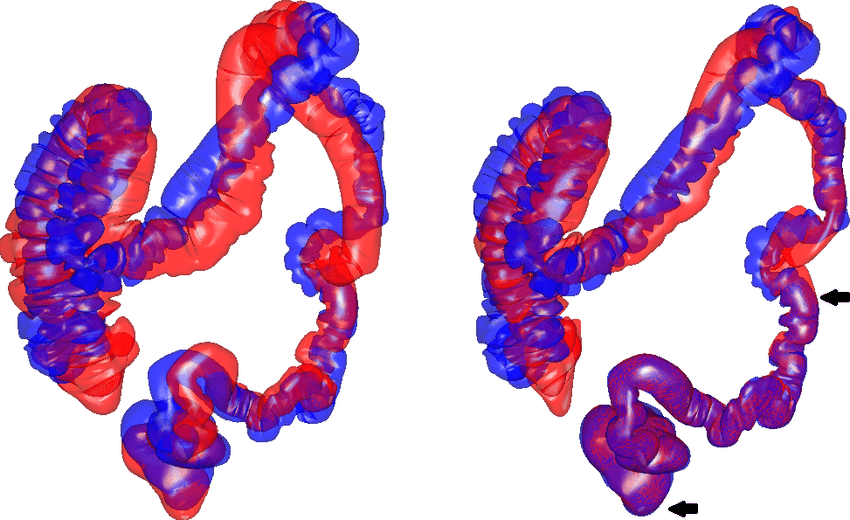
The ingredients of the cleaning kit, with all these fibers acting like sponges, seem to leave the body while retaining an imprint of the colon. If the colon is healthy, without deformation, diverticula, or contraction, the eliminations should be cylindrical and regular. In cases where the ‘mucilaginous plaque’ is tortuous, this likely indicates the presence of contraction, deformation, and diverticula in the colon.
Note: The colon is an organ connected to all parts of the body. The contractions and deformations it may undergo (see photos below) are sometimes caused by stress, trauma, or repressed emotions. Enemas, but especially colon hydrotherapy, have the ability, thanks to the pure water used that can clean toxins and deconstructive energies, to gradually restore (over sessions) the colon to a healthy and functional shape.
What is the interest of intestinal cleaning kits?
If mucoid plaque does not exist, it is recognized that intestinal diverticula can store food waste and toxins that a cleaning kit or an enema can clean out.
Through the massive presence of fibers, digestive enzymes, and mucolytic stimulants, they clean the intestines like a broom and sanitize the intestinal flora. That said, as explained at the beginning of the article, if your diet consists of raw fruits and vegetables daily, your body is receiving more than enough fiber, enzymes, and digestive stimulants without needing a cleaning kit.
If your diet is not ideal or if you are ‘in dietary transition‘, it may be wise to undergo several sessions of colon hydrotherapy possibly supplemented by an intestinal cleaning. Since these kits are generally expensive, I am currently working on establishing a more accessible protocol based on psyllium, Pianto Classic, spirulina, and enzymes that will be shared soon on this page.