Introduction
Since 2003, the WHO and the Food and Agriculture Organization of the United Nations have recommended a fat intake of between 15 and 30%. This percentage means that for a daily intake of 2000 Kcal (value for a sedentary person), between 300 kcal (15% of 2000) and 600 kcal (30% of 2000) should come from fats. Currently, the average French person consumes 40% fat. For a raw foodist accustomed to a cuisine based on oilseeds, this percentage is sometimes between 40 and 60%!
The excess of fats has long been criticized for its harmful effects on the cardiovascular system and is now recognized as the main cause of type 2 diabetes. Raw foodists believe they are safe because they consume raw fats. I invite you to discover in this article many biological mechanisms that seem to indicate that excess fats explain many failures that occurred during the transition to Living Nutrition.
The chemistry of fats
The term fat refers to oily substances that are insoluble in water, such as fats, oils, waxes, sterols, and triglycerides. They constitute the fat of living beings and are by nature hydrophobic or amphiphilic (one hydrophobic part that repels water and one hydrophilic part that loves water). This amphiphilic property is the origin of the fluid and flexible lipid bilayers that make up the biological membranes of our cells.
Fats are officially classified into 8 categories. The 3 most well-known are:
- Fatty acids. These are chains of carbon atoms to which hydrogen atoms are attached. Fatty acids are said to be “saturated” or “unsaturated” in hydrogen depending on the number of double bonds existing between the carbon atoms (0 double bond = saturated, 1 double bond = monounsaturated, 2 or more double bonds = polyunsaturated). Saturated fatty acids are solid at room temperature, while monounsaturated and polyunsaturated ones are liquid at room temperature. The more polyunsaturated a fatty acid is, the lower its melting point. Fatty acids are also classified as cis (characterized by a low melting point) or trans (due to exposure to heat or industrial hydrogenation). When fatty acids store by grouping 1, 2, or 3 around glycerol (an alcohol naturally present in the body), they form mono, di, or triglycerides.
- Sterols and their derivatives, which include cholesterol, steroids (testosterone, estrogen, cortisol), and vitamin D.
- Phospholipids, which are major components of the cell membranes of nervous tissues.
Fatty acids, sterols, and phospholipids constitute the bulk of the fats in human nutrition. They are all components of cell membranes, which cells depend on to maintain their structure, oxygenate, absorb micronutrients, and eliminate waste. Fats also play an essential role in growth, cell recycling, and hormone production.
At the beginning of the 21st century, physician and researcher John M. Rose was the first to identify the functions of fatty acids on health and the importance of maintaining an adequate balance in the dietary intake of different fatty acids. He identified two in particular that he called “essential fatty acids” because our body cannot synthesize them and therefore needs to find them in food. According to Rose, the two essential fatty acids are:
- Alpha-Linolenic Acid (ALA, from the omega 3 family).
- Linoleic Acid (LA, from the omega 6 family).
These two polyunsaturated fatty acids are building blocks from which the body manufactures 12 other fatty acids. All fatty acids made from ALA are called omega 3, and all those formed from LA are called omega 6. However, not all omega 3 and 6 are essential; only ALA and LA are.
The properties of fats
Fats cover a range of molecules essential for the functioning of the body, while fats mainly refer to triglycerides, which are a form of energy storage. Thus, all fats are lipids, but not all lipids are fats.
Vegetable fats tend to be liquid and therefore polyunsaturated (except coconut oil), while animal fats tend to be solid and therefore saturated (except fish oil). The digestibility, assimilation, and utilization of fats are better when they are polyunsaturated because their fluidity makes them more malleable for the body, which can saturate them at will (by adding hydrogen) according to its own needs.
Fats are distinguished from other macronutrients:
- By their high calorie content. While 1g of carbohydrates or proteins contains 4 kcal, 1g of fats contains 9.
- They are absorbed directly by the lymphatic system in the intestine, which is why they enter the blood without passing through the liver.
- Their digestion is slow. 600 calories of fats can take up to 5 hours to digest. Mixed with other foods, this digestion time is further increased, and a meal of protein + fat can remain in the stomach for up to 10 hours.
- Their (almost) absence of smell and taste. They are recognized more by their texture.
Our adipose tissues contain 10% essential fatty acids. Alpha-Linolenic Acid (ALA, from the omega 3 family) and Linoleic Acid (LA, from the omega 6 family) are essential for the health of our skin and hair, for development and growth, and for the proper functioning of the immune and glandular systems. Omega 6 (found in quantity in sunflower seeds, grape seeds, walnuts, etc.) has a pro-inflammatory, prothrombotic, and hypertensive action, while omega 3 (found in quantity in flax, blackcurrant seeds, evening primrose, etc.) has an antioxidant, sedative, and vasodilatory action. Omega 3 and 6 therefore have complementary actions, which is why it is recommended to balance their intake by consuming them in equivalent amounts.
The benefits of fats
If they are of good quality (see below), fats present various benefits for the body:
- Once stored as fats, they insulate from heat and cold.
- They replace yellow fats (bad fats) with brown fats that have 18 important metabolic functions in the body. Read this article on the benefits of cold to learn more.
- They form the insulating myelin sheath around nerves and participate in the good circulation of electrical current.
- Some fats (mainly omega 3) are known for their anti-inflammatory properties.
- Due to their liposoluble properties, fats are good cleansers of colloidal waste (glues, mucus, etc.).
- The consumption of fats stimulates the production of bile, which is alkalizing, antitoxic (it dissolves liposoluble toxins), and stimulates peristalsis.
- They are the carriers of fat-soluble vitamins A, D, K, and E.
Our needs for fats
Despite all this scientific information at our disposal, it is important to keep in mind, as the famous biochemist, naturopath, and herbalist Robert Morse points out, that our physiological needs are largely unknown, particularly our needs for fats. Moreover, recent study results suggest that ALA may not be essential because the body may be capable of producing it.
The needs for essential fatty acids
According to current nutritional standards that are not debated, the ideal omega 6: omega 3 ratio in the diet should be between 1:1 (as in the brain) and 4:1. Currently, the ratio among consumers is between 10:1 and 30:1, which causes significant inflammatory states in people who overconsume omega 6.
And according to the official recommendations of the Food and Nutrition Board of the American Institute of Medicine, our needs for essential fatty acids would be between 1 and 1.6 g of ALA (omega 3) and between 1 and 6.4 g of LA (omega 6). For a sedentary person consuming 2000 calories per day, the needs for ALA represent about 0.5% of the caloric ratio, or 10 calories, equivalent to one-third of a teaspoon.
Notes:
- Official nutritional values are, as a precautionary principle, always overestimated.
- ALA is found in all cell membranes of green leaves.
- The intestinal flora produces fatty acids from plant fibers.
The needs for unsaturated fatty acids
According to standard recommendations that are also not debated, it is preferable to consume two to four times more unsaturated fatty acids than saturated fatty acids. Otherwise, the latter become harmful to the cardiovascular system and are, among other things, responsible for atherosclerosis.
Notes:
- The good proportion of unsaturated/saturated fats is mainly found in foods from the plant kingdom: fruits, vegetables, and nuts.
- In animal products, it is the opposite; there are on average 4 times more saturated fats than unsaturated ones.
How much fat do we need per day?
- According to observation
If we look at the animals genetically closest to us, chimpanzees, they would have a caloric fat ratio of 5%. This means that in a 2000-calorie meal, about 100 calories come from fats, or only 11 g of fats.
And if we study the peoples known to have many centenarians, such as in Hunza (Pakistan), Abkhazia (Russia), and Vilcabamba (Ecuador), they would have a caloric fat ratio between 15 and 18%. This means that in a 2000-calorie meal, about 300 calories come from fats, or only 35 g of fats.
- According to official bodies
As mentioned in the introduction, official recommendations consider that we need 15 to 30% of fats (in caloric ratio), but these values are overestimated under the pressure of certain lobbies. Animal products being rich in fats (obvious or hidden), recommending a lower percentage of fats than current standards would decrease sales.
- According to American pro-vegan doctors
Several American cardiologists such as Dr. Dean Ornish, Dr. Caldwell Esselstyn, Dr. Neal Barnard; some of the most prestigious American centers (a title measured by the number of recoveries) like the Pritikin Longevity Center; as well as many other specialists, such as Dr. Michael Greger and Dr. Gabriel Cousens, recommend a low-fat vegan diet, namely only 10%. This makes sense with the observations made on chimpanzees and in blue zones where there is a high concentration of centenarians.
Note: Every day our body recycles lipids (and proteins) from about 200 g of dead cells to produce new cells. This explains why our lipid needs are low.
- According to pro-meat diets
In the face of the surge in epidemics (cancers, diabetes, chronic diseases, etc.) and the confusion prevailing in the food sector, many diverse diets have emerged. Some have achieved unprecedented success, such as the “low carb” diet (that is, low in carbohydrates, also known as the Atkins diet) or the ketogenic diet, which heavily favors lipids.
According to Dr. Michael Greger (who advocates for a strictly vegan diet) as well as the director of the nutrition department at Harvard, the Atkins diet (and by extension the ketogenic diet) causes, among other disorders, cardiovascular and liver problems, deficiencies, osteoporosis, osteoarthritis, diabetes, chronic fatigue, and obesity.
Notes:
- If one consumes few lipids, one will inevitably have a diet rich in carbohydrates, which can raise certain concerns that I demystify in this article:“What about sugar in Living Nutrition?”
- Some people think they have a “salty” palate and do not like fruits; they then derive their energy from fatty or cooked foods, particularly grains. By significantly limiting their consumption, the natural craving for fruits will return on its own.
Read this article to learn more about the harms of the ketogenic diet.
The problem of excess lipids
When we provide the body with few carbohydrates, it is forced to produce them itself from fats because some of our cells are glucose-dependent, and this is why the body maintains a blood sugar level between 0.7 and 1 g/L at all costs. This is proof, if needed, that carbohydrates are vital for the body. Besides the additional energy cost required by the body, the conversion of fats into glucose, called gluconeogenesis, produces waste such as acetone and other types of ketones. The body then enters ketosis, as during a fast, except that it is not fasting and gains no benefit from it.
All cell membranes are made of lipids, and these tend to clump together in bubbles in an aqueous environment. This is why, and this point is crucial, the excess of lipids or the consumption of poor-quality lipids will generate a lipid filter around the cells that will hinder the passage of oxygen and nutrients trying to make their way into the cells. Furthermore, since the digestion of lipids is slow, those consumed in excess will remain in the blood for hours and lead to the following disturbances:
- Insulin will have difficulty binding to its dedicated receptors on the surface of the cells, which will cause a spike in blood sugar and eventually promote the onset of type 2 diabetes. For this reason, one of the most harmful food combinations is mixing carbohydrates with lipids. Note: Candida Albicans is a yeast naturally present in the body that proliferates excessively in people with high blood sugar because its role is to regulate blood sugar levels. For this reason, an excess of lipids is indirectly a cause of parasitism by this yeast.
- Cells undernourished in oxygen and micronutrients can mutate and become cancerous. This cellular famine will stimulate the desire to consume stimulants (tea, coffee, cocoa, spices, etc.) and foods concentrated in micronutrients (superfoods, seawater, vegetable juices, etc.).
- A thickening of the blood that will cause hypertension and hinder red blood cells from transporting oxygen.
- A significant slowdown in digestion when they are associated with proteins during a meal. This meal can remain in the stomach for about ten hours and cause heartburn in those who eat fruits afterward, even if it is the next morning.
Moreover, since lipids, once digested, enter directly into the lymphatic system, they will tend to thicken the circulating lymph and slow its circulation. This is why excess lipids also hinder the proper functioning of the body’s natural detox mechanisms.
Note: Excess sodium (salt) is also a hindrance to the assimilation of glucose by the cells. This is why it can promote diabetes and stimulate cravings for sweet foods (raw or cooked).
The danger of bad fats
In this article on fresh fruit juices, I showed that the evolution of blood sugar following the consumption of an apple crumble (a raw dessert with nuts) raises blood sugar levels more (disrupting it for several hours) than drinking a liter of apple juice in one go. This unequivocally shows that lipids disrupt sugar metabolism, even when they are raw!
That said, all the disturbances caused by the consumption of lipids (see previous paragraph) are amplified if one consumes poor-quality fats. Because in the absence of good fatty acids (especially omega-3), the body settles for building cell membranes with bad fats, which become less permeable to nutrients. The body can then feel like it is starving and suffocating. Moreover, without essential fatty acids, one cannot burn their own fat reserves. This is why bad fats cause cravings, obesity, and depression.
What are bad fats?
- Refined oils
The refining of oils includes several steps, such as decolorization, deodorization, and treatment with chemicals to remove impurities, free fatty acids, toxic compounds, and pigments. During the refining of oils, antioxidants like vitamin E are removed, which promotes the rancidity of the oil (caused by oxygen, heat, and light), to which additives are added to keep it palatable. For these reasons, refined oils are extremely toxic to the body and should never be consumed.
- Heated fats
Some oils withstand cooking better (like olive, sunflower, or coconut oils which have high smoke points) than others (like flax, walnut, or hemp oil) which become toxic if used for cooking. In any case, the less an oil is heated, the less it develops toxic substances. More generally, polyunsaturated fatty acids, which are the most beneficial to the body, are destroyed by heat and turn into saturated fatty acids. To benefit from the advantages of lipids, it is therefore advisable to consume them raw.
- Trans fatty acids from heated or synthetic lipids
As for trans fatty acids obtained through hydrogenation or exposure to heat, which are found, for example, in margarines, they are all undesirable because they are very harmful to the cardiovascular system.
- Fatty acids from animal products
Saturated fats, which are predominant in animal products, cause cardiovascular disorders such as atherosclerosis. Moreover, since organisms store dangerous toxins in adipocytes, traces of vaccines, medications, antibiotics, and hormones can be found in animal fats. Products like meat, fish, cheese, pastries, and other industrial products also contain hidden fats that are not negligible.
Evaluate your own lipid consumption
To get an idea of the quantity and quality of lipids you consume, you can use specialized calculators like Cronometer, Nutridiary, or Fitday, noting that the measurements indicated concern the edible parts of foods and not the pits, skins, peels, etc. Even if these databases are not necessarily very accurate and the quality of plants (which depends on the maturity at harvest, the cultivation method, and soil richness) can greatly influence their nutritional richness, they allow you to get an idea of the content of our diet.
If you think that a plant-based and living diet is not for you because it makes you lose weight, indeed, it may be that the detoxes are too strong, but in many cases, it is simply that you are not eating enough. In this regard, calorie counting apps are very useful for verification.
And if you think that a plant-based and living diet has not been effective in addressing some of your health issues or that it causes digestive disorders, check with these apps what the % of lipids consumed daily is. If this figure is above 20% (which is already double what is necessary), then you can reduce your lipid intake and see if there are improvements.
Example of analysis of a plant-based and raw meal
Let’s analyze with Cronometer the nutritional content of the following, which could be the total of foods consumed in a day by a raw vegan:
- 1 kilo of kiwis, tomatoes, and bananas
- 500 g of mangoes and romaine lettuce
In total, 2075 calories, of which 100 calories are from lipids, or 4.8% of lipids, including 1.6 g of AAL and 1.1 g of AL.
The average of 10% lipids is reached by adding, based on a daily intake of 2000 calories, 100 calories of lipids, which is:
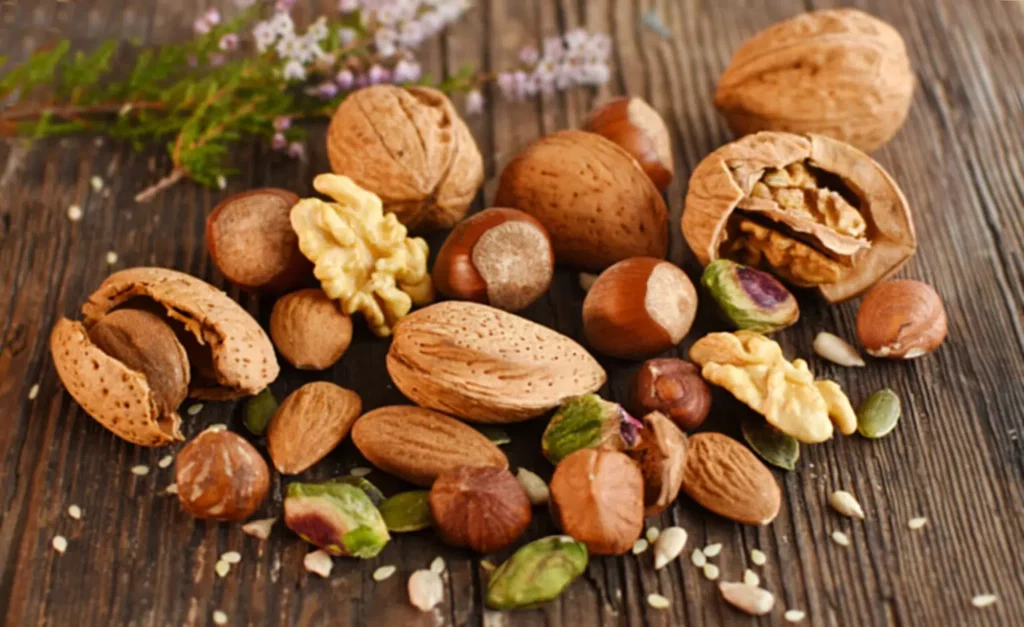
- 17 g of dry nuts (almonds, hazelnuts, etc.) OR
- 20 medium olives (4 g once pitted) OR
- 1 tablespoon of oil (15 ml) OR
- 65 g of avocado flesh
The average of 20% lipids is reached by adding, based on a daily intake of 2000 calories, 300 calories of lipids, which is:
- 50 g of dried nuts (almonds, hazelnuts, etc.) OR
- 60 olives OR
- 3 tablespoons of oil (45 ml) OR
- 200 g of avocado flesh
Notes:
- These percentages can be seen as an average to be achieved over the year.
- The digestion of lipids takes several hours: about 2 hours for 10% of fresh lipids (avocado, olive, or fresh coconut) and up to 10 hours for 20% of lipids from oilseeds. This is why it is preferable not to consume sweet fruits in the hours following (between 2 and 10 hours) a meal rich in lipids.
- As we do not need a lot of fatty foods, it is better to group them into a single meal and eat them alone (or with vegetables) to facilitate their digestion and avoid the overconsumption that often arises from mixtures.
- The liver and pancreas have an internal clock, and their functioning is optimal during the day but not at night. Consuming lipids late in the evening can disrupt digestion and sleep.
What is remarkable when analyzing the lipid content of raw fruits and vegetables is that, on average:
- They contain 5% lipids (excluding oilseeds which contain an average of 70%).
- The ideal 1:1 ratio between omega 6 and omega 3 is found.
- There are twice as many unsaturated fatty acids as saturated ones, including for oilseeds.
In short, everything seems to indicate that raw fruits and vegetables are ideal foods for humans.
Are our lipid needs variable?
Do average lipid needs vary from one individual to another based on genes, sex, physical activity, or the latitude of their living place? Is it 5% for one, 10% for another, or even 20% depending on the circumstances?
This question is akin to asking whether a horse at rest in its pen in a warm region will, comparatively, need a different diet than a horse working in a cold region. In reality, in this scenario, both will eat hay or grass; the only difference will be the amount consumed. The same goes for humans; regardless of our activity and living place, the proportions of lipids should not be very different, only the total amount of calories should mark a notable difference.
Read this article to learn more about the link between living nutrition and cold sensitivity.
Why are we attracted to fats?
If we all have roughly the same lipid needs, then why are we generally drawn to consume more than the recommended 10%? For several reasons:
- Acidosis in the body can stimulate the desire to consume lipids, which act as a balm due to their buffering effect on acids.
- Lipids provide density to stomachs accustomed to dense and cooked meals at the beginning of dietary transition.
- Lipids limit weight loss in individuals who do not consume enough calories in the form of sweet fruits.
- Due to their heavy digestion, lipids slow down detox (physical and psychological) by dissipating the nerve energy that would normally be allocated to detoxifying the body and fully feeling emotions. The consumption of fats helps to escape these two beneficial but uncomfortable mechanisms.
Experience shows that our attraction to lipids must be somewhat mentally controlled, including for raw plant fats. This seems to go against a key principle in living nutrition, namely: “As long as it is plant-based and raw, our instinct is always right, and we can eat whatever we want, as much as we want”. To learn more about this key principle, read this article on sensory nutrition.
So why shouldn’t we indulge in our cravings for avocado, oil, or nuts? For several reasons:
- Fat has little taste, and it is not easy to identify it with our taste buds; it is more by its texture that we recognize it, and this is why we can easily consume it in excess without necessarily realizing it.
- Fatty fruits are much less abundant than sweet fruits and are only found at certain times of the year. Therefore, it is natural for the body to stock up when the opportunity arises. For this reason, one cannot rely solely on their sensory stop towards lipids when they are available and abundant all year round.
- If you gain weight by consuming good fats, you have proof that the body does not know what to do with them, and that is why it stores them.
In conclusion, since we have access to fats all year round in our society, the downside is that we must engage our minds to recreate the natural conditions of scarcity of this macronutrient. Just as in a context where food is abundant all year round, it becomes necessary for health to fast from time to time.
What about oils?
Only organic cold-pressed oils are consumable, and even then, provided they have not gone rancid due to contact with light, heat, and oxygen. A rancid oil can be identified by its unpleasant taste. Taste your oils and listen to what your taste buds tell you. Some oils, like sesame and olive oil, are less prone to rancidity because they are rich in antioxidants. Conversely, flaxseed oil, known for its richness in omega 3 and anti-inflammatory properties, goes rancid easily, so it is imperative to store it in the fridge and check its taste before use, even for a new bottle.
As mentioned earlier, our lipid needs are low, and moreover, it is very easy to meet them with a small amount of oilseeds. Oils are generally empty calories that can go rancid, so it is better to eat fatty foods in their raw form and thus benefit from all their nutrients.
On the other hand, oils can be interesting for topical application if, for example, one has dry skin. They are also useful for purging, like castor oil which cleanses the intestines, or olive oil present in the Moritz cure.
Conclusion
I have observed in my clients that a diet with 10% lipids can lead to cravings for non-physiological foods (cheese, fries, pastries, etc.) rich in lipids. In this case, it is better to incorporate more lipids without exceeding the upper limit of 20% (on average over the year), otherwise, there will be more disadvantages than advantages.
According to my experience, to consume 10% lipids and thus optimize energy levels and health, it is necessary to:
- Reprogram your mind to eat larger volumes of fruits and vegetables (5 kilos per day in my case).
- Gradually accustom your stomach to contain larger volumes of food as it has lost its capacity due to the consumption of cooked and dense foods.
- Have a sufficient variety of ripe fruits that you enjoy available. Vary throughout the day between watery, acidic, sweet, bitter, dense, or soft fruits according to your cravings.
- Spend 40% of your calories on physical activity to manage detox and the significant energy flow that fruits provide.
- Follow emotional and spiritual support to manage emotional detox if you wish to maintain this diet in the long term.
- Take it gradually by testing several times a year periods ranging from one week to one month without consuming any fatty foods.
What is important to remember is that we do not need a lot of fats, and excess can be detrimental to health and the successful transition to a new diet. Ultimately, the right percentage of lipids for each person is the one that stabilizes the diet towards a maximum of physiological foods without causing cravings or disrupting digestion. This criterion also applies to the consumption of vegetable juices, seawater, herbs, and other superfoods. Nutritional balance (which is temporary because everything is impermanence) is achieved when you feel fully nourished after a meal, without feeling heavy.
To go further
If you want to learn more about lipids and living nutrition, I can only recommend this reading:“The 80/10/10 Diet”by Douglas Graham. You will find there the references of the multiple study results that I mention in this article.