Zucchini Tartare
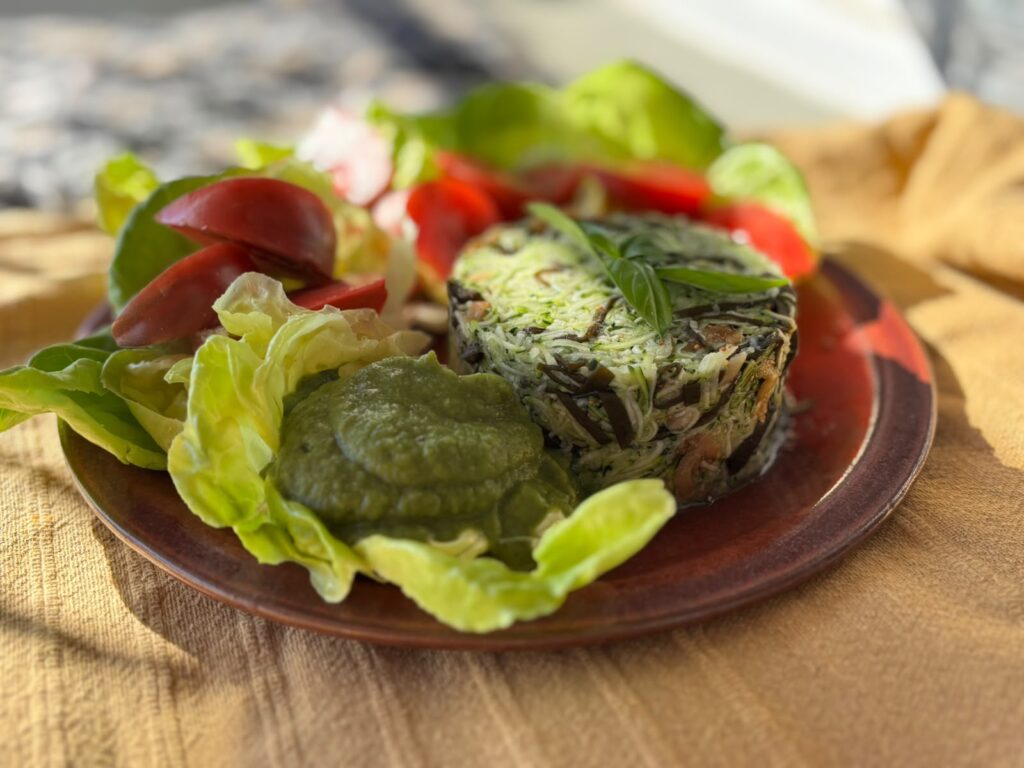
special equipment Blender + a tartare ring About the recipe A light and refreshing recipe with delicate, harmonious flavors. INGREDIENTS FOR ONE PERSON 1½ zucchinis 4 rehydrated dried figs 2 tbsp seaweed of your choice or barley grass powder ½ lime or lemon 1 handful of fresh basil leaves A small amount of water Preparation Finely grate one whole zucchini into a large bowl. Add the seaweed or barley grass powder and the figs cut into small pieces, then mix well. Transfer the mixture to the tartare ring and gently press it down to remove any excess juice. You can collect the juice and drink it through a straw. Carefully remove the ring, then drizzle the tartare with half of the lemon or lime juice. Now prepare the sauce. Place the remaining half zucchini, cut into pieces, in a blender with the basil, the remaining lemon or lime juice and a small amount of water. Blend until smooth. Spoon the sauce alongside the tartare and enjoy! Tips Everyone’s tastes are different and may change depending on their needs at the time, so feel free to adjust the quantities. They have intentionally been left fairly flexible. The basil can be replaced with another fresh herb of your choice. Barley grass powder can be replaced with wheatgrass powder. Food always tastes better after a moment of gratitude! 😉
The Bel Pepper Spread
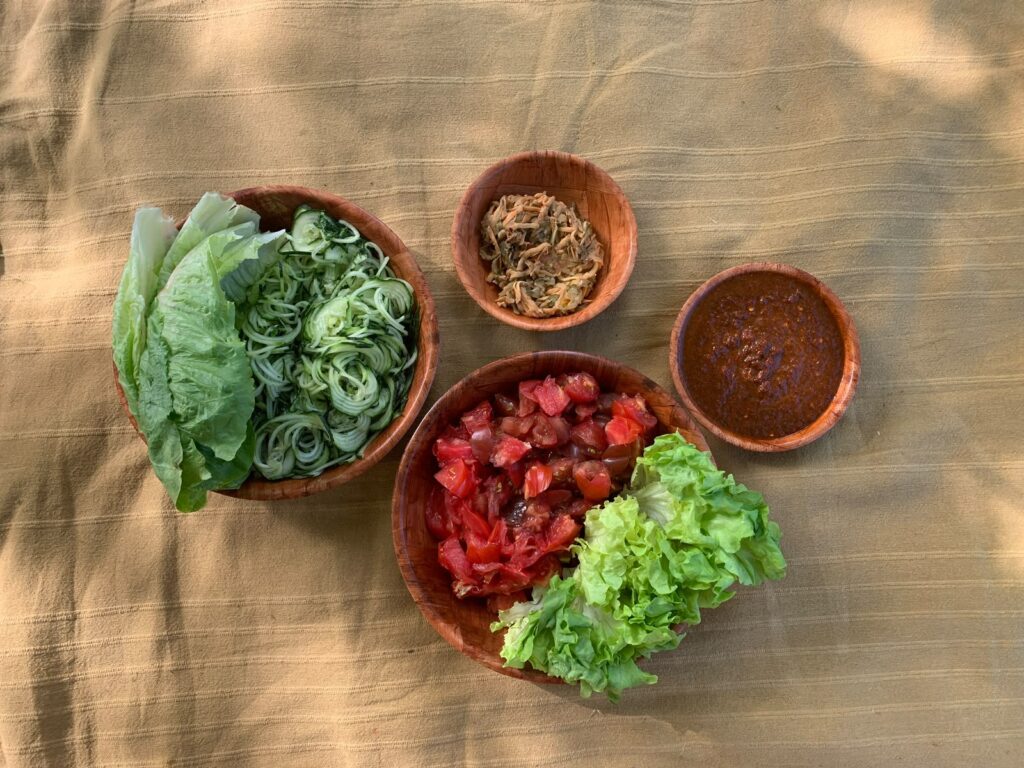
SPECIFIC EQUIPMENT REQUIRED Blender ABOUT THE RECIPE A smooth, flavorful, and incredibly simple sauce to make, perfect for pairing with raw vegetables, topping zucchini noodles, or enhancing salad sushi. Depending on the ingredients you choose, it can be made in a sweeter version (with dates) or a richer, fattier version (with sesame butter). INGREDIENTS (FOR ONE PERSON) 1 large red Bell pepper 2 tbsp barley grass powder 2 tbsp dried seaweed or dried mushrooms 6 pitted Dateor 1 tsp Tahini A few centiliters of water Preparation Cut the bell pepper into chunks and place it in the blender with all the other ingredients, except the water. Blend while gradually adding the water until you achieve a smooth, creamy, and even consistency. Pour the mixture into a bowl or directly over your vegetables. Tips This pepper spread makes an excellent alternative to bolognese sauce over zucchini or cucumber noodles. You can vary the flavors by changing the seaweed or dried mushrooms: each variation brings its own unique character. And as always: meals are even better when they begin with a moment of gratitude 😉
The Wrooms
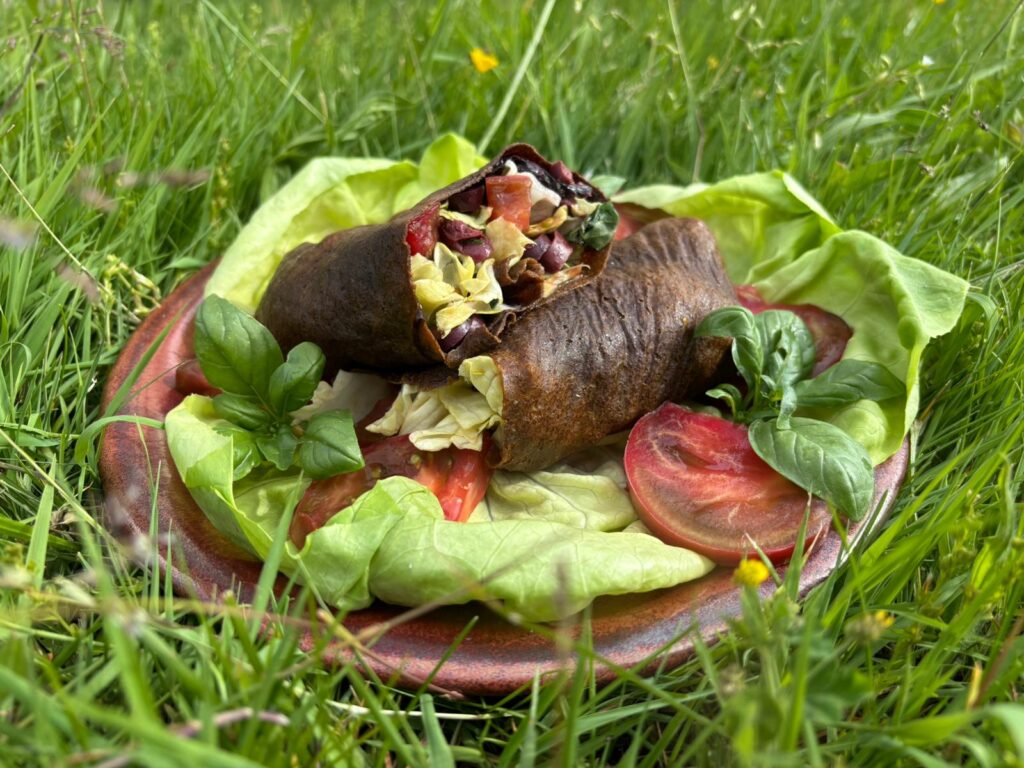
REQUIRED EQUIPMENT Blender Food dehydrator INGREDIENTS FOR ONE WRAP 150 g sweet potato 150 g mushrooms (your choice) 15 g psyllium Optional: spices or fresh herbs Preparation Place all the ingredients into a blender and blend without adding water. Spread the mixture onto baking paper or a similar non-stick surface. Distribute evenly using a spatula, or cover the mixture with plastic wrap and flatten it with a rolling pin. Dehydrate for 10 hours at 42°C (107°F). If needed, slightly rehydrate before eating. Tips It is best not to fully dehydrate the wraps so they remain soft and flexible. You can fill the wraps with anything you like, such as a vegetable fruicassée or a salad open me. Meals are always better after a moment of gratitude 😉
Lacto-Lemon Vegetables
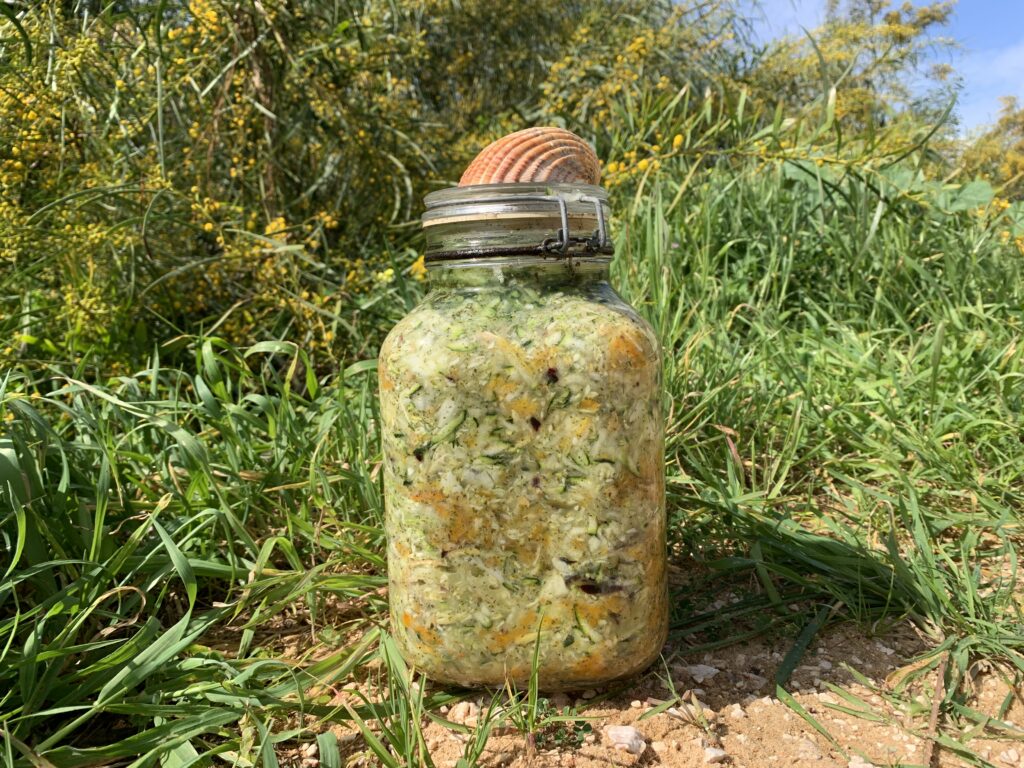
SPECIFIC EQUIPMENT REQUIRED FOOD PROCESSOR OR GRATER INGREDIENTS FOR A 4-LITER JAR 6 organic yellow lemons 1 kg of zucchini 1 large cabbage 1 kg of fennel 100 g of ginger A few centiliters of seawater Optional: a handful of dried seaweed flakes or a large bunch of aromatic herbsaromatiques Preparation Grate the vegetables and lemons using a food processor or a simple grater. Place everything in a large container, then add the finely chopped seaweed or herbs. Mix thoroughly until the preparation becomes homogeneous. Transfer it into a jar or a rubber-sealed glass container, pressing it down as much as possible. Stop about 2 cm below the rim, then add seawater until the container is full. Store it at room temperature in a sink or another container (as it may release liquid during the first few days). Wait at least 3 weeks before tasting. Tips Since tastes are directly connected to our needs — which differ from person to person — it is up to you to adjust the types of vegetables and the quantities, which have intentionally been left imprecise. Read this article about lacto-fermentation to learn more about the subject. Meals are always better after a moment of gratitude! 😉
A Winter in the Algarve, Portugal

March 22, 2026 – A Winter in the Algarve, Portugal After the shamanic retreat in Switzerland, I set course for the south of France to take part in a walking interview with Hervé Pauchon, a former journalist at France Inter who created his own podcast, La Balado de Pauchon.I then continued on to visit his cousin David, who also happens to be my Thai massage teacher, for a courtesy visit… and to receive a treatment from the master’s hands. With my body thus retuned, I quickly got back on the road to escape the cold and rain that had settled over Provence. After maintaining an overly intense pace of life from spring through the end of the year, I longed for just one thing: rest. I could already picture myself on a beach in southern Portugal, under the sun, resting in the shade of a tree. Drawn by this vision and pushed away by the damp winter, I crossed Spain through the snow without lingering. Three days on the road, with a day of fasting and castor oil in the middle, and I arrived in this promised land exactly at the winter solstice. A brief clearing in the sky revealed the deep green of cork oak forests, eucalyptus, and pine trees. At this latitude, something shifts: winter loosens its grip, and the landscapes remain alive, clothed in a persistent green. After crossing the Portuguese border, I settled near Lisbon, where I had signed up for an Ecstatic Dance with mantra chanting to celebrate the New Year. Despite the greenery and willow trees still in leaf, the days remained cool, with occasional frost at night. I spent the Christmas period by the Tagus River, retreating into a library during the day to write the Manual of Full Health, and warming myself the rest of the time through physical activity. On the weather maps, I kept looking further south, about 300 kilometers away, where temperatures promised a few precious extra degrees. It was my first winter living in a van, and I had to deal with an unusually cold season for Portugal—something I was not mentally prepared for. For much of the year, I had ignored my need to slow down, telling myself I would rest later, in Portugal. A gross mistake. I found myself facing not only the cold, but also all the needs I had neglected. Instead of the gentle rest I had expected, I was met with a kind of bitter stripping away. This period reminded me of something simple and fundamental: we always live in the here and now. What we push aside, thinking it will be easier later, inevitably returns. So I stopped escaping into daydreams and began giving myself the comfort I needed. In my situation, that meant simply dressing warmly from head to toe, running the van’s noisy heater, and accepting reality as it was. A useful shift in mindset, as the four days of Ecstatic Dance turned out to be particularly cold, in spaces not designed for such temperatures. Still, the singing, dancing, mantras, and a few logs in the fire created enough warmth for a beautiful celebration. It was there that I met Dana, a Californian who had recently moved to Portugal with her Italian husband, who invited me to spend a few days at her place in Lagos, by the ocean, where it was a few degrees warmer. So, in early January, I arrived in Lagos, in the Algarve—a town of about 30,000 inhabitants, largely made up of expatriates, mainly English, German, and French, who have settled in this almost tropical climate in search of a more human way of life. Dana introduced me to La Casa del Corpo, a dance and movement studio run by a French woman. There, I practiced animal flow, acro yoga, capoeira, contact dance, floor dance… all disciplines that had long interested me but that I had rarely had the chance to explore in France. I quickly found my rhythm in Lagos, signing up for multiple classes each week, while also taking part in singing circles and breathwork sessions nearby. I was genuinely surprised by the richness of movement practices available in the Algarve. For a month, my days were filled from morning to evening with these activities. And each night, I returned to the same spot in nature, just steps from the ocean, far from traffic and city lights. A perfect place that a Frenchman had shown me on my first day—like a welcome sign from the land itself. I became almost addicted to these practices, as my body thrived and transformed through these new forms of expression. And yet, something remained unchanged deep inside. I had wished for rest and solitude… and once again found myself caught in constant movement, as if I couldn’t slow down and embrace the emptiness. In the end, my body forced me to stop. I suffered a tear in my intercostal muscles during an acro yoga class. Fortunately, the immobilization was partial: I could still walk and even run a little, but nothing intense. I suspended all activities at La Casa del Corpo and devoted myself fully to writing the manual, under the guidance of Aeolus, who unleashed storms for a full month and kept me in a kind of enclosed retreat conducive to introspection. Many questions still remained unanswered in my understanding of hygienism and the physiological mechanisms behind it. Despite having read around fifty books, my understanding was still fragmented. It was through artificial intelligence that I finally found a way to satisfy my thirst for knowledge. Writing this book became an unexpectedly fascinating journey, reconnecting me with the energy and mindset I used to feel during my expeditions. I thought I would never experience such intensity again. And yet, in a different form, it returned through this work of writing. It is often said that children fulfill their parents’ dreams. My father dreamed of being a revolutionary, and my mother dreamed of studying biology. I sometimes
Vegetable fruicassee

SPECIAL EQUIPMENT REQUIRED None ABOUT THE RECIPE A flavorful dish that allows you to enjoy vegetables without necessarily adding fats. INGREDIENTS FOR ONE PERSON 1 mango and 4 clementines (or other fruits) 1 large red bell pepper 3 stalks of celery 200 g of salad greens of your choice 150 g of fresh or lacto-fermented kabocha squash Herbs or seaweeds of your choice Optional: 30 g of pumpkin seeds Preparation In a large bowl, break the fruit into pieces, finely cut the greens with scissors, then grate the squash. Add any optional ingredients, mix everything together, and it’s already ready to enjoy! Tips Quantities are given as a guideline—since needs and preferences vary, feel free to adjust them. Dried fruits are ideal for enhancing sweetness without adding too much water to the preparation. Replacing the squash with lacto-fermented vegetables introduces a pleasantly tangy and savory flavor. Meals are always better when enjoyed with a sense of gratitude! 😉
Freeing Your Emotions Through Dearmouring
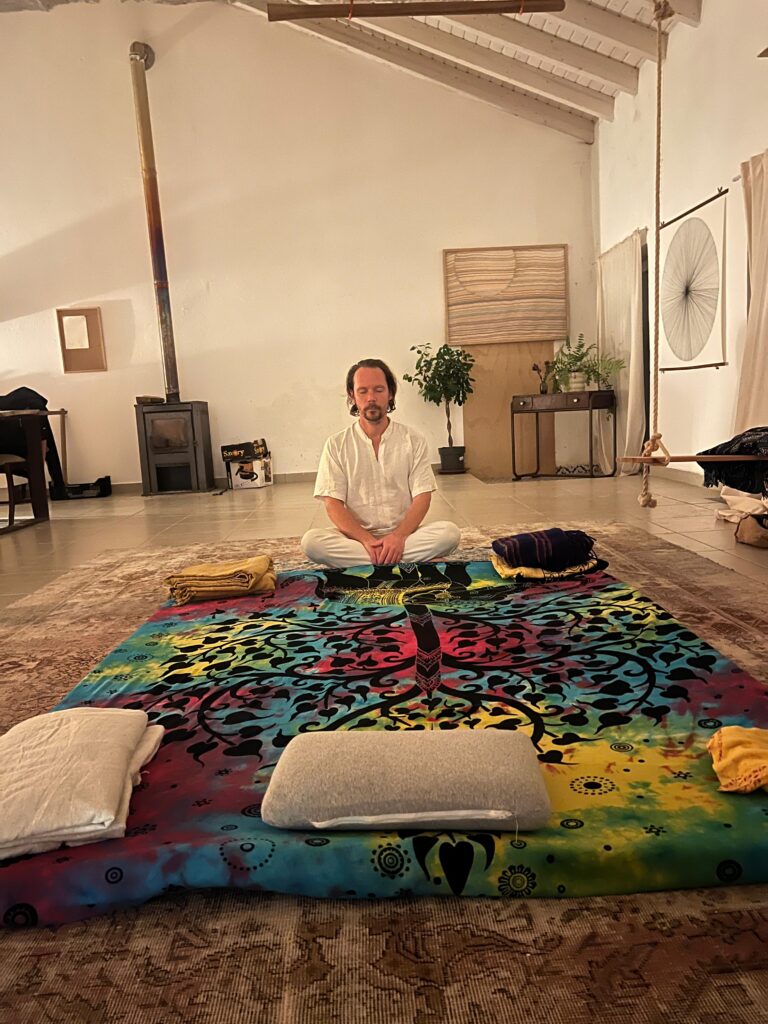
Introduction Dearmouring is a body-based support approach designed to facilitate the release of old emotional burdens, particularly those associated with experiences perceived as traumatic. It relies on the stimulation of specific acupressure points, combined with breathing, movement, and the use of the voice. Depending on the areas of the body engaged, previously contained emotions — fear, anger, sadness, frustration — may rise into awareness, be fully felt, and then gradually release. The objective is not to “force” an emotion, but to create a framework that allows deeply rooted tensions to soften. When the body and psyche lighten from tensions accumulated over time, greater joy, peace, self-confidence, and vitality naturally restore themselves. It then becomes possible to experience greater sensitivity and pleasure, as well as a deeper connection with oneself and with others. Trauma Mechanisms An event becomes traumatic when it exceeds the nervous system’s capacity for integration, particularly during childhood when it is still maturing. It then leaves a lasting bodily imprint. Psychotraumatology and affective neuroscience describe conditioned neuromuscular patterns and repeated physiological loops involving the autonomic nervous system. As Dr. Gabor Maté explains in The Wisdom of Trauma, trauma does not reside in the event itself, but in what happens internally when the event occurs — especially if we are not supported at that moment in speaking about it. Every emotion (and even every thought) is accompanied by hormonal, muscular, respiratory, and nervous modifications. When an intense emotion cannot be fully experienced, a protective mechanism activates. This may involve emotional distancing, dissociation, or repression. This adaptive strategy protects the organism from physiological and psychological overload that could otherwise lead to bodily harm. The system does not merely suppress the emotion; it also reorganizes self-representation and worldview in order to prevent the situation from recurring. In other words, physiological protection is often accompanied by an unconscious reconfiguration of beliefs. The body does not use this mechanism only for trauma, but also for all the emotions that trouble us daily and that we refuse to welcome. In spiritual environments, we often hear about acceptance as the sole solution to suffering. This does not mean accepting all life events, but accepting everything happening within us — otherwise we repress it. That is true letting go, not passive resignation. Even if temporarily cutting off from part of ourselves prevents an emotional manifestation that would be too intense for the system, the experience does not disappear. It remains latent, stored in the organism. Over time, this strategy can become an automatic mode of functioning. It is within this context that many addictive behaviors may appear. Substances, food, screens, overinvestment in work, compulsive sexuality, or entertainment become attempts at emotional anesthesia. Addiction is then not a problem in itself, but an adaptive solution to unresolved suffering. Repression and Bodily Storage When an emotion does not reach resolution (expression, action, regulation), chronic muscular tension, restricted breathing patterns, and hypervigilance of the autonomic nervous system may persist. Muscles, due to their ability to contract and maintain defensive postures, constitute a privileged site of storage. However, these emotional burdens may also embed in the fascia, in the autonomic nervous system, and even in toxins accumulated in tissues. From this perspective, it is observed that certain forms of anger seem to crystallize in acidic deposits, while certain fears associate with colloidal waste. Physiological terrain and emotional state thus constantly interact. In general, the following correspondences are frequently observed: Anger tends to manifest in the head and jaw. Sadness expresses itself in the chest and ribcage. Traumas related to survival, domination, or violence anchor in the abdomen and pelvis. Shame, guilt, and sexual frustration often localize in the thighs. These localizations are not random, but relate to the physiological function of the areas involved and their role in fundamental adaptive responses. Life Scenarios as a Liberation Process The body naturally tends toward balance. Life itself participates in this regulatory movement, helping us release emotional burdens that diminish our physical and mental health. As long as an emotional charge remains contained, it continues to manifest in the unconscious sphere. It then repeatedly attracts situations, relationships, or experiences that reactivate it with the aim of releasing it. This mechanism, often referred to as the law of attraction, operates through attachment patterns, unconscious beliefs, implicit expectations, and automatic nervous system responses. These life scenarios tend to fade once the repressed emotional charge has been recognized, felt, and integrated, and once the underlying limiting beliefs have been identified and reprogrammed. As long as emotions are not consciously accepted, the scenarios intensify. The settings change, the protagonists differ, but the storyline remains the same until it is finally integrated as a constructive experience of being — transforming the inner relationship to what was lived without projecting responsibility onto the outside world. Becoming Responsible for One’s Emotions On this path of liberation, one of the main traps is placing responsibility for our emotions on a culprit — whether a person or a situation. An external event may act as a trigger, but the root of the emotion lies in our own history and unmet needs. Emotional responsibility consists in recognizing this reality. For example: “I am angry because you did that!” amounts to attributing the cause of the emotion to the outside. In reality, the other person is the trigger (stimulus), but the true cause is an unmet need. The three foundational modules of Nonviolent Communication according to Marshall Rosenberg clearly explain these fundamental human mechanisms. In fact, within NVC, manipulation is considered to begin the moment we make another person responsible for our internal state and seek, explicitly or implicitly, to induce guilt in them in order to obtain change. This does not mean that the other person has no responsibility for their actions. It means that our emotional reaction belongs to us. Reclaiming this emotional responsibility therefore involves recognizing the emotion, identifying the underlying need, and not escaping through excessive intellectualization or behavioral anesthesia. Systematically attributing the cause of one’s state to an
Why meditate for two hours a day?
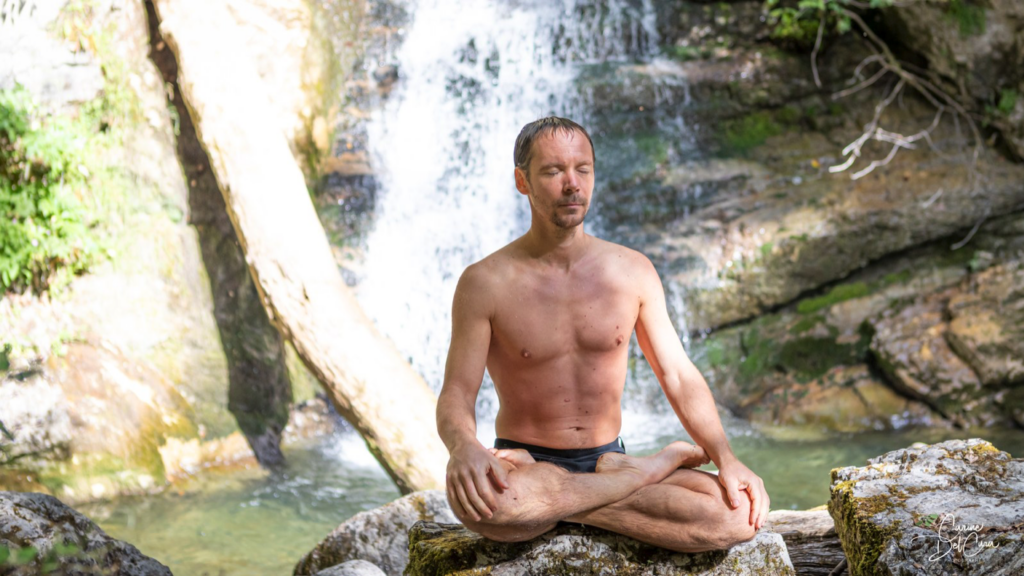
Why do I practice Vipassana meditation for two hours a day? Vipassana, a Sanskrit word meaning “to see things as they really are,” is a meditative practice based on continuously observing sensations in the body, from head to toe and toe to head. It does not use mantras or visualization, as these techniques can create pleasant states that distract from the direct observation of what is actually present within oneself. Its dual purpose is to: develop a keen awareness of bodily sensations, providing direct access to inner reality; cultivate equanimity in order to transcend the conditioning of the mind and connect with a broader dimension of being. Without body awareness, we live in ignorance or denial of what we are experiencing.Without equanimity, we replay the same life scenarios. This meditation, which is said to have been transmitted by the Buddha 2,500 years ago, is practiced for at least 1 hour in the morning and 1 hour in the evening. This regularity is the foundation for profoundly transforming the way we function and returning to the present moment. What Vipassana brings me on a daily basis: less mental distraction, more presence deep calming of the nervous system greater acceptance of what is reduced inner resistance a freer relationship with desires and aversions a direct understanding of impermanence new clarity about the influence of the mind on the body heightened states of consciousness, without resorting to substances a feeling of inner abundance a more authentic quality of presence in my relationships Some keys to integrating Vipassana into your life: Listen to the parts of yourself that resist and negotiate with them rather than fighting them. Understand that meditating is not a waste of time: it’s like consulting your map and compass before setting out on a walk. Recognize that the real waste of time is living trapped in repetitive mental patterns with all the disadvantages that this entails. To go further Read this full article on Vipassana meditation.
The Fruit Challenge
For a good year Good resolutions — from the Latin resolutio, which means ‘to untie’ — are commitments to oneself that can be made every day of the year. It is about making the right choices, those that free us from suffering, as soon as we understand that we have everything to gain by abandoning certain habits rooted in false beliefs. When we think we have understood a truth or a principle but do not apply it, or only partially, it means that we have not yet integrated it in all its depth. Indeed, there is no real disadvantage to freeing ourselves from old toxic habits to reconnect with our authentic nature and true needs. These general considerations lead me to talk about fruits because, in reality, we are all — regardless of naturopathic or Ayurvedic profile, blood type, and other classifications — made to primarily consume fruits. That is why any dietary change that does not give them a central place is doomed, in the short or medium term, to reveal its limits. Another major reason to emphasize fruits is that, beyond their beneficial effects on health, they have the power to make us fully alive, awakening parts of ourselves that have long been asleep or repressed. Why are we made to eat fruits? Like all primates, we have an anatomical constitution of frugivores (see the chapter 1 of Optimal Health, book to be published in 2027). One of the laws of the living is that we are biologically designed to eat what we can catch with our bare hands and enjoy without artifices (sauces, spices, cooking, etc.). In this regard, it is interesting to note that the word metacarpus (the bones of the hand) means ‘behind the fruit’ in Greek. Furthermore, the word fruit comes from the Latin fructus, which means ‘enjoyment’ or ‘that from which we profit’. And in Greek mythology, it is said that Demeter, the goddess of fertility, carried a cornucopia filled with fruits and vegetables symbolizing the generosity of the earth and the prosperity it offered. If you do not seek your energy in the sugar of fruits, you will seek it: in starches, which are a source of colloidal waste (see this article on starches); in stimulants (coffee, chocolate, alcohol, refined sugar, etc.), which generate acidity; or in fat, which slows lymphatic circulation and hinders the assimilation of sugars (see this article on our lipid needs). In this regard, the ideal average consumption of lipids is estimated at about 10% of total caloric intake. Beyond that, excess fat promotes elimination crises (due to the slowing of lymph), as well as a decrease in cognitive and physical performance. Fruits are the foods that provide the most energy for a minimum of digestive work (about two hours), as they naturally contain digestive enzymes and the right dosage of fiber compared to vegetables. Moreover, the fructose they contain can be assimilated without direct intervention from insulin. Contrary to popular belief, fruits neither make you lose weight nor gain weight, nor do they cause diabetes. On the contrary, they lead the body towards its ideal weight. When weight loss occurs with a predominantly frugivorous diet, it is most often because caloric intake is insufficient. Conversely, weight gain is never attributable to the fruits themselves, but to what accompanies them. Finally, regarding type 2 diabetes, the main contributing factor is excess fat, much more than sugar consumption (see this article on our sugar needs). What are the benefits of eating fruits? They are a major source of vitality, joy, and pleasure, provided you learn to choose and consume them properly. They improve transit — going to the bathroom at least twice a day is a physiological benchmark — and, more broadly, the entire digestion, provided certain rules are respected. By gradually awakening different dimensions of being, they can transform life on physical, emotional, and psychological levels. They are one of the simplest and quickest meals to prepare (see this article on fruit meals). What are the major obstacles to consuming fruits? The fear of consuming too much sugar, fueled by erroneous beliefs. The idea that there are ‘savory beaks’ and ‘sweet beaks’ is misleading: all cells in the body function on glucose. Therefore, biologically, there are only ‘sweet beaks’. Some people are simply more attracted to savory due to increased mineral needs. The cost of fruits. It is true that they are more expensive than a bag of rice, but it is an investment in health. The essential question then becomes: what price do we place on our vitality? In this regard, read this article on where to buy your fruits? Unfavorable food combinations, such as fruits and nuts, or acidic fruits and very sweet fruits, which can lead to fermentation and make digestion difficult. To learn more about this, read this article on food combinations. The consumption of fruits at the end of a meal or after meals rich in fats and proteins, whose complete digestion requires six to twelve hours. This is why a heavy dinner can make breakfast fruits indigestible. As my grandfather noted — ‘what’s good about your diet is that you’re always at dessert’ — reveals a deep conditioning: eating at fixed times, reserving sweetness for the end of the meal and considering it a reward. This conditioning, repeated thousands of times during childhood, installs the idea that it is not legitimate to fully listen to one’s desires and that pleasure must be earned. The abundant consumption of fruits highlights this belief and can, in this regard, generate discomfort (see this article on meal frequency). And this is precisely the only real contraindication to fruits: preferring that certain parts of oneself remain unexpressed. Ten tips to make fruit consumption ecstatic Obtain quality fruits from reliable suppliers. To learn more, read this article on organic and local, as well as the one on where to buy your fruits? Learn to distinguish ripe fruits from those that are not, and to recognize those that
An autumn and projects in the South-West
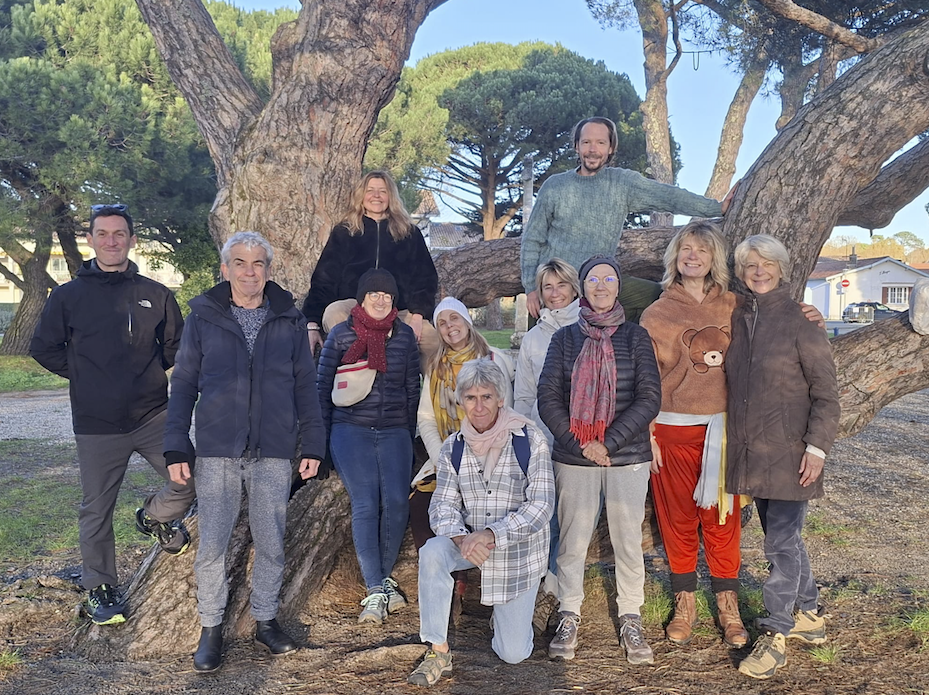
At the beginning of October, after a few days of rest in Camargue, I went to Ardèche to lead a week of fasting (stay Fasting and Trekking), with hikes, cold baths, conscious breathing, yoga, and, a special feature of this edition, an introduction to Vipassana meditation. An intense week where, in addition to the program, I provided 3 hours of care daily (Thai massage and magnetism). This allowed me to realize that even though I train much less than during the time of The Footprint, when I was a lumberjack, I maintain an equivalent vitality that is just as useful in my new professional activity. On the very evening of the end of the course, I was back in Saône and Loire at Fabienne’s, a friend (and former neighbor) who, since I became a nomad, stores all my belongings at her place. After a short pit stop, I left again the next morning, weighed down by a few boxes, which I relocated to my friend Gaspar’s in Dordogne where I plan, starting next spring, to organize Optimal Health workshops. In 2021, while participating in a reconnection to life workshop, Gaspar introduced me to Thai massage and later inspired me to train at Lulyani school in Provence. Since then, whenever we meet again, we pull out the futon for a very useful practice exchange to complement the courses and improve technique. After this beautiful week of sharing by the Dordogne, I joined Fanny near Bordeaux, a yoga teacher interested in living nutrition. To this end, Fanny invited me as a speaker for her “Sunday Yoga,” a warm gathering where the yoga community intersected with hygiene practices. A successful event that we decided to repeat on Sunday, May 10, 2026, in Mérignac, with, in addition, a raw food workshop and a conference on living nutrition. Then, a few days later, I followed up with the facilitation of the “Shamanic Detox” weekend that took place in early November in Gironde with Christel. A stay that I particularly cherish because it allows me to share other facets of my activity, where hygiene practices intersect with shamanism and new horizons open up. Then, two days later, I was in Luchon in the Pyrenees to attend a Vipassana retreat of 10 days in silence with 10 hours of daily meditation. My first Vipassana experience took place at the end of 2025 in India and it brought profound changes in my life. Both in the way I view the world and in my way of meditating. However, the food offered at this type of event is not the most physiological (in Luchon, 50% was industrial) and it is also not allowed to bring your own food. For these reasons, I am currently considering organizing a Vipassana retreat with living foods. The first session could take place in a small group in the fall of 2026 in Dordogne. Then, a few days later, I met Fanny in Andernos-les-bains to co-facilitate a yoga retreat with living nutrition, fresh juices, and hygienic practices such as cold baths, animal flow, and hyperventilation exercises. Once again, this happy combination inspired us to repeat the event from November 20 to 22, 2026. After this last course of a bustling season, I found myself quite pleased to finally take a breather and slow down. I then left the Atlantic Ocean to visit my family in Saône and Loire before joining Alison in Switzerland to participate in a shamanic retreat (with plants) within the framework of non-duality and the teachings of the course in miracles. A divine stay that allowed me to close the season beautifully even though I only slept 5 hours in 3 days and 3 nights and came out exhausted… As always with the plants, I feel immense gratitude for the wisdom and guidance they bring to humanity with such intelligence. The themes that emerged were not new: reconnection to love with my loved ones, the importance of forgiveness, reprogramming my beliefs about the order of the world, letting go of fears and resistances to love, allowing myself to be touched by the beauty of life, seeing it differently, realizing the unity among all beings, etc. This experience still fresh in my memory leads me to conclude the last episode of this year’s Rawd Trip by wishing us to place Love and Peace (which alone exist) at the center of our lives… See you next year and all the best until then…
How to do a detox?
The mechanisms of detox Detoxes are trending because, by reducing toxicity, they directly address the root causes of health problems. This article aims to shed light on the underlying mechanisms of detoxes and to enumerate the different ways to implement them. First of all, it is important to be aware that detoxes occur daily, whether we are interested in them or not. Indeed, every day the body cleanses itself; otherwise, it would no longer be able to function. Toxins that hinder the proper functioning of the body, whether endogenous (related to the normal functioning of the body or to inappropriate food combinations) or exogenous (non-physiological food or combinations, medications, pollution, etc.), are expelled daily through urine, feces, skin, lungs, mucous membranes, etc. Those that could not be eliminated, due to lack of time or energy, are stored. This vital self-cleaning mechanism is mainly active when the organs of the digestive system are no longer engaged in digesting and assimilating food. They are then mobilized to detoxify the body of its toxins stored in cells, tissues, fluids, fats, etc. This explains why, after a night of sleep, the body shows signs of detox such as blurred vision, a swollen face, a coated tongue and breath, a confused mind, a stuffy nose, etc. All these symptoms fade as soon as we put our body in motion (thanks to better oxygenation and lymphatic circulation) or restart the digestive system (with breakfast). To learn more about this, read this article on meal frequency. The role of the lymphatic system The lymphatic system, with its 4 to 5 liters of circulating lymph, is the key element of the immune system and detox mechanisms because it is responsible for collecting cellular waste and toxins to transport them to the emunctories, the exit points of the body. That is why it is crucial to maintain good lymphatic circulation; otherwise, detoxes are slowed down and elimination crises (better known as diseases) are more likely to manifest. If the body’s self-cleaning system is insufficient, we can take the initiative and use, in the short or long term, naturopathic detox techniques, cleanses, diets, purges, etc., which will support the body in its work of eliminating toxins. For detox to be effective and sensible, there are 4 main areas of development to consider. Here they are in order of priority: The 4 aspects of detox 1) Reduce the intake of toxins When we reduce the amount of toxins brought into the body, it is naturally better able to purify itself through a difference in osmotic pressure in biological fluids. Here are the different ways (which can be combined) to reduce the intake of toxins: Stop or limit the most harmful foods as well as unfavorable food combinations. For personalized advice, read this article on the stages of dietary transition. Reduce fat (even plant-based and raw) because it slows down lymphatic circulation, thus the elimination of toxins. To learn more, read this article on our lipid needs. Reduce the quantities of food, without changing the content. One possibility is to implement intermittent fasting. Improve personal hygiene by avoiding all products (soap, toothpaste, perfume, cosmetics, etc.) containing non-natural components, as these enter the body through the skin pores, mucous membranes, or lungs. 2) Open the emunctories and drain The main role of the emunctories is to expel toxins from the body. The three main ones are the liver, kidneys, and intestines. The secondary ones are the skin, lungs, mucous membranes, and eyes. Drainage simply involves promoting the movement of matter and fluids, such as intestinal transit as well as blood and lymphatic circulation. Here are the different ways (which can be combined) to open the emunctories and drain: The most important is physical activity, which alone performs 50% of the detox work. It is inseparable from good health as it opens all the emunctories, drains, vitalizes, regulates appetite, and improves transit. Ideally, 40% of the calories ingested should be burned through physical activity. To learn more about the benefits of physical activity, read this article. Good sweating is also important because the skin can detoxify more than the kidneys if it is well engaged. Additionally, exposure to cold (cold baths or showers, alternative baths, etc.) helps, among other things, to decongest organs, tone the fascia, and improve blood and lymphatic circulation. To learn more about hormesis through cold, read this article. Blood and lymphatic circulation can also benefit from stimulation through massages and cupping. In terms of personal hygiene, nasal irrigation (using a neti pot) and dry brushing of the skin (which opens the pores and stimulates drainage) are good complements. To learn more about personal hygiene, read this article. 3) Provide energy A sufficient level of energy is necessary for the body to perform the cleanses for which it is naturally designed. For this: Getting enough sleep and rest is essential. Just like exposure to sunlight (without sunglasses or sunscreen) which recharges energy and allows for sufficient vitamin D production, which is essential for various vital functions. An average of 20 minutes of exposure per day would be sufficient. To learn more about the benefits of sun exposure, read this article. With about 15 kg consumed each day, air is our primary food, which is why functional breathing (i.e., nasal, silent, abdominal, and with a respiratory rate below 12) is also crucial. To this, we can add hyperventilation exercises (such as holotropic breathing – Translation note: this video is currently in French, but you can activate YouTube’s auto-generated subtitles in English while we work on providing a dedicated English version -, Wim Hof breathing, etc.) which have the merit of vitalizing through oxygen, alkalinizing the blood through bicarbonate formation, and expelling volatile acids through the lungs. In parallel, it is wise to implement a vitalization. This involves eating only fruits and/or drinking vegetable juices. A vitalization thus includes fruit cleanses, mono-diets, and vegetable juice cleanses. It can be implemented over a meal, a day, a week, or even a month. Finally,
The summer 2025 review
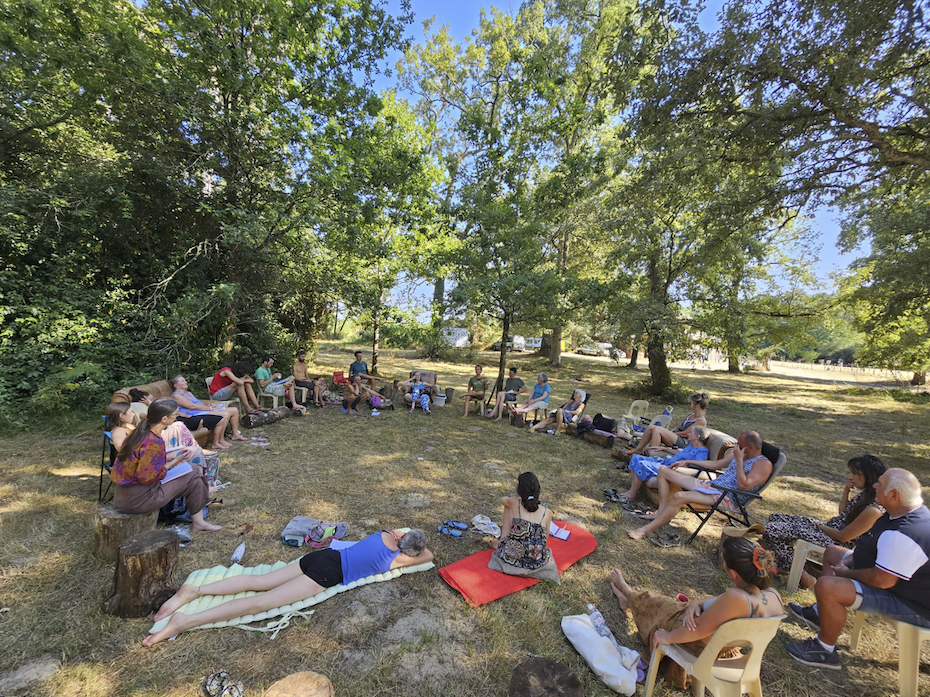
The latest news from the Rawd Trip dates back to the end of May and autumn is already here… My schedule and my book project leave me little free time to write on this blog, but I will summarize the main points of this summer, which has been rich and fulfilling! In June, after the Mantra Joie festival, I attended an exciting training on essential oils at Myrtéa-Formation in Clermont-Ferrand. The scientific and practical parts, with the implementation of protocols for their use during treatments, were very interesting. I then experimented with holotropic breathing with the facilitators from the Centre in Dijon (managed by the Arborescence association) where I received the “message” that all human achievements are hollow if they are not filled with Love… Then, I continued in Lyon with module 3 of Nonviolent Communication which gave me valuable keys to better understand how to love more. July and August were the months of festivals. I first reconnected with the Sangha of Thai massage at the Festi Thaï in Fonroque for 4 days of practice and meetings with teachers from around the world. Then, I led conferences and offered treatments to the fasters at the Living Festival organized by Zineb Réghay and Stéphane Carbiener in the Landes. I then spent a month in the Pyrenees during which I ran every other morning in the alpine pastures to physically prepare for the fasting and trekking around Mont Blanc. Between training sessions, I reconnected with friends and met new people with whom projects were born or will come to life. This is how a new type of stay was added to those I already offer: The Shamanic Detox. Then, September started strong with the trek around Mont Blanc while fasting, which lasted 6.5 days with nights in a tent over a course of 170 km with 10,000m of positive elevation gain. Under the guidance of my friend Hervé Deschamps, we were 11 adventurers of life, women and men aged 25 to 65, who dared to take on this challenge. With humility and courage, we set off each day to ascend the passes, drawing our energy from the unsuspected resources of the human body. A transformative and purifying experience that strengthened our confidence in ourselves and in life. To rest in comfort after this adventure, I seized the opportunity to take care of a chalet, a cat, and green plants in the Bauges massif for two weeks. Before heading to Provence to take a course taught by the Lulyani osteothai school founded by David Lutt. On this occasion, I had the pleasure of presenting the film L’Empreinte to the Sangha during a movie night. I then spent a very pleasant week in the off-season in Saintes-Maries-la-Mer where I had occasionally accompanied Irène Grosjean. In two days, the workshop “Fasting to Change” will begin in Ardèche, and taking the time to write these few lines between two events has allowed me to better realize how much I love the nomadic life. It allows me to reconcile my needs for solitude and time in nature while leading a rich social life punctuated by inspiring encounters. In the next episode scheduled for December, I will share my plans for the winter that will take place outside of France… Thank you for reading and see you soon for new adventures!
What about vegetable juices?
A juicy story The earliest known written records of the use of fresh juice date back to ancient civilizations (Egyptian, Roman, and Sumerian) which, through rudimentary methods, extracted juice from certain fruits (such as grapes and pomegranates) for religious or medicinal purposes. A practice considered beneficial for health and longevity that is also found among the Essenes (around 100 BC), a Jewish community known for living and eating according to hygienist principles. Later, in the Middle Ages, some writings from the 15th century reveal that vegetable juices (notably beet juice) were occasionally used for their purifying, digestive, anti-inflammatory, and restorative virtues. Then, it wasn’t until the 17th century that orange juice made its appearance in certain royal courts (France, England, Netherlands) as a luxury drink and a remedy against scurvy. Before the invention of modern machines, vegetable juices were prepared by finely grating the vegetables and then wrapping the pulp in a cloth or towel to press it by hand and extract the juice. It wasn’t until the 1920s that the first mechanical juice extractors appeared, making the practice more accessible and common. The rise of juices with Max Gerson It was in the 20th century with the German doctor Max Gerson (1881-1959) that fresh juices experienced a true boom, becoming a much more intensive therapeutic tool (several liters of juice spread throughout the day) than the traditional practices that had been limited and sporadic until then. It was because he suffered from persistent migraines that Gerson, finding no remedy for his ailments in the pharmacopoeia of his time, turned to experimenting with raw fruit and vegetable diets, particularly in the form of fresh juice. His conclusive personal experiments led him to systematically study the effects of juices on health and body regeneration. He observed that, when consumed in large quantities and regularly, fresh juices have the ability to stimulate self-healing, improve digestion, strengthen cellular metabolism, stimulate the liver, alkalinize the blood, and provide antioxidants. Little by little, his work led him to develop a therapy based on a vegan diet rich in fresh vegetable juices with precise combinations and dosages. Initially intended to treat tuberculosis, his therapy was later applied to cancer and other chronic diseases. His approach popularized the idea that fresh juices can detoxify and regenerate an organism through a massive intake of nutrients (essential vitamins, minerals, salts, fibers, and other phytonutrients known to fight diseases) concentrated in the juices. Norman Walker (1886-1985) and Ann Wigmore (1909-1994) democratize vegetable juices The story of juices continues with Norman Walker, a British naturopath who popularized the idea that fresh juices can be included in daily nutrition as a health and prevention tool, rather than being reserved for therapies or occasional supplements. At that time, juices were laboriously made using a grinder and a hydraulic press. To make fresh juices more accessible to the public, Norman invented, in the 1930s, the first mechanical juice machine (the Norwalk). In parallel, in his practical works, such as “Fresh Fruit and Vegetable Juices”, he shares juice recipes, each with the observed physiological benefits. A little later, in the 1940s, it was Ann Wigmore’s turn, a Lithuanian-American naturopath and teacher, to highlight fresh juices as a health tool. Influenced by Maximilian Bircher-Benner’s theories of “return to nature,” she believed that plants concentrate more solar energy than animals, and that wheatgrass (rich in chlorophyll) consumed in the form of fresh juice has the power to purify the blood and strengthen the body. Furthermore, her contribution was to promote in the United States, through the Hippocrates Institute, therapeutic programs based on living nutrition, fresh vegetable juices, and sprouting (a concentrated source of nutrients and enzymes) to detoxify the body and help it heal. Thus, in the 1960s and 1970s in the United States, fresh juices gradually gained the trust of the public and the health community. The first juice bars opened their doors, and some doctors and naturopaths began to promote them as concentrates of vitamins and minerals. Juices then found their place both in the Raw Food community and among those who maintained a more traditional diet. Juicer VS Extractor The juicer uses a fast-spinning blade to shred fruits and vegetables and centrifugal force to separate the juice from the pulp. This high-speed process generates heat and oxidation, which destroys some vitamins and enzymes present in the juice. Moreover, the juicer does not recover all the liquids contained in plant cells, particularly those in the cytoplasm, which are the richest in nutrients (chlorophyll, polyphenols, enzymes, antioxidants, etc.) and also in chloroplasts and mitochondria, which are rich in magnesium and iron, respectively. As for cold extraction and slow rotation, it is done using a screw that completely bursts the plant cells without producing heat. For these reasons, juices extracted with a screw are richer in assimilable nutrients than those produced by a juicer because they recover all the nutritional value of the plant, without oxidation. Why drink fresh vegetable juices? 1) To better digest raw foods and heal the body All raw fruits and vegetables have therapeutic properties. Foods from the plant kingdom have the ability to cleanse the intestines thanks to their fibers and certain phytoactive principles like chlorophyll. This cleansing sometimes triggers mild disturbances such as gas, bloating, diarrhea, or even irritations. These discomforts occur when the intestines are overloaded with toxins, colonized by an unbalanced flora, or in an inflammatory state. Read this article on the keys to good digestion to learn more. Moreover, we are primarily made to consume fruits (whose fibers are gentle) and not large quantities of raw vegetables (whose fibers are rougher, especially for root vegetables). However, while fruits are particularly revitalizing and detoxifying, only vegetables have the power to rebuild and regenerate the human body due to their richness in vitamins, salts, and minerals, which are also in soluble form and in the right proportions for proper absorption. Therefore, if you have intestinal or absorption issues, it is preferable, at first, not to consume large quantities of
Salad open me
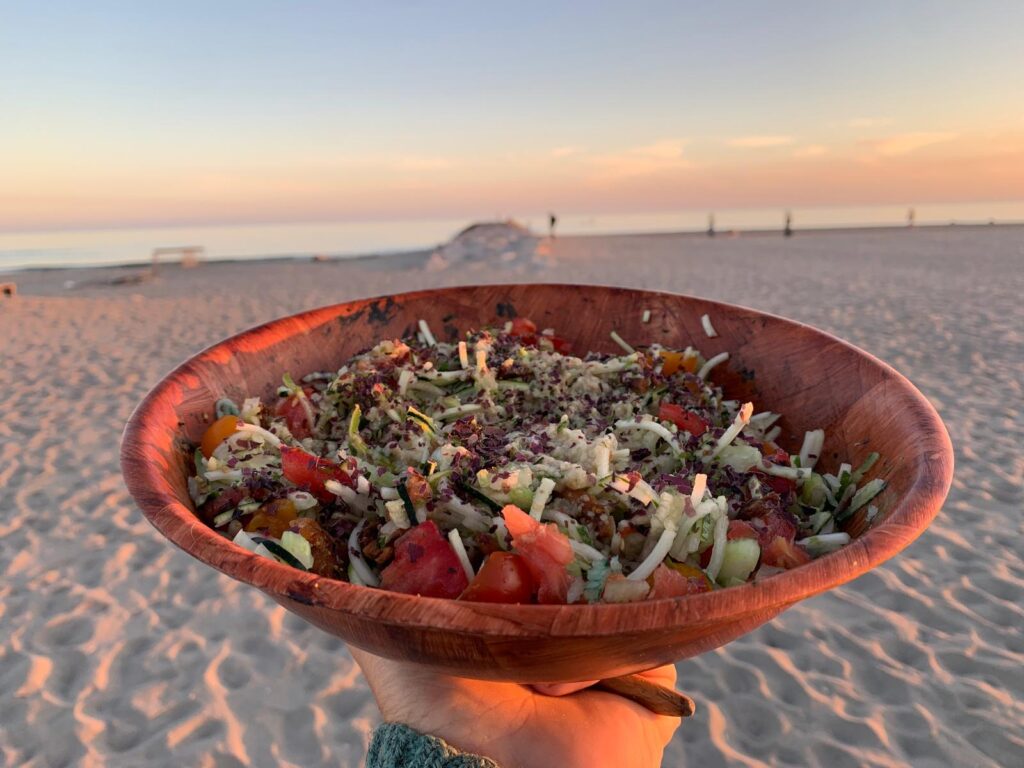
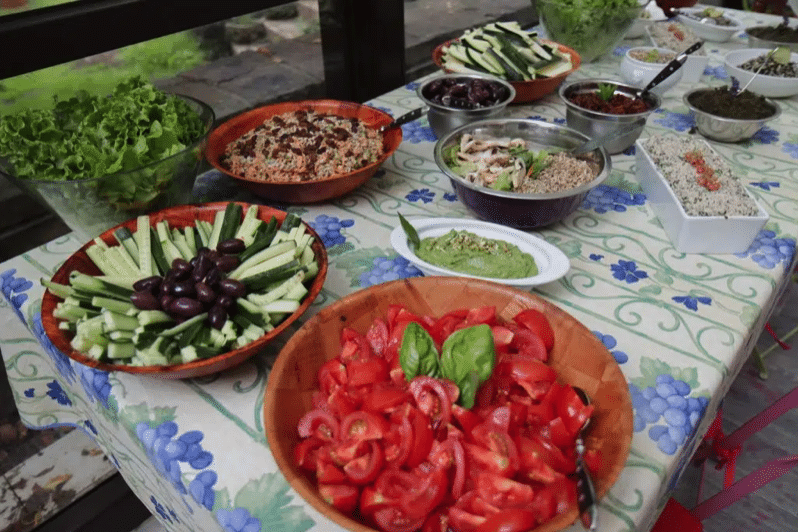
Specific equipment required None Ingredients for one person 3 or 4 vegetables of your choice, for example: tomatoes, lettuce, sweet corn, and cucumber. A small bunch of coriander, mint, basil, or parsley. A tablespoon of tahini (sesame paste). A few centiliters of seawater. A few pinches of dried seaweed flakes. Optional: ginger, turmeric, garlic, onion, or chili. Preparation In a bowl, add the vegetables of your choice prepared as you like (diced, grated, in spaghetti, etc.) along with the herbs. Mix everything together. In a glass, pour the tahini and seawater. Mix until a smooth sauce forms. Pour this sauce evenly over the vegetables and sprinkle everything with the seaweed. It’s then ready to be enjoyed! Tips Tastes, directly related to our needs (for salt, fat, herbs, etc.), vary for everyone, so it’s up to you to adjust the quantities that are intentionally vague. If you have a blender, you can prepare a creamy white sauce by blending tahini + seawater + zucchini without the skin. Dishes are always better after a moment of gratitude! 😉
What about fresh fruit juices?

“Fresh fruit juices purify the body, fresh vegetable juices restore it.” Dr. Norman Walker Natural sugar is the primary source of energy for living beings We all need energy to live, to ensure our biological functions, to defend ourselves from aggressions, to regenerate, etc., and the most efficient source of energy for our cells is the sugar found unprocessed in nature. Even though the body can produce energy from lipids (as is the case during fasting), this backup route greatly burdens digestion and is energy costly, which is why it is not optimal for the body (see the article on the keto-carnivore diet). If we do not primarily derive our energy from the simple sugars in fruits, we will seek it from starches (glue producers, see the article on the harms of cooking) or from animal products (which contain stress hormones that overstimulate the body, giving a false sense of energy, which atrophies the adrenal glands, see the article on the keto-carnivore diet) or from stimulants, which exhaust the nervous system and lead to burnout, such as refined sugar (found in sodas, cakes, jams (including “homemade”), etc.), coffee, tea, alcohol, etc. These three other sources of secondary energy are all addictive, acidifying, and harmful. In the 1970s, the famous hygienist Herbert Shelton already lamented this fear of the natural sugar in fruits, maliciously instilled by lobbies (agri-food and pharmaceutical), which spreads even to the benches of naturopathy schools due to a lack of practice in Living Nutrition and a loss of common sense. Discrediting the safety of fruits, this preferred food for our body, is a way to deprive consumers of access to information that would allow them to consciously choose a diet that provides vitality, joy, and health. Why deprive us of this crucial information for our health? Simply because those who have the power to publish “studies” and inform us on a large scale about nutrition have more interest in having consumers buy cereals, animal products, and industrial food rather than fruits & vegetables. Producing false studies to stifle those that are relevant is a well-honed strategy that was already at work in the 1950s regarding the dangers of tobacco. Conflicts of interest that blur the lines Even though there are clinics (like those of Gabriel Cousens and Dr. Robert Morse in the USA) that treat diabetics with Living Nutrition (favoring fruits), false studies (motivated by conflicts of interest) mislead. “At one time, fructose was recommended for diabetics because fructose has a low impact on blood glucose levels. Relying on this characteristic, a scientific opinion from the EFSA led the European Union to authorize a health claim on fructose in 2013. But fructose’s reputation then deteriorated. Simone Lemieux from the Institute of Nutraceuticals and Functional Foods (INAF) states that ‘when consumed in large quantities, fructose increases triglyceride levels in the blood, which is a factor for cardiovascular disease and insulin resistance.’” Wikipedia It is important to understand that all studies claiming that fructose is dangerous for health are conducted on rats injected with large amounts of pure fructose. This is as absurd as injecting pure oxygen into humans (which is deadly) and concluding that this gas is toxic! That is why pure fructose found in corn syrup (which is heated and contains no fiber) is not comparable to that found in fruits. These absurd rumors about fructose motivated one of my friends, Hervé Deschamps, to conduct experiments on his blood sugar. Using a sensor (FreeStyle brand), he monitored the evolution of his blood sugar over several days through meals and physical activity. Fresh fruit juice VS pasteurized fruit juice Experiment #1: With one liter of fresh apple juice (13 Gala apples processed in the extractor) Contrary to what is often heard, including in the field of naturopathy, fresh fruit juices are the most vitalizing and detoxifying foods (Read Robert Morse “The Miracle of Detox” and Norman Walker “Fresh Fruit and Vegetable Juices” for more information) there are. Fresh fruit juices are even successfully used in some clinics (like Dr. Morse’s in the USA) to regenerate the nervous system (which is very energy-hungry) and revitalize exhausted individuals. Even though it may seem counterintuitive, fresh fruit juices do not destabilize blood sugar (meaning it remains between 0.7 and 1.6 g/l, a healthy range). This is for at least three reasons: Juices (of fruits or vegetables) always contain a quantity of soluble and insoluble fibers that slow down the absorption of sugars and alert the liver that fructose is coming so that it prepares to receive it. When a food is raw, the body metabolizes, assimilates, and eliminates nutrients, various salts, minerals, and phyto-active principles much more easily. Furthermore, according to some sources (see Georgia Knap, a self-taught genius known for her rejuvenation method; unfortunately there is no English version of this Wikipedia page), raw fruits would contain a natural insulin. Fruits mainly contain fructose, which is metabolized by the liver into lactate (25%), glycogen (15%), triglyceride (10%), and glucose (50%) depending on the body’s needs (see diagram 1). Moreover, the regulation of blood sugar (via insulin) is much more effective when sugar is not mixed with fats. Diagram 1 can be found in this article on fructose published on Planet Vie website. (Translation note: this link leads to a website in French. To read it in English or another language, simply copy the URL and paste it into Google Translate https://translate.google.com/?sl=fr&tl=it&op=translate) Anyone can verify this next experiment for themselves: drink a liter of fresh fruit juice and see if you experience hypoglycemia. For if there is hyperglycemia, it is necessarily followed by reactive hypoglycemia. As for the blood sugar spike, it is normal whenever one consumes any food that contains sugar, and this is not a problem. This is confirmed by experiment #1 conducted by Hervé, during which he drank freshly pressed juice from 13 Gala apples in just 6 minutes on an empty stomach in the morning. After this fruit meal, Hervé remained physically inactive (tidying his house
The aromatic tea
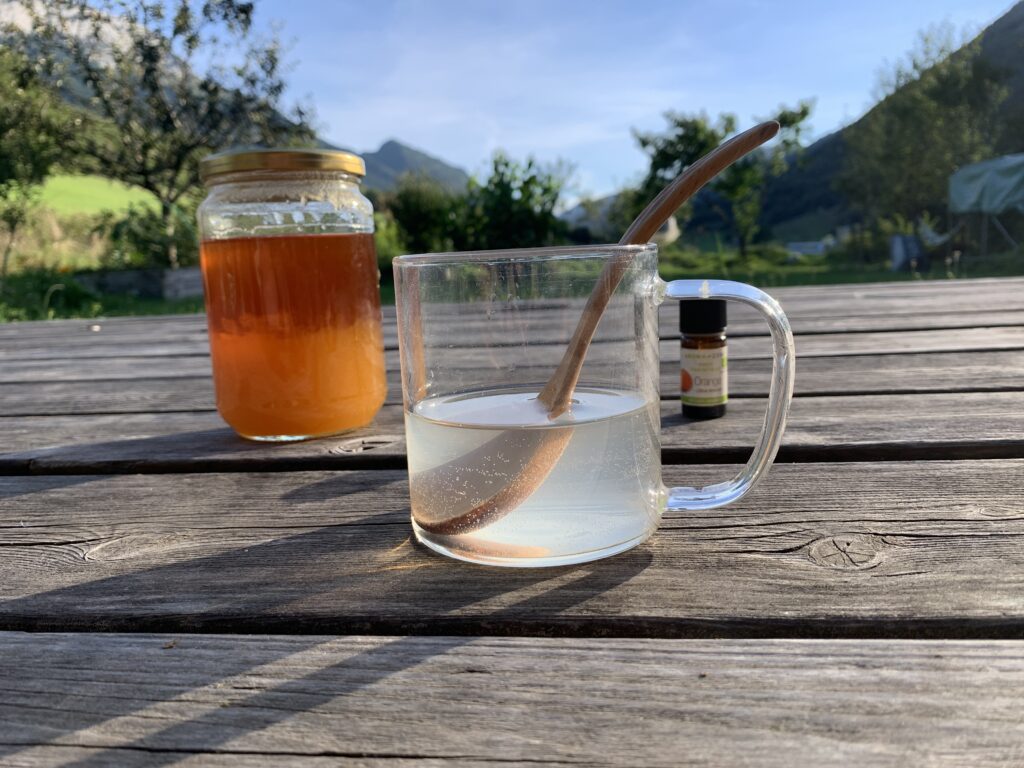
Specific equipment required Aucun About the recipe A drink that can be consumed hot or cold depending on your desire, between meals or afterwards. Ingredients for one person One or more essential oils Organic honey (preferably liquid) or another liquid sweetener Still or sparkling water, hot or cold Preparation In a cup, add a teaspoon (or more) of honey. Add one or more drops of essential oils of your choice. Mix everything well, which will allow the essential oils to dissolve with the water you will add last. Mix well and it’s already ready to be enjoyed! Some suggestions One drop of peppermint essential oil. A few drops of orange essential oil (or any other citrus). A few drops of cardamom essential oil. One drop of cinnamon bark, tarragon, and ginger.
The mucoid plaque: fact or a myth growing like weeds ?

“Let your food be your medicine.” Hippocrates “Let your plaque come out with a kit.” Hypocrite Anatomy of the intestines Before wanting to cleanse the intestines, it is important to know the characteristics of the surface in question. We have a cylindrical intestine about 10 meters long (of which 8 m is small intestine with an average diameter of 3 cm followed by 1.5 m of colon with an average diameter of 6 cm) lined with a mucosa whose surface is around 50m2. Furthermore, this digestive tube that links the outside and the inside is inhabited by about 10 trillion bacteria, viruses, and fungi essential for our survival. The mucosa that completely covers the intestines is composed of 3 superimposed layers: It is formed by a first layer of adjacent cells called intestinal epithelium. This has the particularity of being folded by the presence of valves (circular folds) and 10 million intestinal villi (small fingers of 1 mm by 0.1 mm rich in capillaries and lymphatic vessels) which themselves have microvilli. These 3 levels of folds allow the intestine to multiply its absorption surface by 10. Structurally, the epithelium is composed of several types of cells: enterocytes (absorption), goblet cells (mucus secretion), endocrine cells (hormone secretion), and Paneth cells (antimicrobial defense). Epithelial cells are born in the crypts of Lieberkühn (at the base of the villi) and gradually migrate to the top of the villus in 3–5 days. Upon reaching the end, they die (apoptosis) and detach into the intestinal lumen. The villi, however, remain in place; only the superficial layer of cells is continuously renewed. Just below this epithelium is the connective tissue which serves to support, protect other body tissues, and ensure the management of functional tissues such as nutrient supply and waste elimination. And even below, a thin layer of muscle fibers called muscularis mucosae. This finely folded intestinal mucosa, which should generally be cylindrical in shape, can be deformed in the colon by the presence of diverticula (small pouches protruding) when transit is too slow and/or when the diet is too low in fiber. The different sources of intestinal clogging Intestinal clogging can have various origins: Digestion which naturally produces more or less toxic waste depending on the nature of the foods (such as uric acid from the digestion of animal proteins). Similarly, lymph and mucus naturally release toxins through the intestines, which is one of the body’s emunctories. Foods, air, and water polluted by pesticides, heavy metals, etc. An unbalanced intestinal flora (dysbiosis) due to a non-physiological diet and/or the consumption of intoxicants (medications, alcohol, tobacco, drugs, etc.) that can release metabolic toxins (ammonia, phenols, amines), gases (methane, hydrogen, carbon dioxide), and endotoxins promoting intestinal and systemic inflammation. Poorly digested foods due to inadequate chewing, poor food combinations, or dysbiosis (an imbalance in the population of bacteria in the microbiome). A too slow intestinal transit (i.e., if one does not go to the bathroom at least 2 times a day) promotes the development of fermentations and putrefactions that become a source of self-intoxication. This process is exacerbated when consuming foods that are not designed for our digestive system. Digestive waste stagnating in diverticula (see image below). Notes: Fermentations produce gases and organic acids; putrefactions (degradation of proteins by certain bacteria) produce ammonia, phenols, indoles, skatoles, sulfides, and biogenic amines. These harmful and irritating substances beyond a certain threshold are responsible for abdominal bloating and flatulence. Furthermore, they alter the quality of the intestinal flora and fatigue the liver. For all these reasons, intestinal clogging contributes to digestive disorders, malabsorption of nutrients, inflammation of the mucosa, dysbiosis, weakening of the immune system, and potentially to intestinal hyperpermeability which is linked to neurological diseases (Parkinson’s, MS, etc). The best and simplest way to naturally maintain the intestines is to: Primarily eat raw foods from the plant kingdom for their richness in water, fiber (which serves as an intestinal broom, stimulates peristalsis, and the development of a beneficial microbiota), digestive enzymes (which break down macronutrients), alkaline micronutrients, etc. Practice simple and natural gestures to promote good digestion. Information can be found in this article on the keys to good digestion. Regularly use natural tools to cleanse and regenerate the digestive system. Information can be found in this article on the keys to good digestion. Mucoid plaque, reality or salads? Naturopath Richard Anderson introduced the concept of mucoid plaque in his book “Cleanse and Purify Thyself” published in 1987. He describes it as a harmful accumulation of mucus, undigested food, and waste lining the intestines that can be eliminated through fasting and various detox kits he developed himself. Since then, this mucoid plaque has been seen as the cause of many health problems, blocking nutrient absorption and obstructing the intestines. Theory VS experience The problem with Richard Anderson’s mucoid plaque theory is that it is not confirmed by experience. Indeed, the countless colonoscopies performed by gastroenterologists, as well as the thousands of autopsies, reveal no trace of mucoid plaque even in very sick patients with poor diets. This is why doctors, many of whom are renowned hygienists, believe that mucoid plaque simply does not exist. This viewpoint is shared by Dr. Alan Goldhamer (founder of the TrueNorth Health Institute), who has supervised over 20,000 fasts; by Dr. Areli K. Cuevas-Ocampo, who has carefully examined hundreds of digestive tracts without finding the slightest trace of this alleged accumulation; and by Dr. Douglas Graham (author of the 80/10/10 diet), who consulted many surgeons who have removed colons and sections of intestines, as well as one of his medical professors who has autopsied thousands of corpses. This is why medical experts and pathologists, including Dr. Areli, believe that the spectacular ‘snakes’ sometimes observed are not decades-old toxins, but a mixture of fibers, mucus, bile, and intestinal cells excreted, sometimes colored or shaped by the products of the detox kits themselves. See the video above to learn more about this. Without putting his opinion in the hands of specialists, one can simply
The plant-based flan
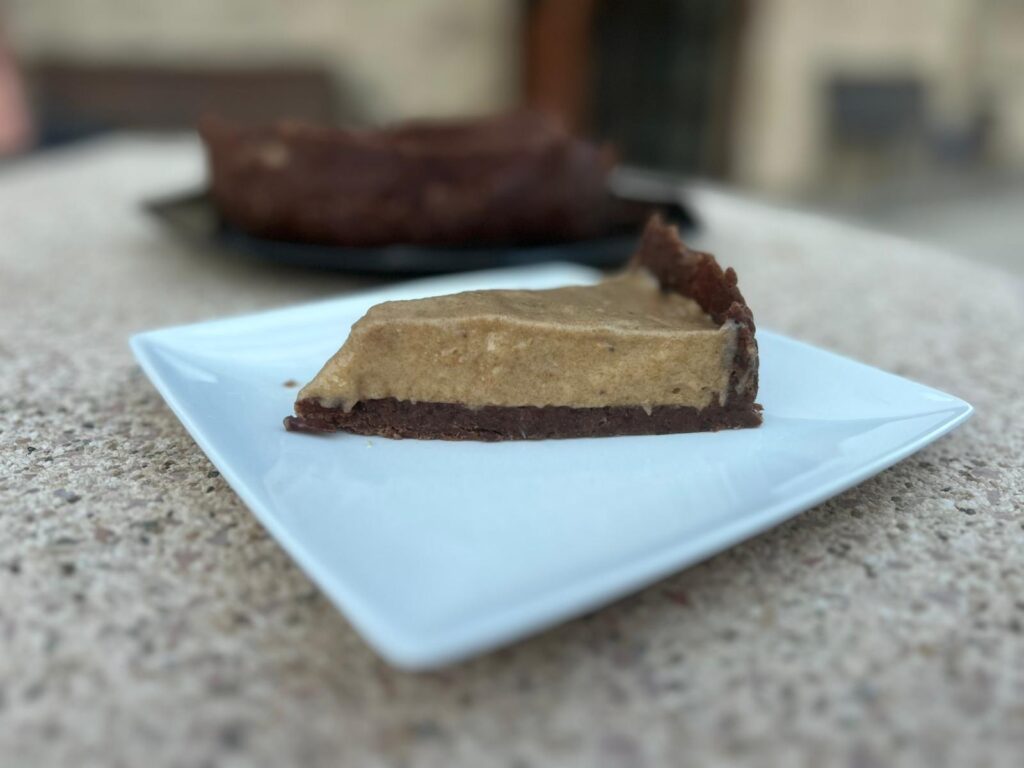
Specific equipment required Blender About the recipe A 100% plant-based, raw, fat-free recipe with compatible food combinations. Ingredients for one person 4 ripe plantains 200 g of date paste Optional: vanilla OR the juice of a lime OR 3 tablespoons of carob powder Preparation Spread the date paste as thinly as possible in a mold of your choice. Place the chopped plantains into a blender and, if desired, an optional ingredient. Blend well and pour everything into the mold. The final step is to let it rest in the fridge until the blended banana sets. It’s then ready to be enjoyed! Tips To eat raw plantains, you must wait until their skin is black. With carob powder as an additional ingredient, the date paste is not necessary and the preparation can be poured directly into the mold. After chilling, the flan is ready and unmolds perfectly. Food is always better after gratitude!
The Morning Routine
https://youtu.be/PQuYlYRYw94?si=HM66Cuxtu7zP-oNr Translation note: this video is currently in French, but you can activate YouTube’s auto-generated subtitles in English while we work on providing a dedicated English version. Introduction The hour following waking is precious as it sets the tone for the rest of the day. That’s why it should be dedicated to addressing our true needs to feel good. This is the role of the morning routine, preferably practiced while fasting, which aims to: Cleanse the body and mind of tensions and residual negativity. Oxygenate the cells and improve the circulation of bodily fluids. Develop flexibility, increase joint mobility, and enhance vitality. Bring mental clarity and good mood. Over the months, the morning routine establishes a solid anchor that contributes to cultivating a calm and inner security independent of external circumstances. It engrains new habits to increase energy and creativity without resorting to stimulants like coffee. Furthermore, it becomes a pivot around which an expanding space of awareness opens up, allowing for true inner transformation. Body Hygiene 1. Regularly test your saliva and urine with a pH meter Upon waking, spit into a small cap and also collect the first urine of the morning. Test these two bodily fluids with a pH meter or litmus paper (less precise). If either of these two bodily fluids has a pH < 6.5, it means your body is in acidosis and dietary and lifestyle changes need to be implemented to alkalinize the body. Urine and saliva should be tested regularly as they evolve based on living conditions (especially dietary). 2. Dry brushing of the skin It allows you to: Promote lymphatic and blood circulation. Remove dead skin and impurities without using water or soap. Open the pores (sweat and sebaceous glands) so that the skin (the largest emunctory of the body) can eliminate toxins more easily. Depending on your skin’s sensitivity, choose a firm or soft brush (online or in health stores) and brush upwards along the lymphatic channels to the lymph nodes. The precise movements to follow are detailed in this video. https://www.youtube.com/watch?v=8XjPcjcBmPM Translation note: this video is currently in French, but you can activate YouTube’s auto-generated subtitles in English while we work on providing a dedicated English version. 3. Oral hygiene Good dental hygiene consists of removing all food deposits stuck in the mouth and cleaning the interdental areas where saliva (a natural and sufficient antiseptic) circulates little. To best achieve this cleaning, it is advisable to use (in this order) a water flosser, a quality soft-bristled toothbrush (Inava is a very good brand), interdental brushes to clean small spaces, and finally, dental floss (without additives like fluoride) to clean very small spaces. The use of toothpaste is not recommended unless it is homemade with natural ingredients like clay, activated charcoal, or baking soda. To finish, you can perform a mouthwash with seawater to alkalinize the oral environment and perhaps even remineralize the teeth. Read this article to learn more about dental hygiene. 4. Nasal irrigation Good nasal breathing is a key element for properly oxygenating the brain, cleansing the lungs, ensuring good blood circulation, and regulating the nervous system. Nasal irrigation cleans the sinuses by stimulating mucus production that expels toxins stuck to the mucosa. To do this, the simplest method is to obtain a neti pot (online or at the pharmacy) that you will fill with seawater (pure or isotonic) or, if not available, with fresh water mixed with unrefined sea salt, diluted to 10 g/L (about 2 teaspoons). Then, hold your head upright, gently insert the tip of the neti pot into one nostril, pump the water with the button provided until it comes out the other nostril. Repeat the operation with the other nostril. Wait about ten seconds and then blow your nose. 5. Cleaning the ear canal This involves cleaning excess earwax using a ear cleaner or a cotton swab previously moistened with saliva. 6. Dry brushing of the scalp With a brush or comb (wood, plastic, or horn), brush your scalp from the roots to the tips for about 1 minute to remove dead skin and dust while distributing sebum along the length of the hair. Brush with your head upright and then with your head down for optimal sebum distribution. This is a practice known as no poo. To learn more, read this article. (Translation note: this link leads to a website in French. To read it in English or another language, simply copy the URL and paste it into Google Translate https://translate.google.com/?sl=fr&tl=it&op=translate) 7. Cold shower It complements the dry brushing of the skin and scalp by removing residual impurities, boosting blood circulation, and firming the skin and hair. Moreover, it favorably stimulates the sympathetic nervous system, giving you energy (much better than coffee) while removing parasitic emotions. Read this article to learn more about the benefits of cold exposure. During this shower, any use of soap or shampoo (organic or not) is undesirable for two reasons: on one hand, everything we put on our skin should be edible because some of the substances eventually enter the body through the pores. on the other hand, the use of detergents (organic or not) removes the protective lipid film (made of sebum) that covers our skin and hair. Removing it with a detergent (gentle or not) weakens the skin and prompts the body to produce more sebum, which can lead to oily skin or hair problems. For these reasons, the use of soap or shampoo should be limited to once a week. One of the most common strategies is to gradually reduce their use so that eventually, you can do without them completely. Also, know that a healthy diet will eventually eliminate unpleasant body odors, making the use of soaps and deodorants unnecessary, which can be replaced by essential oils (like palmarosa essential oil). If despite stopping detergents and improving your diet, your skin or scalp remains “oily,” it may be necessary to reduce lipid consumption. To learn more, read this article on our lipid
The Stages of Dietary Transition
https://www.youtube.com/watch?v=7skrvQDBriE Translation note: this video is currently in French, but you can activate YouTube’s auto-generated subtitles in English while we work on providing a dedicated English version. Introduction In 2019, after meeting Irène Grosjean and incorporating cleanses as a new hygienist ritual, they definitively weaned me off the attraction to cooked food. Filled with gratitude and feeling inspired to share my experience, I summarized the main stages of the dietary transition that I went through in the following diagram: Five years have passed since then, and the hundreds of people I have accompanied in the meantime on the paths of Living Nutrition have clearly shown me that it is not as simple as this diagram suggests, even when motivation is strong and purgatives are used. Furthermore, I have observed many inconsistencies, such as worrying about an “acceptable” food combination (see below the combination diagram) while industrial food is still regularly consumed. The difficulties and confusions encountered on this path can lead to guilt, frustration, or even eating disorders that can discourage and divert one from this wonderful journey. It was while reading the hygienist Désiré Mérien and his stages of dietary descent towards fasting that the idea came to me to define the concept of the stages of dietary transition, which I have defined in 6 steps: Detoxification Hypotoxic Diet Hygienist Diet Living Nutrition Frugivore Diet The Gates of Pranism The User Manual for the Stages of Transition The logic of these stages is to gradually remove the most toxic foods and food combinations by replacing them with more physiological ones. This step-by-step approach (like in diving) allows for the gradual release of toxins, weaning off certain addictive substances, rebalancing the intestinal microbiota, and thus improving the terrain, and therefore the overall state of health. Even though, in itself, there are no absolute rules other than the uniqueness of the path for each individual, following this stepwise transition will facilitate the maintenance of a stable goal, bring coherence to the approach, and provide solid foundations that will support the mind in establishing new references and the emotional aspect in stabilizing. How to find the stage you are in and what to do next? To clearly identify the stage you are in, it is necessary to read the diagrams completely, starting from number 1 to the 14th. We will call stage A the first stage where you do not validate all the recommendations listed in the orange boxes. And we will call stage B the one for which you do not follow (more or less) any of the recommendations. You can then estimate that your current diet is somewhere between stage A and stage B. Next, between stages A and B, you write down on a piece of paper all the recommendations (those listed in the orange boxes) that you do not follow. You then have a program to implement to reach stage B. When to move to the next stages? There are 3 scenarios: When you are well established in a stage, your weight is stable or excessive, and you want change. You can then move to stage B+1. When you want to do a detox cure lasting from a few days to a few weeks. In this case, you can choose the stage of your choice (like a water fast, stage 13) if your adaptability allows it. When you are not satisfied with your state of health or when old symptoms reappear. You can then move to stage B+1. Note: It may be necessary to go back if you have moved too quickly in the transition (for example, on a whim). In all other cases, it is not advisable to do so. The dietary transition, the path of a lifetime Any easing of the diet (by changing stages) greatly promotes the improvement of health. This lasts until the toxic level of the terrain balances with the level of toxins brought by the diet of the stage you are in. This explains why some diets (like the ketogenic) that are far from the principles of Living Nutrition still yield results for a given time. The reappearance of certain symptoms or diseases is a sign that you have reached a state of balance and that it is time to move to the next stage. It is therefore up to each individual to find their own rhythm and dynamic of dietary easing. The 15 stages of dietary transition Click on the diagrams to download them. 1 & 2. The two phases of detoxification 3 & 4. The two phases of the hypotoxic diet 5 & 6. The two phases of the hygienist diet 7 & 8. The two phases of Living Nutrition 9. The frugivore diet 10, 11, 12, 13, 14 & 15. The gates of Pranism How to successfully transition from one stage to another? This can happen spontaneously, intuitively, naturally, and that is ideal. In other cases, it is all a matter of a decision-making process which, according to neuroscience, finds its source not in the neocortex (seat of thought) but in the reptilian brain (related to survival) and the limbic brain (related to emotions). The neocortex can only come in as support, once the decision is made, to justify our choices, maintain the course, and find strategies. 1. Motivation Decision-making related to the reptilian brain can be: healing or surviving an illness, living longer, limiting one’s ecological footprint, not intentionally poisoning oneself, etc. Decision-making related to the limbic brain can be: taking care of oneself, having more energy, compassion for the animals we kill for food, expanding one’s feelings and consciousness, feeling more peace, love, and joy, etc. 2. Understanding and promoting the mechanisms at work a) The hormonal axis: Transforming pleasure (dopamine) into joy (serotonin) Our intestinal microbiota alone produces 95% of the serotonin (the happiness hormone) in the body, which is why the intestines play a key role in regulating mood and the feeling of well-being. When the balance of the intestinal microbiota is disturbed (dysbiosis)
Provence
June 12, 2024 – Provence After the heavy rains of the previous weeks, I was finally able to enjoy the benefits of van life which, when the weather is nice, feels like a vacation. I have now found my bearings and feel at home in my vehicle. Waking at dawn, I start my days with a bath in a river or body of water. This ritual is important to me, so I park as often as possible near this liquid element to feel good, refresh myself, and wash. I then dedicate the first two hours of my day to practices that do me a lot of good: conscious breathing, movement, and meditation. I am then ready to work on my computer non-stop until early afternoon. A sacred time dedicated to writing articles and advancing new projects (notably a book), giving consultations, and, more generally, managing my professional activity. Then, for the rest of the day, I explore the surroundings on foot, do sports, yoga, learn to play the ukulele, and read extensively on all the topics that excite me. I alternate several solitary days of this type that fulfill me with visits to friends, professional meetings, festivals, workshops, etc., which are opportunities to weave nourishing human connections, share my passions, and offer individual consultations (Thai massages, energy healing, disarmament, Kambo, etc.). It is at this ideal rhythm for me that, following the Fasting and Trekking in Morvan, I traveled along the southern shore of Lake Geneva to lead a Kambo session before visiting Alexis Golliard with whom I am setting up a new concept called: Fasting and Nonviolent Communication. I then headed to Ardèche in the small town of Le Teil where a screening of L’Empreinte followed by a conference was organized. I stayed a few days on site in the beautiful home of Marlène Letrouillas, the proofreader of L’Empreinte, before leading a session of Ecstatic Breathwork in Lyon. I then returned to the south of Aveyron to participate in the Mantra Joie festival where I spent three days singing in a gentle and timeless atmosphere with Claude Brame and other talented artists I discovered. Then, after a few days spent by the beautiful Salagou lake, not far from the festival, I headed to Sisteron to participate in an interesting workshop on synchronicities organized by Philippe Guillemant. The program for the year looks as rich as these past two months, so I created this agenda page where you can find all my workshops & events. See you in a month dear reader, unless we meet before then!
Where to buy fruits and vegetables?
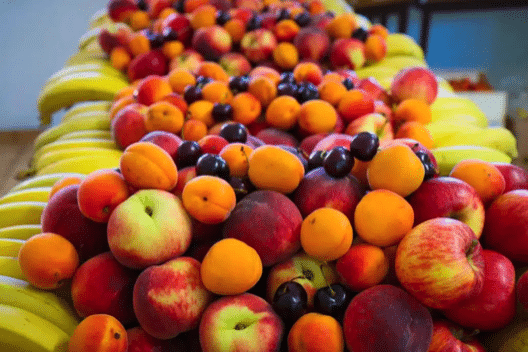
Introduction The cuisine of a frugivore is immediately recognizable by an abundant and colorful display of fruits showcased on the countertop rather than left to their fate in an isolated bowl or in the fridge’s vegetable drawer. Fruit is the staple food that is optimal for our primate constitution (see this article on the origins of Living Nutrition) but the conditioning that can distance us from it is manifold: “All that (in volume)?!”, “But isn’t that too much sugar with all those fruits?” “Are they organic?” “Fruits are too expensive!” These mental obstacles to fruit consumption are regrettable because the word “fruit” comes from the Latin fructus which means “to enjoy.” This suggests a direct link between the permission we give ourselves to eat fruits and our ability to enjoy life. Moreover, in Greek mythology, it is said that Demeter, the goddess of fertility, carried a cornucopia filled with fruits and vegetables symbolizing the earth’s generosity and the prosperity it offered. The purpose of this article is to share some good tips & tricks from a modern forager to achieve beautiful harvests in the jungle of supermarkets and thus feast on fruits and vegetables. Note: To understand the harmlessness of fruit sugar, which has nothing to do with refined sugar, read these two articles on fresh fruit juices and on sugar in Living Nutrition. Eating “well” before eating “organic, local, and seasonal” For the “fruit hunt” to be fruitful, it is essential that the purchased foods are tasty enough (otherwise, one won’t want to eat them) and that they represent an accessible budget (otherwise, one won’t be able to buy enough). It is up to each individual to juggle these two parameters as best as possible. If I have chosen to prioritize “good” over “organic,” it is partly because the flavor of a food is due to its unique combination of nutrients (minerals, antioxidants, vitamins, enzymes, and other phytoactive principles). And partly because cultivation on depleted soil with many chemical inputs will inevitably yield less nutritious foods that will, therefore, be bland. For these reasons, if a fruit or vegetable is good, it has grown under correct agricultural conditions. Our millions of taste buds and olfactory receptors can inform us about the nutritional quality of a food without needing laboratory analysis results (see this article on sensory nutrition). But we especially need to learn to recognize ripe fruits and, for others, to differentiate (by color, texture, and smell) those that can ripen at home from those that were harvested too early. Note: I provide other reasons for this prevalence of good over “organic, local, and seasonal” in this article on organic, local, and seasonal foods. We are a consumer society that suffocates under excess, and aided by supplement sellers and their many affiliates, we still fall into the fear of scarcity even though we have access to fruits and vegetables from around the world, all year round!… Moreover, our needs for micronutrients are generally poorly understood, and detected deficiencies are most often due to a lack of assimilation directly linked to soil contamination. This is why blood tests are generally better after a fast than before, even though nothing has been consumed in the meantime. Read this article on how to address deficiencies to learn more about this topic. Investing in Living Nutrition The food I select in stores to meet my needs in quantity and quality represents a budget of between 15 and 20 euros per day for a daily caloric intake of between 2500 and 3000 Kcal. By being less active, one can manage with 15 euros per day, which, counting some small extras, results in an average monthly expenditure of 500 euros on fruits and vegetables. Certainly, it is more expensive than pasta and Coca-Cola, but I save on bars and restaurants where I hardly ever go. Furthermore, this amount should be put into perspective because the European Union injects four times more subsidies into animal husbandry than into plant agriculture (see this article from The Guardian). Thus, animal products are subsidized by Europe (through our taxes) and are sold at least twice as cheaply as they would normally cost, not to mention the real costs (environmental, health, social). Read this article on the impact of veganism on the environment to learn more about this topic and understand that fruits that come by air are absolutely not the cause of our planet’s environmental problems. From this, there is a key principle to remember if one wants to eat physiologically: We are made to live in the tropics (the cradle of humanity), so either we go towards the fruits, or they come to us. Another consideration that helps to put the “fruit” budget into perspective is to link the consumption of non-physiological food with the consumption of medications encouraged by current policy, through social security reimbursements and the support of doctors. Canadian doctor Gabor Maté explains in his videos and in his wonderful film “The Wisdom of Trauma” that medications functionally act like corticosteroids that stifle inflammation, calm pain or stress, and short-circuit the body’s normal reaction without addressing the root cause of the disorder (discomfort and lifestyle hygiene). The consumption of medications numbs feelings and contributes to conformity, consumer society, and the futile pursuit of distractions at the expense of awakening consciousness. This digression is to give value to these 500 euros per month, which represent an investment for a flourishing health, joy in the heart, and energy to spare. This could also be quantified: better performance at work, fewer sick days, and fewer medications. And above all, in return, better guidance with one’s soul (see this article on the link between Living Nutrition and vibrational frequency) that gradually allows one to break free from consumer society, put an end to repeating life scenarios, and bring something new into one’s life. How much fruit and vegetables? For a person who sustains themselves on raw fruits and vegetables, one should count about 4 kilos of sweet fruits
A spring that sounds like the time for assessment
After my shortened stay in Bordeaux (see previous article), I joined Gaspar, a friend who introduced me to Thai massage and who recently settled in Dordogne, by the eponymous river, in a farm that develops syntropic agriculture. I spent a week in this region where life is good with its bucolic charm, calm, mild climate, and the presence of many fruit trees. Between visiting the farm, a lactofermentation workshop, swimming in the river, muscle strengthening, and our daily spiritual practices, we also exchanged some Thai massages, both for the pleasure of receiving and for the valuable feedback. After this fraternal week in harmony with the laws of the living, I concluded this first stay in Dordogne with a day of mindfulness organized by the Plum Village. This community, founded by Zen master Thich Nhat Hanh, is known worldwide for its practice of mindfulness. One can attend retreats and teachings on Buddhism and the art of living mindfully. I thus discovered this charming estate and attended spiritual teachings, a silent walk in the forest, and an empathic listening circle. With an interlude, a fruit break on the branches of a cherry tree and under the watchful eye of the monks. I then joined Lozère where my father lives, whom I hadn’t seen since my trip to India. This visit was an additional opportunity to practice Thai massage against the backdrop of the Margeride mountains where I completed two 25 km sessions running to finalize my physical preparation for the fasting and trekking of Beaujolais. After this return to Lozère, where I lived for two years following my resignation from national education, I headed towards Saône and Loire, a region also rich in memories where I lived for about ten years, first as a lumberjack, then as an adventurer, and finally as a workshop organizer. Yes, I am already 40 years old and experiences are accumulating… On the way, I first stopped by the Loire, near Firminy, a river I kayaked down in 2014 in preparation for the complete crossing of North America. I was moved and full of gratitude to find this still wild watercourse (with beavers) that completely changed the course of my life. It was here, ten years ago, that I had a transformative experience in reaction to a strong sunstroke that completely cut my appetite for a week while giving me plenty of energy. Thus, little by little, I was led to living nutrition. Fortunately, I never had the bad reflex to suppress fevers (or anything else for that matter) with medication, otherwise I would have missed the experience… A certain nostalgia was latent and I felt that the mourning of this life phase (the thirties) was not over. This is also why I wanted to organize another fasting and trekking in the Beaujolais mountains where my very first workshops took place in 2019 following the expedition of The Fasting Walk. Thus, from May 18 to 25, 2025, a group of living explorers joined me for a new edition in Beaujolais where, despite cool temperatures and humidity, we walked about 125 km with a 4800m elevation gain, all while fasting without broth or juice! A natural feat accomplished with the help of the magnificent wooded massifs, countless flowers, heights with breathtaking views, spring waters, and good group cohesion. A timeless stay where one connects within oneself to their eternal part, the one that gives us unsuspected strength and the guidance we need to then return to civilization, with body & spirit detoxified, filled with energy and joy. The villagers I met, as well as some naturopaths, question: how is it possible to walk while fasting? Is it really good for health (see this article on the benefits of active fasting)? For my part, I always fast with my groups (aged between 18 and 70 years) and, far from being weakened by the fifteenth edition since 2019, I was surprised this time to be almost on a dry fast (one liter of water over the week). To this day, I know nothing more invigorating & purifying for the body and mind… This fast also brought me inspiration and the desire to resume workshops on living nutrition and lifestyle (the last one took place in 2022 under the name “Reconnection to Life”) with a new format called “Optimal Health” which will start (even if it’s to be confirmed) in April 2026 near Toulouse. Following this beautiful experience completed, at the request, by various treatments (Kambo cleanse and disarmament), I returned to the south of France to participate in the joy mantra festival which took place in the beautiful Isis campsite in Cévennes where about 500 souls gathered around talented artists to sing mantras. A wonderful moment of connection and communion between humans, with nature and the divine, where one begins to dream of a bright future (or clever) to use the expression of physicist Philippe Guillemant. All that was missing was living nutrition, biodanza, hormesis, and massages for the event to be perfect. This gave me ideas for a possible next celebration of life on the horizon of 2026 or 2027… It was in this same campsite that the 2nd meetings of Regeneration organized by Thierry Casasnovas took place where I had the joy of sharing The Fasting Walk by Damien Artero. To be continued…
How to remineralize without a juice extractor?

Whether you are traveling, a nomad, have not yet acquired a juice extractor, or due to a lack of time, here are some tips to remineralize yourself very simply using a few kitchen utensils and 4 major principles. Fruits VS vegetables Although all fruits are remineralizing, vegetables generally contain more alkaline minerals – such as calcium, magnesium, and iron – than fruits. They also contain more natural mineral salts – such as sodium, potassium, and phosphorus in ionic form – which regulate blood pH by neutralizing excess acids and contribute to the proper functioning of the nervous system. Furthermore, green plants contain chlorophyll, which is detoxifying, antioxidant, anticoagulant, and which, due to its structure similar to hemoglobin, may facilitate the production of red blood cells (useful in cases of anemia). The right proportion of fruits and vegetables in the diet is simply achieved by listening to your cravings so that you feel satisfied and fulfilled after a meal, without feeling heavy or tired. The benefits of vegetable juices In addition to being vitalizing and detoxifying, vegetable juices provide a large amount of minerals, antioxidants, vitamins, and other phytoactive principles with minimal digestive work. However, when one cannot drink them to remineralize, it may be necessary to consume a good amount of vegetables without overloading the digestive system with bulky and indigestible fibers. Here are some principles to achieve this. Remineralizing without a juice extractor, instructions: Principle #1 : Favor leafy vegetables and sweet fruits All vegetables contain soluble fibers (such as oligosaccharides, pectins, and inulin, which are prebiotics) and insoluble fibers (such as cellulose) necessary for intestinal flora and transit. However, we are not made to digest large quantities of insoluble fibers like those found abundantly in root vegetables (carrots, beets, sweet potatoes, etc.). Therefore, it is advisable to favor leafy vegetables (spinach, which is among the most nourishing, lettuce, celery, cabbage, etc.), flower vegetables (broccoli, cauliflower, etc.), and sweet fruits (tomatoes, cucumbers, zucchini, squash, peppers, etc). Note: As long as they are well digested, one can consume root vegetables freely. But if this poses a problem, it will suffice to limit their consumption or to take them in lactofermented form (see this article on lactofermentation). Principle #2 : Cut vegetables into very small pieces This will reduce the volume of food, facilitate digestive work, and improve absorption by breaking down fibers as much as possible. To do this, it is very useful to have a spiralizer and a multi-blade scissors, a simple scissors, and a knife (see main image). A good grater is also welcome to complete the toolkit. Examples of use: – With the spiralizer, you can reduce zucchini, cucumbers, etc., into spaghetti form. – With the multi-blade scissors, finely chop lettuce, spinach, peppers, aromatic herbs, celery, cabbage, etc. – With the simple scissors, you can further cut everything to reduce the volume. – The grater can be used instead of a spiralizer or to break down hard foods like dried coconut, root vegetables, or ginger. Principle #3 : Let sweet fruits ripen and eat fresh By allowing sweet fruits to ripen at room temperature – like sweet fruits that do not belong in a fridge – and waiting until they are “just right,” they will be more nourishing and better tasting. It is also advisable to cut vegetables just before eating them, as some vitamins, like C, are very sensitive to oxidation and degrade quickly when exposed to air. Principle #4 : Consume large quantities of vegetables every day Thanks to principles #1 and #2, it becomes easy to consume, in one meal, a zucchini, a cucumber, a pepper, several large leaves of lettuce, about twenty cherry tomatoes, and a handful of sprouted seeds. To this base of vegetables, you can add sweet fruits (mangoes, bananas, figs, etc.) or fatty fruits (coconut, avocado, olives, etc.) also cut into small pieces with a knife. Examples of recipes: – Coconut pilaf crudités – Fruity salad – Sea salad – Chia pâté crudités Other tips for preparing vegetable meals that are good, digestible, and nourishing: If it’s not salty enough for your taste, consider adding cucumber, celery, or lactofermented vegetables. Otherwise, add seaweed or a bit of seawater (see this article on the benefits of seawater). If it’s not dense enough for your taste, consider adding spinach or sprouted seeds. Otherwise, add a bit of spirulina, chlorella, or powdered barley grass, which have the advantage of being highly remineralizing. Replace store greens with wild plants. Read this article on how to choose wild plants to learn more. If it’s not acidic enough for your taste, add lactofermented vegetables or lemon or orange juice. Read this article on the acidity of citrus fruits to learn more. If it’s not fatty enough for your taste, preferably add a source of fresh fat (as it is more digestible) like avocado, olives (rinse beforehand to remove excess salt), coconut (fresh or dried), or, if not, a small handful of nuts of your choice. Read this article on our lipid needs to learn more and avoid consuming too much. If it’s not spicy enough for your taste, add ginger, turmeric, pepper, pink berries, or chili. If it’s not sweet enough for your taste, add dried fruits cut with the multi-blade scissors. Fatty or sweet, you must choose, as both together are not compatible in terms of digestion and absorption. Read this article on food combinations to learn more. If you have difficulty digesting raw vegetables, read this article on the keys to good digestion. Note: Purists will say that vegetables should be eaten as a single food like fruits, which is feasible except that we eat less than when we prepare them, whereas the goal here is to remineralize by emphasizing vegetables. Another possibility, for those who are bothered by the vegetable-fruit mix, is to prepare meals consisting solely of vegetables. To make these salads more appealing, simply incorporate, in addition to finely chopped fresh vegetables, lactofermented vegetables and seaweed. Here you go, you
What are our protein needs?
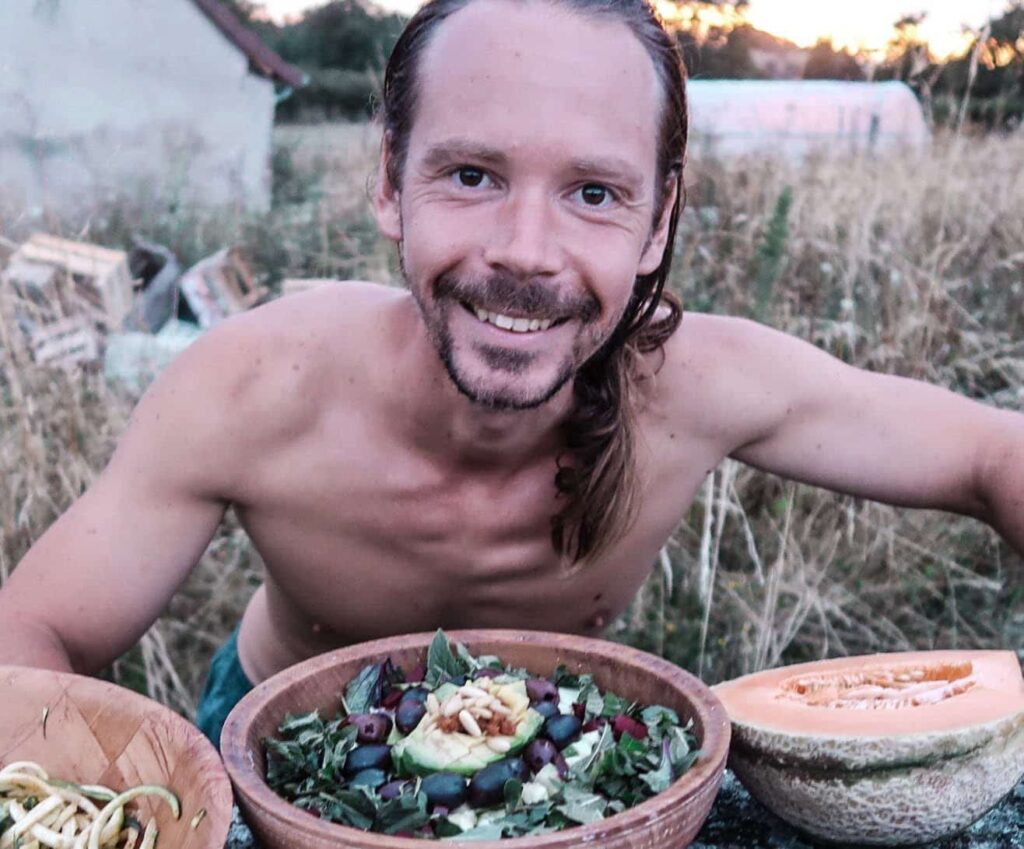
“What you consume becomes a part of you. The closer it is to you evolutionarily, the more it interferes with your system.” Sadhguru Introduction “Where do you get your protein?” is undoubtedly the most frequently asked question I have received, which is why it deserved a detailed response in the form of an article. From their discoveries in 1835 to the unfounded myths that have taken hold of the collective unconscious, I invite you to discover our real protein needs according to current science. Note: All protein values expressed in % in this article indicate a caloric ratio. Thus, 10% of protein in the diet of a person consuming 2000 Kcal corresponds to 200 Kcal from protein, or 50 g of protein (since there are 4 Kcal for 1 g of protein). The chemistry and role of proteins Discovered in 1835 in the Netherlands by chemist Gerardus Johannes Mulder, proteins are biological macromolecules present in all living cells. They are coded by a sequence of amino acids, linked together by peptide bonds, which adopts a three-dimensional structure according to a specific folding that allows them to perform various vital biological functions. Generally, a molecule is referred to as a protein if it contains more than fifty amino acids, as a peptide if it contains a few dozen, and as a microprotein if it contains fewer than 10. All proteins from all known living beings are made up of 22 different amino acids known as proteinogenic amino acids. Humans, like most species, only have 20 different proteinogenic amino acids. However, there are about 500 amino acids that play a central role in the physiology of the organism, regardless of their contribution to proteins. Proteins are classified into different categories: Structural proteins that allow the cell to maintain its structure and shape (keratin, collagen, etc.). Enzymes that modify the speed of chemical reactions in the cell. Motor proteins that enable mobility (actin, myosin, etc.). Regulatory proteins that modulate the activity of other proteins and control gene expression. Transport proteins that ensure the transfer of different molecules in and out of cells (hemoglobin, albumin, etc.). But also defense proteins (antibodies), storage, signaling, communication (hormones), energy (ATP), etc. The importance of the role of proteins in the human body explains its etymology from the Greek “prôtos”, which means “first”. Our protein needs In the 1950s, Dr. William C. Rose conducted experiments on humans (see this article) to determine the so-called “essential” proteinogenic amino acids, those that we need but that our body cannot metabolize. According to his work, 9 of the 20 essential amino acids are (with average daily needs): histidine (700 mg), isoleucine (1,400 mg), leucine (2,730 mg), lysine (2,100 mg), methionine (1,050 mg), phenylalanine (1,750 mg), threonine (1,050 mg), tryptophan (280 mg), and valine (1,820 mg). The body has the capacity to produce certain amino acids itself, notably the 11 so-called “non-essential” amino acids which are: alanine, asparagine, aspartate, glutamate, glutamine, glycine, proline, serine, tyrosine, cysteine, and arginine. It is also capable of converting certain amino acids into other amino acids, a mechanism that plays an important role in the synthesis and recycling of proteins. Then, depending on its needs, the body produces all its proteins from the amino acids it produces itself, recycles, or derives from the digestion of food. With the indispensable contribution of insulin, amino acids are assembled into proteins within cells according to the instructions recorded in our DNA. Notes: – 80% of our amino acid needs come from the recycling of proteins already present in the body. – The “essential” status of histidine is still debated as the body can produce it but not enough according to experts. – Dr. Rose’s results should be put into perspective as the values obtained are those that maximize the growth of the organism without considering health. – Only plants produce essential amino acids. Thus, all animals find their essential amino acids by eating plants or other animals. Official protein recommendations Since the 1980s, the ANSES, the FAO, the UN and the WHO have published reports on our protein needs based on Dr. Rose’s experiments. According to these official organizations, our daily protein needs average 0.66 g of protein per kilogram of body weight, and the recommended dietary allowances, given with a margin of “safety”, are 0.83 g/kg to meet our essential amino acid quota. Even though our protein needs vary depending on our age (see table below), they are naturally met by a caloric ratio of 10% protein. This means that for a person needing 2000 Kcal daily, 160 g of protein is sufficient. Many other official groups such as the U.S. National Academies’ Institute of Medicine and the National Research Council also suggest that consuming only 10% protein is largely sufficient. Estimation of our protein needs per kilogram of body weight Source: Massimo Nespolo, Professor at the University of Lorraine The protein content (caloric ratio) of foods Source: Douglas Graham’s 80/10/10 Diet These estimates coincide with what is observed in our primate cousins who are frugivorous. Indeed, according to primatologists, chimpanzees, bonobos, orangutans, and gorillas consume about 7% (caloric ratio) of protein. It is known that fruits contain on average 4-8% protein, and vegetables 30% (see the table above with protein values calculated based on the caloric ratio of the food). It is not a coincidence that fruits and vegetables contain the exact amount of protein necessary for our bodies. And it is also not a coincidence that the minerals they provide are mainly alkaline minerals: calcium, sodium, magnesium, and potassium. Furthermore, as we will see later, and contrary to what can be read in magazines, all these essential amino acids are present in fruits and vegetables. “In his book, “The China Study”, T. Colin Campbell, a renowned professor of nutritional biochemistry at Cornell University, states that we only need 5-6% protein to replace what we naturally lose. He adds that “for about fifty years, a figure of around 9-10% protein has been recommended to ensure that people
The Morvan
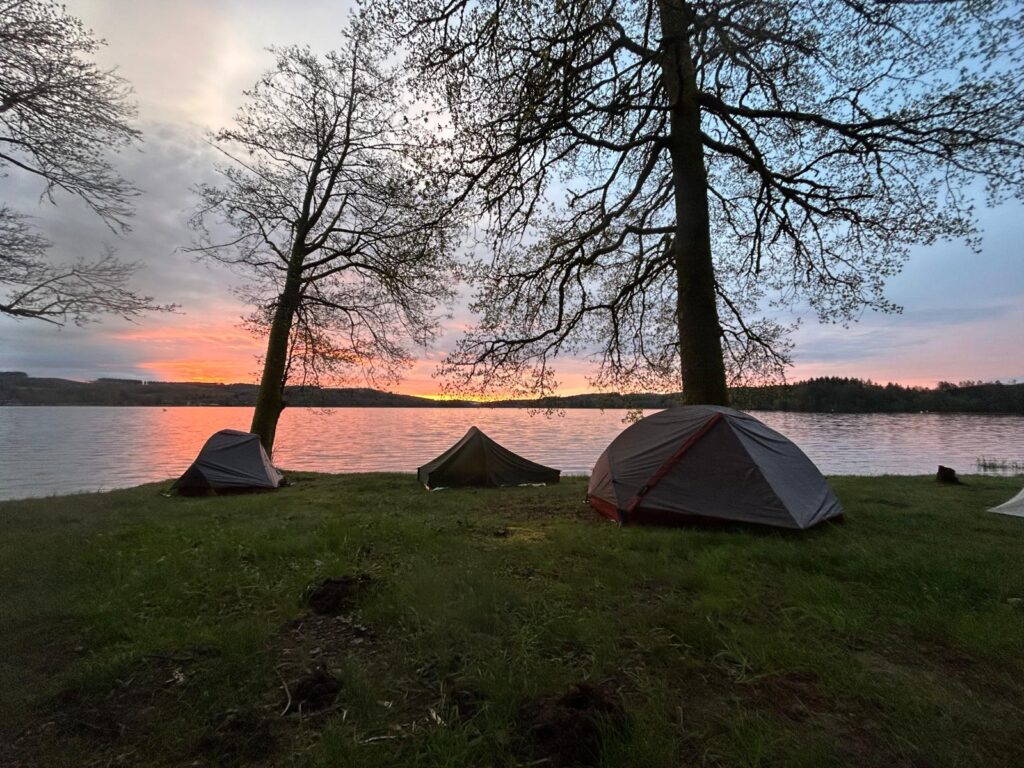
Day 163 – The Morvan For administrative reasons, I left India a month ago to visit Sri Lanka. Straddling Western and Indian customs, here cows do not roam freely on the roads, trash bins are in use, sidewalks exist just like washing machines, and the temples have set the sound system volume to a reasonable level. These are significant improvements for the tourists who are very present on the island of Ceylon, whose capital, Colombo, hints at exotic flavors. That said, the island has retained some essential folkloric specifics such as its countless stupas, its gigantic Buddha statues, and its bakers in tuk-tuks who announce themselves with Beethoven's Für Elise played on a synthesizer. There is also the famous Paan, a preparation made from areca nuts, tobacco, and snail shells that is chewed for its euphoric properties. It stains their teeth and gums blood red, so Sri Lankans do not laugh yellow but red. I mainly spent time on the paradisiacal beaches of the southwest where one can see the sun rise and set over the Indian Ocean and where fruits like mangoes, jackfruit, and durian are abundant. I walked and cycled through these coastal areas where wild dogs come to be petted and where one can swim with colorful fish and turtles.
Assessment of India and return to France
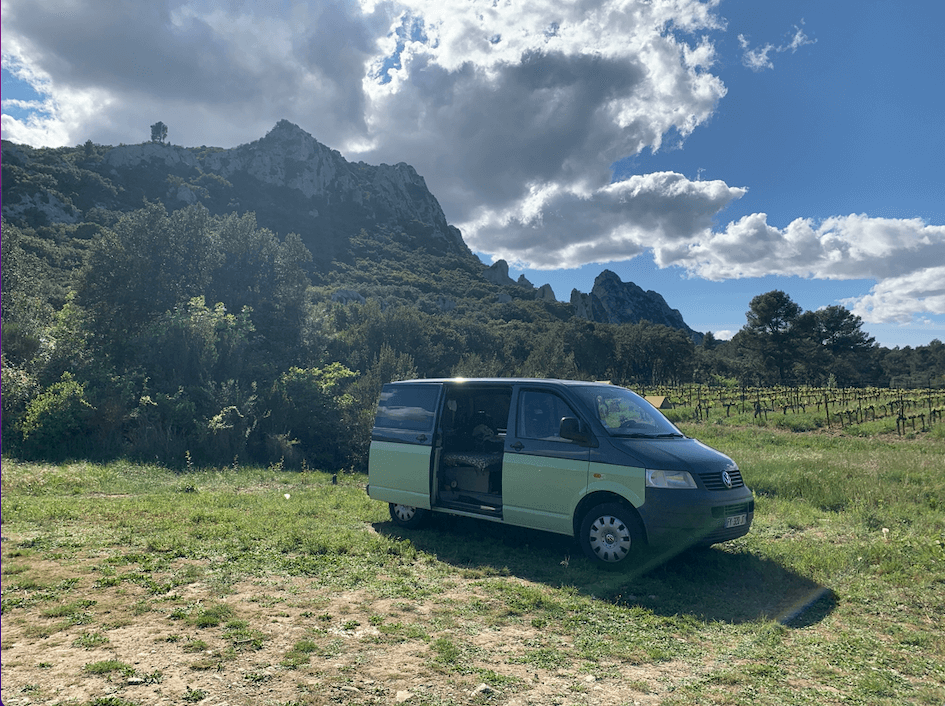
My journey in India ended in early April after 5 months spent in Kerala, Tamil Nadu, and Sri Lanka. Besides meditation, yoga, and breathing techniques that transformed my daily practice, this country particularly inspired me with its ashrams. I come away full of ideas and dreams to create the practical school of Living Nutrition. If you want to know more about this, you will find in this article on nature yoga a summary of the teachings I received in India and my vision for creating a community. I bring back with me a dose of gentleness, tolerance, and patience that the Indians are generous with. My memory also retains the vivid recollection of having seen a country function with a minimum of organization but with good verbal communication. There is always someone to help you when you are in trouble. The cultural differences between the East and the West are so great that one inevitably comes away enriched from having, for a time, tasted another way of living. It helps to reconsider one’s beliefs, habits, and to open up to difference and novelty. This is one of the universal virtues of travel, wherever it may be. But after 5 months on site, I felt weary of the constant agitation, noise, and pollution. What I missed most in India was not being able to walk and recharge in the calm of nature. That is why, in particular, I was happy to return to France and find a clean and organized country, not overcrowded, where even Paris gave me the impression of being in the countryside. When you stay at home, it is harder to realize all that we have that is precious in France and that we mistakenly take for granted. Like, for example, simply being able to walk in clean nature, sometimes even with the luxury of being alone. This is extremely rare in India! I also realize how much we have quality teachings in France, regardless of the fields. On the other hand, we lack resourcefulness, patience, and especially this openness to spirituality that makes India conducive to the emergence of ashrams, which are precious places for rejuvenation and transformation. I had never been around a population as “connected” as in India. Even in a crowd with dense traffic, no one bumps into each other, and many things work with the operation of the Holy Spirit… Since being back in France since April 8, I am happy to have reunited with family, friends, and to spend time in the natural spots dear to my heart… I then picked up Free Your Van, which had been patiently waiting for me near Lake Paladru at a garage that restored its health by changing the gearbox, clutch, and a driveshaft, not to mention some bodywork. Ready for new adventures, my van took me to Aix en Provence to attend a Nonviolent Communication (NVC modules 1 and 2) workshop. More than an innovative approach to communication, it is a revolutionary vision of relationships with oneself and others that invites one to redefine their way of thinking. Then, I crossed France towards Bordeaux where I was expected by an association to lead a 3-day event around the natural feats of the body through a film, workshops, and conferences. Unfortunately, the association preferred to cancel the event due to an insufficient number of reservations. No matter, I honored the other appointments I had in the Bordeaux region to provide individual consultations and, at the same time, had the pleasure of meeting, against the backdrop of spring, beautiful people with whom common projects related to the practical school of Living Nutrition could come to life… To be continued…
The fruit meal

About the recipe Fruit meals are the simplest and quickest to prepare. They represent between 50 and 75% of meals (depending on whether one eats 2 or 4 meals a day) for a raw vegan who eats physiologically. Recipes for fatty CRUsine or with mixtures are not representative of the basic diet of a frugivore, which is human, and should, for this reason, be minority. Ingredients for one person Between 1 and 3 kilos of fruit with a maximum of 3 different fruits. Preparation You may want to have a sharp knife and a spoon. And it’s already ready to be enjoyed! Tips Relearn the pleasure of simple things by not mixing your fruits. If they are ripe and of good quality, they are perfect as they are! Eat them in a squatting position to aid digestion and familiarize yourself with this natural posture that is most beneficial for the body. Wait 20 minutes between each variety of fruit to optimize digestion. Dishes are always better after a moment of gratitude! 😉 To meet your mineral needs, complement these fruit meals with vegetable meals.
The Yoga of Nature
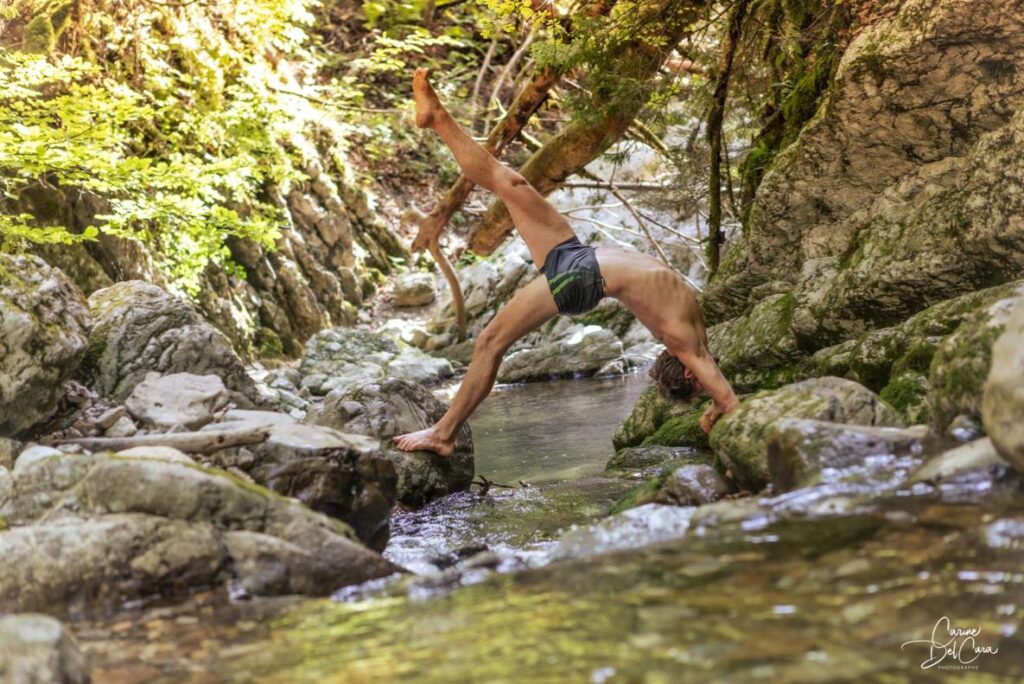
“Only when nutritious and pure food is taken will pranayama bestow its glorious fruits upon the practitioner.” Vishnudevananda “Health is wealth. Peace of mind is happiness. Yoga shows the way.” Sivananda “Do you not know that your body is the temple of the Holy Spirit who is in you, whom you have received from God?” Corinthians 6:19 In this article, you will find a summary of my learnings in India as well as the vision of the practical school of Living Nutrition that I nurture. Enjoy your reading! Introduction Yoga (from the Sanskrit “union, yoke, method”, “rest”) is a philosophy that has been linked since its origin to the practice of Jainism or Jinism (from the Sanskrit jina, “victor” and mata “doctrine”), a religion that is believed to have begun to appear around the 10th century BC. Yoga is a discipline or practice common to several eras and currents, aiming, through meditation, asceticism, and physical exercises, to achieve the unification of the human being with the cosmos, to realize the Self, and to free oneself from the cycle of rebirths, samsara. Over the centuries, the philosophy of yoga has gradually been codified in several reference texts such as the Yoga-sutras, the Bhagavad-Gita, the Vedas, and the Upanishads. These sacred writings have influenced many thinkers and are, to a large extent, the source of inspiration for the renewal of spirituality in the West. Among other things, they are responsible for the concept of non-duality and the law of impermanence. The 4 Traditional Paths of Yoga There are four major traditional paths of yoga: karma yoga, bhakti yoga, raja yoga, and jnana yoga. Karma Yoga – the Yoga of Selfless Action Karma yoga is based on two main principles: first, a deep respect for the work undertaken; second, a complete indifference to its fruits. Any idea of obtaining something in return for the work done hinders spiritual development and ultimately brings suffering. In addition to this detachment from the results of actions taken, the karma-yogin should not consider themselves the author of the action, but act as an instrument in the work, impartially and impersonally, with the erasure of their ego and equanimity. The ultimate goal of karma yoga is the liberation from all karma through non-attachment to action and its fruits. Bhakti Yoga – the Yoga of Devotion In the Bhagavad-Gita, the practice of karma yoga is combined with that of bhakti yoga, which is a spiritual path based on love, faith, and total surrender to a deity (such as Krishna, Rama, Shiva, Vishnu, or the Divine Mother). The central idea is that, through pure and selfless love for the divine, one can unite with it. Devotion in its broadest sense also includes faith and gratitude towards spiritual teachers and their teachings. Practitioners of bhakti yoga seek to connect with the divine through prayers, devotional singing, recitation of mantras or names of God, pujas, satsangs, offerings, services, charity, celebrations of rituals, meditations on a sacred image, etc. Note: Some branches of Jainism reject idol worship, just as the teachings of Buddha do. Raja Yoga – the Yoga of Meditation and Mastery of the Mind Raja yoga (which means “royal” yoga) is also called ashtanga yoga (“yoga of eight limbs”). It is in this yoga that we find the moral code that represents the prerequisite for any yogic practice, namely: Do not kill and consider all forms of life. Do not steal and refrain from taking what is not given. Do not lie and have impeccable speech. Moderation of the senses and have a healthy and respectful sexuality. Refrain from consuming intoxicants (drugs, alcohol, and any other addictive substance). It is to Raja Yoga that we owe practices such as asanas, pranayamas, and meditation. It also emphasizes the importance of developing certain virtues such as equanimity, detachment, purity, surrender, non-possessiveness, non-violence, contentment, and self-knowledge. Jnana Yoga – the Yoga of Wisdom and Self-Knowledge Jnana yoga is an introspective and philosophical path that leads to liberation (moksha) through direct knowledge of the Self (Atman) and its non-separation from the absolute (Brahman). It is the yoga of those who seek the truth through reflection, contemplation, and intellectual discrimination between the real and the unreal (maya). The perception of this reality is obscured in humans by the false idea they have of themselves and the world, preventing them from experiencing the fullness of unity. Pure Consciousness, called Brahman (the universal Self), is presented as the substrate of the universe, from which the world and also individualized consciousness appear. The whole world is not what it seems: it has no independent existence, it is the manifestation of an ultimate reality, it is a mere appearance, and it arises through the play of maya, the creative power inherent in Brahman. https://youtu.be/pUXZNhCbFgo?si=WKIDFgsJMRlxY_dYhttps://youtu.be/EayyV7DdLxg?si=AGGJI5qDwIgcXeOa The Weaknesses of Integral Yoga The Physical Body Clothing All ashrams have monastic rules to maintain a certain order and ensure an atmosphere conducive to study and learning. One of the common rules in all ashrams is related to clothing. Everyone is required to wear pants (not tight) and a top with sleeves (without a neckline) regardless of the heat. The major problem with this rule is that the skin is very little exposed to light, and for those residing on-site for several weeks or months, this leads to vitamin D deficiencies. Yet, originally, yogis like Sivananda practiced sun salutations facing the sun (when it is close to the horizon) and in shorts (see photo). The asanas of the salutation lasted about 15-20 minutes, a time calculated for the body to receive its daily quota of vitamin D. A practice unfortunately fallen into oblivion. Food It consists of 95% cooked foods, mainly starches with spicy sauces and cooked vegetables. Raw fruits and vegetables, which are the quintessential sattvic food, are merely decorative in the dishes. As I have observed many times, those who primarily consume starchy foods that generate glues (see this article on the harms of starches) end up frequently coughing and spitting. Moreover,
What about the acidity of citrus fruits?
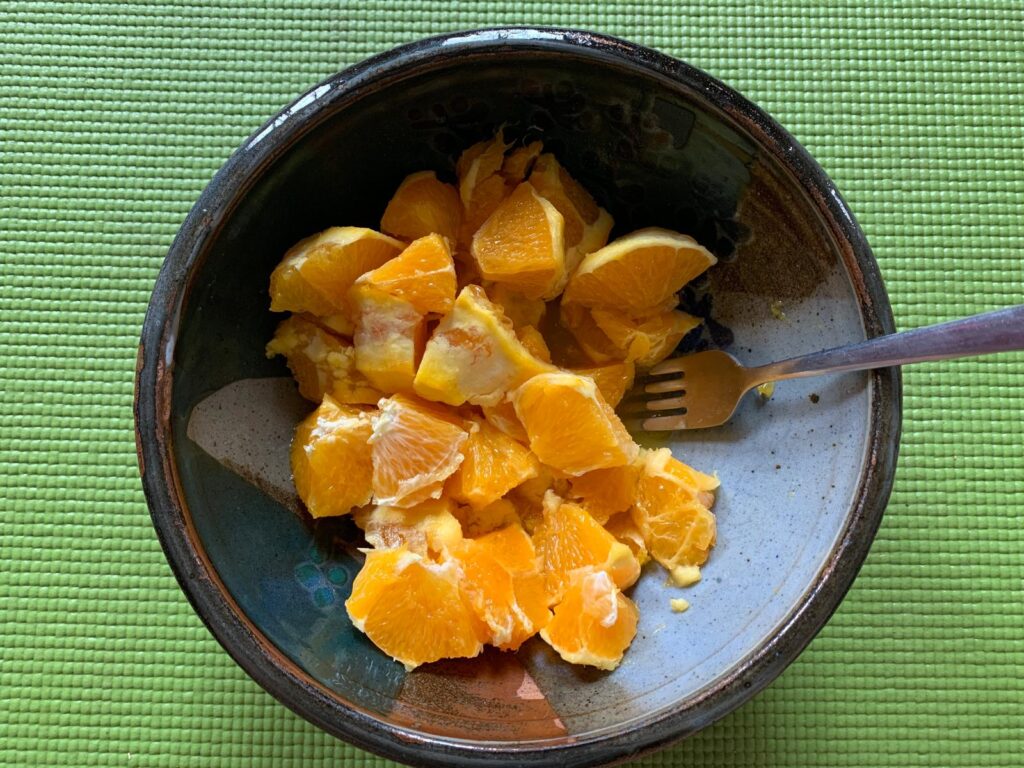
Are citrus fruits acidifying? Many people report that their dentist has warned them against consuming citrus fruits, those acidic fruits that could be a cause of enamel demineralization and, indirectly, dental cavities. Let’s see what the situation is by studying some chemical characteristics of lemon juice, the most acidic of the citrus family. The pH of lemon juice is between 2 and 3 and its pKa (the acidity constant) is greater than 3. This means that the citric acid contained in lemon juice only releases its protons (the acidity) if it is in an environment where the pH is greater than 3. For this reason, it is said to be a weak acid. However, lemon juice is met by hydrochloric acid in the stomach, which has a pH between 0 and 1, and a pKa of -6, making it a strong acid. Therefore, lemon juice does not release protons (the acidity) in the stomach and is thus not acidifying for the body. Moreover, citric acid is found as a metabolite in the Krebs cycle, a set of chemical reactions that allows cells to produce energy. The citric acid we consume through lemon juice is either used directly by the cells to produce energy or metabolized by the liver into non-acidic compounds and bicarbonate (which is alkaline). Ultimately, after consuming lemon juice, the body has fewer acids to expel than before and additionally benefits from the intake of alkaline minerals such as potassium, calcium, and magnesium. This is why citrus fruits are classified among foods with a negative acid load (Potential Renal Acid Load). Citrate (the ionized form of citric acid) also inhibits the formation of certain types of kidney stones, particularly those based on calcium oxalate. Overall, it can be said that the weak acids from fruits contribute to the regulation of the body’s pH, especially if one has a diet that is too acidic. The citric acid found in citrus fruits and some red fruits has other benefits: Promote digestion: Citric acid stimulates the production of gastric juices, which helps better digest food. Natural antioxidant: Citric acid helps neutralize free radicals, thus protecting cells against excess oxidative stress (in the right proportions, the oxidation process is normal and necessary). Improve mineral absorption: It can enhance the absorption of non-heme iron (from plant sources), especially when consumed with vitamin C. Natural preservative: It helps preserve food by slowing down oxidation and the proliferation of bacteria. Do citrus fruits damage teeth? Citrus fruits are therefore not acidifying, but can they still damage tooth enamel? As we have seen, they are weak acids and their transit time in the mouth in contact with teeth is short. On the other hand, when the body is acidified, the pH of saliva decreases and becomes a favorable environment for bacteria responsible for cavities (Streptococcus mutans) that feed on food residues stuck in the teeth and release acidic waste that can erode enamel. Since our teeth are bathed in saliva 24/7, the acidity of saliva is the number one cause of enamel demineralization. Conclusion Experience shows that the more acidified one is, the more one is attracted to acidic fruits which, once digested and metabolized, are alkalizing. This is why it is easy to misinterpret the true culprit of dental problems or, more generally, acidosis… Some still believe that we are not all capable of transforming the acidity of fruits into base when the liver or the Krebs cycle (which produces energy from nutrients) are defective. A rare scenario that only concerns physically inactive individuals with very low vitality. Moreover, an organism with a tired or congested liver will not be able to properly digest its food, whatever it may be, without producing acidic residues. Furthermore, under the principle of alliesthesia, it is unlikely that these individuals will be attracted to acidic fruits if the body does not have the resources to use them to its advantage, simply because the experience will be unpleasant. Moral: Don’t deprive yourself of eating acidic fruits if you love them! But don’t force yourself either; the body knows exactly what it needs and in what quantity! To go further: Read these articles on “Dental hygiene” and “How to use instinct to choose the foods the body needs?”
Date Leaves
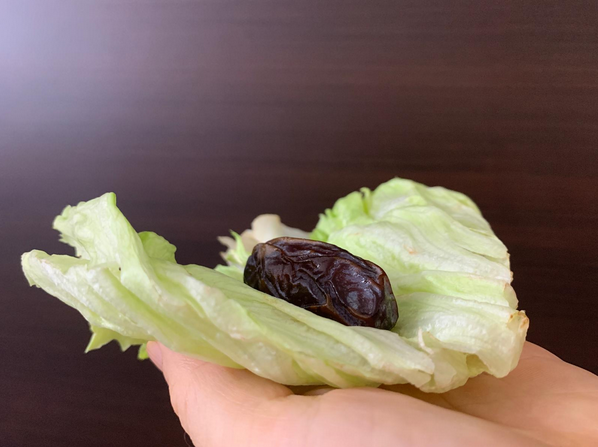
About the recipe Our digestive system needs water to properly digest food, which is why dried fruits are less digestible than fresh fruits. It is generally recommended to rehydrate them before eating, but they can also be consumed with vegetables. Ingredients for one person Leaves of salad of your choice Dates of your choice Preparation Place a pitted date at the heart of a salad leaf. Fold it all up and it’s already ready to be enjoyed! Tips Food is always better after a moment of gratitude! 😉 The salad can be replaced with a slice of cucumber.
Raw Vegetables with Chia Pâté
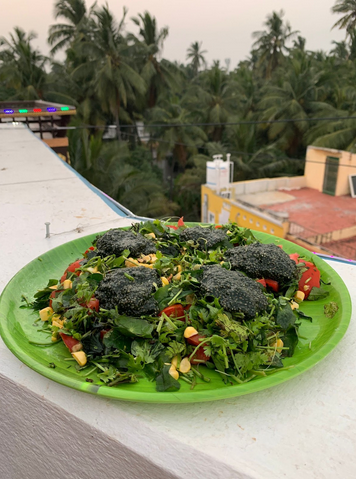
About the recipe An ideal recipe for any season to introduce a small daily portion of good fats with raw vegetables. Ingredients for one person A selection of raw vegetables, 4 maximum (for digestibility) 50g of chia seeds About 5 cl of sea water and 5 cl of fresh water Optional: 1 tablespoon of spirulina flakes Preparation In a bowl, pour the chia seeds with the sea water, fresh water, and spirulina. Mix well and let sit for 5 minutes; this is the chia paste. Pour the raw vegetables onto a large plate and then sprinkle the chia paste over the vegetables as desired. And it’s already ready to be enjoyed! Tips Food is always better after a moment of gratitude! 😉
Coconut Pilaf with Raw Vegetables
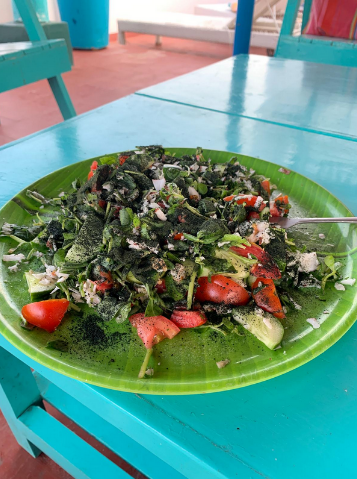
About the recipe An ideal recipe for any season to add substance and an exotic touch to raw vegetables. Ingredients for one person Half a mature coconut (brown shell) 3 varieties of sweet fruits or vegetables Aromatic herbs Optional: two teaspoons of spirulina flakes or powdered barley grass juice. Preparation In a large bowl, grate the coconut and then add the chosen vegetables and sweet fruits after cutting them into small pieces or grating them. Add the finely chopped aromatic herbs and mix everything together. Just sprinkle the preparation with spirulina or barley grass and it’s ready to be enjoyed! Tips Food is always better after a moment of gratitude! 😉 You can add (before sprinkling) a bit of sea water if it’s not salty enough for your taste.
Spanish chocolate
Ingredients for one person 1 to 3 teaspoons of raw cocoa powder 1 teaspoon of honey Optional: a blend of powdered spices with ginger, cayenne pepper, cardamom, anise, clove, and cinnamon Preparation In a nice cup, pour the raw cocoa powder, honey, and possibly the spices, then add about 10 cl of hot water at 50°C. Mix well and it’s ready to enjoy! Tips For children and adults who need an extra touch of sweetness: replace the suggested spices with powdered vanilla. If you need or want a denser or creamier drink, add a teaspoon of nut butter (of your choice). If you have a blender, you can replace the honey with pitted dates and replace the nut butter with whole nuts. To have a delicious milk chocolate, replace the hot water with a plant-based milk made in the blender. Nothing stops you from using cold water if you want a refreshing drink. Food is always better after gratitude! 😉
The sea pâté
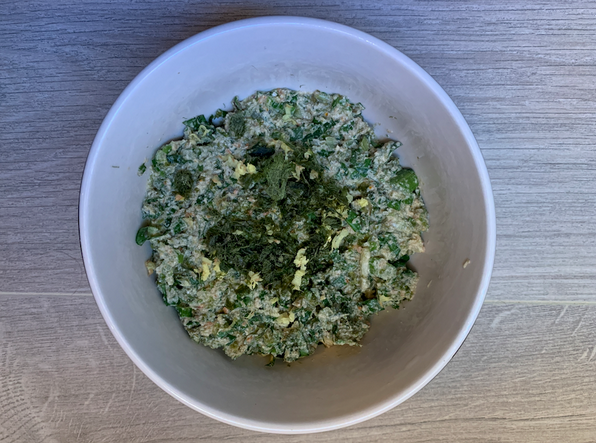
Specific equipment required Blender OU Food processor About the recipe This recipe lives up to its name and it is important not to overindulge in fats in thediet. To learn more about this, I invite you to read this article on our real lipid needs. Ingredients for one person 50g of activated sunflower seeds The juice of half a lemon A handful of dried seaweed (wakame or ocean salad) 1-2 stalks of celery A bunch of aromatic herbs of your choice A piece of ginger A little sea water Preparation In a blender or food processor with an S blade, blend the sunflower seeds with the lemon juice, ginger, and a little sea water to obtain a slightly liquid paste. In a large bowl, finely chop the celery and aromatic herbs, add the dried seaweed, then pour the sunflower mixture on top. Mix well and it’s ready to be enjoyed! Tips You can stuff mushrooms with this sea pâté or use it as a sauce. Food is always better after gratitude! 😉
The fruity salad
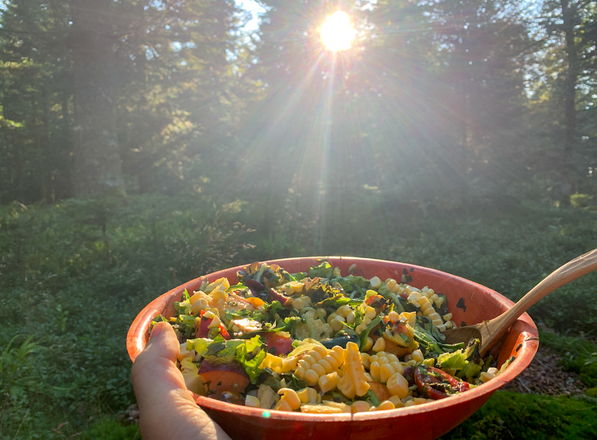
Ingredients for one person 3-4 nectarines or peaches or the equivalent in mangoes 2 ears of sweet corn 2 large handfuls of multicolored cherry tomatoes 1 cucumber or 1 zucchini 4-5 sun-dried tomatoes herbs of your choice and ginger Optional: a bit of sea water Preparation In a large bowl, cut the fruits into small pieces, separate the corn kernels from the cob with a knife (cutting lengthwise), cut the cherry tomatoes in half, prepare the zucchini or cucumber into spaghetti with a spiralizer, finely chop the sun-dried tomatoes and herbs with herb scissors and grate the ginger. Finally, add a bit of sea water and mix everything together. Tips You can replace the herbs with spirulina flakes. Food is always better after gratitude! 😉
The avocado egg
Ingredients for one person a ripe avocado (that is, very soft) a pinch of kala namak salt, the black salt from the Himalayas Preparation Peel the skin of the avocado with your fingers starting from the top and spiraling down. Add a little kala namak salt and bite into it! You’ll feel like you’re eating a hard-boiled egg. Tips You can add dried seaweed of your choice instead of salt. Food is always better after gratitude! 😉
The Sea Salad
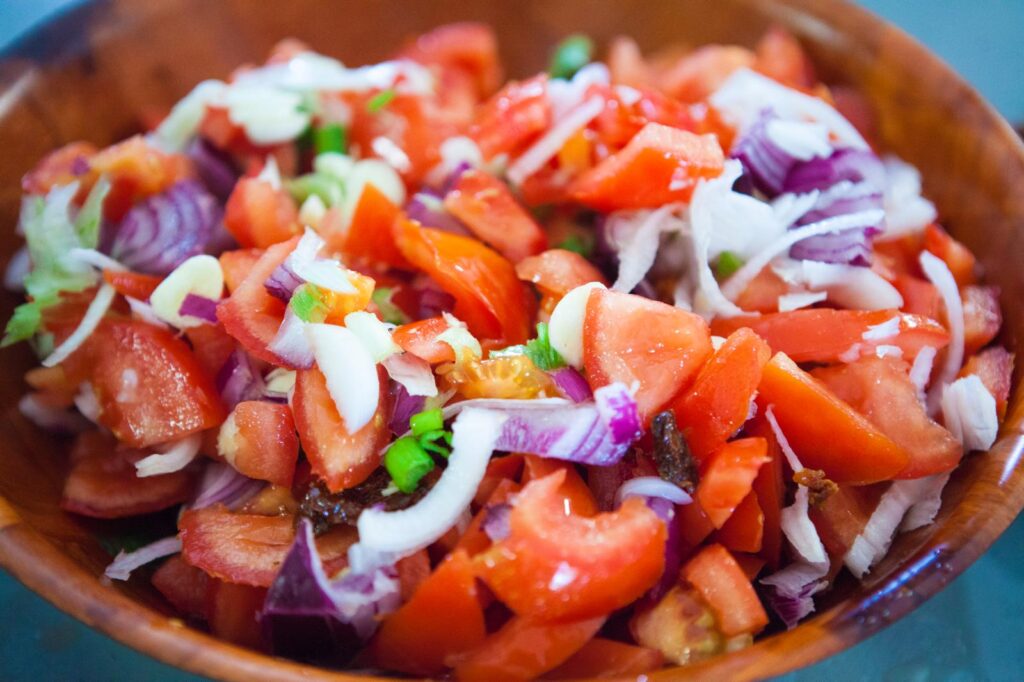
Ingredients for one person 1 cucumber (with or without skin) 300g of cherry tomatoes or beef heart 1/2 lemon A bit of white or red onion A handful of dried or fresh seaweed of your choice 2 tablespoons of an oil of your choice Preparation In a bowl, grate the cucumber and onion, then add the tomatoes previously cut into small pieces and the lemon juice. Add the seaweed and oil, then mix everything together and it’s ready to be enjoyed! Tips You can add sprouted seeds or aromatic herbs of your choice. Food is always better after gratitude! 😉
Mont Blanc Cream
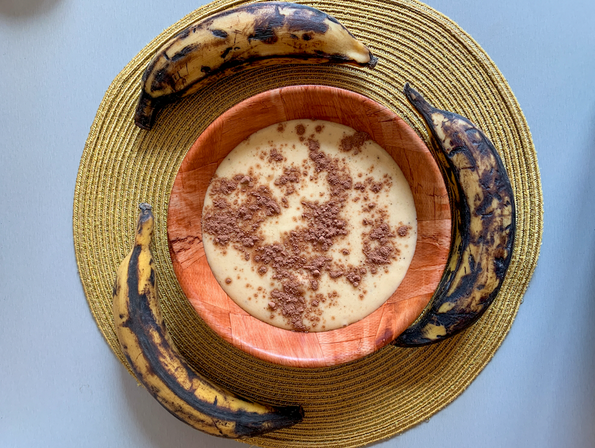
Specific equipment required Blender Ingredients for one person 4 to 6 ripe plantains 1 teaspoon of cocoa powder ¼ cup of hypertonic seawater ¼ cup of fresh water Optional: vanilla Preparation Place the chopped plantains, seawater, fresh water, and optionally, vanilla into a blender. Adjust the amounts of seawater and fresh water according to your preferences for saltiness and creaminess. Blend everything well and serve the creamy preparation in a bowl as desired. The final step is to sprinkle with cocoa powder. It’s then ready to be enjoyed! Tips You can add cacao nibs if you enjoy a crunchy texture. To eat raw plantains, you need to wait until their skin is black. Food is always better after a moment of gratitude! 😉
Stuffed Cabbage
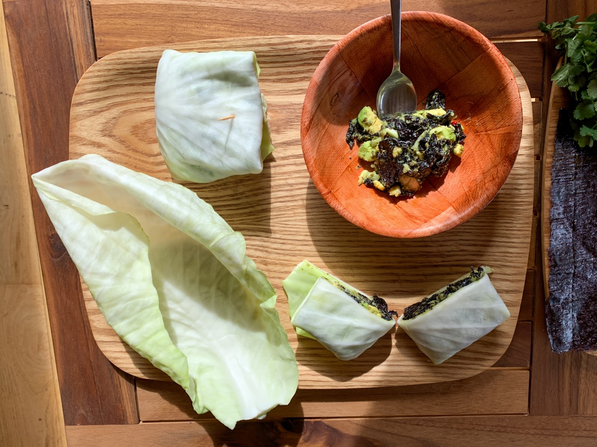
ABOUT THE RECIPE This recipe lives up to its name and it is important not to overindulge in fats in the diet. To learn more about this, I invite you to read this article on our real needs for lipids. INGREDIENTS FOR ONE PERSON 2 to 4 leaves of white cabbage (depending on size) 1 avocado 2 sun-dried tomatoes a small bunch of herbs of your choice (coriander, mint, oregano, etc.) 1/2 yellow or green lemon 2 to 4 sheets of Nori (or equivalent with another seaweed of your choice) Optional: fresh chili or garlic or onion Preparation Place in a large bowl: the Nori sheets cut into small pieces; the avocado previously diced; the lemon juice; the sun-dried tomatoes, finely chopped herbs as well as the chili, garlic, or onion. Mix everything together and let it rest for a few minutes to allow the seaweed to soak well. Tips Insert a toothpick to keep the cabbage leaf closed. Food is always better after gratitude!
Sivananda ashram in Kerala

After 10 days spent at the Isha Yoga Center, I took the train to return to the south of Kerala, to Marari Beach, a small seaside resort that had captivated me with its gentleness and astonishing calm. On its long, almost deserted beach, which had been swept by a tsunami a few years ago, one can run for miles on the fine sand in nature and contemplate the simple life of the villagers, fishermen, and children building treehouses or playing with stray dogs. An atmosphere where time seems suspended. The loop in South India was complete, and I would have happily returned to France if it weren’t still winter, and then, in my program, I still had to visit the Sivananda Yoga Ashram at Neyyar Dam, an isolated place in the mountains, surrounded by forests and by a large artificial lake. I have been practicing yoga (the asanas part) daily for about 10 years, self-taught, using books and YouTube videos, following injuries from running, particularly sciatica. Since I had never taken classes, my practice was mainly based on feeling, and I felt the need to structure my sessions. It was with this simple ambition that my steps led me to this ashram, to follow a free 2-week program: the “Yoga Vacation,” without ever having heard of the Hindu spiritual master Sivananda (1887-1963). Yet it is this revered figure who, in Rishikesh in northern India, founded the Divine Life Society, whose purpose is to work for peace and the training of citizens practicing “integral yoga.” A yoga that can be summarized in these words: Serve, Love, Give, Purify, Meditate, and Realize (the Self). It is thanks to one of his most well-known disciples, Vishnudevananda, that this integral yoga became known worldwide and that today there are 11 ashrams offering programs and training to become a Yoga teacher. With its international success, Rishikesh has established itself as the cradle of yoga. Founded in 1978, the Neyyar Dam ashram is one of the oldest and most renowned. The building, ideally shaded to face the heat of India, is impeccably maintained with beautiful paths, murals, well-kept gardens, statues, and large practice halls. Every day, about 250 visitors from all over the world are guided by competent teachers to discover or perfect their practice of integral yoga while immersing themselves in the rhythmic life of an ashram with its share of rules. As always when arriving at such a place, where it is not really allowed to go out or eat in one’s room, I bring my own supply of fruits that I store under my bed, being extra vigilant so that the ants do not betray my secret. Then, my priority is to ensure that I can replenish my supply during my stay. If that is not possible, I fast or I leave. This firm alignment with my values has never deprived me of anything; on the contrary, it offers me amazing opportunities. Just like at Vipassana, where one of the servers was a fruitarian and arranged for me to eat plant-based and raw during the retreat! At Sivananda, I could count on two small fruit shops that had everything I needed, including coconuts and jackfruit! Once reassured on these points, I was able to fully appreciate the richness and quality of the theoretical and practical teachings provided. The daily rhythm was 4 hours of yoga, 3 hours of satsang, 1.5 hours of theory, and 1 hour of karma yoga, not counting optional activities. This left me a few free hours to read and write, so I quickly felt like a fish in water with this lifestyle close to my daily routine. Before going to India, I envisioned myself singing mantras with emotion, and the opportunity had not yet arisen. At Sivananda, I made up for it because here we sing for 1 hour morning and evening, as well as at the beginning and end of each activity. I greatly appreciated the chants that moved me and made me shed tears of joy. Coming with the sole ambition of gaining flexibility and mobility, this ashram turned out to be, after Vipassana, the most beautiful surprise of this trip to India, far beyond my expectations. I had come to this sacred land to find inspiration to create the practical school of living, and it is here that I found it… After a 2-week stay at the Sivananda Ashram in Neyyar Dam to follow the “Yoga Vacation” program, I returned to Kovalam, to my favorite environment: the seaside. I happily resumed my little habits: meditation, movement, singing, and swimming in the morning and evening. In between: reading, writing, managing professional activities, not to mention the stroll to the market to stock up on fruits. A beautiful and simple life, the one I chose, even though I would be delighted to find a richer social life in France. I was happy to go to India, and I am just as happy to return home next Monday. Everything is therefore perfect, and I savor for a few more days the generous sun of India, its beaches, and its delicious exotic fruits. The program that awaits me upon my return is already well filled until the end of summer, so this calm time in Kovalam is welcome to take stock of these last 5 months during which I have: Participated in a workshop on disarmament Experienced a Vipassana retreat (see this article on Vipassana meditation) Followed the online training “Inner Engineering” by Sadhguru. Followed the “Yoga Vacation” program at a Sivananda ashram. Visited 6 ashrams + Auroville Read about fifteen books on hygiene Simplified my diet to eat only raw and fat-free foods (see this article on our lipid needs) Redone my entire website Learned to be more patient… Cured my intolerance to loud music and noise… In recent years, I had been somewhat nostalgic for the expeditions of my past as an adventurer because I did not think I would relive engaging experiences where one feels there
In the Vercors
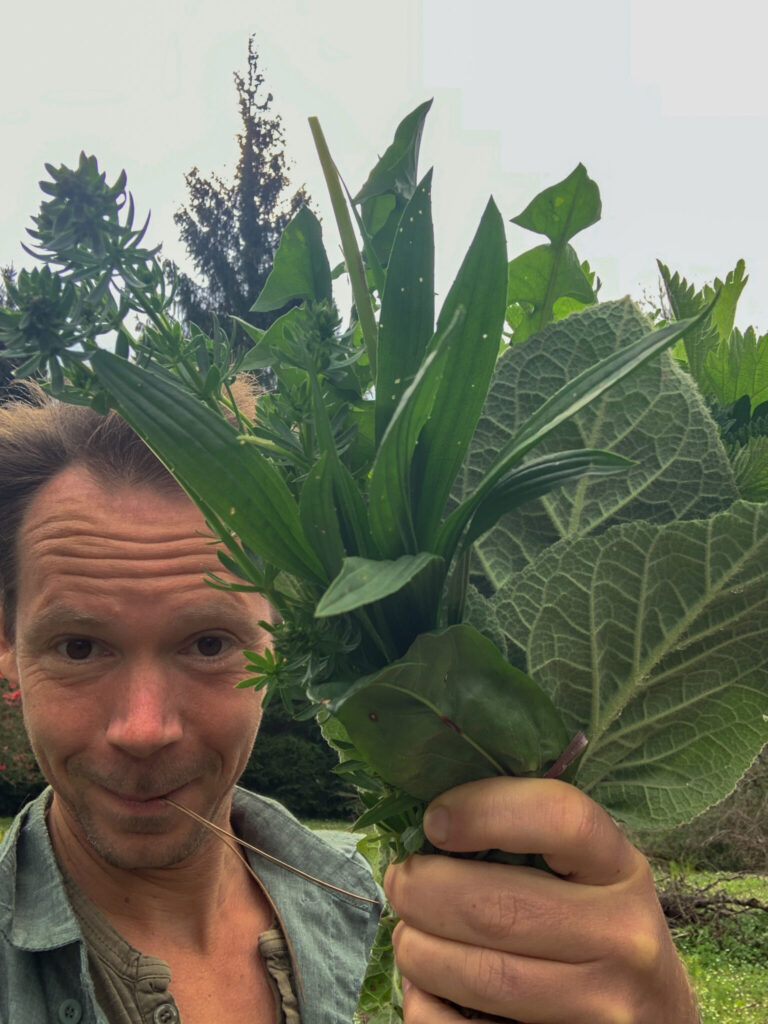
DAY 125 – Still in the Vercors Upon my return from Morocco, which took place in mid-February, I had the pleasure and joy of being invited to Sylvie’s (a fan of Fasting and Trekking) who is the owner of an old maternity home currently being renovated, which will soon host workshops on Living Nutrition, lifestyle hygiene, and well-being. I amusingly observe that this is the fourth time since the beginning of the Rawd Trip in 3H that I have been welcomed in centers with this vocation. Here, in the Vercors, 20 minutes from Valence, the restoration work has been delayed, so I was invited to spend the end of winter warm and dry in this old maternity home, by the banks of a river, the Lyonne. It is therefore no coincidence that I had the feeling that my projects were in gestation during this introspective period and that something new was about to be born within me. I felt daily gratitude for the opportunity to comfortably recharge in this place where I spent a lot of time reading (by the end of the year I will have covered the main works on natural health, a subject I have been researching for 10 years), writing new articles, finalizing the travel account “The Footprint” which will be published in a few weeks by Guy Trédaniel editions, meditating, recording new guided breaths on my YouTube channel, testing new hygienist techniques, forming partnerships, learning the ukulele, and running every day in the Vercors with its enticing valleys filled with fruit trees, a true Garden of Eden! This peaceful stay in Royans allowed me to take stock of the past few years and define new perspectives. So much so that, between the workshops, festivals, congresses & screenings, my agenda gradually filled up until mid-October. Even though the Rawd Trip in 3H has been put on hold, Free Your Van (the nickname of my vehicle) was called upon for several small excursions. The first took place in early March to lead a conference in Dyo (in Saône et Loire) on the benefits of active fasting and, at the same time, illustrate my remarks by screening “The Fasting Walk”, the documentary by Damien Artero. It had been two years since this film was last shown publicly, and it was a real joy to present it again, especially on my native soil. An event initiated and managed thanks to the goodwill and kindness of Fabienne (another fan of Fasting and Trekking) with whom I extended my stay. During this winter break, I also visited Lucile and Jean Geoffray, a dynamic young couple who offer gong baths and raw cuisine in Lyon. We plan to organize monthly ecstatic breathwork sessions to the sound of the gong in Lyon (the page is currently being created). Then my faithful van took me, among other destinations, to Chambéry where I met my friend Pierre Legros to experience the warm & brotherly atmosphere of the men’s circles he leads. And recently, a collaboration with Alexis for a new concept “Fasting & NVC” is in the works. Our first week of water fasting in co-facilitation (50% hygienism and 50% NVC) will take place from October 12 to 19 in Savoie (this page is also being created). Back in Royans, I just have to enjoy a few more blissful days by the river before hitting the road for new adventures. The schedule is already looking busy for April with a Thai massage training, a Tantra and Voice workshop with Kelly Aura and Frédéric Steine, a visit to Irène Grosjean to receive a dedication on her latest book that has just been published, and on April 27, from 6 PM to 8 PM at Yoga Corner, co-hosting with ausondugong.fr our first Ecstatic Breathwork in Lyon. Until then, dear readers, take care of yourselves and see you soon for new adventures!….
Raw pumpkin or nettle soups

Specific equipment required Blender About the recipe An ideal recipe to stay warm in winter with raw food. Ingredients for one person Nettle (fresh or powdered) OR pumpkin with skin 1/2 avocado A small bunch of coriander A handful of wakame (seaweed) flakes Boiling water Optional: a pinch of chili Preparation Place the nettle or pumpkin (cut into small pieces), avocado & chili in a blender. Add boiling water with an adequate volume to achieve a creamy consistency while blending everything together. Pour the obtained mixture into a bowl and add the seaweed and coriander after finely chopping it. Mix everything together and it’s ready to be enjoyed! Tips Coriander can be replaced by parsley or any other herb. Chili can be replaced by garlic. Nettle and pumpkin can be mixed. Wakame can be replaced by any other seaweed you like. Dishes are always better after a moment of gratitude! 😉 😉
Sri Ramana Ashram and Isha Yoga Center

Sri Lanka is more open to tourism than India, which leads to more evolving customs. For example, on the beaches, swimsuits do not attract attention, whereas they are an exception on the Indian side where people swim fully clothed. There is also less poverty; you won’t find slums here, and few sleep on the sidewalk amidst the loud chaos. Western visitors have not only brought benefits; drug use (alcohol, tobacco, and others) has also increased. However, there is a constant between the two countries: they all have at least three questions on their lips when they approach a foreigner: Where are you from? How long have you been here? What do you think of our country? I spent sweet moments alone between Bentota and Tangalle, where some Sri Lankans joined me at dawn on the beach to share my morning routine facing the sun and the ocean. However, I felt the call of the mountain located in the center of the island. So, after 7 hours by bus and 2 hours by train, I arrived near Horton Plains, a nature reserve that houses the highest peaks (about 2000m) of the island. A place I chose for its isolation to fast for 3 days with walks in the jungle. A small routine fast where I experienced a strong emotional detox triggered by the undue amount I paid at the park entrance. For various reasons, this brought up all the frustrations, fears, and angers related to my professional activity. In fact, at that moment, caught in the emotional storm, I wanted to stop everything. I thought I had made peace with these feelings, whereas in reality, I had repressed them. This is where the teachings of Vipassana were helpful in revealing the desires and aversions acting at the source of my torments. This detox allowed me to return to healthy foundations: following one’s life impulses is already a lot, and it is important, to live happily and in peace, to trust in creative intelligence and to have no expectations in this evolutionary process we call life… Back in India, I took a sleeper bus to Tiruvannamalai, a major pilgrimage site known for its temples and ashrams dominated by the 800m Mount Arunachala. Daily, thousands of pilgrims, often with shaved heads, walk barefoot the 14 km that circle this sacred mountain. You meet many small vendors and hundreds of saffron-clad sadhus who beg, sometimes insistently. It is in the caves of this mountain that Sri Ramana Maharshi (1879-1950), considered one of the greatest sages of India, spent nearly 20 years in contemplation in silence. In 1922, an ashram was founded to accommodate the crowd of devotees who visited him to soak in his aura and follow his teachings, mainly centered on the notion of the Self and the question “Who am I?”. 75 years after his death, his ashram, which lives on donations, continues to offer free lodging and meals to the thousands of devotees who come from all over the world to gather and spend some time in silence and devotion to the rhythm of rituals, chants, readings, and offerings. Having come here after hearing about this place several times, I only stayed 48 hours due to the incessant agitation and the constant noise of the city, a victim of its success. Just enough time, however, to get one of his books “Who am I?” to read with interest that Sri Ramana recommends a sattvic diet, breath control, and meditation as tools to calm the mind in order to realize the Self. In the sattvic diet, we find the notions of “pure, essential, natural, vital, energetic, clean, conscious, and true.” A sattvic diet also respects Ahimsa, the principle of not harming other living beings. Living Nutrition is therefore sattvic, and with the Vipassana meditation (closest to the teachings of Buddha) that I practice daily, I see this visit as a confirmation that I am on the right path… After a short stay at the ashram of Sri Ramana Maharshi, where I had to somewhat defend myself from the monkeys, as they too love jackfruit, I headed to the city center of Tiruvannamalai to take a sleeper bus to Coimbatore, 350 km away. Under a blazing sun, the frenetic agitation was at its peak, and the oversized horns of the countless buses making their way through the dense traffic were deafening. In the midst of the chaos, where I was directed to a different pick-up point each time I questioned a driver, I could not find the bus I had reserved. Overwhelmed by the intense energy of the place, I let go and simply got on the first bus (without a sleeper or toilet) that was pointed out to me, and 9 hours later, with a stop, I arrived at my destination. A few days later, I entered for the first time the ashram of Sadhguru, called Isha Yoga Center, which is located an hour by bus from Coimbatore. Ideally isolated among banana and coconut groves, far from the city, it is surrounded on three sides by a beautiful mountain range covered in forest. It was February 26, and I came to participate in Mahashivratri, a spiritual festival in honor of Shiva that takes place from 6 PM to 6 AM on a vast open field set up for the occasion. Open to all, with no entry fee required, a million people came from all over India to participate in this major event where drugs (legal or not) and animal products are not allowed. The entire night was animated with meditations guided by Sadhguru, concerts, and performances taking place right in front of Adiyogi, a 34m statue representing the bust of Shiva, the largest in the world. The heart of the ashram is accessible by following a long paved path located behind Adiyogi. It is lined with stalls selling food, and regularly spaced speakers broadcast the guru’s voice singing “Shambho Mahadeva.” You then arrive at a high archway where a giant cobra
What are our needs for lipids?
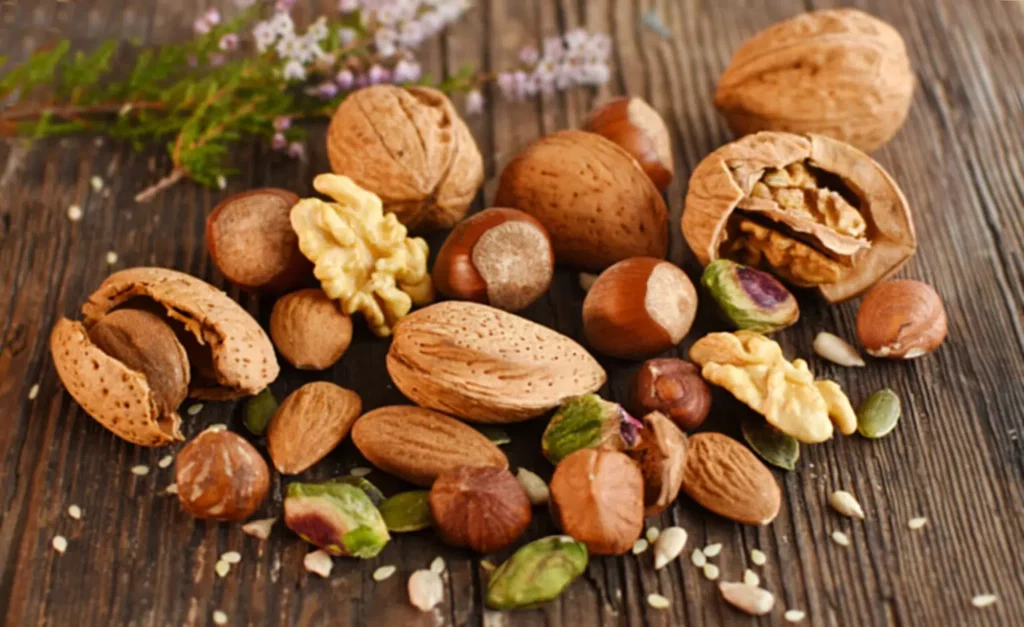
Introduction Since 2003, the WHO and the Food and Agriculture Organization of the United Nations have recommended a fat intake of between 15 and 30%. This percentage means that for a daily intake of 2000 Kcal (value for a sedentary person), between 300 kcal (15% of 2000) and 600 kcal (30% of 2000) should come from fats. Currently, the average French person consumes 40% fat. For a raw foodist accustomed to a cuisine based on oilseeds, this percentage is sometimes between 40 and 60%! The excess of fats has long been criticized for its harmful effects on the cardiovascular system and is now recognized as the main cause of type 2 diabetes. Raw foodists believe they are safe because they consume raw fats. I invite you to discover in this article many biological mechanisms that seem to indicate that excess fats explain many failures that occurred during the transition to Living Nutrition. The chemistry of fats The term fat refers to oily substances that are insoluble in water, such as fats, oils, waxes, sterols, and triglycerides. They constitute the fat of living beings and are by nature hydrophobic or amphiphilic (one hydrophobic part that repels water and one hydrophilic part that loves water). This amphiphilic property is the origin of the fluid and flexible lipid bilayers that make up the biological membranes of our cells. Fats are officially classified into 8 categories. The 3 most well-known are: Fatty acids. These are chains of carbon atoms to which hydrogen atoms are attached. Fatty acids are said to be “saturated” or “unsaturated” in hydrogen depending on the number of double bonds existing between the carbon atoms (0 double bond = saturated, 1 double bond = monounsaturated, 2 or more double bonds = polyunsaturated). Saturated fatty acids are solid at room temperature, while monounsaturated and polyunsaturated ones are liquid at room temperature. The more polyunsaturated a fatty acid is, the lower its melting point. Fatty acids are also classified as cis (characterized by a low melting point) or trans (due to exposure to heat or industrial hydrogenation). When fatty acids store by grouping 1, 2, or 3 around glycerol (an alcohol naturally present in the body), they form mono, di, or triglycerides. Sterols and their derivatives, which include cholesterol, steroids (testosterone, estrogen, cortisol), and vitamin D. Phospholipids, which are major components of the cell membranes of nervous tissues. Fatty acids, sterols, and phospholipids constitute the bulk of the fats in human nutrition. They are all components of cell membranes, which cells depend on to maintain their structure, oxygenate, absorb micronutrients, and eliminate waste. Fats also play an essential role in growth, cell recycling, and hormone production. At the beginning of the 21st century, physician and researcher John M. Rose was the first to identify the functions of fatty acids on health and the importance of maintaining an adequate balance in the dietary intake of different fatty acids. He identified two in particular that he called “essential fatty acids” because our body cannot synthesize them and therefore needs to find them in food. According to Rose, the two essential fatty acids are: Alpha-Linolenic Acid (ALA, from the omega 3 family). Linoleic Acid (LA, from the omega 6 family). These two polyunsaturated fatty acids are building blocks from which the body manufactures 12 other fatty acids. All fatty acids made from ALA are called omega 3, and all those formed from LA are called omega 6. However, not all omega 3 and 6 are essential; only ALA and LA are. The properties of fats Fats cover a range of molecules essential for the functioning of the body, while fats mainly refer to triglycerides, which are a form of energy storage. Thus, all fats are lipids, but not all lipids are fats. Vegetable fats tend to be liquid and therefore polyunsaturated (except coconut oil), while animal fats tend to be solid and therefore saturated (except fish oil). The digestibility, assimilation, and utilization of fats are better when they are polyunsaturated because their fluidity makes them more malleable for the body, which can saturate them at will (by adding hydrogen) according to its own needs. Fats are distinguished from other macronutrients: By their high calorie content. While 1g of carbohydrates or proteins contains 4 kcal, 1g of fats contains 9. They are absorbed directly by the lymphatic system in the intestine, which is why they enter the blood without passing through the liver. Their digestion is slow. 600 calories of fats can take up to 5 hours to digest. Mixed with other foods, this digestion time is further increased, and a meal of protein + fat can remain in the stomach for up to 10 hours. Their (almost) absence of smell and taste. They are recognized more by their texture. Our adipose tissues contain 10% essential fatty acids. Alpha-Linolenic Acid (ALA, from the omega 3 family) and Linoleic Acid (LA, from the omega 6 family) are essential for the health of our skin and hair, for development and growth, and for the proper functioning of the immune and glandular systems. Omega 6 (found in quantity in sunflower seeds, grape seeds, walnuts, etc.) has a pro-inflammatory, prothrombotic, and hypertensive action, while omega 3 (found in quantity in flax, blackcurrant seeds, evening primrose, etc.) has an antioxidant, sedative, and vasodilatory action. Omega 3 and 6 therefore have complementary actions, which is why it is recommended to balance their intake by consuming them in equivalent amounts. The benefits of fats If they are of good quality (see below), fats present various benefits for the body: Once stored as fats, they insulate from heat and cold. They replace yellow fats (bad fats) with brown fats that have 18 important metabolic functions in the body. Read this article on the benefits of cold to learn more. They form the insulating myelin sheath around nerves and participate in the good circulation of electrical current. Some fats (mainly omega 3) are known for their anti-inflammatory properties. Due to their liposoluble properties, fats are
How to improve your eyesight?
Introduction According to the WHO, one third of the global population has vision disorders. Among them, we can mention: myopia, hyperopia, astigmatism, presbyopia, cataracts, glaucoma, and macular degeneration. Personally, I have worn glasses since the age of 12 due to myopia. Then, in my teenage years, my myopia increased and astigmatism was added. Subsequently, every 2-3 years until the age of 30, my vision deteriorated slowly but progressively. In 2016, during the trans-Canadian expedition America Extrema, I had a feeling that soon, I would no longer need to wear glasses. Yet, at that time, I wore them daily and they were essential for driving and working. It was this intuition that motivated all the investigations and experiments I conducted later on the subject. 10 years later, what I can testify to is that after applying as best as possible the advice I share below, my vision has significantly improved and my myopia has almost disappeared. I have not needed glasses since 2018, which makes me say that in life, I see more clearly than before, and I hope that will be the case for you too after reading this mind-blowing article! Anatomy of the eye The eye is made up of six main extraocular muscles that control its movements and allow the gaze to be directed in all directions. This information is interesting because 3 of the eye disorders (myopia, hyperopia, and astigmatism) are directly linked to a deformation of the eyeball due to tensions in the extraocular muscles that can no longer fully relax. This means that by promoting the relaxation of these muscles, through specific eye exercises and reforming certain bad habits, it would theoretically be possible to reverse some vision disorders. A regenerative possibility that concerns billions of people worldwide… Let’s see what good habits and reflexes to adopt to take care of our eyes and even improve our vision! What are the origins of vision disorders? International studies conducted on the subject (cf “The History of the Human Body” by Daniel Lieberman) agree that the number one cause of vision disorders is the lack of exposure to daylight. The other major problem highlighted concerns the gaze fixed on a fixed plane, such as a screen or a book. Normally, our eyes should constantly adjust their focus according to the objects we look at, whether they are near or far. When this variation is neglected (as during prolonged fixation on an object), it leads to tension and fatigue in the eye. What the eye needs to function well To function well, our eyes need: To be sufficiently exposed to daylight. This means spending several hours a day outside without wearing sunglasses and opening the shutters and curtains wide in the house during the day. To look at objects at different distances, which happens naturally when we are outside. If this outdoor time is insufficient, exercises, like those found in the BATES method, allow for alternating focus between near and far to relax the eyes and improve their flexibility. More generally, a good lifestyle with sufficient sleep (fatigue has a direct impact on the quality of vision), regular fasting, and a diet based on raw fruits and vegetables naturally promotes good eye health. Some good habits and reflexes to adopt to improve vision In addition to the 3 previous points, we can add: If you spend time in front of screens: Adjust the brightness, hue (avoid blue light, especially in the evening), and contrast of the screen (in the settings or with software) so that it tires your eyes as little as possible. Position the back of your computer facing a window (which will already bring in natural light) and regularly look outside at objects at different distances to force the eye to focus. For example, there is the 20-20-20 rule: Every 20 minutes, look at something 20 feet away (about 6 meters) for 20 seconds to avoid eye fatigue caused by the screen or a book. Regularly do digital detoxes. My tip: More generally, I have noticed that walking and especially running barefoot are very effective for developing eye flexibility. Indeed, when barefoot, we look carefully at the ground just in front of us, then a bit further to anticipate any sharp objects, and finally, even further to admire the landscape before returning just in front of us, etc. This natural exercise forces the eyes to focus on objects at varying distances. Some unconventional methods to improve vision Eye yoga I am not a fan of eye methods or yoga because I find they take too much time, but some exercises yield good results, such as: Cross your eyes while looking at the tip of your nose and then between your eyebrows. Then, perform slow rotations with maximum amplitude of the eyes in one direction and then the other. If these exercises are painful, it means there is interesting room for improvement, so continue day after day until it becomes easy. Rub your palms vigorously for about fifteen seconds and then gently place them on your closed eyes for 1 to 2 minutes, focusing all your awareness (without distracting thoughts) on your eye sensations (phosphenes, tingling, etc.). This exercise is called palming. Practice it whenever your eyes are painful. Once palming is done, gently massage your eyes with your palms. More broadly, meditation, yoga, or even deep breathing techniques can improve blood circulation and thus reduce eye fatigue. If you wear glasses or contact lenses: They are like crutches for your eyes, so it is better to wear them as little as possible to avoid weakening the eye and its muscles (cf the law of economy). If they are really essential, prefer the lowest possible correction to engage the extraocular muscles. It is quite possible that the absence of glasses (if it is really not possible, have their correction reduced) gives you headaches. This is due to the mind desperately trying to receive the information it lacks. Cultivate letting go (being sure that what your eyes
Colombo

February 19, 2025 – Colombo For administrative reasons, I left India a month ago to visit Sri Lanka. Straddling Western and Indian customs, here cows do not roam freely on the roads, trash bins are in use, sidewalks exist just like washing machines, and temples have set the sound system volume to a reasonable level. These are appreciable improvements for the tourists who are very present on the island of Ceylon, whose capital, Colombo, promises exotic flavors. That said, the island has retained some essential folkloric specifics such as its countless stupas, its gigantic Buddha statues, and its tuk-tuk bakers who announce themselves with Beethoven’s ‘Für Elise’ played on a synthesizer. There is also the famous Paan, a preparation made from areca nuts, tobacco, and snail shells that is chewed for its euphoric properties. It stains their teeth and gums bright red, so Sri Lankans do not laugh yellow but red. I mainly spent time on the paradisiacal beaches of the southwest where one can see the sun rise and set over the Indian Ocean, and where fruits like mangoes, jackfruit, and durian are abundant. I walked and cycled through these coastal areas where wild dogs come to be petted and where one can swim with colorful fish and turtles. In parallel, I deepen my meditation and yoga practice for 4 hours a day. Recently, I took the online course ‘Inner Engineering’ by Sadhguru, which is a prerequisite for the transmission of a public yogic practice called ‘Shambavi’ that includes asanas, pranayamas, bandhas, and mantras. In the theoretical part, we find the basic teachings of the miracle course, positive thinking, the power of the present moment, and compassion, Vipassana, the law of attraction, etc. The remarkable originality is that it is the only spiritual personality (to my knowledge) to introduce a part on nutrition and health that aligns with hygiene. A few words in honor of Jackfruit: Appearing in Asia during the time of the dinosaurs, jackfruit is the largest edible fruit in the world. It can measure up to 90 cm long and weigh 40 kg. It is now cultivated in most tropical regions for its nutritional qualities and strong, sweet flavors that delight enthusiasts. It can be found quite easily in markets where it is most often sold chopped before ripening. It is then generally consumed cooked in the form of achar or as a meat substitute. For this reason, it is nicknamed the ‘poor man’s fruit.’ With a bit of luck, one can find a few that have escaped the machete and had time to ripen. At the price of 40 cents per kilo, the poor man’s fruit obliges, I eat to my heart’s content of this delicious fruit that is so nourishing it feels like eating appetizer-main course-dessert! Also nicknamed ‘miracle fruit,’ it is said to be very rich in antioxidants, vitamins, etc., but that’s just talk. What matters is eating the fruits you love because those are the ones you need; besides, all fruits (and vegetables) contain plenty of very interesting phytoactive substances for the body, no need to chase after them. Another peculiarity of jackfruit hides under its spiky skin that resembles a dinosaur’s skin. The jack tree produces a very sticky latex that ends up on fingers, mouth, knife, and it’s a real hassle to get it off (last time I shaved my beard to get rid of it). It was last year in Réunion at @vivreaunaturelreunion that I was shown the trick of using oil (any kind) to remove the latex in a snap. I recount this anecdote because it illustrates an interesting chemical property of glues, namely that they are not soluble in water but in oil. And it is precisely for this reason that oils (like castor or olive oil) are used to clean the body of its glues. To learn more about glues that you are not taught in school, read this article on starches.
Morocco
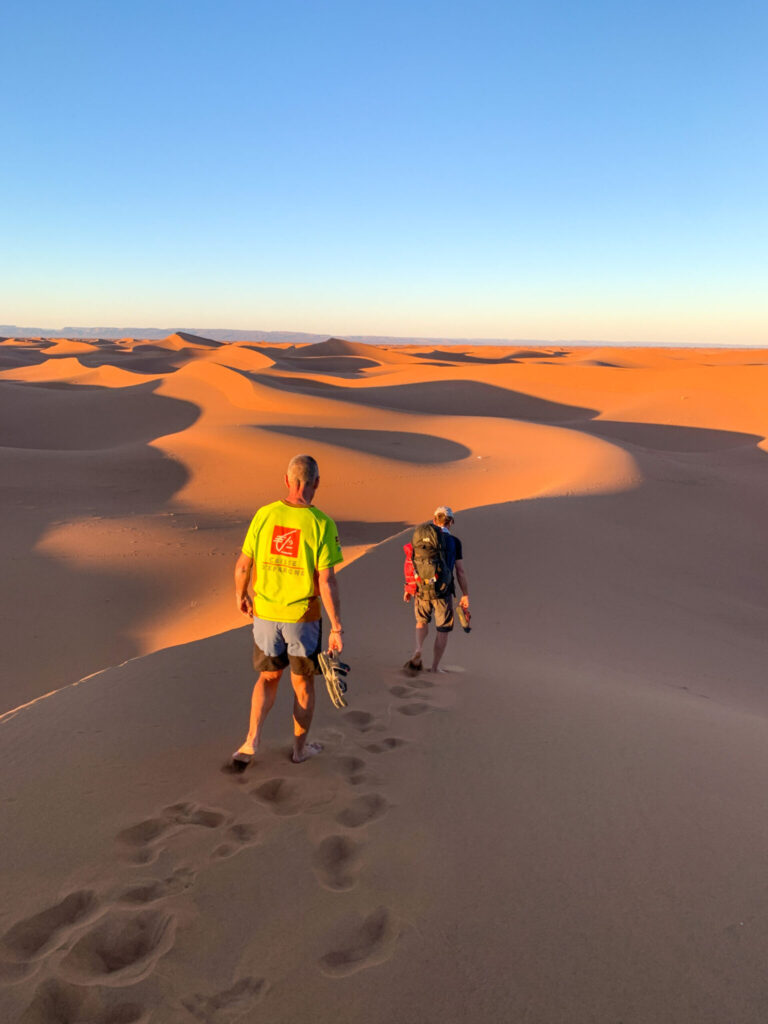
Day 79 – In the Vercors After the enchanted New Year’s Eve with Claude Brame & Kelly Aura, and a visit near Avignon to Irène Grosjean, I was invited to Aurélie & Eric Viard of Biovie. We briefly met for the first time in 2020 at an Irène workshop, and fleetingly in 2023 for the 3rd edition of the Living Festival. However, we had never taken the time to discuss the topics that unite us as well as our life paths that present similarities. Besides the gratitude I have for their professional and friendly support over the past years, I was eager to spend some time with them to draw inspiration from their family and business model. On this occasion, an afternoon of “meetings” with a potluck meal was organized in their living room, and in the following days, between self-defense classes & Solaris meetings, we recorded several videos on Living Nutrition, hormesis, and the art of managing detoxes (Translation note: this video is currently in French, but you can activate YouTube’s auto-generated subtitles in English while we work on providing a dedicated English version.). After this rich and informative week of meetings, I spent a few days alone in Saintes-Marie-La-Mer on the beach where I wrote an article on cold sensitivity, before joining my friend Hervé with whom I spent two weeks in Morocco. As it was my first time in Africa, the first week was dedicated to understanding this country and visiting Les Jardins de la Santé, an oasis in the middle of the desert, a center dedicated to Living Nutrition located 60 km from Marrakech. Then, the participants of Fasting and Trekking joined us, and from February 5 to 9, accompanied by a guide and two camel drivers, we were 10 explorers of life walking 88 km while fasting in the Moroccan desert. Between sand and stones, our walk was naturally marked by dawn & sunrise as well as the limited shade of a few trees. We followed the nonchalant steps of the affectionate camels that carried our water in this arid environment, conducive to introspection and inner silence. Whether it was an oasis, a dune, or a sunset, the grace and value of natural elements filled the space. For four and a half days, we literally nourished and quenched ourselves with this nature and exchanges within our close-knit group centered around the desire to take care of oneself, others & life. A simple yet powerful experience where we, among other things, reconnect with the magic of the starry sky reminding us of our essence, and with the campfire reminding us of our humanity. Every evening, when the cold of the night seized us, we gathered around the flames to talk and sing. Just a few days that felt like a month… Thank you life for this rich and intense new experience… and thanks to all the members of our group of explorers for their trust. An experience to be renewed next year, in the Moroccan Atlas this time, in partnership with Aloé d’Agafay. I will tell you more in the spring once I have scouted the locations because I will be the guide! Stay tuned for the next episode!….
The keys to good digestion
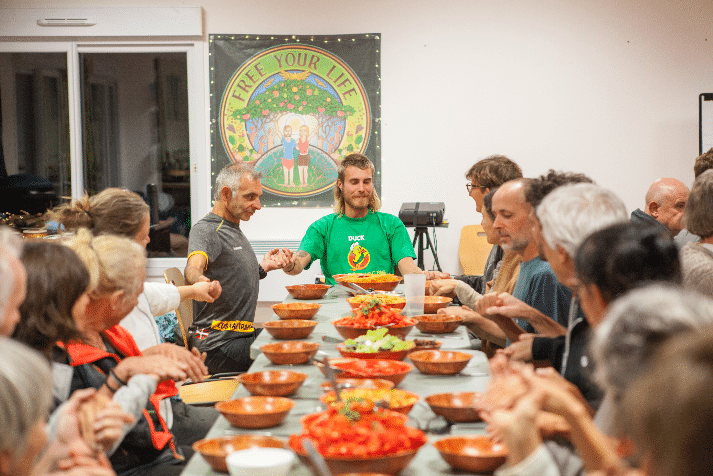
The main roles of the digestive system The digestive system, with its 100 trillion microbes (bacteria, fungi, viruses, and yeasts) and its 100 million neurons, is referred to as the seat of immunity and the second brain. This is rightly so, as it is connected to all the organs of the body and is capable of producing antibodies, fatty acids, hormones, amino acids, vitamins (such as B and K vitamins), etc. It is also the site of food assimilation and toxin elimination, and it is the one that produces 95% of the serotonin (the happiness hormone) found in our body. Therefore, it is in our interest to understand how it works. For several decades, with the normalization of industrial and non-physiological food that generates toxins and inflammation, with the frequent use of antibiotics and vaccines that harm the intestinal flora and the immune system, etc., many diseases of the digestive system have emerged. More and more intestines are now in a state of chronic inflammation, contain numerous waste products, and have an unbalanced intestinal flora. Autopsy reports have even revealed that the 600m2 of digestive mucosa can store up to 2 kilos of unwanted waste (fecalomas, gallstones, hardened mucus, dead cells, heavy metals, parasites, etc). All diseases have an emotional component, and it seems that this is particularly true for intestinal disorders. Moreover, since the digestive system is interconnected with all parts of the body, complementary approaches (on the psychological or postural sphere) sometimes yield good results. Regardless, whether you have acute digestive disorders or not, and whether they are related to external causes or not, there are simple and free good habits that can bring great benefits to your digestive system. Our education has instilled in us the false belief that what is complex is more effective than what is simple. I am convinced of the opposite. It is nature, with its cycles and elements, that has given us life, and it is she who is best suited to help our body self-heal. 8 simple and natural practices to promote good digestion Follow natural cycles by eating between 10 AM and 6 PM (solar time) We have the biology of a diurnal animal, and our digestive secretions mainly occur during the day, particularly around noon. Therefore, when the sun is high in the sky, the most important meal of the day should take place. Eating at fixed times also facilitates digestion. Chew well, without looking at a screen and without talking Eating should be a meditation where one connects to the sensations that food evokes in the body and where one breathes consciously between each bite. To facilitate stomach work, all solid foods should be made liquid through chewing. It also allows the pancreas and small intestine to estimate how much enzymes, juices, and minerals to release. Furthermore, it is soothing (by activating the hippocampus), increases taste pleasure, and allows for less food intake. The habit that humans have taken to gather around a meal is really to be reconsidered; it is not the place for that! Practice abdominal breathing When done consciously during meals, it activates the parasympathetic nervous system (necessary for digestion) and massages the organs. Eat fruits alone and before meals Because they do not digest in the stomach, where they only transit, but are assimilated in the small intestine. Eating fruits when the stomach is already occupied will cause digestive troubles, especially if you are prone to them. Follow good food combinations The less you transform and mix your foods (4-5 is a maximum), the more digestible your meals will be. Moreover, certain combinations should be avoided, such as: Fat – sweet – salty / fruits – oilseeds / starches – proteins. To learn more, read this article on food combinations. Consume plants that promote digestion All aromatic plants prevent putrefaction and aid digestion. Some are carminative (they purify and cleanse the intestines) like coriander, mint, oregano, anise, basil, etc. Others are choleretic and cholagogue (they promote the production and excretion of bile) like turmeric, ginger, celery, etc. Don’t overthink it; incorporate the ones you like into your foods. Be present to yourself Take at least 10 minutes after the meal to rest while remaining still and aware of the sensations in your body. A 15-minute postprandial walk in full awareness will also be beneficial. Familiarize yourself with the squatting position Practiced for at least 10 minutes a day, it improves breathing, fluid and energy circulation, digestion, and flexibility of the lower back. It is also the ideal position for bowel movements, as explained by Bernatd Clavière in the video below. https://youtu.be/SKO-YIbO-Eo?si=DOJTMOw2cl8bBJFF Translation note: this video is currently in French, but you can activate YouTube’s auto-generated subtitles in English while we work on providing a dedicated English version. The importance of good transit According to statistics, one in three French people suffers from constipation. This means, according to the official definition of the WHO, that a third of the population goes to the bathroom less than three times a week. From a hygienist’s point of view, it is considered that there should be one bowel movement per meal, that is, 2 to 3 times a day; this is the natural rhythm of evacuation according to Mother Nature. Therefore, almost the entire population is constipated… When we eat raw fruits and vegetables, they are digested and eliminated in 12 to 24 hours depending on whether the transit is functional or slowed. When we eat industrial or cooked food, refined foods low in fiber, or animal products, they remain in the body for 24 to 48 hours. This non-physiological food (already a source of toxins) that spends a prolonged time in the intestine is subject to fermentation (gas emission) and putrefaction (foul odors), which in turn generate other harmful substances. The many toxins that result from this aggress the intestinal mucosa and alter the quality of the intestinal flora. These repeated indigestions, which often go unnoticed, directly contribute to the formation of mucoid plaque (see image
The Spirorange
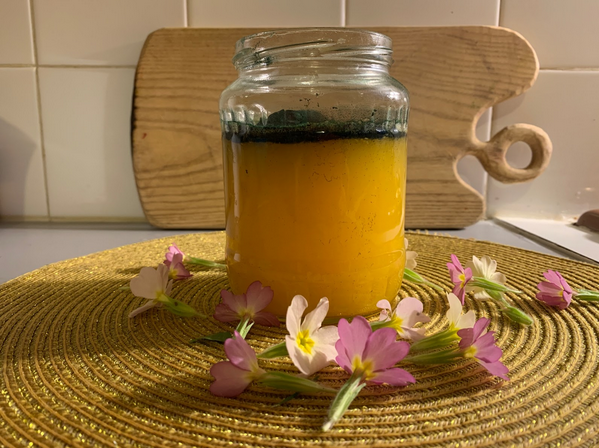
SPECIFIC EQUIPMENT REQUIRED Juicer or citrus press ABOUT THE RECIPE Spirulina Orange Juice Recipe – A simple yet effective juice! INGREDIENTS (FOR ONE PERSON) 10 small juicing oranges 1 tablespoon spirulina powder or flakes Optional: a splash of seawater Preparation Juice the oranges, then add the spirulina. Gently stir with a spoon if, like me, you enjoy spirulina clumps; otherwise, close the jar with a lid and shake vigorously. It’s then ready to enjoy! Tips Food always tastes better after a moment of gratitude! 😉
Auroville
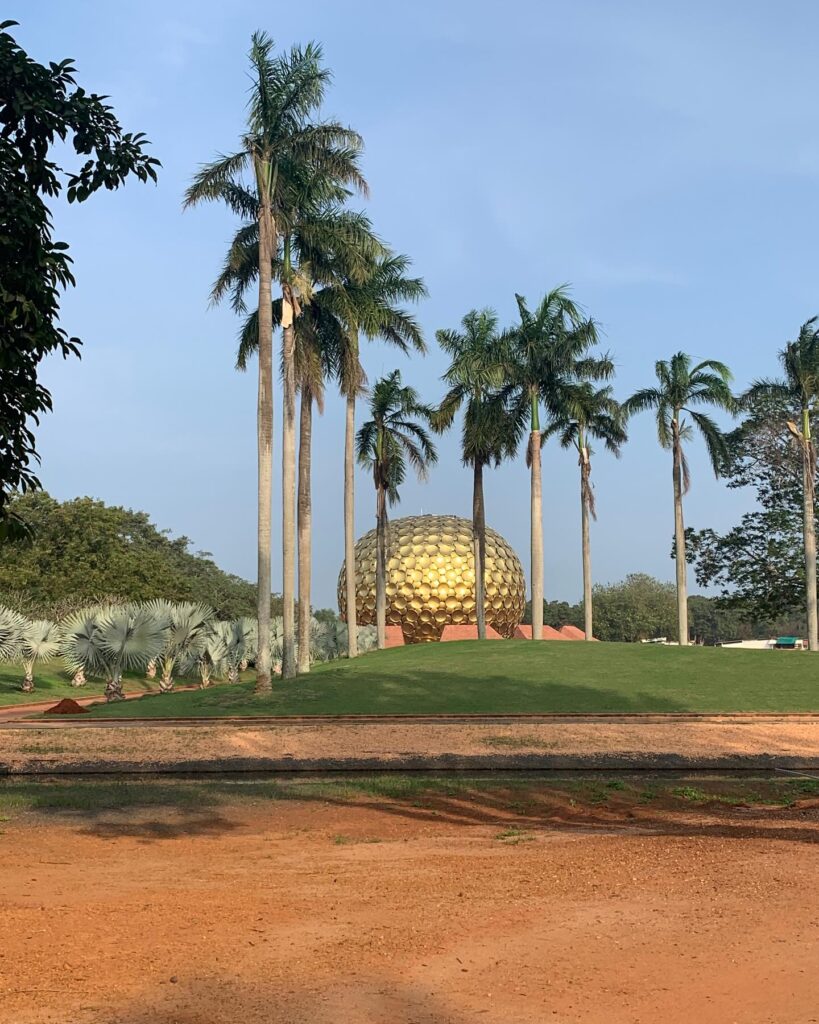
January 22, 2025 – Auroville It has already been more than 2 weeks since I joyfully and curiously roamed Kerala, a magnificent tropical region bordered by the Arabian Sea. Located in southern India, this heavily wooded area has the coconut tree as its emblem and main wealth. After a busy and intense spring and summer, I left France in early November to participate in a tantra workshop in the Czech Republic to receive and practice disarmament. A particular technique (detailed on this page) aimed at releasing certain physical and emotional tensions stored in the body. Thus, relieved of some tensions, I arrived in India for the first time with the intention of staying for 5 months to visit ashrams (those of Amma, Sadhguru, and Sivananda, among others), communities (Auroville), and certain mountains in Tamil Nadu (a neighboring region to Kerala) populated by monkeys, elephants, and tigers. It is not far from these reserves that I plan to organize a fasting and trekking event in February. The magic of life even made me meet by pure chance in the traboules of Kovalam an old trekker!…. I particularly appreciate this country for its mildness (temperature between 25-30 degrees), its excellent exotic fruits, as well as the calm and kindness of the Indians. Already a few surprises like the almost complete absence of trash cans, washing machines, and traffic laws (it seems) despite the very high population density (1.4 billion). This contrasts with the almost complete absence of alcohol, cigarettes, and meat (at least in certain regions), a context that undoubtedly favors the peaceful inclination of this people. So far, I enjoy being traversed by India and its paradoxes, like finding peace amid the surrounding agitation where wealth and poverty mingle with scents as diverse as varied. After a 10-day vipassana retreat (read this article to learn more), a meditation technique that consists of seeing what is real, I took an adventurous bus ride towards Munnar, a mountain station, with a view of the second highest peak in India, which is reached at the cost of some road scares and with the help of loud honking. This mountain range, which peaks at 2700 m, had caught my attention while I was preparing my trip to India from France. The relative isolation of this area, along with the information gathered online, led me to organize a winter fasting and trekking event near this mountain, planning to scout the area a month in advance. Unfortunately, I did not anticipate the impossibility of obtaining a map of the region and the lack of interest from guides, accustomed to day hikes, to organize a custom trek like mine. In reality, the hills of this range are almost entirely dedicated to tea cultivation, which severely limits walking opportunities. The “Tata Tea” group owns it, and access is regulated in accordance with the natural reserves administration that manages the daily flow of thousands of tourists. There is no room for adventure here, even though the region with its lakes and waterfalls is quite charming. One might wonder why cultivate so much tea? These shrubs with bitter, unappetizing leaves that contain twice as much caffeine as coffee? It is to counterbalance the morning, noon, and evening consumption of starches (wheat and rice). Indeed, tea (like coffee and alcohol) is a stimulant that compensates for the “heavy effect” or “the heavy fact”! After the mountains of Munnar and the very relative isolation in the second highest range in India, I took a sleeper bus (an expedition in itself just to find the bus amid the hustle and delays) to the city of Pondicherry and its 1.2 million inhabitants. I usually shy away from the hustle and bustle of big cities and, more generally, tourist spots, but this former French trading post, which has left its mark in many street names, is one of the must-visit places. In the white quarter, clean, calm, and well-treed, one can find the ashram of Sri Aurobindo, one of the two founders (with the Frenchwoman Mirra Alfassa alias “the Mother”) of Auroville. Elsewhere in Pondicherry, dense agitation and a joyful disorder reign supreme in the crowded streets where, in the absence of sidewalks and amid an uninterrupted concert of honking, pedestrians, two-wheelers, cars, stray dogs, goats, and cows coexist among all kinds of waste. It is in this organized chaos where vigilance is required at every moment that I was able to recover a laptop and get back to work, notably writing an article on Vipassana (see above). These few days of visiting Pondicherry allowed me to appreciate the calm, cleanliness, and green atmosphere of Auroville at its true value. This small town of 3,500 inhabitants, which welcomes as many visitors from around the world every day, is a true oasis of peace. Born from a vision of Sri Aurobindo and the Mother (whose portraits are displayed in every building) in the 1970s, this city emerged from nowhere in the midst of a desert where 2 million trees have been planted. Today, one can freely cycle along its countless pleasantly shaded paths. One of Auroville’s unique features is that it does not belong (parliament act) to anyone but to humanity. Created in 1968 following a vision of Sri Aurobindo, this city aims to serve the truth and be a concrete example of human unity. In theory, anyone can reside in this spiritual high place as long as they are a voluntary servant of the divine consciousness. For less than 10 euros a day, one can stay in minimalist rooms and rent a bike, which is quite appreciated for exploring the many laterite roads and paths winding through the 2000 hectares of this very real utopia. The atmosphere resembles that of a festival focused on ecology, health, and spirituality. Every day, one can participate in yoga workshops, meditation, sound baths, mantra singing, and concerts. There is also a spirulina farm, a plant-based and raw restaurant, and ecstatic dance ceremonies with cacao are offered. Barely arrived in
How to purify the mind with Vipassana meditation?
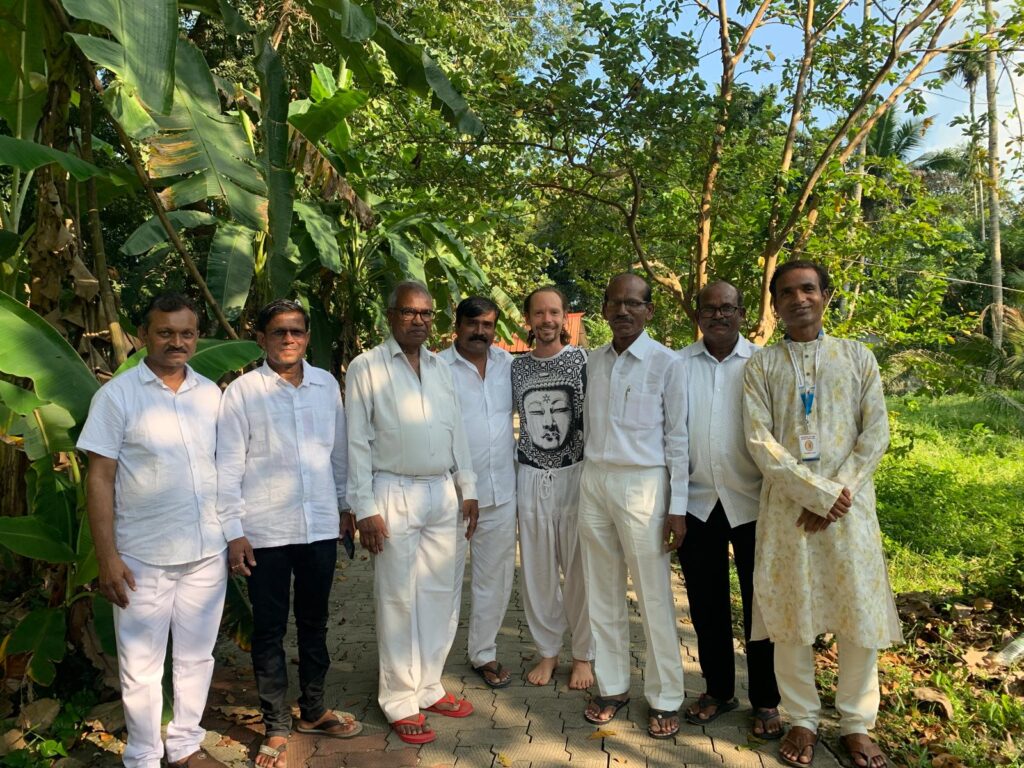
“It is only when one understands that all external things, all mental constructions, all material efforts are vain, useless, if they are not entirely dedicated to this Light and this Force from above, to this truth that tries to express itself, that one is ready for decisive progress. When one opens to the spirit within oneself, it gives you a first taste of this higher life that alone is worth living, then comes the will to rise towards that, the hope of reaching it, the certainty that it is possible, and finally the strength to make the necessary effort and the resolution to go all the way.” Mirra Alfassa alias “The Mother”, founder of Auroville in India Introduction Suffering is a malady so universally spread that its origin, when not seen as a fatality, is obscure. Curious by nature and wanting to tackle my own suffering head-on, I have consulted, over the last 10 years, several therapists, mentors, mediums, clairvoyants, astrologers, numerologists, shamans, and participated in multiple personal development workshops, tantra, disarmament, shamanic ceremonies, and read about a hundred books on the psychological sphere. Until now, I have rarely addressed my experiences in this field (which I study at least as much as hygiene) because I consider it is not my specialty. And then, in December 2024, in India, I participated in my first Vipassana retreat and there, I knew I had found the teaching I had been searching for over 10 years, one that goes to the root causes of suffering while purifying the mind. A big surprise awaited me because the principles at the heart of this teaching, originally transmitted by the Buddha, wonderfully complement the teaching of Irène Grosjean which aims to purify the body. I share in this article, in my own words, what I heard, retained, and understood from this Vipassana retreat. Definitions and prerequisites In this article, the term “spirit” encompasses the concepts of “mind” and “consciousness”, it refers to all the facts or phenomena produced by the psychic and cerebral functioning of a human being as well as their results (emotions, feelings, states of mind, desires, or even the psychology of the individual). The mind (that is to say, the intellectual functions, thought, and reasoning) is a mechanism for interpreting reality so that the individual can position themselves, adapt, defend themselves, decide, or anticipate certain situations. The Self or Ego consists of: The matter of which the physical body is made. Mental energies related to what one thinks, feels, reacts, and recognizes. Total awakening is a state free of suffering where one no longer identifies with the Self, meaning that one no longer identifies with their thoughts, emotions, and sensations. There would be 4 progressive stages of awakening. The human user manual A human being consists of a spirit and a body that are intertwined, like yin and yang. One influences the other and vice versa. Every thought has the power to create pleasant or unpleasant sensations in the body. For example, emotions (from the Latin movere which means “to shake”) that we feel arise from the meeting point between the body and the spirit. They are the result of the mind’s interpretation of a factual event. As Eckhart Tolle writes in “The Power of Now”: Emotions relate to the loss of awareness of the spiritual nature of who we truly are. Love, peace, and joy are not emotions, they constitute our baseline state when we are equanimous in the present moment, without identification with the Self. All negativity (fear, anger, aversion, etc.) leads to a change in breathing and a modification of sensations in the body due to biochemical reactions (hormones). Hence the importance of purifying the mind, otherwise it can make us live hell on earth. We have 6 senses that create our reality: sight, touch, smell, taste, hearing, and the sixth, thought. The objects (in the broad sense) that come into contact with the body create sensations through the 6 sensory doors born from the assembly between the spirit and matter. The mind catalogs pleasant (and then creates a desire) or unpleasant (and then creates an aversion) any object that comes into contact with the body and creates sensations. Natural laws versus false beliefs One of the fundamental laws of nature is the law of impermanence: all physical and mental phenomena appear and then disappear over time, they do not have an independent existence (the non-self). If one identifies with their Self (which is the case unless one is awakened), we become slaves to our 6 senses and the impermanent sensations they generate. We then create attachments (desires) and aversions, which are strategies of the mind to be happy and protect itself. Whereas in reality, by creating desires and aversions, we attract situations where we will suffer from lack and experience what we fear. The previous principle is another well-known natural law called the law of attraction, which could be summarized in these terms: “We are united to what we do not want. We are separated from what we want.” Another principle to know: the more we create desires and aversions, the more they multiply, like trees that bear many fruits giving rise to many trees. So it becomes vital at some point to break out of this vicious circle. We have the belief that to protect ourselves from the outside world and meet our needs, we need to think about our recurring problems and develop strategies. That is why we let our mind be the master of the house instead of being its servant. Alas, this is vain because thought is linked to the past and cannot provide solutions to problems it has itself created. As Albert Einstein said:“ You cannot solve a problem with the same mindset that created it.” The mind ultimately creates more problems than it solves: the biased interpretations it induces and the control it imposes lead to a deceptive relationship with oneself, to relational problems, and to a loss of self-confidence. We also
Paris
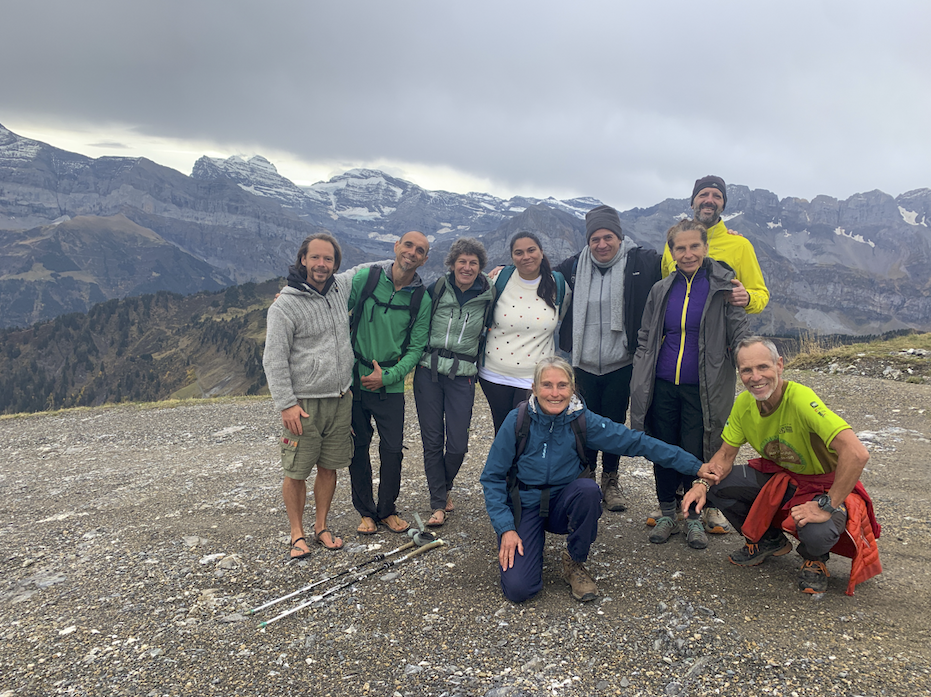
November 3, 2024 – Paris In the weeks that followed this first meeting of “friends of Irène”, I felt the backlash of a life rhythm that had been too intense since spring, with events following one after the other. Fortunately, I had three weeks of respite ahead of me to recharge in the Eastern Pyrenees before the next activity: leading a Fasting and Trekking event in Aude for which I only needed to scout the locations. Thus, 13 joyful & dynamic adventurers of Living Nutrition, barefoot, in sandals or shoes, celebrated the first days of autumn with a 7-day water fast around Pech de Bugarach. While dealing with cool, humid, and unpredictable weather, we walked daily from 15 to 30 km in the majestic forests of the Corbières massif. In total: 4000 m of elevation gain and 120 km of walking. After this intense adventure where the unique energy of the region left no one indifferent, I had another month in the metropolis to prepare for my trip to India (from November to April), lead a week of Fasting to Change in the Abondance valley, before heading down to Toulon to participate in the last screening of the year of The Footprint. A stay of a few days in Var that was an opportunity to see friends and gather around a delicious plant-based and living meal while singing mantras with Caroll on guitar and me on ukulele! Everything was then ready for India, and I had one week left to slow down, gradually head towards Paris while visiting my family and reflecting on the past season. This was without counting on a car breakdown (Free Your Van is currently stuck in a garage near Grenoble), the crash of my website, and a nice detox crisis (cough and hoarse voice). I had to hitchhike from the garage to the nearest train station. 1.5 hours of waiting before a helpful driver offered to drop me off at La Tour du Pin station just in time before my train left. The situation seemed chaotic until I spotted on the dashboard of the car a statuette representing Ganesh. This wink from life (one among many) is a good omen, and I think I am in good hands… With a lot of elbow grease (that’s different from castor oil ;-)), I was able, at the last minute, to get all my things in order before departure. All that’s left is to publish the November newsletter and take my flight tomorrow Monday from Orly to first go to the Czech Republic. I have indeed planned an 8-day stopover in this country to participate in a disarmament workshop (a practice detailed here). Only once I am well “disarmed” will I set foot on Indian soil for the first time with the intention of experiencing magnificent inner and outer adventures…. See you next month!…
Living Nutrition VS traditional medicines
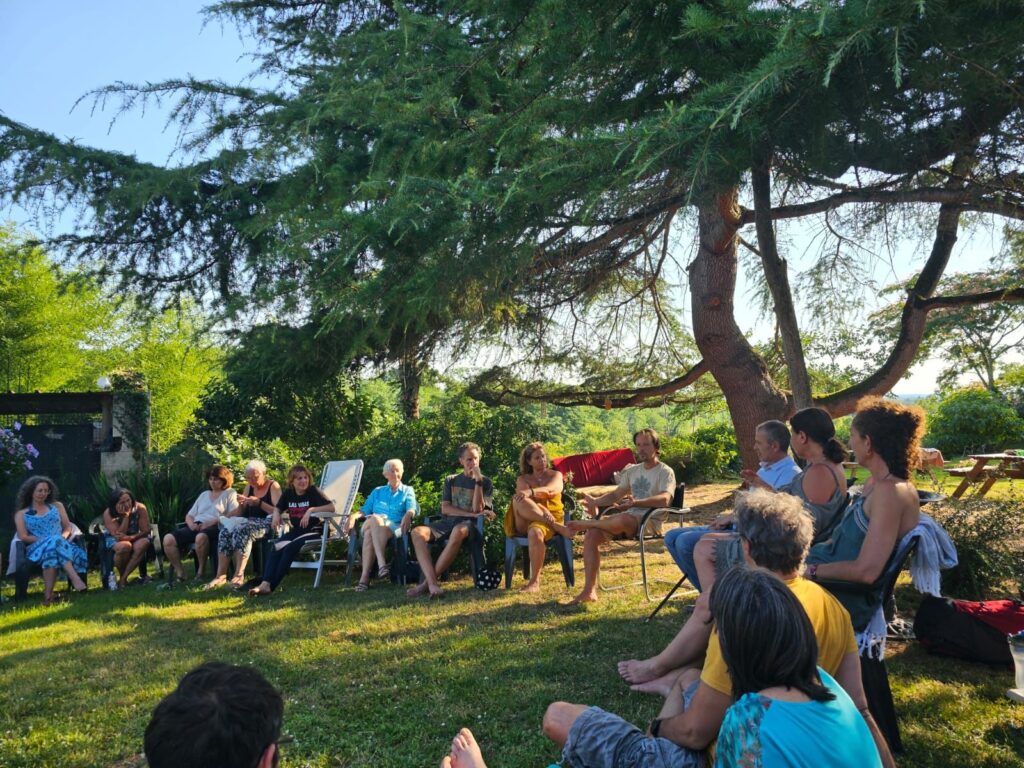
When one becomes aware of the harms of cooking, especially starches, compared to the many benefits of consuming raw plants, it is legitimate to wonder why ancient medicines, such as Ayurveda and traditional Chinese medicine, recommend rice cures and the consumption of cooked vegetables while discouraging many people, depending on their profile, from consuming raw fruits and vegetables. I propose below some lines of thought to explain this apparent paradox… At the origins of Ayurveda and traditional Chinese medicine Just as the ancestor of allopathic medicine is Hippocratic medicine, the ancestor of Ayurvedic medicine is Jain medicine, which already advocated raw plant consumption, and the ancestor of Chinese medicine is bigu medicine (with the same recommendations as Jain medicine). For proof, there are still in India Ayurvedic centers where plant-based and raw food is recommended. However, these ancestral medicines have all evolved over time and have become increasingly symptomatic. This means that there is more concern about stopping discomfort related to symptoms than addressing their true causes. “When someone desires health, one must first ask if they are ready to eliminate the causes of their illness. Only then can they be helped.” Hippocrates Chinese and Ayurvedic medicine are often regarded as the new bible by Westerners, with the pitfalls that blind faith can lead to. There is much to gain from these teachings, but there are also significant elements to discard. Separating the wheat from the chaff remains a principle of discernment valid at all times. Even if these medicines are effective health systems, they remain tied to a given cultural & environmental context where cooked food is consumed, particularly grains. Why choose grain cultivation over fruit cultivation when the yield of orchards is higher than that of a field? Perhaps, this is a hypothesis, for economic, demographic, or even political reasons. Indeed, we are largely influenced by what we eat. Eating meat tends to lead to predation. Eating grains tends to lead to domestication (like well-aligned wheat stalks all of the same caliber). That is why I am convinced that the consumption of cooked starches promotes, through the presence of colloidal waste (see the article on starches), the submission of peoples and the establishment of castes. An idea found in the book “Zomia or the Art of Not Being Governed” by James C. Scott, where the author explains that the Chinese administration classifies as “raw” those who refuse to submit to Chinese administration and as “cooked” those who submit to authority… Why must traditional medicines evolve? If, as was the case centuries ago, we still lived in a natural, unpolluted environment, without stress, in contact with the elements and with a physically active life, then a so-called “Mediterranean” diet, that is to say, primarily plant-based (but not only) would be fully satisfactory. The blue zones of the world where healthy centenarians live (increasingly rare despite population growth) are proof of this. If we lived in that same context, we would not be asking all these questions about lifestyle and ideal nutrition. All of this would flow naturally, and traditions would only need to repeat themselves for the greater good of all. However, in our modern context with various sources of pollution, over-medication and vaccination, industrial food, and sedentary lifestyles, ancestral health practices that were valid at one time prove insufficient to regenerate our contemporary, devitalized, demineralized, and toxin-saturated bodies. Hence the necessity to evolve hygiene practices and traditional medicines to respond to the modern characteristics of our environment and the human beings that compose it. The precepts, even if relevant, dating back a few thousand years or even just a few centuries, must be updated. We are also at a time (the Age of Aquarius) where we can no longer apply precepts without understanding them and without reconnecting to our feelings. One can feel, for example, that Ayurvedic dietary advice that emphasizes cooked foods with very precise dietary protocols no longer makes sense for more and more people. All animals on this planet eat raw and thrive, so by what divine intervention should we cook our food to be healthy? Why would it be contraindicated for certain individuals to eat raw? Practitioners of natural health do not seem to truly consider that naturopathic, Ayurvedic, or other profiles are primarily profiles of diseases and not of people, and that these profiles can evolve with the improvement of the terrain. Whether you are a proponent of traditional medicines or not, are you truly satisfied with your state of health? If so, you probably ignore the principle of optimal health. And if you are not satisfied with your health despite all your efforts, you likely believe that this is due to various forms of pollution. In both cases, your reflection is at an impasse. On one hand, the true capabilities of the human body are underestimated, and on the other hand, pollution represents the tip of the iceberg. In our contemporary society, becoming a centenarian (often bedridden) seems to be a half miracle. Yet, we are far from imagining what the human body can offer in terms of health and longevity when we use our bodies with the right manual. In reality, when one is not satisfied with a health model, one must know how to question its foundations. Personally, the model that speaks to me is that of optimal health, living nutrition, and what is called “regenerative” medicine, this wonderful legacy left to us by Irène Grosjean. Regenerative medicine VS balance medicine Hippocratic, Ayurvedic, and Chinese medicines are sometimes called “balance medicines” because they primarily seek organic balance through cures, detoxes, phytotherapy, hydrotherapy, massages, etc., which, in themselves, are effective but are manifestly insufficient to treat modern pathologies and deeply regenerate our organisms. Simply because we have strayed too far from simple and natural living. When a problem arises, life (being perfect) always provides a solution. In my experience, getting as close as possible to a plant-based and raw diet (see the article “What is the right % of living foods
Fasting & Trekking Stories
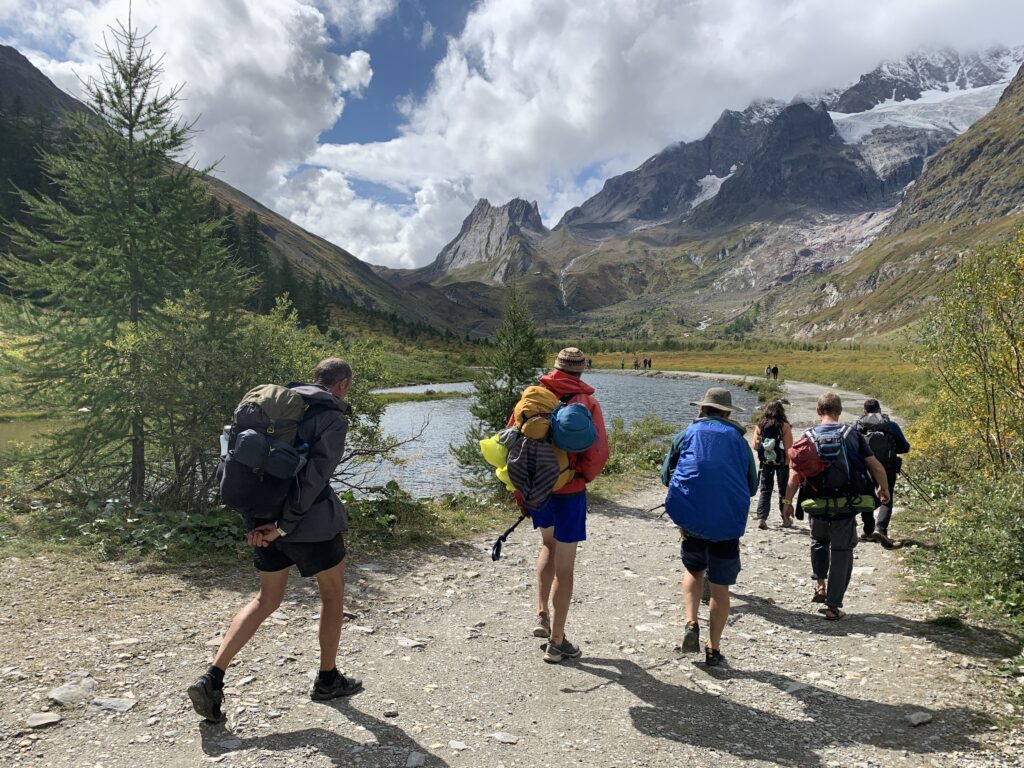
Genesis of the concept: The Fasting Walk, a 360 km trek without eating in Canada in August 2018 DO YOU HAVE ANY DIFFICULTIES FASTING EVEN THOUGH YOU KNOW IT WOULD BE GOOD FOR YOU?! This is why Florian developed a simple solution: to go in a group with backpacks to trek in nature. One might think that during a fast, physical strength would be lacking and that it would not be wise, nor even possible, to walk all day. And yet… It all started when Florian began his transition to raw food in 2014, following a spontaneous fast (naturally imposed by his body) during which he experienced a period of great physical well-being. Troubled by this experience that contradicted his beliefs, particularly the one that says we need to eat to have energy, he researched raw food and then reevaluated everything he thought he knew about the subject. Awed by this pranic experience that fell from the sky, he wished to replicate it, in vain: all the fasts attempted afterward were difficult, and he could not relive the state of grace he had tasted. The idea then came to him to return to Canada, a country he had crossed by non-motorized means in 2015-2016 (read the account of the America Extrema expedition). Florian thought that by being in nature and walking all day, he would no longer think about eating and would relive that fluidity of body and mind. Thus, in August 2018, Florian returned to the Mackenzie Mountains with filmmaker Damien Artero to create the documentary ‘The Fasting Walk’ about a particular experience: 2 weeks and 360 km of trekking without eating in one of the wildest environments: grizzly bear mountains under the Arctic Circle and dozens of glacial rivers to cross. It was a revelation as it amazed Florian about the seemingly limitless capabilities of the human body and the benefits it brought him on physical, mental, and spiritual levels. So much so that upon his return to France, he could only think about replicating the experience, but closer to home. Thus was born the concept of Fasting and Trekking: to offer 7-day treks while fasting to groups of a maximum of 20 people. Please note: this video is currently in French, but you can activate YouTube’s auto-generated subtitles in English while we work on providing a dedicated English version. Account of JT n°1 in April 2019 / Beaujolais It had been a long time since the Haut-Beaujolais mountains had seen pilgrims walk for several days without eating. This unusual event took place from April 29 to May 3, 2019. Where pilgrims who did not believe in God but in life set out, not for a holy land, but for better health. Geoffrey, Anne, Christian, Agnès, Jérôme, Florence, Mickaël, and Marine, aged 26 to 60 and coming from all corners of France (and even Germany) gathered at my place in Gibles (71) on April 28, the day before departure. All driven by the desire to discover the charms of Brionnais and Haut-Beaujolais in minimalist attire, with just a few kilos of gear on their backs to camp. An ultra-light trek made possible by the absence of food, which frees movement and temporarily liberates from the constraint of eating. After a collective castor oil purge taken on the morning of departure, we set off into the cool fog towards St Cyr (771 m), the highest point in Southern Burgundy, where a journalist from the Journal de Saône-et-Loire awaited us. For we live in a strange time where it is enough to humbly do what one is genetically programmed to do to make it into the newspaper. It was time for the first abandonment. The 18% slopes of St Cyr had exhausted Anne, who was dropped off at my place by the journalist to continue fasting in more comfortable conditions. The remaining 8 participants are motivated and in good shape, we continue smoothly on the GR 7 towards Mont Saint-Rigaud. With about 35 km for 800m of positive elevation, it is the most demanding stage of the journey but not the most exhausting thanks to our state of freshness. Just before reaching the summit of Saint-Rigaud (1009 m), we drink from the so-called “miraculous” water source where there are about a hundred makeshift crosses made of branches taken from the site, as tradition dictates for wishes to come true. We then set up camp at the foot of the belvedere, where, in ancient times, the Romans had erected an altar to Jupiter. Up there, the night is cool (3°C) and few have slept well, but the morning laughter testifies to the strength of the group and the walk quickly warms us up. We take advantage of a clearing in the underbrush to shower under the waterfall before resuming the GR 7. With the significant elevation, the first signs of fatigue appear and we shorten the stage after only 25 km. We then camp in a meadow with a magnificent view of the Azergues valley and practice kirtan kriya meditation facing our God: the Sun! The next day, on the 3rd day, we visit the largest Douglas firs in Europe located in the municipality of Claveisolles, right next to two small ponds. It is the most beautiful day of the trek, sunny with 18°C in the afternoon, but an 8 km ascent with 500m of positive elevation is a tough blow for the group, which multiplies stops. Nevertheless, we all arrive together at the ridge line where we take a break in the sun to recharge our batteries and dry tents and sleeping bags. As we descend towards the lake of the Pines, I sense discomfort in the group and Mickaël, who interviews them one by one for a report, confirms it to me. We still manage to cover 30 km during the day to camp on the shores of the lake of the Pines. An evening circle of words is necessary and we redefine the program. I promise that
The Story of Fasting & Trek
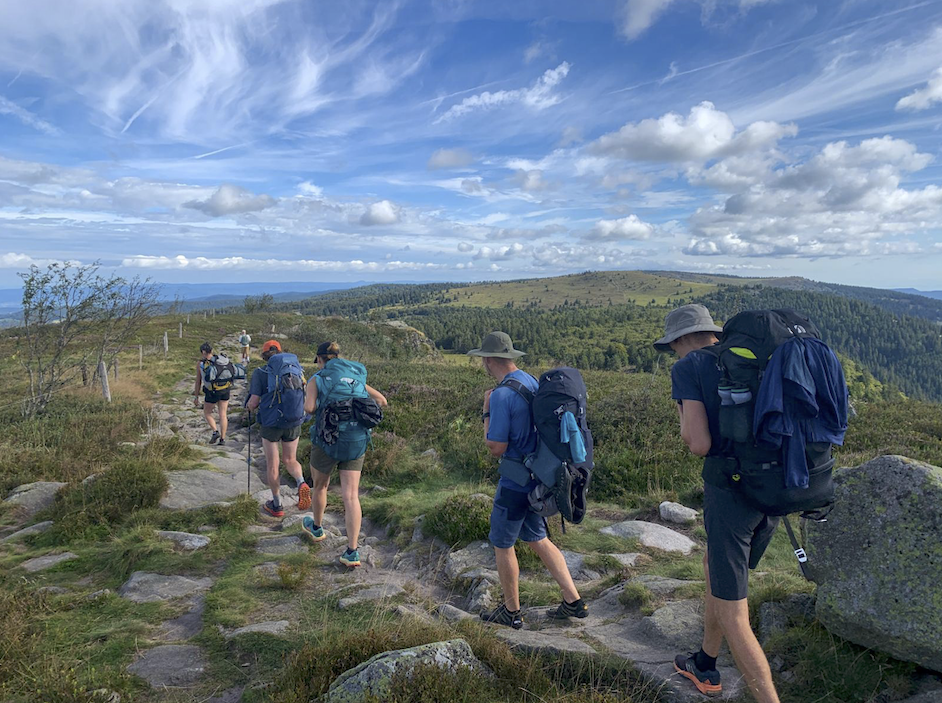
DO YOU STRUGGLE TO FAST EVEN THOUGH YOU KNOW IT WOULD BE GOOD FOR YOU?! This is precisely why Florian developed a simple solution: setting off with a group, backpack on, to trek in the heart of nature. One might think that while fasting, physical strength would wane, making it unwise, or even impossible, to walk all day. And yet… It all began when Florian started his transition to a raw food diet in 2014, following a spontaneous fast (imposed naturally by his body) during which he experienced a period of peak physical condition. Perplexed by this experience which contradicted his beliefs, particularly the idea that we need to eat to have energy, he researched raw nutrition and completely revised everything he thought he knew on the subject. Amazed by this pranic experience that fell from the sky, he wanted to replicate it, but in vain: all the fasts he attempted afterwards were difficult, and he couldn’t recapture that state of grace he had once tasted. The idea then came to him to return to Canada, a country he had crossed by non-motorized means in 2015-2016 (read the story of the America Extrema expedition). Florian thought that by being in nature and walking all day, he would stop thinking about food and relive that fluidity of body and mind. And so, in August 2018, Florian returned to the Mackenzie Mountains accompanied by filmmaker Damien Artero to create the documentary “La Marche Sans Faim” (“The Walk Without Hunger”). It documented a unique experience: 2 weeks and 360 km of trekking without food in one of the wildest settings possible: grizzly bear mountains below the Arctic Circle and dozens of glacial rivers to cross. It was a revelation, astounding Florian with the seemingly limitless capabilities of the human body and the benefits it brought him on physical, mental, and spiritual levels. So much so that upon returning to France, he could think of nothing but repeating the experience, but closer to home. This is how the Fasting & Trekking concept was born: offering 7-day fasting treks to groups of a maximum of 20 people.
Perpignan

September 7, 2024 – Perpignan After Irène’s birthday, I stopped for a few days in Burgundy to visit my family and friends. It was in this homeland that I celebrated my 40th birthday on August 9, a symbolic threshold that I celebrated by treating myself to a plane ticket to India where I will reside from November to next April with the aim of drawing inspiration from the functioning of ashrams to set up the practical school of Living Nutrition. After this brief Burgundy interlude, Free Your Van took me to the Vosges where I led the third Fasting and Trekking of the year. We were 6 adventurers of Living Nutrition walking without food and only on water (no juice, no broth, or herbal tea) for about sixty kilometers (with 2500 m of elevation gain) in 4 days in the Vosges mountains in the area of Bresse and Gérardmer. Even though it was the thirteenth edition (since the creation of the concept in 2019, following the expedition ‘The Fasting Walk’), all Fasting and Treks are different and nothing is ever guaranteed in advance. Even in a short summer format like this one, adventure is always on the agenda. There are falls, morale dips, unexpected weather, the search for a camping spot, sometimes a lack of water, extra kilometers, unforeseen events, and detoxes to manage… After the Vosges, I made a brief pit stop at my friend Hervé Deschamps in Annecy to pick up some copies of my book “The Footprint” before heading out the next day to Aveyron to participate in Naturofest. There, I joyfully reunited with friends and led two conferences on nutrition and lifestyle hygiene as well as a practical workshop on my morning routine to maintain the body. Nourished by all these exchanges as well as the delicious mangoes from JurassicFruit and the fresh spirulina offered at the festival, I joined the rejuvenating Lake Salagou for a few days. Then, on Saturday, August 31, in the field of Nicolas Porcher near Avignon, the first meeting of the ‘Friends of Irène’ took place, a Telegram group (contact me if you wish to join) that was created following the passing of Irène Grosjean. Beautiful reunions took place around a simple & lively program: hugs, laughter, swimming, fig picking, a bit of raw cuisine, a walk, holotropic breathing, a concert with the divine voice of Rosalyne, and even a car lift with bare hands thanks to the invigorating energy of raw fruits & vegetables… Thank you life and thank you Irène for this meeting that warmed all our hearts…. See you next month for new encounters around Living Nutrition…
Living Nutrition VS keto-meat diet
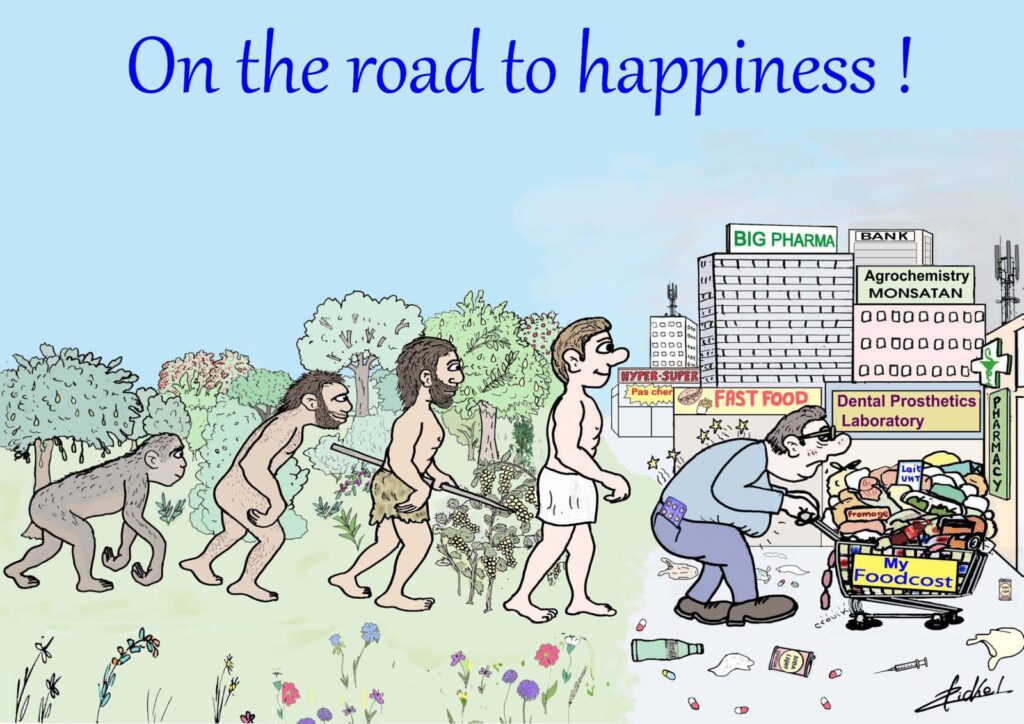
Recently, through two videos that were shared with me, I was surprised to learn that some people consider humans to be neither frugivores nor even omnivores, but carnivores. One of them is extracted from a so-called ‘integrative’ medicine congress, so I listened carefully to the arguments presented that would suggest that humans are physiologically designed for a keto-carnivore diet (that is, based on meats and fats). I respond point by point to these arguments in this article. Here are the videos in question: https://www.youtube.com/watch?v=HEoeF6fMgYghttps://www.youtube.com/watch?v=y1isDi3hFQc My surprise lies in the fact that the phylogenetic classification of humans undeniably places us among primates that are part of the great ape family, all of which are frugivorous species. Even though humans have gradually anatomically differentiated from other anthropoids over the past two million years, we have retained organs and a digestive system very similar to theirs, as can be verified in the comparative study below, made famous by Herbert Shelton, which is attributed to Dr. Richard Lehne and Swiss Dr. Bircher-Benner over a century ago. Observations that have been confirmed for several centuries by anatomists, anthropologists, and naturalists. I did not think that a debate could still take place on this subject; however, there are a few sites (like this one) (Translation note: this link leads to a website in French. To read it in English or another language, simply copy the URL and paste it into Google Translate https://translate.google.com/?sl=fr&tl=it&op=translate) that challenge some data contained in this diagram. It is true that some points are debatable, such as the true length of the human intestine, which is a complex data to evaluate and has been the subject of controversies for over a century, as can be verified in publications like “.Observations upon the growth and length of the human intestine”, American Journal of Anatomy, 34(2), 227–284, by Bryant, J. (1924). That said, even if it is always possible to quibble over parameters that everyone cannot verify for themselves, like the length of our intestine, the acidity of gastric juices, the nature of our intestinal flora, etc., it is evident that we are not capable of catching animals with our bare hands and that, even if we could, we would not be able, with our dentition, to tear their skin to eat their flesh. Moreover, the majority of us would be repulsed by the idea of killing an animal with our own hands. This is what common sense and observation tell us. For these reasons, our regular consumption of animal proteins has depended, since its origins, on technology for hunting (weapons), skinning and cutting meat (flint), and fire to preserve meat or rid it of parasites. The idea that humans are frugivores is therefore not new. This makes sense since before Homo sapiens sapiens appeared, our ancestors (non-human) were frugivorous for 63 million years. It is only in the last two million years that humans began to consume meat, hence the necessary appearance of adaptations to digest this type of food. However, this does not mean that we have become carnivores, nor does it mean that we cannot return to our preferred diet: fruits. To learn more about dietary changes during evolution, read the article “The Origins of Living Nutrition.” To read other strong arguments in favor of plant-based nutrition, read the article “What is the ideal % of living nutrition for everyone”, paragraph: “Why do I no longer consume animal products at all”. A revealing anatomical fact about our true nature, frugivore or carnivore, seems not to be questioned by proponents of the human carnivorism thesis. It is the remarkable fact that, unlike carnivores, we do not secrete uricase, an important enzyme that transforms uric acid produced during the digestion of animal proteins into a more soluble and less corrosive substance: allantoin. “Uricase is the final catalyst in the degradation of purines in non-primate mammals and lower primates, but the expression of uricase has been lost in humans and higher primates during evolution. Uricases directly degrade relatively insoluble uric acid by catalyzing its conversion into highly soluble allantoin.” xPharm Click here to learn more about this topic (Translation note: this link leads to a website in French. To read it in English or another language, simply copy the URL and paste it into Google Translate https://translate.google.com/?sl=fr&tl=it&op=translate). https://www.youtube.com/watch?v=Yoe7l9SRcqghttps://www.youtube.com/watch?v=JsGED4iykrY Translation note: the second video is in French, but you can activate YouTube’s auto-generated subtitles in English while we work on providing a dedicated English version. Beyond anatomical, anthropological & ideological arguments, let’s return to the facts. Experience shows that some humans, like the Inuit, have adapted to a carnivorous diet rich in fats. In a context, let’s remember, with a lot of hormesis, periods of fasting, the consumption of berries in summer (acidic fruits help uric acid exit tissues) and a reduced life expectancy (around sixty years) compared to blue zones (around a hundred years) where the diet is primarily vegetarian. In reality, if one eats raw meat as well as all parts of the animal (skin, bones, blood, guts, and viscera included, like a carnivore), or by aging the meat, humans can find everything they need in terms of micro and macronutrients for physical development. Just as humans can also develop with an exclusively plant-based diet. But that is not the question. This is where etymology becomes interesting, as can be read in the “Zen Detox Aromatic Cure” volume 1 by Nelly Grosjean and Miguel Barthéléry: “Food, from alere = to nourish and mentis = mind… food is literally the nourishment of the mind; nutrition, from nutrire = to grow. Let’s talk about ‘feeding’ rather than ‘nutrition’! To feed is to unconsciously evoke the idea that we do more than replace matter; we (in)form the mind. So let’s talk about natural and living nutrition and leave nutrition to nutritionists!” The real question is rather about what matter we wish to inform our minds with. With fruits that plants produce in a spirit of cooperation (their flesh is sweet to entice animals to consume
Always Provence
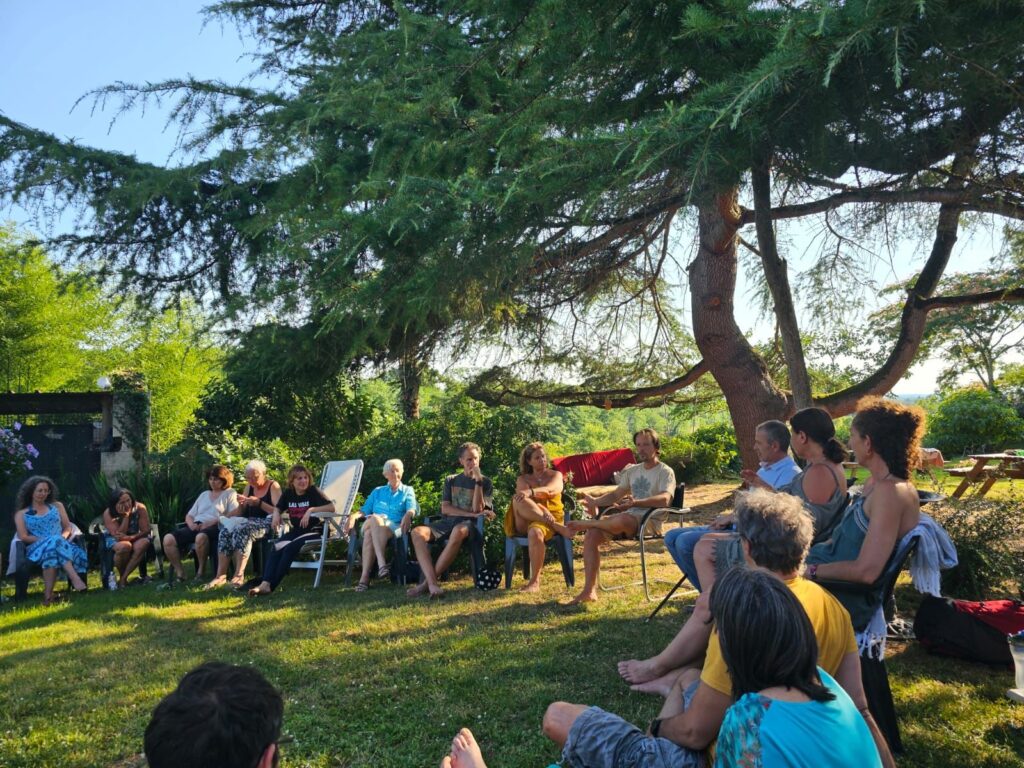
August 3, 2024 – Still in Provence Summer is in full swing with an uninterrupted series of events for almost two months where I offer on my way, Thai massages, disarmaments, energy treatments, hygienist support and shamanic cleanses. After the stay with Philippe Guillemant to participate in a workshop on synchronicities, I had the pleasure of joining the integrative health congress organized by the ENA & MNC school in the Jura to present The Imprint as well as a new conference on the 3H, then to lead a session of ecstatic breathwork in Lyon before heading to Annecy to discover acroyoga, a new discipline I wish to integrate into my life :-). At the beginning of July, after a few days of rest at my father’s in Lozère, I joined a community where I feel at home: that of Thai massage on the occasion of the Festi Thaï. 4 days of pure happiness with meditation, mantra singing, teachings, beautiful encounters, acroyoga (again!) and lots of massages! I extended this moment of sweetness by treating myself to about ten days on the beaches of Médoc where I learned to slow down and to be fully in tune with my inner child. After this rejuvenating stay by the Atlantic Ocean, I had the pleasure of participating in the festival of sun fruits organized by Zineb Reghay and Bernard Clavière. In the very pleasant setting of the Oasis Ahmara near Bordeaux, I shared some of my experiences & reflections as a hygienist adventurer as well as my projects with about fifty joyful fasters. I then spent a few days resting in a pine forest by the Salagou lake after visiting “The healing farm” with Raphaël Colicci where I tasted some rare & exquisite varieties of figs! A quick visit that I will renew soon to take the time to better discover the fantastic work of this passionate advocate of forgotten fruit trees. At the end of July, it was time to join the Roc Castel festival in Hérault which honors slow travel. A new meeting place around my travels & hygienist experiences where the film The Imprint was wonderfully well received. My wanderings were then interrupted by the sudden announcement of the departure of Irène Grosjean and the establishment of a time to celebrate Irène’s life on Sunday, August 4 instead of the ceremony that was initially planned to celebrate her 94th birthday. (The links below point to websites in French. To read them in English or another language, simply copy the URL and paste it into Google Translate https://translate.google.com/?sl=fr&tl=it&op=translate) A final THANK YOU Irène Grosjean for all these good moments shared as well as for the richness of your teaching which, I am sure, will continue to bear fruit! Not a day goes by without me thanking Life for knowing (and practicing) the living nutrition that you have magnificently brought back to the forefront! What a beautiful example for all of us… All the best my dear Irène, all the best… We will miss you down here and you will always be in our hearts… ❤︎
The Dangers of Cooking
Until the mastery of fire, about 1 million years ago, humans ate raw food. The evolution of dietary habits has been much faster than our genetic evolution, and the consumption of “glues”, toxic products, and Maillard bodies, largely related to cooking methods, has become significant. With the advent of modern nutrition, our bodies face a growing mismatch between the products consumed and the biological capacities to digest, absorb, utilize, and eliminate them. Cooking is referred to as soon as the food is exposed to a temperature above 42°C. Because beyond 42°C, enzymes degrade and the food gradually loses its nutritional and therapeutic qualities. The creation of colloidal waste As soon as we heat a food, chemical reactions occur between proteins, carbohydrates, and lipids. These reactions create new compounds that do not exist in their natural state and that the human body struggles to eliminate because they have the property of being viscous and sticky. This is why we say that cooking generates “glues”. They are particularly present in starch (see this article on starches) when heated because chemical reactions modify the bonds in the carbohydrate chain (cross-linking phenomenon), making it partially indigestible and a source of many sticky residues. A similar phenomenon occurs with dairy products. Moreover, the industry uses starch and casein from milk to make glues. So it is not a metaphor. The problems caused by glues: Cooking food also generates glues as soon as sugars react with proteins under the effect of heat. However, glues are mainly generated by the consumption of anything containing cooked starch (gluten or not) and heated dairy products (like U.H.T milk). It is important to distinguish between “glues” and endogenous mucus, which is produced naturally to protect the mucous membranes. This mucus, although natural, can be produced in excess by the body in response to inflammation caused by acidification of the body, the presence of foreign proteins, or pollutants. The body evacuates these glues and excess mucus in the form of phlegm, viscosities, and discharges known as colloidal waste. Glues are the main problem for the body before acids and pollutants because they can settle anywhere in the body, paralyzing the immune system and its self-cleaning abilities. This is for several reasons: They slow down the circulation of lymph, which is responsible for transporting cellular waste to the excretory organs. They attach to the elimination or filtration organs, hindering the proper functioning of the excretory organs and the immune system. When they accumulate in the kidneys, they indirectly cause acidification (since the kidneys are supposed to eliminate acidity). They make us more sensitive to all other forms of pollution (water, air, waves, pesticides, etc.) because our immune system functions less well and accumulates pollutants. Glues can also promote or exacerbate states of anxiety, depression, fear, shyness, and decrease brain plasticity, which can result in increased difficulty in changing habits and beliefs. It is through the intestines that glues are mainly evacuated, but when there are too many or when the intestines no longer do their job properly, the skin, mucous membranes, sebaceous glands, and lungs take over. This promotes the appearance of cysts, acne, oily skin, boils, abscesses, seborrheic dermatitis, oozing eczema, asthma, white discharge, bloating, bronchitis, sinusitis, excess earwax, serous otitis, colds, diarrhea, allergies, white tongue, etc. Maillard bodies A French chemist, Louis-Camille Maillard, discovered in 1911 that amino acids (the basic building blocks of proteins) in the presence of sugars and at high temperatures turn brown. He presented this discovery to the Academy of Sciences and then in a book published in 1913. This chemical reaction has since been called the Maillard reaction. All this would be just insignificant theories if this glycation of amino acids (which means caramelization of proteins) were not produced daily by bakers, pastry chefs, chocolatiers, caterers, cooks, and roasters. It indeed results in an appetizing browning of foods and the appearance of characteristic flavors often appreciated (the crust of bread, roasting of poultry, aromas of roasted coffee, etc.). Unfortunately, it is nutritionally detrimental because it causes a loss of quality in the ingested proteins and the production of insoluble and indigestible substances. The Maillard reaction occurs when a mixture of proteins and sugars is heated to a temperature above 55°C. Knowing that the higher the temperature, the more numerous the chemical reactions will be and the more detrimental to health. Among the Maillard bodies, acrylamide is formed during the high cooking of starchy foods containing asparagine. Acrylamide is particularly present in chips and breakfast cereals, coffee powders, chicory, and all foods that are heavily grilled or cooked above 120°C. Its carcinogenic and toxic power for reproductive and nervous system cells is recognized. There are at least three other types of toxic compounds: PAHs (polycyclic aromatic hydrocarbons) are formed by heat or incomplete combustion of organic matter. Grilled and smoked foods, heated vegetable oils and fats contain a large number of PAHs. Heterocyclic amines form during the high-temperature cooking of meats and fish. Thus, grilled meats and fish, as well as cooking exudates, are the main sources of heterocyclic amines. Carboxymethyl lysine is a pro-oxidant substance. It is responsible for the creation of free radicals and micro-inflammations. The destruction of enzymes and nutrients Enzymes are specialized proteins that enable chemical reactions within our body; they are also called biocatalysts because they accelerate chemical reactions. Our body hosts hundreds of thousands of enzymes that are essential for life because they carry out all cellular processes: DNA repair, molecule production in the cell, transformation of sugars into fat, message transmission, etc. In summary, enzymes allow us to breathe, digest, regenerate, and detoxify. The enzymes present in raw, living, and unprocessed foods participate in the digestion process. They relieve and complement the work of the body’s enzymatic secretions, which consist of breaking down ingested food into very small molecules. Enzymes will transform macronutrients (lipids, proteins, complex sugars) into fatty acids, amino acids, and simple sugars. Without them, we can hardly assimilate the nutrients contained in our foods. However,
Are starches good for your health ?
“Starches, including cereals, have become very popular among Homo sapiens. Ungerminated cereals have very low nutritional value and are acidifying, cause weight gain, are difficult to digest, and turn into sticky starch. The reason we feed our livestock and pigs with cereals is to fatten them up for better sales.” Dr. Robert Morse “One must keep the stomach free to think well.” Voltaire Prehistorically Since the Neolithic, about 12,000 years ago, humans have gradually transitioned from a nomadic hunter-gatherer lifestyle to a sedentary life organized around agriculture. While for two million years humans and related species primarily consumed fruits, vegetables, nuts, and some animal products (the meat proportion was greater for tribes living near the poles), our species completely altered its diet by moving out of the Paleolithic and primarily deriving its energy from the consumption of starches. These are foods rich in starch such as cereals (wheat, rice, corn, barley, oats, millet, sorghum, etc.), pseudo-cereals (buckwheat, quinoa, amaranth, etc.), legumes (lentils, soy, beans, peas, fava beans, etc.), tubers & roots (potatoes, sweet potatoes, Jerusalem artichokes, cassava, yams, taro, cassava, arrowroot, etc.), and certain fruits (chestnuts, green bananas, etc.). This unprecedented dietary change had direct consequences in terms of health, and many pathologies began to appear, including dental issues (see this article on dental hygiene). To learn more about this evolution of human dietary habits, read this article on plant-based and living nutrition. Glucose versus Fructose Today, the consumption of starches still represents, according to studies conducted in France, about half of caloric intake. However, starch is a complex sugar (a chain of glucose) that cannot be used in its raw form by the body. It must first be broken down into simple glucose molecules through the action of an enzyme, amylase, which acts in the mouth (hence the importance of taking the time to chew well) and in the intestines. Then, the pancreas produces insulin, a hormone that allows glucose to enter cells to be used for energy production and thus contribute to proper cellular function. It is much more economical (biologically speaking) to consume fructose (the predominant sugar in fruits) because it has the property of entering cells directly (by diffusion) without needing intermediaries like enzymes and hormones. This represents an energy saving, avoids hyperglycemia, and does not unnecessarily fatigue the pancreas. The only “advantage” of starches (also applicable to animal products) is that they have allowed humanity to live outside the tropics (a region where, in general, one would like to spend their holidays or retirement), where there are not enough fruits to sustain oneself exclusively. To learn more about the importance of sugar and the different forms in which it can be consumed, read this article on different sugars. What about diabetes and hypoglycemia? Even if it may seem counterintuitive: the sugar from fruits does not create hyperglycemia but simply a small spike in blood sugar (blood sugar level). This is not the case with starches, which, because they contain glucose and not fructose (see the previous paragraph), require insulin to be digested and absorbed. It is this poorer absorption of glucose compared to fructose that is responsible for hyperglycemia after each meal containing starches (or any refined sugar). In reaction to this (unnatural) hyperglycemia, which is harmful to the body, blood sugar then drops well below the threshold value, and this is what is called hypoglycemia. This occurs in response to hyperglycemia, which is why it is termed “reactive hypoglycemia.” Various symptoms may then follow: hunger in the mid-morning after a non-physiological breakfast (bread, cereals, biscuits, etc.), almost sudden fatigue, headaches, the need to rest, etc. The entire body is put on alert to manage this sugar overload, forcing it to work well beyond its capabilities. This can lead to the exhaustion of certain organs and their dysfunction (such as type 2 diabetes). To learn more about meal timing, read this article on social life and meal frequency. Thus, whether we eat cereals, legumes, tubers, or fruits, blood sugar necessarily increases. But it does not increase and decrease in the same way, which generates a very different impact on the body. Health problems related to the consumption of starches Aside from the digestion and absorption issues of starch, starches (cereals, pseudo-cereals, legumes & tubers) are almost always consumed cooked, which has many harmful repercussions on health. 1) Cooked starch is sticky When we cook (beyond 42°C) a food, chemical reactions occur, and new compounds, most often toxic, are created. In the case of starch, the glucose molecules that compose it will fold in on themselves due to heat, a mechanism called “gelatinization,” to form a new molecule that does not exist naturally and has the property of being sticky. Cooking starches thus alters their chemical characteristics by creating additional bonds on the chains of simple sugars. Subsequently, these starches will be poorly metabolized by the body and will only be partially digested: part in the form of glucose, and another part in an indigestible, sticky, and unassimilable form that will pose problems. This sticky property of cooked starch has been known for a long time, which is why it has been used to stiffen shirt collars or make homemade wallpaper paste (see this video on how to make homemade glue). Nowadays, the industry still uses starch (but also milk casein!) to develop all sorts of particularly effective glues. This awareness may come as a shock, but eating cooked starch (and heated milk too) is akin to eating glue… The consumption of cooked starches thus generates undigested sticky residues that will partly agglomerate in the intestines (to form mucoid plaque) and, in the long term, lead to inflammation of the mucosa, which will result in intestinal hyperpermeability (a source of inflammation responsible for many digestive, autoimmune, chronic, and inflammatory diseases, etc.) and chronic malabsorption (a source of deficiencies and thinness). Another part of these undigested and sticky residues will enter the bloodstream and lymphatic circulation, which will result in overloading and thickening these fluids. These
Hygienism and Energy Hygiene
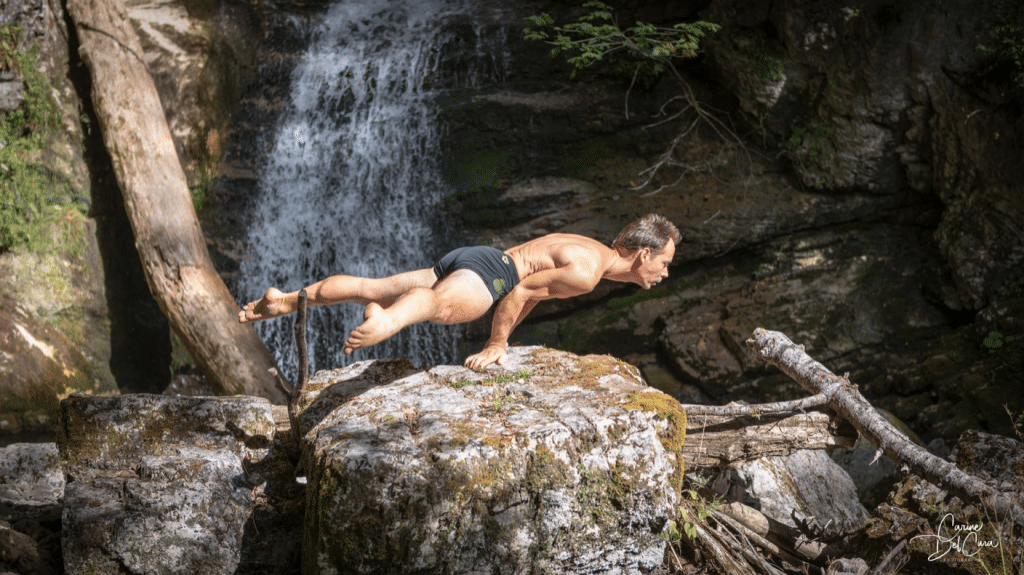
Hygienism is not just about detoxifying cells and providing them with a favorable environment (oxygen, nutrients, etc.), it is also about purging destructive thoughts and emotions. Reminders on the essence of hygienism Through the article “Definitions of hygienism” I have overviewed all the natural health practices that allow one to take care of their being as a whole. However, the approach was focused on the physical body, and this complementary article aims to shed light on the other bodies: mental, emotional, and energetic. As a reminder, a practice or substance is qualified as “hygienic” if it participates in the natural mechanisms of life such as homeostasis and hormesis. These are innate mechanisms that can be observed in nature and thus serve as natural Laws. This is why they are also called Laws of the living. For comparison, it is amusing to observe that in Kipling’s “The Jungle Book”, the proper observance of The Law guarantees animals peace and harmony in the forest. It is also written that all animals conform to The Law except for one, the monkey, the animal closest to us. Is it then a coincidence that we have become masters in the art of not bowing to nature? Has nature itself ultimately favored our predispositions to thwart the established order? Perhaps to ultimately appreciate it even more… Indeed, following the Laws of the living confers a state of being free from conflicts, diseases, and a harmonious body. This is a theoretical state referred to as “Optimal Health” that all wild animals living in a preserved natural environment know. However, encountering illness is not the best way to appreciate health and bow to the wonderful beauty of life? The attentive observation of nature and listening to our feelings are the main sources of all wisdom, and we have everything to gain by seeking answers within ourselves, where everything is present. You may be wondering, what is the right environment to live in? What is the most suitable diet for humans? The answers, according to this spiritual approach, are that a good place to live is where you do not need heating in winter, and the foods that suit us are those we can catch and eat without artifices such as weapons or fire, these precursors of processed food. A “reasoned diet” (that is to say, one that will bring benefits) is a diet that is less concentrated in toxins than the cellular environment, as it allows the organism to gradually regenerate. That is why our food cravings are the barometer of our cellular state. How do we know if we are on the right path? It is the case when we observe our diet lightening (tending towards raw plant-based) and simplifying (with fewer mixtures) year after year. However, it would be simplistic to consider that for a human being, having a lifestyle that optimally supports the various organic functions, those that tend towards optimal health, guarantees, as is sometimes heard, a life free from conflicts and diseases. As Dr. Robert Morse says (cf “The Detox Miracle Sourcebook: Raw Foods and Herbs for Complete Cellular Regeneration”): “To enjoy a state of optimal health and vitality, it is necessary to cleanse (detoxify) your body, your mind, and your emotions, and thus you will free yourself.” This is what we will explore in the continuation of this article. Our different bodies to agree upon The human body consists of a physical body (visible in matter, and still partially to the naked eye) and other so-called subtle bodies because they are not visible (such as the mental body, emotional body, and other energetic bodies). It is indeed on this supposed representation of our different bodies that the observed benefits of “magnetism” or laying on of hands are based. The widespread use of this type of care since time immemorial is not the only element that lends credibility to the existence of these subtle bodies. In the wonderful book “The Secret Life of Plants” by Peter Tompkins and Christopher Bird, it is demonstrated through numerous experiments that plants have the ability to memorize information and feel emotions (or at least an equivalent) even though they do not possess a nervous system. This could be explained by the presence of a mental and emotional body that every living being would possess regardless of its biological constitution. All these bodies would be interconnected, and the state of one would influence the state of the others. For this reason, the practice of hygienism, by bringing life to the physical body, will “move” the other bodies and vice versa. The physical body can also be seen as the crystallization, in matter, of all the other planes & states that constitute the incarnation of the Spirit. This explains why, as Jacques Martel has admirably detailed in “The Great Dictionary of Disease”, each disease has its mental, emotional, and energetic correspondence. Thus, changing the way one thinks, reacts, sees the world, etc., will positively impact the physical body through various biological mechanisms, many of which are linked to the immune system. You have probably noticed that we live in a particular time with great changes that we struggle to conform to because they disrupt our belief system inherited from childhood and even before. Our belief system, at an energetic level, is as stable and structuring as the skeleton is to our physical body. The current period shakes us up because we must update our old beliefs about ourselves, about life, about the order of the world, etc. This involves the gradual rectification of our energetic structures, with its share of consequences on the physical body to better allow the light of our essence to pass through. This alchemical process (in reference to the different works) does not happen without certain ruptures in our lives that are part of the natural order of events. That is why, in my opinion, it is necessary to optimize and harmonize all our bodies without leaving one behind. Otherwise, we might have the
Living nutrition and vibrational energy
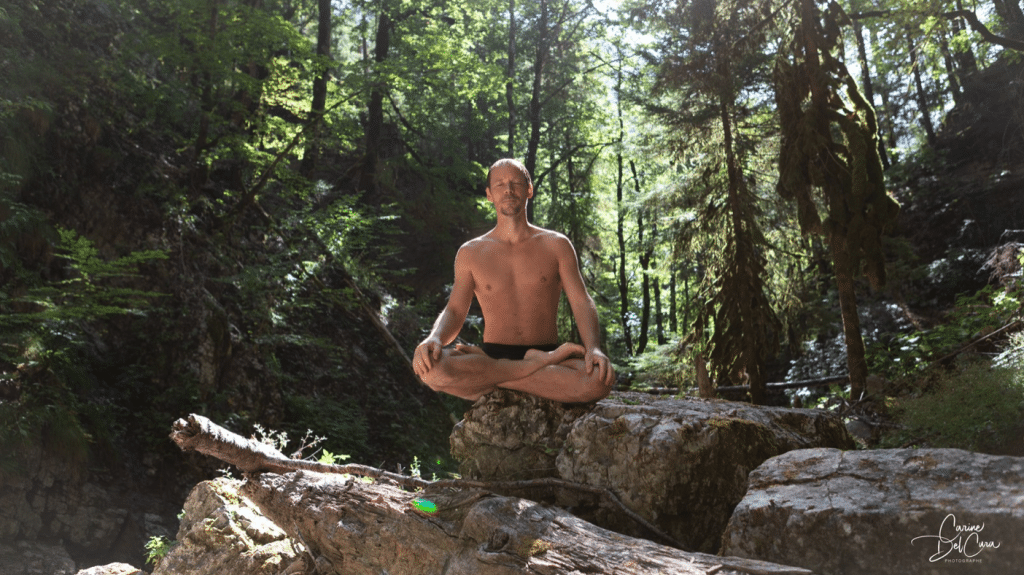
Translation note: this video is currently in French, but you can activate YouTube’s auto-generated subtitles in English while we work on providing a dedicated English version. https://youtu.be/5_SA2uLNYDk?si=3NYBmJrUBVI9eMXJ “For, truly, no one can reach the heavenly father except through the earthly mother.” The Essene Gospel – Living in Harmony with the Universe – Volume 1 Unlike the majority of articles on Living Nutrition & lifestyle that I have written so far, this one is not primarily based on factual observations, common sense, scientific and experimental results, but mainly on my feelings & intuition (see the video above). Even though the claims presented here do not stem from a scientific approach, they are nonetheless based on tangible facts that can be reproduced by anyone willing to try Living Nutrition and detoxify their body to embrace “the earthly mother.” My journey from atheist math teacher to living explorer passionate about mantras Until I was 30, I was shaped by my atheist upbringing, my scientific studies (master’s and teaching degree in mathematics). Even though I always had my head in the stars with my passion for astronomy, I was a genuine stubborn Cartesian. When it came to anything related to spirituality and, more generally, to all phenomena that are neither visible nor measurable, I would at best respond with derision, if not contempt. My awareness on these subjects was on the same wavelength as current mainstream media. There was only one breach in this ready-made thinking: I allowed myself to believe in the existence of my lucky star. Mainly because the expression is well-known and can be heard in society without being seen as mystical, but also due to the incredible luck I experienced whenever I traveled. A “luck” that, on several occasions, saved my life. At that time, in 2014, I had already crossed the Italian Alps by bike, completed a tour of Romania by mountain bike, finished a tour of Lozère on foot, crossed Switzerland on foot via a 4000m peak, and traversed Norway by bike and on foot from Oslo to North Cape (see the book “First Expeditions”). At that time in my life, I was a self-employed lumberjack after being a math teacher. Despite all these successful expeditions, my physical and psychological health was at its lowest. I had suffered from depression, allergies, myopia, skin problems, and sciatica for several years. In July 2014, a few months after successfully starting barefoot running to heal my sciatica (see the article “Why Barefoot?”), I was kayaking down the Loire when I suffered a severe sunstroke that cut my desire to eat for a week. Following this experience that changed the course of my life (see the article “Why I Took Off My Shoes and Changed My Diet?”) overnight, I switched from an omnivorous diet to an exclusively plant-based diet with 80% raw (see the article “Why Eat Living Food?”). Following these dietary changes, in the months that followed, I opened up, like a flower, to the practice of yoga, meditation, cold baths, and conscious breathing. In 2015, my health problems being resolved thanks to these lifestyle changes (see the article “What is Hygienism?”), I was able to embark on my greatest expedition: America Extrema (see the travel account), the solo crossing of North America without motorized means, from its eastern tip to its western tip. 12,000 km by bike, on foot, on skis, and by kayak through the boreal forest. It was during these 15 months of adventures that new supernatural experiences once again changed the course of my life. Two experiences in particular marked me. The first took place at the end of winter 2015-2016 while I was undertaking a world first: the solo and unmotorized crossing of the Mackenzie Mountains in winter (see the video below). This mountain range located below the Arctic Circle is as large as Switzerland and is completely uninhabited. The remarkable originality of this expedition, aside from its unprecedented nature, is that I set out with only ⅔ of the food rations necessary to survive for two months in this region where temperatures can drop below -40°C. It’s not that I intended to fast; I simply lacked the necessary space in the sled I was pulling behind me. But my intuition (a breach of the acute Cartesianism I suffered from), which I had gradually learned to listen to during my previous travels, told me not to worry about food and that everything would be fine. However, reality caught up with me, and inevitably, my supplies began to melt away like snow in the sun, just like my nascent and heretical faith (in the eyes of my upbringing) in my lucky star. The day I seriously began to worry about my fate, I fortuitously found, in the midst of these cold and austere mountains, a hunter’s cabin that had all the provisions (left abandoned) I needed to complete the crossing of the Mackenzie without starving or exhausting myself. https://youtu.be/Cx8kesJwXq4?si=3qpLYcg7Eth9LSxd Translation note: this video is currently in French, but you can activate YouTube’s auto-generated subtitles in English while we work on providing a dedicated English version. But it took more to break the armor of my conditioning, as life had in store for me an even more striking experience: that of the grizzly. It was a few months after the Mackenzie, in the spring of 2016, on a deserted island in Alaska. I had been traveling in grizzly territory for over a year, had encountered about ten of them, and had learned to live alongside them. Yet, I had no weapon or even pepper spray to defend myself; I simply trusted life. Moreover, I had made a deal with bears of all kinds: I don’t eat meat, and they, in return, don’t eat me. Except that one fine day, on this island, I felt an unusual fear towards them. As I had learned to pay attention to my intuition, I took this signal very seriously and, all day long, I heightened my vigilance to avoid surprising a
What to think about sugar in Living Nutrition?
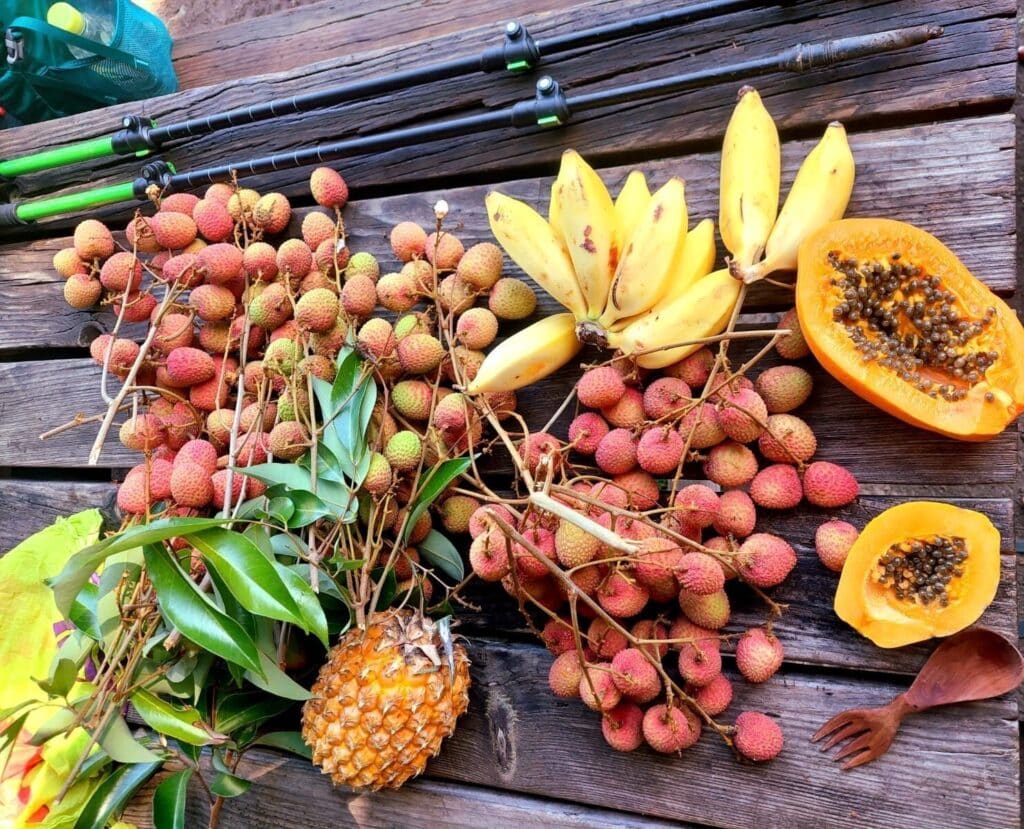
“Theory is when you know everything and nothing works. Practice is when everything works and no one knows why.” Albert Einstein Introduction The desire to write this article came to me while traveling on the island of Réunion when, several times, locals seeing me eat fruits told me that I was going to get diabetes. How Homo Sapiens Sapiens, this living being belonging to the family of great apes, with its frugivore digestive system (see this article on ideal nutrition), has come to distrust fruits? The population is so confused about its dietary needs that Google is consulted to tell us what to eat. Humans, proud of their science (I am also curious to read the AI’s nutritional recommendations), are the only living beings that need specialists to know how to nourish themselves. The reason is simple but it shakes some official dogmas: we are all made to eat the raw foods we can catch with our bare hands in nature and that we love to consume. This principle applies to all species on Earth. Nature should be our only nutritionist, dietitian, doctor, teacher, etc. Any other theory on nutrition is just pure speculation that distances us from common sense. But to know our nutritional needs, we must first clear our minds of false ideas, like those we will see about sugar, and (re)learn to listen to our feelings. A natural impulse that, as children, we were not encouraged to follow since it was primarily about eating at fixed times and finishing our plates. It is a whole journey to restore this connection, and I sincerely hope that this article will contribute to it. First, it is important to define in a simple yet rigorous way what we mean by “sugar” as well as the different forms in which we find it in food. For the sake of simplification but also to spare us some mechanisms and obscure notions, I will deliberately simplify my presentation so that it leads us, guided by common sense, to take a step back rather than dive into endless biochemical complexities. Complexities, I emphasize, mastered by no human being, however knowledgeable they may be. I will therefore get to the point by talking about the two main types of sugars: simple sugars (those that the body can assimilate very easily) and complex sugars (those that the body can assimilate provided they are digested by means of enzymes). Two types of sugars: The main simple sugars (or monosaccharides) in food are: glucose, fructose, and galactose. These simple sugars are very easily assimilated by the body. The main complex sugars (or polysaccharides) in food are starch (a chain of glucose in alpha linkages), sucrose (one molecule of fructose and one of glucose), cellulose (a chain of glucose in beta linkages), and lactose (galactose + glucose). These so-called complex sugars (because they are assemblies of simple sugars) must be hydrolyzed (that is, broken down into simple sugars) to be assimilated by the body. Sugar in foods Fruits contain varying proportions of fructose and glucose. Corn syrup, wheat, etc., contain only fructose. Honey contains ⅓ fructose, ⅓ glucose, and the rest in the form of other sugars. White and brown sugar contain sucrose. Milk contains lactose. Starchy foods, cereals, legumes, and root vegetables contain starch. This starch (a chain of glucose in alpha linkages) is broken down into glucose by an enzyme called amylase. All fruits, vegetables, and the seed coats contain insoluble fibers made of cellulose (a chain of glucose in beta linkages) that cannot be assimilated by humans because we lack Beta Amylase (the enzyme that breaks down cellulose into glucose), unlike herbivores and certain insects and fungi that digest the cellulose contained in plant stems, wood, and tree bark. The plant kingdom can therefore be seen as a vast stock of sugar! In summary, it is the entire animal kingdom that feeds on sugar, including herbivores, insects, and fungi! Sugar is vital for our cells! Moreover, our body needs simple sugars to function, and not just any: only glucose! Nerve cells (thus our brain) have an imperative need for glucose as an energy source. As for the other simple sugars, fructose and galactose (which are only found in milk and honey), the liver converts them into glucose so that they can be used by the cells (via the Krebs cycle) to produce energy (ATP). And in case of sugar shortages, such as during a ketogenic diet, or, more simply, during a fast, the body produces the glucose it needs (from lipids and proteins) through a mechanism called gluconeogenesis. What science says about fructose: When it comes from fruits, fructose enters the blood more slowly than glucose thanks to the presence of water, fibers, and phytophenols. “The absorption of fructose is slower than that of glucose. Fructose is absorbed in the intestines, through a mechanism different from that of glucose: its transport into the intestinal mucosal cells results from a process of passive facilitated diffusion, while glucose is actively transported.” Wikipedia (Fructose) “Fructose from fruits does not have the same nutritional effects as industrial fructose because while the molecules are the same, they are accompanied in fruits by other nutrients, such as phytophenols, which counterbalance the harmful effects of pure fructose.” Wikipedia (Fructose) Fructose is primarily metabolized into glucose (and glycogen) by the liver, which then redistributes it at its own pace in the form of glucose. “The liver captures most of the fructose on the first pass thanks to the high efficiency of the enzymes fructokinase and aldolase B. The remaining fructose appears in low concentration in the blood.” Wikipedia (Fructose) Fructose has a sweetness power twice that of glucose. This means that eating a sweet-tasting fruit does not necessarily imply that one ingests more sugar than by eating rice (for example). Fructose from fruits does not cause hyperglycemia (even when taken in juice form) and, unlike glucose, it does not lead to an immediate and significant secretion of insulin after ingestion.
Hormesis: Sensitivity & Living Nutrition
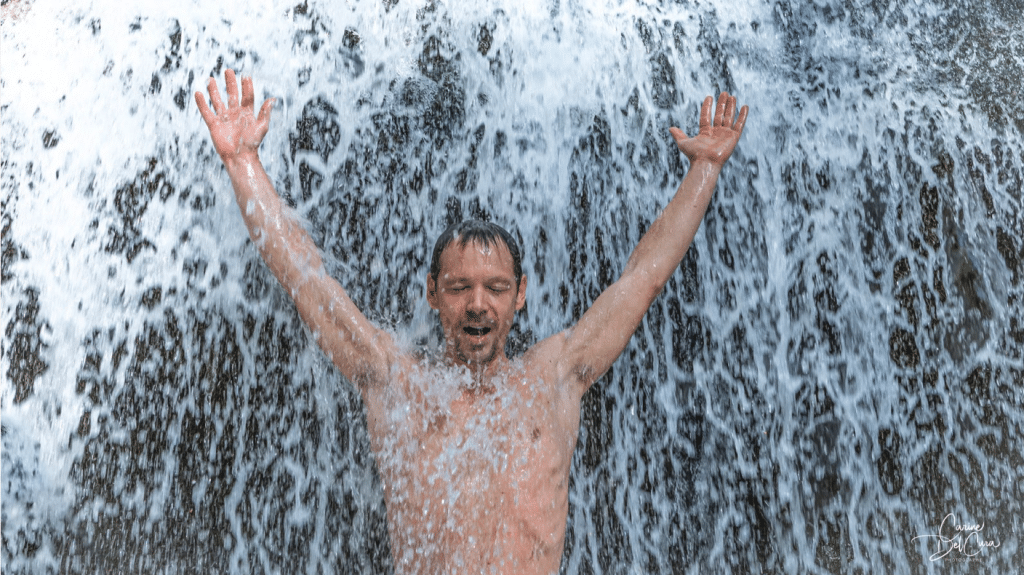
One of the seasonal difficulties one may encounter on the path to Living Nutrition is sensitivity to cold, especially in winter. In this article, we will explore where it comes from and how to remedy it in all seasons. From a purely thermodynamic perspective, if we no longer put heated foods into our bodies, it receives less heat. For this reason, one might feel that Living Nutrition cools the body and is only suitable for summer or warm regions of the planet, or that it is reserved for those with ‘yang’ or ‘sanguine’ temperaments. From there to conclude that Living Nutrition is only suitable for certain seasons or climates, and for certain constitutions, is a small step… That would be jumping to conclusions, and we will see why. First of all, we can observe that the entire animal kingdom eats raw and seems to adapt very well, even in winter, except for domestic animals that are given cooked, processed foods that are incompatible with their digestive system (for example: grains and cow’s milk for cats) and who, ‘strangely’, suffer from the same diseases as humans. It is true that depending on our terrain, temperament, and constitution (terms taken in their naturopathic sense), we will not all be equal in the face of sensitivity to cold. The good news is that this is not a fatality because the terrain can be cleansed, the temperament (which is a classification of pathologies and not of people) can evolve, and, to a certain extent, the constitution can regenerate. Let’s try to look beyond clichés to understand the causes of sensitivity to cold, how to boost thermogenesis (this innate ability of the human body to produce heat), and, along the way, some tips to stay warm while eating raw, even in winter. The causes of sensitivity to cold Too much water! Indeed, an excessive presence of water in the diet leads to the dilution of blood and cools the body. Therefore, it is advisable to limit the consumption of watery fruits, certain water-rich vegetables (like celery), and vegetable juices, unless, of course, you enjoy them and the cooling effects do not bother you. Deceptive stimulants! The absence of consumption of stimulants such as tea, coffee, roasted cocoa, alcohol, soda, refined sugar, animal proteins, etc., confronts us with our true energy level, which may not be optimal if, for example, our nervous and/or glandular system is exhausted. The consumption of stimulants (is a check without funds, as Irène Grosjean would say 😉) helps the body release energy by tapping into reserves that are not eternal. And when they are depleted, it leads to depression or burnout! A lighter digestion! When we eat everything (cooked, processed, mixed foods, omnivorous, etc.), the daily indigestions that the digestive system must face cost, according to estimates, 50% of the daily energy we expend. When we eat foods compatible with our physiology, this percentage decreases for the greater good of our vitality. This digestive economy has the collateral effect of significantly lowering the heat production generated by the digestive system. Those who have experienced fasting have been able to observe this phenomenon. An adaptation period! We must give the body time (one to two years on average) to function in winter without crutches (heated foods and stimulants) so that it regains natural and effective thermogenesis. In the meantime, add an extra layer and follow the advice in this article! Although animals living in cold areas are content to eat raw, one might argue that since we are designed to live in the tropics, it is normal to consume cooked foods and animal products to compensate for an environment that is not ours. So wait until you read the rest… How to boost thermogenesis at the bodily level By developing muscle! 40% of body heat comes from muscle. And the best way to build muscle is not to eat ‘protein-rich’ foods but to make them work through sports or any other physical activity that requires effort. By improving the terrain! Improving one’s lifestyle (see the article “Definitions of Hygiene”), and cleansing one’s ‘terrain’ (see the article “Cleanses, the Keystone of Hygiene”) allows for better blood and lymphatic circulation which, in turn, enables heat to diffuse better throughout the body. Exposing oneself to the cold! For our body to function well, it needs to be regularly confronted with natural stresses: this is called hormesis (see the article on the law of hormesis). Naturally, the more we expose ourselves to the cold (see the article on cold hormesis), the less sensitive to cold we become thanks to very interesting adaptive mechanisms such as the production of brown fat and an improvement in the vascular system. This can be done in several ways: cold baths, cold showers, differential baths, dressing less, avoiding underwear, but also through dry brushing of the skin, massages, etc. Breathe better! Nasal, slow (8 cycles per minute on average), silent, and diaphragmatic breathing daily allows blood to circulate better thanks to the vasodilatory effects of nitric oxide produced by nasal breathing and thanks to a better tolerance to CO2, which is also vasodilatory. Practicing breathing exercises daily or almost daily (like those in this article: “Meditate and Breathe”) also helps retrain one’s breathing. Know that being resistant to cold is not necessarily a sign of good health. Acidified individuals, those in an inflammatory state, nervous or angry people will find in exposure to cold a salvific antidote. France Guillain (see her method; translation note: this link leads to a page in French. To read it in English or another language, simply copy the URL and paste it into Google Translate https://translate.google.com/?sl=fr&tl=it&op=translate) has demonstrated that the average body temperature has increased by about 1°C over the last 60 years due to a generalized inflammatory state, linked in particular to an industrial diet and excessive protein intake. Moreover, know that the primary cause of cracks in winter is not the cold but the acidification of the body (partly due to an
Somewhere in Lozère
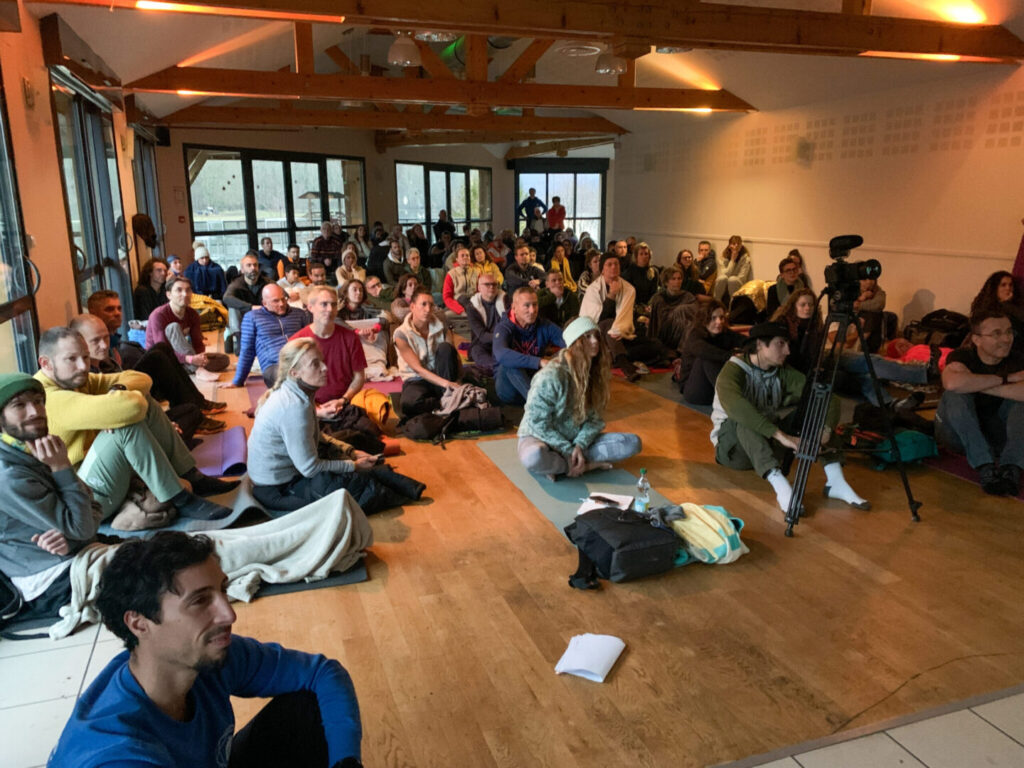
DAY 45 – Somewhere in Lozère This transition to 2024 has been marked by beautiful encounters. First, for New Year’s Eve, I had the joy of singing with Claude Brame and Kelly Aura, who transported us and made us experience divine moments out of time. ❤️✨Music and singing are becoming increasingly important in my life, and I can’t wait to meet them again in 2024…🙏 Then I went to present my wishes to Irène Grosjean: “May 2024 be the first of the most beautiful years that await you….” where I spent a few days rich in exchanges and sharing on the topics that are dear to us. Irène, who at 93 years old, continues to inspire me with her experience, and it is an honor to share an authentic friendship with her.🌞🌳 Then the Rawd Trip in 3H took me to Cantal for the Cold Festival organized by Leo & Elise from Inspire Potential. 🥶🫁Between cold baths, sauna, breathwork, and encounters, I led a conference on hormesis, illustrating it with images from my last two expeditions: The Fasting Walk and The Imprint. After this return at full speed to the mainland, I joined my father in Lozère, with whom I hike on the snowy trails. Between two walks, I catch up on administrative tasks after a month without a computer, and I get my van repaired after a flat tire and a heating failure. 🚐 Next departure next Wednesday, where I will head south to spend some time with Aurélie and Éric Viard from Biovie.🤗 In the meantime, I adhere to tradition by presenting my best wishes for 2024. Knowing that everything we experience is just and that we attract the experiences that will help us evolve towards more consciousness and love, I wish you, dear readers, to find everything you need WITHIN you to be happy, regardless of external events. 😇🧘♂️🌞❤️
Réunion Island
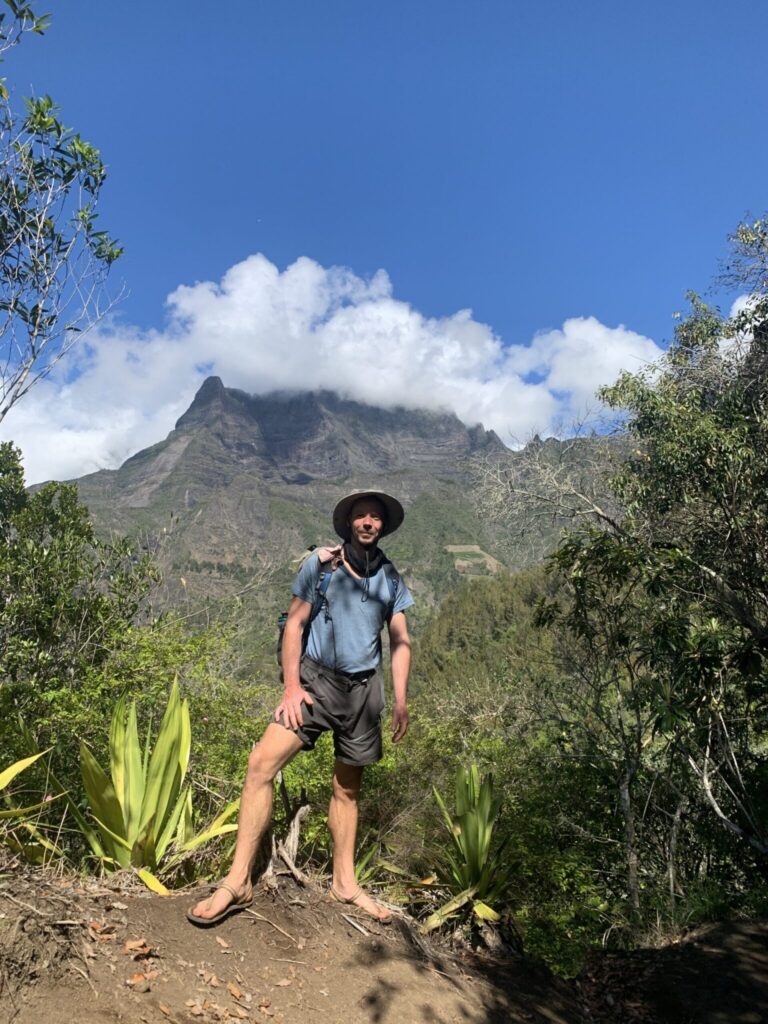
Day 29 – On the island of Reunion Following some synchronicities, particularly with the numbers 3 & 7, I booked a plane ticket to the island of Reunion – 3 days before departure – for a stay of 3X7 days on the island of Reunion. I felt the need to leave the cold and grayness of the mainland to spend Christmas in the tropics with plenty of exotic fruits. Two days after my arrival, I embarked on the trek of the Diagonal of the Fools (the GR R2) where I experienced 8 days of great intensity to cross the island of Reunion 🌋 (from south to north) and its multiple paradisiacal and astonishing biotopes (the island alone is as rich in diversity as the entire Hawaiian archipelago). 🌴🐸🌞 130 km in sandals (including part barefoot), 8000m of ascent, 7000m of descent, all while eating only the fruits and vegetables found along the way (plus a few nuts and dried fruits I brought along), and practicing nasal breathing even on the infernal slopes. 8 difficult days on demanding terrain while managing a significant detox crisis like I rarely have had 😅… but with the reward of encountering the treasures of this island in the best way possible: on foot. 🦶 8 days of tumultuous introspection like the landscape, a Diagonal of the Fools that was undoubtedly necessary before returning to the straight line😆. After following the magical and intense trek that crosses the island of Reunion, my body demanded 10 days of rest that I was happy to spend at the center “Living Naturally” – dedicated to Living Nutrition and hygienist practices – that Fabrice Benard is currently bringing to life. Between sun-soaked exotic fruits, sea water baths among the colorful fish that inhabit the coral, cold baths in the freezer, naps, readings, meditation, yoga, singing, and dancing, this is how I spent the Christmas holidays 🎄, far from indigestible meals and the unconscious wastefulness that serves as our tradition to generate conviviality…🙃 These three weeks on this paradisiacal island 🌴🌞 (rich in 110 microclimates) have recharged my batteries and I am now ready to return to France to spend the winter and the new year which will joyfully start with the New Year’s Eve and New Year organized by Claude Brame 🙏✨❤️.
Lake Leman

Day 3 – Towards Lake Leman After definitively leaving the Chartreuse and storing many of my belongings in Saône-et-Loire at a friend’s place not far from the house I sold a year earlier, I headed towards Annecy to participate in a weekend of shamanic constellations wonderfully organized by Aurore Widmer. Besides the astonishing and moving shamanic space I joined, the adventure began with a flat tire on my van, a broken heater in the snow, and a major detox that forced me to fast. It has been three weeks since I have been chaining hours of driving, film screenings, and workshops, and I long more than ever to settle down, to rest in the south… But I still have a few important appointments in Burgundy before heading to warmer regions and taking stock of the last years of my life. A good part of what I have tried to build over the last 3 years has collapsed like a house of cards. I find myself in a situation similar to one I experienced about ten years ago when, after being a math teacher and leading a couple’s life (naively thinking that my life was all mapped out until retirement), everything quickly came to a halt and I found myself depressed and without real prospects, except for this vague and strange desire to undertake expeditions in the Far North. The beautiful path that opened up afterwards means that today I appreciate this phase of shedding, of deep deconstruction where life invites us to slow down to listen to ourselves, to reconnect with our deep aspirations & joy, to offer ourselves softness and security. The current of the river is so strong that I let it carry me towards unknown lands. Winter is coming, the wisdom of nature invites rest and introspection so that new flowers and fruits may emerge next year. And that a new path may open…🌞❤️🌳
Living Nutrition VS Sensory Nutrition
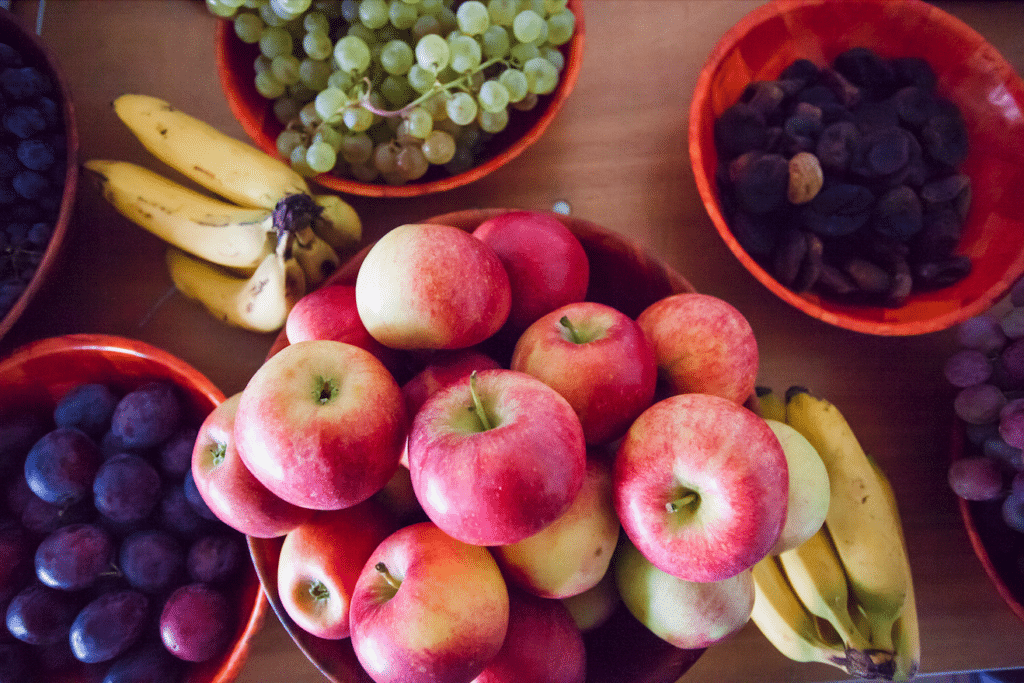
Introduction In France in the 1980s, Guy Claude Burger, known as the father of instinctotherapy, promoted a dietary approach based on the olfaction of raw foods. According to his theory, based on experimentation and careful observation of nature, our body, through olfaction, knows how to recognize the foods it needs, provided they are raw and natural. Furthermore, these foods that we find pleasant to smell, if eaten alone (that is, without mixing with other foods, or even spices to avoid misleading the taste buds about the content of the food) and by letting oneself be guided by instinct regarding quantities, best fulfill our deficiencies, optimize digestion, and additionally, allow us to fully benefit from their therapeutic properties. The logic It consists of observing nature and considering it as a model to follow. According to this approach, the food that is best suited for us is that which can be obtained in our preferred environment (that is, where we can live all year round without air conditioning or heating) with the help of our own hands (made of bones called metacarpals, which, in Greek, mean ‘behind the fruit’). This picked food is then smelled, and possibly tasted. If the sensation is good, then this food will be consumed until no longer hungry. This is how all animals function. As we are diurnal animals, all food will be consumed exclusively during the day. Faced with raw plants, our instinct is always right During the consumption of one and only one raw food, one can observe that it changes in taste (a mechanism called alliesthesia) as one consumes it until a sensory stop manifests itself through a change in the taste of the food that no longer makes one want to return to it. This is nothing mysterious; the taste and appeal we feel towards a food is merely our body’s response to indicate whether it needs it or not. Our mind, unless it has read a study on the subject, does not know what is in a food; however, our body, through our countless olfactory sensors located in our nose but also in the liver, stomach, and kidneys, is able to precisely analyze the content of an isolated food. If the body needs it, it will make us love it in terms of taste, and when we digest it, the intestinal microbiota will, in response, produce serotonin (nicknamed the happiness hormone). A mechanism that can be interpreted as a reward to encourage us to follow our desires, which are merely reflections of our needs. Conversely, if the food is not good for us, we will find it tasteless or bad, and we will not want to eat it. It follows that by maximizing our pleasure, we will maximize our health. Unfortunately, if the food has been cooled, heated, or even simply dehydrated, then our instinct will be slightly misled and the instinctive stop less reliable. Ideally, all food consumed should be at room temperature and in season. And if the food is mixed, or worse, cooked, our finely tuned instinct, with its thousands of receptors spread throughout the body, will not be able to inform us clearly (even less so if the cooking temperature is high) about this, and it will be more difficult to listen to our needs. The harms of cooked foods Above 42°C, cooking prevents our sense of olfaction from functioning properly because chemical reactions induced by the rise in temperature strongly alter the chemical nature of foods, and this is even more pronounced at higher temperatures. At the same time, the enzymes necessary for the proper assimilation of micronutrients are destroyed (as soon as the temperature exceeds 42°C) and force the body to draw on its own reserves (which incurs an energy cost) to provide digestive enzymes that are naturally present in foods when they are not heated. This destruction of enzymes by heat decreases the body’s ability to assimilate micronutrients, not to mention that they are fewer in number. If the food turns out to be less nourishing when cooked than raw (except from a caloric standpoint), it can even become potentially toxic because certain indigestible molecules (called colloidal waste) or even toxic molecules (Maillard molecules, to name just one) arise from the chemical reactions related to cooking temperature (the higher the temperature, the more toxic the compounds created). Finally, since ingesting a dead food (because it is cooked) prevents the body’s recognition system from identifying what has been introduced, a digestive leukocytosis (massive influx of white blood cells that rises from about 6000 leukocytes under normal conditions to 10,000 for steamed cooking and even 20,000 for less physiological food) occurs unnecessarily and fatigues the immune system. To conclude the list of disadvantages of cooking food, know that the pollutants contained in fruits & vegetables penetrate much more into the blood when they are cooked (because the hydrophobic nature of pesticides gives them the property of sticking to insoluble fibers during digestion and being excreted with the stools) and that we deprive ourselves of the life energy contained in the food. In short, to be fully alive, it is preferable to eat living food!… The transition from cooked to raw Between the raw of instinctotherapists and the cooked from standard gastronomy, there are several worlds: Seignalet nutrition, close to what is also called Mediterranean or Okinawa nutrition. A diet that has proven itself in the blue zones but which today shows its limits in terms of therapeutic results for sedentary Westerners accustomed to vaccination & medication, as well as industrial food & pollution. If society had not modernized and we lived as we did in the past, we would all eat more or less this way and we would generally be well. Culinary raw nutrition, as its name indicates, everything is raw but we create food combinations that are unlikely in nature but pleasant to the taste. Well in the transition phase to raw, raw cuisine eventually (if not simplified and reduced in fat) becomes too
Hygienism: Shamanic Cleanses
https://www.youtube.com/watch?v=ZUnqk0QsEoQ Please note: this video is currently in French, but you can activate YouTube’s auto-generated subtitles in English while we work on providing a dedicated English version. General Information on Cleanses There is a belief that unites all hygienists and naturopaths, which links diseases to the toxemia of the human body. According to this principle, if we improve the quality of the terrain in a person, that is to say, if we reduce the toxemia, then diseases will naturally cease their progression and symptoms will diminish or even disappear. This is relatively mechanical and simple to understand, but it opposes the Pasteurian view of medicine, which considers that there are good and bad microbes responsible for our health troubles. It also opposes the allopathic view of medicine, which sees diseases as failures, dysfunctions of the human body. Where the hygienist view sees diseases, according to their nature, as crises of toxin elimination or as a wonderful adaptation of the human body to continue functioning with a certain toxic load so that it causes the least damage possible to the organism. From this point of view, all the symptoms we complain about would be orchestrated knowingly by the great intelligence of the body, which can be seen at work, for example, when a sperm meets an egg to give life to a new being. If we look at health from this angle, it appears crucial to reduce toxemia. However, the most powerful tool to expel toxins, even before fasting since fasting is necessary when one consumes them, is cleanses. Under these conditions, one might believe that catharotherapy (therapy through cleanses) is unanimously accepted in the microcosm of natural medicine, but this is not the case; it is rather a subject of division. In my opinion, opinions are divided on the subject for several reasons: It is necessary to have sufficient vitality and to have the excretory organs sufficiently open to use them; otherwise, their use can be exhausting, sometimes even contraindicated. It is most often necessary to use them frequently and regularly over several years for them to profoundly change the terrain. It only makes sense to use them if one is motivated to change their eating habits deeply and sustainably towards a diet that is primarily plant-based and raw. Otherwise, cleansing only serves to expel the poisons ingested daily, which does not allow for a profound change in the terrain. It is therefore important to be in a dynamic where significantly more toxins are expelled than toxins that enter the body. They do not solve all health problems because our stock of toxins is too great to be completely emptied. Cleanses can therefore only serve to evacuate the excess in circulation (via the lymph). Emotional troubles and stress can also lead to the production or accumulation of toxins, and thus cause diseases. Our state of health also depends on our state of being, our emotional balance, the joy we have in living, and the love we spread around us. Even considering these differing opinions and taking into account the importance of the emotional aspect in humans, it is important to observe the following facts to form one’s own opinion on the matter: Some mammals (canids, felines, bears, primates, etc.) also purge even though their food and existence are 100% physiological. Cleanses were and are sometimes still used by traditional Chinese, Ayurvedic, and Hippocratic medicines, to name a few. Elsewhere on the planet, other peoples, through centuries-old shamanic traditions, also use catharotherapy, as we will see in this article. Presumed Virtues of Cleanses My personal experience has led me to see cleanses as very powerful tools to improve my physical and mental health and to free myself from my addictions to cooked, industrial, and animal-derived foods. A testimony that I detail in this article on cleanses. Even though I am in favor of this form of therapy, I am not unaware of its limits, a subject I address in this other article on the limits of hygienism. In my opinion, to use them wisely, it is necessary to wait for a period of several months to several years during which one will gradually improve their lifestyle until reaching a plateau that cannot be surpassed. It is at this precise moment that they will provide their greatest benefits. Even though this tool is not a panacea, I believe it is the most effective for expelling toxins while simultaneously doing a powerful emotional cleansing. Schematic observations clearly show that some buried anger comes out with acids, and the same goes for fears that come out with glues. It is as if the energetic memories of certain traumatic events in our lives (or even transgenerational) are stored in the acid crystals and glues, and these memories are released when they exit the body. Moreover, a cleanse should never be taken without first setting an intention (see this article on “How to Set Intentions?”) to direct its benefits according to our physical or emotional needs at the moment, while keeping in mind the solemn nature of this practice. Furthermore, cleanses boost the immune system and open the excretory organs, which contributes to the body’s autonomy so that, in the long run, it is as capable as possible of doing its own cleanings. My Experience in Peru Motivated to deepen my experiments in catharotherapy, I went to Peru in May 2021 to train as a practitioner (at Kambo Naturista) of one of the most powerful cleanses: Kambo. A three-week journey along the Amazon during which I followed an 8-day diet accompanied by multiple cleanses. This puts into perspective the “violent” nature often attributed to castor oil, which, by comparison, seems mild… As my trainer at Kambo Naturista, Deyan, said: “With Kambo, it either goes badly, or it goes very badly!” I confirm!… Here is what I retained: The Kambo Cleanse Kambo is a natural substance extracted from the skin secretion of an Amazonian frog called Bi-Phylomedusa Bicolore, also known as the “giant forest monkey frog.”
The Essentials of Lactofermentation
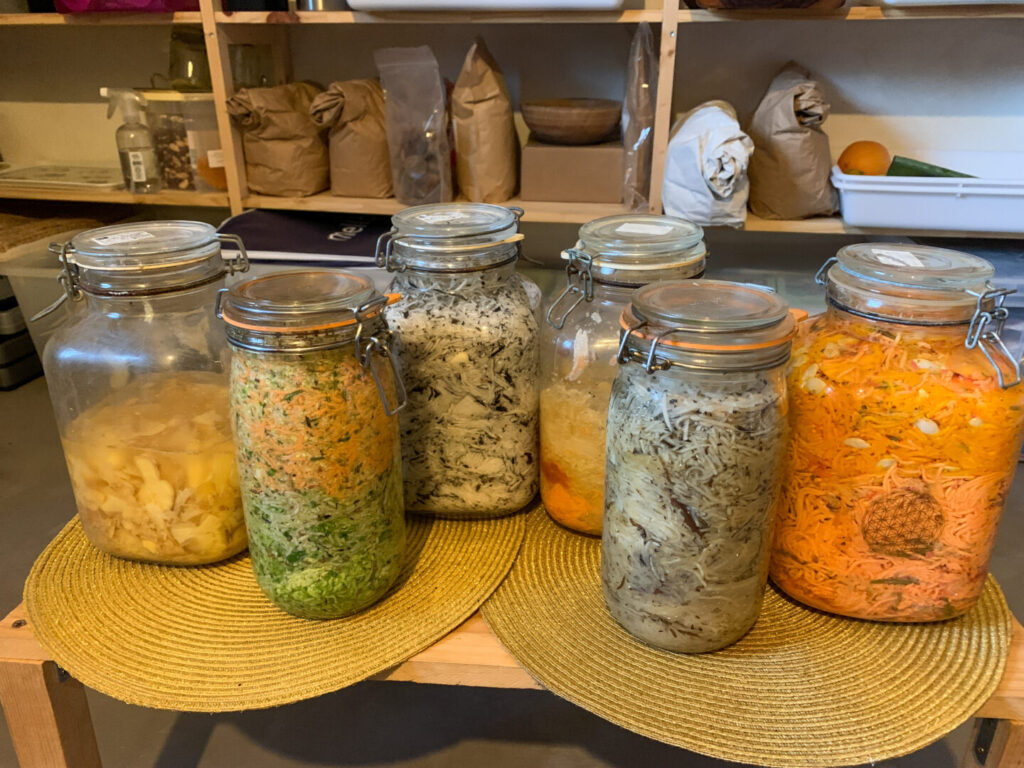
The benefits of lactofermentation Lactofermentation involves preserving food in a salty, oxygen-free environment. Under these anaerobic conditions, lactic acid bacteria break down carbohydrates from vegetables to produce lactic acid. In addition to developing beneficial lactic acid bacteria (naturally present in our mucous membranes), this process prevents the growth of mold through the acidification of the environment caused by lactic acid. Thus, foods can be preserved raw for years, and as we will see below, their benefits are amplified. This is an ancient method used to preserve food, particularly vegetables, with salt. Lactofermentation offers numerous health benefits as it contains probiotics (which positively seed the microbiota with good bacteria) and prebiotics (the fibers nourish the intestinal microbiota). By integrating them into our diet, they help to cleanse, support, and strengthen our digestive and immune systems (which are 80% located in the intestines). For comparison, lactofermented foods can contain up to 500 different strains of pre- and probiotics compared to only one to five strains of bacteria in a probiotic dietary supplement. The quality of our digestion largely depends on the quality of the intestinal microbiota, also known as the second brain. This microbiota encompasses all the bacteria, viruses, yeasts, and other microorganisms that live on and in our bodies, totaling over one hundred trillion microorganisms divided into more than 3,000 species. These microorganisms live in symbiosis with our bodies and ensure numerous biological processes. They can produce antioxidants, vitamins, amino acids (the building blocks of proteins), and reduce inflammatory states as well as food allergies. Furthermore, the microbiota plays a key role in the human body’s defense system, in regulating blood pressure, and in digesting food. It can even influence our behaviors, moods, psychological well-being, and food choices. It is, in fact, our microbiota that rewards us with a secretion of serotonin when we eat the living foods we need. That’s why eating fruits makes us happy. It’s its way of saying thank you to encourage us to consume foods that are beneficial to it. Fermentation, by breaking down large molecules, also makes the nutrients present in vegetables more accessible, a mechanism known as ‘bioavailability.’ The action of lactic acid bacteria indeed involves pre-digesting the food, so lipids are broken down into fatty acids and proteins into amino acids. Moreover, this pre-digestion makes dietary fibers less irritating for those with damaged intestines. That’s not all; the microorganisms that proliferate during fermentation also produce various nutrients such as vitamin C, B vitamins (including B12), and vitamin K. In summary, not only does the quantity of vitamins increase significantly, but they are also more easily absorbed by the body. Studies have also shown that iron and zinc are more easily absorbed in lactofermented vegetables. More generally, eating lactofermented foods at the beginning of a meal helps to better absorb nutrients from other foods due to the notable presence of enzymes. Lactofermentation can also destroy or neutralize several toxic substances such as cyanide, phytates, saponins, nitrates, and nitrites. For all the reasons mentioned above, it is remarkable to observe that lactic fermentation is a transformation that not only preserves food but also increases its nutritional value. In summary, it has the multiple advantages of making food more nutritious, more digestible, of better quality, and enhancing its flavor over time. The perfect opportunity to create vintage lactofermentations like some do with wine… Except that you definitely won’t leave them in the cellar (it’s too cold for the bacteria) and they can beautifully adorn a corner of your room with their lovely colors. In summary, consuming lactofermented vegetables strengthens the immune system, restores the digestive system, facilitates digestion, and remineralizes. Just that! That’s why we talk about it so much! 🙂 Making your own lactofermentations Even though you can easily find quality raw and inexpensive cabbage lactofermentation in health food stores, it is enjoyable to make your own recipes at home. The protocol below works perfectly with all non-sweet vegetables and fruits: cabbage (red, white, green), cauliflower, red beet, bell pepper, turnip, parsnip, zucchini, cucumbers, carrots, shallots, onions, garlic, celery, leeks, sweet potatoes, pink and black radishes, pickles, etc. The only exceptions concern sweet fruits that produce alcohol when they ferment (alcoholic fermentation rather than lactic) and should therefore be excluded. I also recommend setting aside beans and eggplants, which are generally not digestible raw (unless your body craves them). All other vegetables can be lactofermented without restriction. Simplified protocol suggestion The important thing when choosing your container is that air can escape when pressure increases inside due to fermentation. That’s why closures with a rubber seal (like ‘Le parfait’ jars) are ideal. The other option is to use sealed lids but with a fermentation valve. 2. Boil the jar to destroy any germs that could cause mold. Unless your jar already contained lactofermentation, in which case leave a bit of juice or vegetables at the bottom so your next batch ferments faster. 3. Grate, slice, cube, or stick the vegetables (not necessarily of a single variety) or leave them whole according to your preference. I prefer finely grated vegetables (for root vegetables) as it allows for much more to be packed into the jar. Then place the grated or cut vegetables at the bottom of the jar, pressing them down well if they are not whole. For a better taste result, add all kinds of herbs to your vegetables (those that appeal to you!). Leave at least 4 cm between the pressed vegetables and the top edge of the jar. At this point, you have several formulas depending on how the vegetables are prepared: If the vegetables are grated and packed in the jar: pour seawater into the jar to cover the grated vegetables by at least 2 cm OR add two tablespoons (30g) of unrefined salt (refined salt is toxic) in one liter of fresh water that you will pour over the vegetables in the same way as with seawater. If the vegetables are whole or cut into large pieces: pour seawater to
Hygienism: Are we ready to change?
“And those who danced were considered insane by those who could not hear the music.” Nietzsche “One of the most difficult things is not to change society – but to change yourself.” Nelson Mandela Everyone talks about it as a necessity, both individual and collective, but do we truly grasp what a real change entails? If we look back at the civilizational changes that have occurred in the past, we see that they have been accompanied by a change in diet. The dietary changes of the past For the record: about 2 million years ago, humans gradually transitioned from gatherers (95% fruits with some shoots and 5% small carnivorism) to gatherer-hunters. They significantly increased (first on carcass remains and then by inventing tools and hunting strategies) the meat portion of their diet. about 12,000 years ago, entering the Neolithic, humans began to eat grains and dairy products in addition to meat. about 50 years ago, humans started consuming industrially produced foods while some groups began to (re)eat primarily living plant-based foods, like our distant ancestors. With the societal changes observed that seem inevitable in the short term, it is reasonable to believe that we are witnessing a civilizational change that, like in the past, will involve a significant change in our way of eating. Indeed, in the face of climate, ethical, health, and environmental issues related to the consumption of animal products,it feels as if life is no longer giving us a choice but to radically change our habits, with an unusual time requirement (about 30 years) compared to previous changes. Everyone agrees that there is a problem with food. We eat too much meat or we eat too much in general! Food is too denatured! There are too many poisons in our diet! There is not enough fresh water and arable land on the planet! But concretely, what solutions are actually being proposed? Producing organic and local food, all at a low cost, while making some penny-pinching savings through shorter showers and putting a solar panel on the roof to charge an electric car ! And if these expedients do not yield the expected results, it will be the fault of others, of those who pollute or consume poorly, the fault of lobbies, CEOs, shareholders, governments, the crisis, etc. The consequences of consuming animal products This way of thinking has its own hidden benefits, placing us ipso facto in the ranks of victims, the good ones, while keeping us in the illusion that we have done our part. But, regarding food production for the future, is it really possible that only local and organic are the solution to our health and environmental problems?! The documentary Cowspiracy (watch by clicking here), summarized in the article “Impact of Living Nutrition on the Environment”, unequivocally shows that the answer is no! The change that is not superficial and inefficient is the one that involves questioning the type of foods we consume, questioning the type of foods we physiologically need. And this touches on our deepest beliefs, those that revolve around the animal products we have consumed since humans have existed in their anatomically modern form. Is meat a survival food or is it necessary? Are we ready to reevaluate our beliefs? Are we ready to transmute the cultural markers and traditions that, for some, date back to the dawn of time? The question is superfluous just like our answer because life will not give us a choice, for the greater good of our individual and collective evolution! What about ancestral medicines? What I observe is that our resistance to change also manifests through our difficulties in stepping back from ancestral medicines like Hippocratic, Ayurvedic, or Chinese medicine. Yet, this questioning is necessary because everything in life evolves. The precepts, even if relevant, that are thousands of years old must be updated for our time. In a context of change like ours, the past can be a source of inspiration, but evolution and innovation must not be neglected lest we stiffen thought and practices. Indeed, if, as centuries ago, we still lived in a non-polluted natural environment, without stress, in contact with the elements and with a physically active life, then a so-called “Mediterranean” diet, that is to say, essentially plant-based and raw (but not only) would be fully satisfactory. The blue zones (see this article) of the world where many healthy centenarians live are proof of this. If we lived in that same context, we would not be asking all these questions about lifestyle and ideal nutrition. All of this would flow naturally, and traditions would only need to repeat for the greater good of all. Simply, in our modern context with various sources of pollution, over-medication and vaccination, industrial food, and lack of physical activity, the ancestral health practices valid at one time prove, in my opinion, insufficient to regenerate our contemporary organisms that are devitalized, demineralized, and saturated with all kinds of toxins. Hence the necessity to evolve hygiene practices to meet the modern characteristics of our environment and individuals. We are also at a time when we can no longer apply precepts without understanding them and without reconnecting to our feelings. For example, it is clear that Ayurvedic dietary advice that emphasizes cooked foods with very precise dietary protocols no longer makes sense for more and more people. All animals on this planet eat raw and thrive, so by what divine intervention should we cook our foods to be healthy? Why would it be contraindicated for some individuals to eat raw? Natural health practitioners do not seem to consider that naturopathic (or other) profiles are primarily profiles of diseases and not of people, and that these profiles can evolve with the improvement of the terrain. Many ancestral practices (Hippocratic, Ayurvedic, and Chinese) seek balance through cures, gentle detoxes, fasting, phytotherapy, hydrotherapy, etc., which are effective but are clearly insufficient to treat modern pathologies, deeply regenerate organisms, or, more simply, to meet our full human potential. I believe that
3H, the new hygienism
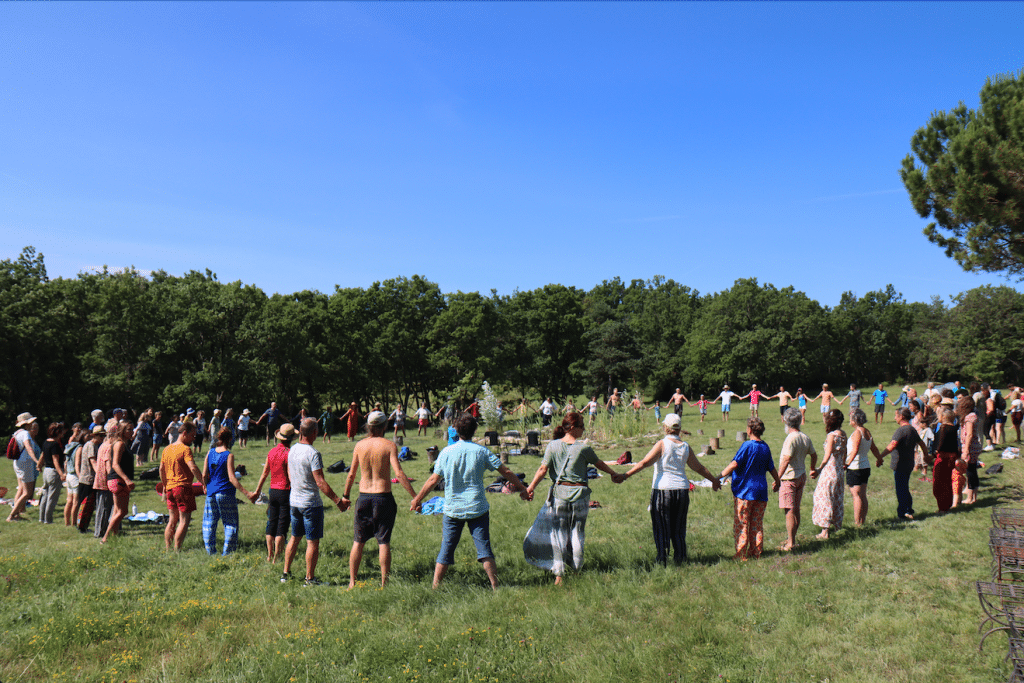
“As long as there are men who will not obey their reason alone, who receive their opinions from an outside opinion, all chains would have been broken in vain, humanity will remain divided into two classes: that of men who reason and that of men who believe, that of masters and that of slaves.” Nicolas de Condorcet “To reach the truth, one must once in life rid oneself of all the opinions one has received, and rebuild the entire system of one’s knowledge.” René Descartes “Do not believe what you are told: experiment with it!” Krishnamurti “The only healing that matters, the true one, is to choose love.” Florian Gomet Before reading this article, I advise you to consult beforehand: The definitions of hygienism Optimal Health The limits of hygienism Nothing predisposed me one day to take a close interest in lifestyle hygiene and the origin of diseases. However, I carried within me the very seed of the hygienist approach, namely that I did not consider it normal to see so much suffering and disease in this world. The commonly accepted explanation that this is the consequence of pollution and the increase in life expectancy has always seemed false to me, or at least incomplete. At the time of my transition, in 2014, I was doing forestry work after being a math teacher. It was the realization that there are people on Earth living very well by primarily eating fruits, vegetables, and nuts that triggered my awakening. As if I had been waiting for this, my habits and beliefs on the subject underwent an unprecedented revolution. At that time, the idea did not occur to me to have indisputable scientific evidence on the benefits of so-called ‘living’ food before adopting it. Fortunately, because I would still be waiting… The energy and enthusiasm that radiated from those who spoke about it passionately was enough to make me want to try. Drawing inspiration from great principles to find one’s truth I was unaware then that living food, as I later realized, does not work for everyone and that there are many pitfalls. However, for my part, it has always seemed strange to me that such a natural diet, close to our physiological needs, could suit some but not others. And the commonly accepted explanations regarding the different profiles of people did not sound right to my ears. Indeed, within a species, all members eat well raw and in the same way. So why would humans escape this rule? It was with this awareness that the necessity to develop the 3H: holistic and humanist hygienism became evident to break free from the rut of dogmatism and connect with other dimensions of human experience: the mental, emotional, energetic, and spiritual. Between those who eat ‘paleo’ and vegans, between proponents of all-raw without mixing and fans of raw cuisine, between the ketogenic diet and fruitarians, there is indeed enough to lose one’s Latin if one wants to follow THE right method or find THE truth; simply because there isn’t one! It is up to all of us to carve our own path in the food jungle. It is up to all of us to understand the great principles and then adapt them to our unique situation. Undoubtedly, the great current confusion that reigns is there for us to learn to seek our truth by ourselves without waiting for someone to tell us how we should eat, live, heal, think, etc. As if life considered it more important for us to be in a sincere search for our truth rather than to follow choices, even if enlightened, that have been imposed on us. The necessity to return to a predominantly plant-based and raw diet Nevertheless, the industrial food that has become widespread and the increase in epidemics of all kinds clearly show that humans have reached the limits of their adaptive capacities and that it is time to return to a more natural and physiological diet and lifestyle. That is why I believe that each of us will gain significant benefits from introducing more raw plant-based foods into our plates and using certain simple and accessible hygienist practices (such as intermittent fasting, grounding, cold showers, conscious breathing, etc.). Fascinated by the exhilarating experience I was having with living food and hygienism, I diligently researched and trained to understand all the facets that determine the quality of our health. Amidst all the existing theories on the subject, I let my intuition and many experiences guide me, the basis for validating or not a theory. Not having been shaped by academic teaching allowed me to approach this topic with as few preconceived notions as possible. It is in this way that I assembled, like the pieces of a puzzle, a set of knowledge and observations that allow us to understand our physiological needs and explain the benefits of living food and, more generally, hygienism. Hygienism as a spiritual path The holistic and humanist hygienism (the 3H) that I wish to develop is and will never be just a pretext to give oneself love (consciously!), a way to reconnect with oneself and with life; it is not a manual for healing a specific pathology. But this reconnection to the living, in its biological as well as spiritual dimension, often offers, as a collateral benefit, a significant improvement in health status. It is also important to understand that Optimal Health is only a theoretical state that we cannot currently reach (see this article on the limits of hygienism) due to our toxic legacy (the one received at birth), several decades of conventional eating (for most of us), pollution (of air, water, and food), and our difficulty in managing our ‘negative’ emotions (sources of toxins and dysfunctions within the body itself). That is why hygienist techniques can only aim to optimize our health by providing more energy to our body, improving the quality of our fluids and organic tissues, strengthening our immune system, and enhancing our eliminatory functions. Even though
How to let go?
“Grant me the strength to accept what cannot be changed and the courage to change what can be, but also the wisdom to distinguish between the two.” Emperor Marcus Aurelius “Even when we have been led to believe that if we let go, we will find ourselves empty-handed, life itself constantly reveals the opposite: letting go is the path to true freedom.” Sogyal Rinpoche “At twenty, I had only one prayer: “My God, help me change this sick world.” For twenty years, I fought like a lion only to find that in the end, nothing had changed. At forty, I had only one prayer: “My God, help me change my wife, my parents, and my children!” For twenty years, I struggled like a beast only to find that in the end, nothing had changed. Now, at sixty, I have only one prayer: “My God, help me change myself… and – oh miracle! – the world changes around me!” Letting go is not something we can do; it is something that happens when certain conditions are met. We will see which ones in this article, in order to foster that state of being we sometimes desperately aspire to without it manifesting! To do this, we will summarize an excellent book: « Lâcher prise – Dire oui à la vie » de Rosette Poletti, which unfortunately does not exist in English. “Letting go is not just about staying calm, accepting the elements; it is much more than that! First, it is accepting the idea that we are, in a way, programmed by our education, our culture, our religion, our professional training. It is accepting to open up to what comes, to change our perspective, to modify our interpretation; it is also sometimes mourning something we held dear, and it is forgiving and focusing our attention on what is here and now.” Rosette Poletti What are the internal mechanisms that prevent us from letting go? Learning to accept and love oneself, two prerequisites for letting go, require that we are ready to let go of our illusions and modify our mental programming. Our educational influences have led us to develop three major illusions: Believing that we can live up to what we think we should be. Believing that we can make others happy, that we can be loved by all, that we can live without conflicts and “succeed” in our relationships, the education of our children, our personal and professional lives. Desiring happiness as a right, as the just reward for our efforts and actions. It is when we can abandon these three illusions that it becomes possible to truly let go. “Letting go is accepting finitude and impermanence; it is changing the way we look at ourselves, others, and events; it is saying yes to what is, not to resign ourselves to it, but to ask ourselves the following two questions: What can I do with what is happening? What can I learn from it for the rest of my life? Answering these two questions is to stop the ruminations, the brooding, and the resentment; it is the heart of letting go, it is exercising our freedom to choose our interpretation in the face of events.” The obstacles to letting go: Our beliefs and habits. Making happiness dependent on external circumstances. Codependency (believing that someone can bring us joy). Attachment to the goals we set for ourselves. The “negative” emotions we nurture, most often without realizing it. The impossibility of finishing situations, of leaving behind what no longer needs to be. How to transcend these internal mechanisms? Overcoming obstacles 1 & 2: Identifying our internal patterns and finding the solution within ourselves To overcome these obstacles, which are barriers preventing letting go from manifesting, there are potentially 12 prohibitions that we have internalized during childhood that hinder us: The 4 prohibitions concerning the dimension of being: Do not exist / Do not be a child / Do not grow up / Do not be yourself The 4 prohibitions concerning feelings: Do not express what you feel / You do not have the right to express this or that feeling / Do not be close (intimate) / Do not have pleasure The 4 prohibitions concerning action: Do not act / Do not succeed / Do not know / Do not think To these 12 potentially inculcated prohibitions during childhood, can be added 5 constraining social moral values: Be strong Be perfect Persevere Hurry up Please others The path to reclaiming one’s free will is done in three steps: Identify your own prohibitions and moral values. Give yourself new permissions, let go of certain prohibitions. Only new experiences allow us to abandon the mental chains that kept us imprisoned. Seek external help: a personal development group or a therapist. It is important to always keep in mind that letting go is primarily a matter of perspective on events; it is a matter of interpretation. It is the images of reality that affect us, not reality itself. Moreover, it is by experimenting with new permissions that we modify the thought chains at the root of our rigidities. “At the moment I give myself the freedom not to have to be perfect, to be strong, to persevere, to please at all costs, or to hurry, I can look calmly at the circumstances of life. I do not have to be anything other than what I am; my only responsibility is to live fully and harmoniously.” Overcoming obstacle 3: freeing oneself from codependency One of the biggest obstacles to letting go is giving the responsibility for our life and happiness to the people around us. The first step to breaking free from codependency is to become aware of this condition. Overcoming obstacle 4: Letting go of outdated goals It is not having goals that is problematic, but the strength of attachment to these goals, the identification with the goals we pursue. Holding onto our goals more than anything else makes us fragile. Anxiety and fear can
The Energetic Anchor

Introduction “Anchoring is grounding to the earth, it is our primary needs, stability, security, survival, the ability to live in the present moment like a child. So, more generally, it pertains to the material realm and earthly life. If you have spiritual practices, anchoring will help you not to get lost in spirituality, not to become too ‘out there’. It will help you maintain the necessary balance between spiritual life and earthly life.” Sandrine HK (Translation note: this YouTube channel is currently in French, but you can activate YouTube’s auto-generated subtitles in English while we work on providing a dedicated English version) What do we mean by “being anchored”? On a symbolic or energetic level, it is not about having (bare) feet on the Earth, it corresponds to the state of being as follows: Feeling good and secure in your body and on this planet. Having the conviction that everything is right and that we are living exactly what we need to live at every moment. Fully accepting the body that our soul has chosen and using it wisely to fulfill our aspirations. Knowing what we want and sticking to it. Fully accepting life’s trials to demonstrate emotional detachment. People who are not sufficiently anchored tend to live in their heads (the mind) or are no longer very in tune with the material realities of this world. This manifests as a gap between their spiritual aspirations and their real life. Symptoms of a lack of anchoring You lack self-confidence, in your body and have a tendency towards hypochondria. Feeling safe nowhere. Having many ideas without any coming to fruition. You fall regularly, you have fine and fragile joints. You feel anxious. You have difficulty saying no. You have major problems with money. You do not know your limits and, consequently, do not respect them. The origin of the lack of anchoring There are multiple origins, but it revolves around fear and traumatic experiences related to pregnancy, childbirth, and upbringing. All these experiences have left a mark on our way of apprehending the world, others, and ourselves. Whatever our childhood was, we transitioned from a state of fusion with our mother to that of being individualized and autonomous. This transition, whether it happened with or without hitches, leads to conclusions (sometimes erroneous) about oneself and life that will be at the root of this lack of anchoring. To learn more about this topic: read this other article “The 5 Wounds of the Soul”. One of the strategies that the being develops to avoid suffering sometimes consists of refusing to fully inhabit the body and fleeing earthly life to take refuge in an artificial paradise (like video games, drugs, etc.) or even in the realm of spirituality, which in itself is a denial of incarnation. The benefits of being well anchored Good anchoring allows us to infuse our spiritual values into matter, into our daily lives, in order to avoid a gap between our values, our beautiful spiritual beliefs, and the reality of our daily lives. As Gandhi said: ” Be the change you want to see in this world.” Thinking about change is not enough! And to manifest it in matter, one must be well anchored! Anchoring also helps us recognize in the simplicity of daily life (with its share of pitfalls) the opportunity to better know ourselves and access wisdom. Only under this condition can we transmit the values of love, peace, and joy by example and show that it is possible to be happy and positive in this world. On a physical level, anchoring allows for a better relationship with your body, your vitality, your health, and even your sexuality. On an emotional level, you will feel more strength and stability, you will be less overwhelmed by your emotions. This truly allows you to be more in the present moment. How to develop your anchoring? “Anchoring is worked on daily through simple and, precisely, down-to-earth actions! You can for example walk in nature, walk barefoot, or even hug a tree. You can start resolving conflicts with your parents. You can engage in earthly tasks such as cooking, DIY, gardening, cleaning. You can look for work if you don’t have any. Start thinking about a career change if you no longer like or have never liked yours, you can take time off or slow down if you are working too much. You can do your daily tasks while being fully present to what you are doing, focusing on the task you are performing.” Sandrine HK Developing your anchoring through meditation: Meditation and visualization are very good tools for this. Here are some key elements to introduce into your meditations if you are already practicing: Visualize roots coming out of your feet to anchor into the ground and nourish you with telluric energy. Review all parts of your body and relax them (body scan). Recharge with telluric energies on the inhale and return to the earth (in the form of black clouds) everything that burdens us on the exhale. Repeat positive affirmation phrases. Suggestions for guided meditations to develop grounding: https://www.youtube.com/watch?v=8vFZ-cF4ioI https://www.youtube.com/watch?v=e4_j1fxwNi4 https://www.youtube.com/watch?v=z0GtmPnqAd8
The 5 Wounds of the Soul
My expertise All the observations I have made in recent years have convinced me of the great benefits of hygieneism on all our bodies: physical, mental, emotional, and energetic. However, the most advanced hygieneism, while optimizing the capabilities of our physical body (with significant repercussions on our other bodies), is not sufficient for our full flourishing if we do not also take care of what is commonly referred to as ‘personal development’ (cf “The Limits of Hygienism”). On one hand, the psychodynamic aspect seems crucial to me in that hygienist tools are useless if psychological barriers limit or even block their use. It is these barriers that often dissuade people from engaging in the healing process. And on the other hand, because optimal health is not limited to that of the body, even if taking care of our earthly vehicle greatly influences our experience of life. As Socrates supposedly said: “Is there a greater good for humans than health?” Each person’s life is fundamentally just a succession of feelings that is why the central problem that remains, regardless of the number of days of fasting, purges, and hygienist practices, is what we call the wounds of the soul. Beneath all the layers of our toxins and emotions stored in the body lies our vision of life (our beliefs) that creates our reality (to learn more about this, read the article “The Law of Attraction and the Power of Thought”). And this is greatly distorted by our wounds. Where do these wounds of the soul come from? At birth, we transition from a state of fusion with our mother to the status of a unique, vulnerable, and dependent being arriving in a hostile environment where the sensations of cold and hunger exist. Whether we had a beautiful childhood or not, the construction of our individuality (this transition from child to adult) necessarily involves difficult moments that will mark us. Depending on what our soul came to experience (a decision made by our higher Self before incarnation), we will be more sensitive to certain events than to others. Ultimately, it is more our perception of a situation than the situation itself that will create our wounds. Our soul is indeed more sensitive to certain injunctions, traumas, remarks, etc., depending on what our soul came to experience, learn, and then heal. A child is made up of pure love energy, and when a person or a situation hurts them, they will develop a belief (about themselves or the world) and a filter on reality that will confirm this belief, in order to justify that what they experienced was right. The trauma can sometimes be so intense for the child (abandonment, abuse, violence, rape, etc.) that the resulting belief helps the child accept the unacceptable. It is a survival attitude without which the child would perish. Since the child’s survival is closely tied to the people who care for them, the child adapts to this (sometimes hostile) environment by establishing a belief about themselves or the world. To adapt and survive, the child may, for example, believe that they deserve to be beaten in order to legitimize their parents’ behavior. Whether in extreme situations of violence or mundane situations, we always find material during childhood to establish beliefs in order to adapt to our environment but also to forge our identity. The downside, as we will see later in this article, is that we unknowingly retain these beliefs once we reach adulthood, even though we are no longer dependent on our parents and we evolve in a completely different environment: that of work, love, friendship, neighborhood, etc. It is at this moment that we experience how much we create our reality when we observe ourselves selecting information in reality that confirms our beliefs and makes us sensitive to certain topics that awaken in us the unhealed wound. The 4 stages of childhood according to Lise Bourbeau According to her, most children go through four stages. “After experiencing the joy of being themselves, the first stage of their existence, they experience the pain of not being allowed to be themselves, which is the second stage. Then comes the crisis period, the revolt, the third stage. In order to reduce the pain, the child resigns and eventually creates a new personality to become what others want them to be. Some people remain stuck in the third stage throughout their lives, meaning they are continuously reactive, angry, or in crisis. It is during the third and fourth stages that we create several masks (new personalities) that serve to protect us from the suffering experienced during the second stage.” For Lise Bourbeau, these masks number five and correspond to five major core wounds experienced by humans. The 5 wounds of the soul according to Lise Bourbeau The wound of Rejection when one did not feel entitled to exist in their first year of life. When this wound is activated, the person wears the mask of the Avoidant and their body is thin and contracted. Their fear is panic. They tend to flee or isolate themselves. The wound of Abandonment when, between one and three years old, one lacked emotional nourishment. When this wound is activated, the person wears the mask of the Dependent and their body is slender and flaccid. Their fear is loneliness, and they tend to pity themselves. The wound of Humiliation when, between one and three years old, one lacked freedom and felt humiliated by their parents’ control. When this wound is activated, the person wears the mask of the Masochist and their body tends toward obesity. Their fear is freedom, and they tend to submit and serve others. The wound of Betrayal when, between two and four years old, one had unmet expectations in connection with the opposite-sex parent. When this wound is activated, the person wears the mask of the Controlling and their body is muscular, exhibiting strength and power. Their fear is separation, and they tend to get angry, blame, and
How to set intentions?
To fully understand this article, I suggest you read beforehand: The Law of Attraction and the Power of Thought and you watch this video by Franck Lopvet. One of the consequences of the law of attraction is that we always get what we want. The Universe fills us at every moment with the energy we carry. In this case, how can we explain that we experience so many unpleasant, even painful situations? Simply because we carry unrecognized limiting beliefs and a behavior (often unconscious) that generates uncomfortable situations within us. We create our reality through filters To these two mechanisms is added a mental filter that, among the infinite flow of information accessible at every moment in our environment, selects those that confirm our beliefs. This is why we truly construct our reality. Hence the importance of changing our beliefs when our reality does not please us! Only by reprogramming our mental filter can we change our perspective on events. In everyday life, when there is no life at stake, the discomfort of a situation always comes from the perspective we have on it and not from the event itself. “We tend to believe that a scene says something, while in reality this scene exists and it is the way I look at it that says something about us.” Franck Lopvet For example: A situation: I just got fired. Possible interpretations of this situation: 1) Life is unfair and cruel because I invested myself and was not rewarded. 2) An opportunity presents itself for me to find a better professional situation. What this says about me: Interpretation 1: I seek recognition because I do not recognize my own value. Interpretation 2: I accept to move towards the unknown with confidence because I recognize my value and my ability to bounce back. These mental filters, built on our beliefs, make us interpret life scenes that are, intrinsically, neutral. Following wounds, especially those from childhood, the mind tries to make us vigilant so that certain painful situations (like abandonment, betrayal, rejection, humiliation, etc.) do not happen again. However, this focus produces the opposite effect by making us hypersensitive to situations that would leave someone else indifferent. The origin of suffering Another important mechanism to demystify: the suffering we sometimes feel is in no way related to “negative” emotions, but to our resistance to fully experience them, to welcome them. Since they scare us, we enter into resistance, whereas if we fully welcomed them, even a painful sensation could become neutral, pleasant, or even orgasmic. This is what we call transmutation. These unexperienced emotions store energetically in the body and the mind will then install a filter that will result in us reliving, through the theater of life, situations that revive our wounds until the painful experience we initially lived is integrated and then surpassed. This alchemical healing process happens naturally, even if it can take more or less time, thanks to our earthly experience. For example: A situation: In childhood, I felt abandoned. Beliefs established: You cannot trust others. I do not deserve to be loved. Etc Reprogramming beliefs The filter that is created following the development of a limiting belief makes us spot in our daily lives everything that could reactivate this initial wound. This makes us hypersensitive to any signal that could suggest that a situation poses the risk of reactivating this wound. If we do not become aware of this reality bias, we have reactions that end up generating the very situations we were trying to protect ourselves from. Ultimately, it is as if the Universe, whether we want it or not, will present us with similar situations until our wound is healed. And this involves its reactivation many times until we change our mental filter. To do this, one of the effective tools is to set intentions. They are expressed verbally, with a simple, short, explicit, affirmative sentence, in the present indicative and in the first person singular. Examples of intentions: If I feel bad, I just need to relax and breathe deeply. In difficult moments, say “Thank you life” with my heart even if at the moment I do not make sense of what I am experiencing. Stress and anger slide off me OR I fully accept to feel this stress and anger. I let go of the mind and I am in my heart. I focus on my strengths/qualities. Intentions to avoid: I wish to be patient. I am patient. I am not afraid. I am confident. Vague or imprecise phrases. Inappropriate phrases because we have not yet pinpointed the problem. Know thyself Setting wise intentions requires knowing one’s wounds (cf the 5 wounds of the soul by Lise Bourbeau) and one’s filters. To become aware of them, one simply needs to look for them behind all the uncomfortable life scenes that repeat endlessly. Once this work is done, sometimes the help of a psychotherapist is necessary, one just needs to ask for what one wishes through meditation, prayer, reprogramming the subconscious, visualizations, offerings, a ritual, or, more simply, by writing them down in a dedicated notebook. Fasting and/or purges, as well as digital detoxes, are very appropriate for setting intentions because we cannot welcome the new without making space, which detoxes effectively allow. Then, as soon as the intention is clearly identified and set, success depends on letting go of the outcome so as not to resist the ongoing process, lest we block it. It is therefore important to accept that we do not know when or how our intention will manifest, while being certain that everything is right and will happen at the right time. Knowing that intentions often manifest in our reality in unexpected ways. It is also possible to set intentions daily on lighter subjects than our reprogramming. For example: Sleep deeply and wake up at such a time refreshed. Receive inspiration for a creative activity. Move freely and without hindrance. Etc. You will find other sources of inspiration on this
The Law of Attraction

Please note: this video is currently in French, but you can activate YouTube’s auto-generated subtitles in English while we work on providing a dedicated English version. https://www.youtube.com/watch?v=c35wUsJd16Q&t=8s Our human existences are governed by a number of laws. One of them, perhaps the most well-known, is called the law of attraction. This law states that we attract what we vibrate. The corollary of this law is that we can place orders with the Universe by “vibrating” what we desire. Whether we believe it or not, whether we consciously use this law or not, it does not change the fact that it acts at every moment. It is the one that distributes the roles in the grand theater of our lives so that we become aware of who we are and of our power. When an unpleasant situation repeats in our lives, it is only the Universe reflecting back to us, like a mirror, an unconscious feeling that exists within us so that we can become aware of it. My experience with this law It is on this law that I unconsciously relied for years to successfully carry out my expeditions. Before each trip, my entire body and all its aspects were focused on its objective, and everything I did in my daily life contributed to its realization. That does not mean I was free from doubt or fear of failure; on the contrary, I listened to the messages my emotions sent me to better prepare myself. However, I never let my fears decide for me, that decision-making role being reserved for my intuition. It took me several years to accumulate a series of synchronicities and increasingly improbable coincidences, crucial to the success of my expeditions, for me to become aware of the existence of this law of attraction. Subsequently, it took me a few more years to learn to consciously use this law in various aspects of my life. During my last expedition “The Footprint”, I used visualizations during the 4 years of preparation for this crossing of Europe. During my training, I imagined myself on the paths traveling with nothing, as if I were there. And regularly, I saw myself at the end of my journey on a beach by the Black Sea, as if the journey had been completed and I could now rest. It is the law of attraction that allowed me to attract everything I needed on a daily basis. How does the law of attraction work? “All organisms, all materials, and all bodies, whatever they may be, emit information, frequencies, radiations, thus influencing their environment. Our cells act as transmitters-receivers, true oscillating circuits; they emit and receive waves and can tune into a specific wave.” Gérard Grenet, urban shaman Some of the vibrational information that our cells receive reaches our consciousness in the form of intuition, dreams, visions, voices, etc. It is often through our emotions, these sensations of our body that we need to learn to listen to and interpret, that we perceive these messages from the Universe that guide us. This implies having resolved our emotional wounds to be well attuned (read on this subject “The 5 Wounds of the Soul” and “Listen to Your Body” by Lise Bourbeau) and to wisely interpret the emotions we feel. Dowsing, using a pendulum, makes it possible to amplify the waves we receive so that we can be more sensitive to them. One of the many advantages of cleansing the body with Living Nutrition, fasting, purges and hygienic practices is to cleanse the interstitial and intracellular fluids. Clean fluids allow cells to function better and also to better capture and emit information through waves. Our orders to the Universe then become more powerful. How to attract what we want? Everything we feel, all our intentions, and everything we think generates waves through our cells. Our unconscious also sends its messages, but we cannot directly know their nature. The law of attraction states that in return for these vibrational emissions (which form an equation between the conscious and the unconscious), we receive life situations on the same wavelength. Hence the double benefit of feeling good in our bodies, having “positive” thoughts guided by good intentions. Without neglecting meditation, introspection, personal development tools, and psychodynamic readings, which are very good tools for expanding the field of our consciousness so that the unconscious (the uncontrolled part of the vibrational equation) is reduced to a minimum. This is “the secret” to attracting what we want. The more what we want aligns with what we vibrate, the more the law of attraction will work in our favor. In addition to the unconscious, our body is composed of three main wave emitters: The head (what we want), the heart (what we wish), and the gut (what we desire). If these three emitters are aligned on the same frequency (the same intention), then our power of attraction will be multiplied. However, if only the head emits the signal of what we want to see manifest in matter while the body (whether the heart or the gut) does not vibrate on the same wavelength, for example due to fear, then the law of attraction will not manifest in the expected way. It is important that the body and mind vibrate as if what we expect is already there. Otherwise, by allowing ourselves to be overwhelmed by fear, doubt, or any other negative emotion, we attract exactly what we fear. The power of thought Although thought is not the determining element of the law of attraction, it does have the power to act at all levels of our existence: at the internal level: on our feelings and emotions at the external level: on our words, actions, and environment Thought is an interface between our inner world and the outer world that we will use to align our emotions, words, and actions with our intentions in order to fully vibrate what we want to attract to ourselves. Thoughts are of two natures; they can be “structuring,”
Meditate and Breathe
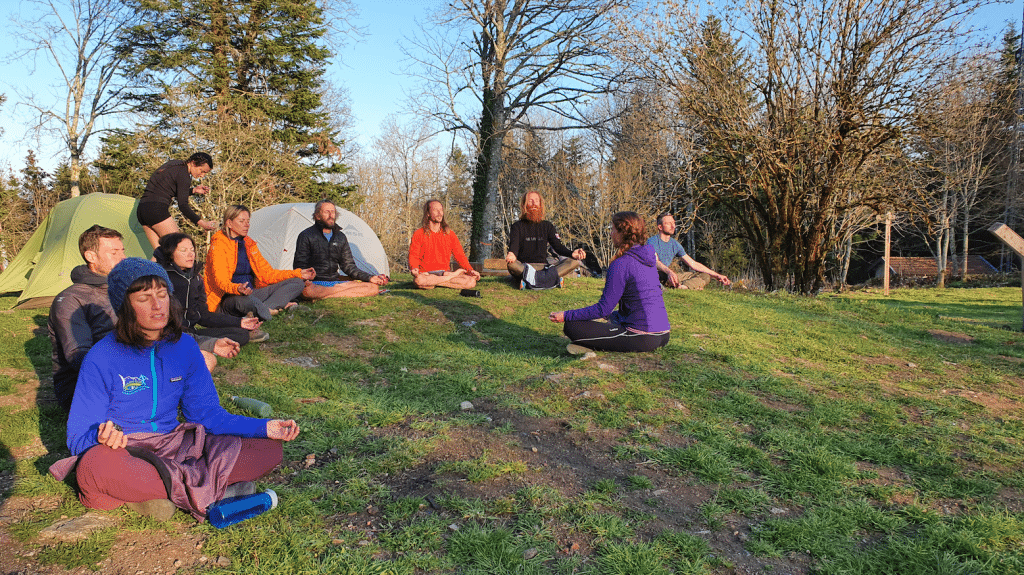
Meditate and breathe or the art of reprogramming oneself… Practiced every morning on an empty stomach right after getting out of bed, meditation and breathing exercises truly allow one to reprogram their mind to open up to more love and peace. This ritual is also a privileged moment of intimacy with one’s body to relearn how to listen to what it tells us and interact with it. The varied trainings that follow originate from Buddhist teachings, shamanism, and Taoism. Most of them have been extracted from the works whose covers are displayed in this article. They are practiced in a seated position for meditations and lying down for breathing exercises. These morning sessions transform and enrich as practice continues. This is just a path of exploration; it is up to you to create your custom ritual without turning your back on a multi-millennial wisdom whose beneficial effects are now recognized by science. Other reasons to spend time meditating when I am already so busy? Living without meditating is like walking without looking at your compass: there is little chance you will reach your destination, that of happiness and a fulfilling life. Where we all want to go… Because when you meditate, your brain shifts from beta waves (12 to 45 Hz, characteristic of analytical functions, reasoning) to alpha waves (8 to 12 Hz, like those of the Earth, characteristic of calm and access to our intuition), which opens a bridge to the unconscious. This allows for reprogramming, learning the language of the body, feeling the circulation of energies, sensing the birth of emotions, and then learning to manage them. Or even developing intuition, gaining perspective on events, and disconnecting the mind. Or even taking conscious control of the functioning of one’s body and physiological parameters. Other reasons to do breathing exercises? Focusing on something like the breath reduces the activity of the amygdala involved in emotions and stimulates the vagus nerve, which contributes to the relaxation of the body. Specifically, conscious breathing dispels dizziness, fatigue, anxiety, fears, nervousness, and irritations. And if you practice hyperventilation, they are also deacidifying and detoxifying. This means they will reduce inflammatory states and pain in addition to accelerating the regeneration process. Moreover, if done correctly, conscious breathing helps retrain the unconscious respiratory function, meaning you breathe better in daily life, even without having to think about it. Just that, yes!! Example of rituals combining guided breathing and meditations to start the day Gratitude: Wake up with the first thought: “Thank you for this day. Thank you, life.” while smiling. We start the session with breathing About 30 minutes of breathing exercises lying down, one hand on the belly, the other on the heart: Hyperventilation breaths: 30 powerful breaths (inhaling through the nose: belly + chest, exhaling through the mouth relaxed, sudden and without forcing) followed by an apnea, empty lungs (option 1) or full lungs (option 2), held until the reflex of suffocation. Then, a deep inhalation followed by a short apnea of about 20 seconds. During this time, focus your attention on the sensation of warmth that arises in places and diffuse it throughout the body through thought. Several series. https://www.youtube.com/watch?v=-USZpRq-0RQ&t=5shttps://www.youtube.com/watch?v=4OOfhCl6to0&t=840s Please note: theses videos are currently in French, but you can activate YouTube’s auto-generated subtitles in English while we work on providing a dedicated English version. Square breathing: For 5 seconds (or the equivalent in heartbeats) inhale while expanding the belly and chest, 5 seconds of retention with full lungs, 5 seconds exhale completely, 5 seconds of retention with empty lungs. Repeat the process for a minimum of 3 minutes. Option 1: During inhalation, breathe in all positive elements like love, trust, energy, etc., and during the following retention, imagine it spreading and being absorbed by all your cells. Note the different sensations based on the element you chose to inhale. Option 2: During the retention with full lungs, accumulate all negative elements like anger, fear, doubt, fatigue, etc., and during exhalation, imagine it leaving your body. Note the different sensations based on the element you chose to exhale. https://www.youtube.com/watch?v=YGmBOkCsBrQ&t=5s We continue with different types of meditations They are preferably practiced sitting cross-legged or in lotus position, otherwise sitting at the edge of a chair with a straight back. All phrases in quotes are to be pronounced mentally and are there only as a guideline. It is up to you to personalize them! Setting positive intentions: “I dedicate the benefits of this practice to the happiness of all beings.” “May this day flow in peace, joy, love, sharing, understanding, etc.” “I am a unique and magnificent being.” “I am getting better and better on all levels.” Express an intention about the changes one wants to make in oneself by banning any negative formulation like “Not…”. It is about transmuting the negative into positive to attract what one desires. Connecting with one’s body: “Thank you to my sight, my hearing, my smell, my taste, my sensitivity, my intuition, and my inner knowledge [focus your attention successively on each of these senses] for the universe they create.” “I greet within me the earth element [become aware of the firmness of the ground where you are sitting], the water element [become aware of the moisture inside your mouth], the air element [become aware of the air going in and out of the lungs], and the fire element [become aware of the warm and cold areas in your body].” Connecting with Nature: “The Universe is my home: the sky, the sun, the clouds, the air, the water, and the earth [focus your gaze on these elements and feel them].” “All living beings want to be happy; that is our common point. We form a big family.” Meditations: About 20 minutes of mindfulness meditation with the breath as the object of attention and visualization exercises. Intrusive thoughts should pass like birds in the sky, fleeting and leaving no traces: With eyes closed, inhale thinking “I am Love” and imagining this love entering through the plexus, exhale
Hormesis through Fasting

Please note: this video is currently in French, but you can activate YouTube’s auto-generated subtitles in English while we work on providing a dedicated English version. https://www.youtube.com/watch?v=SbfebBV9qec&t=17s Introduction The human body struggles with the abundance of food we face because our genes were not selected for this. In contrast, it is full of adaptations to cope with food scarcity, which is a natural phenomenon. We all have within us a program that the body can switch to when entering a fasting period to use its reserves to meet cellular needs: this is the principle of autolysis. Lysis (cellular destruction) occurs on our own tissues, starting with those that are superfluous, sick, and sometimes dangerous. Thus, excess fat reserves will be used long before muscle mass is affected (the latter can be partially used if fasting is prolonged for a long duration). Noble organs like the brain, nerve tissues, glands, and heart are not affected by this lysis. Fasting is a selective self-cleaning process of the body, where a protein savings is put in place. Sarah Juszah, naturopath, specialist in health nutrition and raw food, trained in fasting and trekking. Studies unequivocally show that it is optimal for the body to remain daily between 12 and 16 hours without eating. This is called intermittent fasting; it allows the body to benefit from digestive rest and to initiate the self-cleaning process. The health consequences are notable in terms of increased lifespan (proven in mice), reduced inflammatory processes, and strengthened immunity. Specifically, this means skipping a meal, preferably breakfast, to benefit from a period of activity on an empty stomach. Beyond healing, fasting is a healthy practice to adopt regularly in life, to reset the system and allow it to breathe a little. Especially in the context of a unique moment in human history where we are dying from being too “nourished”. Françoise Wilhelmi de Toledo writes: “(Through fasting) We achieve… a stabilization of the diseases of our time, such as metabolic syndrome, which is an association of abdominal obesity, type II diabetes, hypercholesterolemia, hypertension, and hyperuricemia. Instead of giving five medications plus those to counteract the side effects, we fast to reset all the counters. Obviously, the positive effects will only be maintained if the person improves their lifestyle. It can be a new beginning.” To confront hunger and benefit from its healing effects, it is also possible to fast for several days or even several weeks. After two or three days of fasting, the body slows its basal metabolism to conserve energy: body temperature, blood pressure, and pulse decrease, and motivation for any activity disintegrates. In return, the senses sharpen, behavioral patterns leave us in peace, and mental faculties (imagination, lucidity, memory, intuition) are literally boosted. One then experiences a remarkable inner experience. If one cannot perform intense physical effort during a fast, energy is still present to carry out moderate endurance efforts such as walking. This is an adaptive process selected by evolution. To survive during periods of restriction, it is precisely at this moment that humans must be most relevant in their choices and able to move over long distances. Account of my crossing of the Mackenzie Mountains, 360 km trek without eating for 14 days in August 2018. The mechanisms of fasting Fasting provides an effective solution to naturally relieve many diseases, particularly those called civilization diseases. Obesity, hypertension, migraines, pain, inflammation, depression, epilepsy, cancer, … Fasting is also interesting for its psychological benefits and for reconnecting with oneself. It is scientifically proven that periodic fasting and caloric restriction, if balanced, protect us from premature aging and chronic civilization diseases. The positive effects of fasting come from four main key mechanisms: physiological rest, activation of excretory organs, controlled autolysis of aged, sick, and tumor tissues, and body regeneration with the production of stem cells. The physiological rest Beyond the third day of fasting, metabolism slows down: breathing, blood circulation, and all vital activities are slowed. Internal organs, endocrine glands, and the digestive system rest. Only the elimination system does considerable work, as it frees the body from its deeply accumulated toxins. This detoxification requires a lot of energy, and if it is not sufficient and available, the elimination and repair functions will be diminished, leading to detox symptoms that can be unpleasant. It is thanks to this rest time that the body can invest all its energy in its reparative activities: restoring vigor to an exhausted digestive system, rebalancing an overworked glandular system, resting a tense nervous system. This mechanism gives fasting its effectiveness and therapeutic character. The activation of excretory organs Normally, with three or more meals a day, the body spends a good part (between 40 and 60%) of its energy on digestion. With fasting, this energy is used for other purposes, particularly for waste elimination. Thus, the main excretory organs: liver, kidneys, skin, lungs, and intestines can excrete a maximum of toxins to clean the body. Autophagy or controlled autolysis of aged, sick, and tumor tissues The word autolysis comes from Greek and means loss of oneself. In physiology, it refers to the process of digestion and disintegration of tissues by enzymes. It is because it is deprived of any nutrient intake during fasting that our body practices autolysis. The body exerts very strict control over this process: tissues are destroyed in inverse proportion to their utility, and the vital tissues of the body are not sacrificed. On the contrary, non-essential or abnormal tissues are more easily destroyed by autolysis, and their components are transported throughout the body to be recycled and thus nourish vital or healthy tissues. Free radicals are also neutralized and then eliminated. Our body thus repairs itself deeply. It is this process of autodigestion and disintegration of worn tissues that leads to the regeneration of cells, tissues, and organs. Autolysis attacks in order: Circulating metabolic waste in the blood. Fats and stagnant waste that are stored deeper in the body. Embedded waste (cysts, fibroids, and tumors). Regeneration with the production
Hormesis through Physical Activity
I noticed that the people most prone to suffering from chronic fatigue are primarily those who have the least physical activity. For the simple reason that physical activity, through breathing, provides energy to the body that exceeds what is lost from a caloric standpoint. Unless one exceeds the measure (a measure that shifts anyway), the more one works physically (through their job or through sports), the fitter one becomes. A good fatigue The physical fatigue that comes after exertion is beneficial for the body: tensions dissipate and the brain more easily enters a state of full awareness. Moreover, to build and maintain the good health of our earthly vehicle (the cardiovascular system, the skeleton, our muscles and tendons, as well as the functioning of our organs), we need regular physical activity. This can be an endurance or strength sport, a gentle activity like yoga or qigong, etc. Additionally, all these movements will promote the blood and lymphatic circulation of the body to allow for better overall health and greater well-being. Finally, fatigue is information and not a state to be fought against. Fatigue after a well-filled day provides a sensation that is both gentle and pleasant when welcomed. It is what contributes to restorative sleep. On the other hand, there is a problem when it is overexpressed, especially if it is present upon waking. If that is the case, you need to regenerate (for example, through fasting, a juice cleanse, or sleep) or engage in a physical activity that recharges your energy. The two are not incompatible. The benefits of combining strength, endurance, and flexibility It is necessary to work together on exercises that combine strength, endurance, and flexibility in order to develop a harmonious body and achieve maximum performance. Endurance sports, such as running, are the best means to strengthen the cardiovascular system, improve blood circulation, and build the necessary foundations for all other sports activities. Strength training will develop muscle mass and allow our body to burn its fat reserves more efficiently. That is why a combination of strength training sessions and endurance sports is the best way to achieve maximum results and boost performance. By varying strength and endurance training, the body will not develop a phenomenon of habituation. This will allow you to constantly improve your athletic level. In addition, to avoid injuries and promote relaxation of the body, it is wise to develop flexibility through stretching or practicing yoga. How often to practice? Regular practice of sports brings a lot of satisfaction. It’s physiological: endorphins or the happiness hormone secreted by the brain during physical activity provide a sense of well-being, which is not negligible. This is what gives the motivation to return! Example of a weekly routine: 3 to 5 sessions of 20 to 30 minutes of HIIT, 1 session of yoga/stretching every day (even if it lasts only 10 minutes), 1 hour of outdoor endurance sports per day, Bodyweight exercises every day. One can use a training journal to note what has been done each day and thus stay motivated! The ideal is to do your own research on YouTube (or any other medium) to create a customized program that suits us. The principle is to become autonomous in creating the weekly training routine that suits us and that we will maintain in the long term. The necessity of movement in the development of the nervous system Since childhood, the variety of our movements, very varied and frequent in children, is necessary, among other things, for the proper development of the skeleton and the nervous system. In adulthood, our mind as well as our body tend to become rigid in habits. Recreating time to let the body move and express itself through intuitive or archetypal movements allows us to restore mobility to our body and break free from certain emotional or mental dead ends. What to take away from all this is that the proper development of our nervous system and our 3 brains (primitive brain, limbic brain, and neocortex) depends on the body movements performed during childhood and, later, in adulthood, for its proper maintenance. It is the nervous system that commands movements and, in return, movements ensure the deployment and proper wiring of the nervous system. That is why a child whose movements are hindered (with shoes, toys, etc.) may not develop their brain optimally, resulting in delays in neuromotor development. Archetypal movements What is it? Dr. Temple Fay, an American neurosurgeon, was the first to observe the impact of initial movements of the body, practiced by all newborns, on the awakening and organization of the central nervous system, immature at birth. There are 12 archetypal movements, 5 joint mobility movements in place, and 7 movements used to move the body in space, before reaching bipedal walking. These coordinated movements form the evolutionary foundations of human motor skills. Benefits at all ages of archetypal movements: Hones the joints and traces the axes that connect them. Builds the control system of movements that prepare for walking. Awakens the organs and the 5 senses, connecting, through the meridians, parts of the body that are unaware of each other. Allows the brain to draw the body schema. Stimulates brain maturation by connecting numerous neurons. Refines proprioception, that is to say, the ability to feel one’s body.
Hormesis by Cold

Hormesis from cold aims to enhance the body’s resistance to “stress” caused by the cold. This is so that the body no longer perceives cold as an enemy, but rather as a true health ally. The benefits of cold exposure Exposing the body to a cold, even icy, environment will cause a significant drop in body temperature. In response, the body under stress will develop a set of physiological adaptation reactions to maintain an adequate internal temperature: The production of brown fat which : protects us from the cold by producing heat transports stem cells regulates appetite activates immune defenses controls blood pressure prevents clot formation repairs blood vessels regulates blood sugar nourishes muscles and bones reduces inflammatory state transports internal waste to the exit Vasodilation in the trunk and vasoconstriction in the extremities. In the long term, this leads to better blood circulation: the muscles of the veins strengthen and capillaries develop, which decreases the risk of varicose veins, promotes decongestion and cleansing of organs, and relieves the heart’s workload. The activation of the fascia which transports brown fat and circulating lymph allowing the body to self-cleanse. The release of endorphins which lead to a reduction in stress and a feeling of euphoria. The skin tones up and the hair cuticle closes, improving their quality. Regular exposure to cold also brings numerous health benefits including: resistance to cold, weight loss, optimization of the immune system, endurance and recovery speed, vitality, stress resistance, prevention of certain pathologies such as diabetes, depression, etc. Different exposures One can expose oneself to the cold in different ways: by dressing less, taking cold showers or cold baths, whether in a pool, a river, a tub, or a pond. The principle is not to be cold all day, which would be absurd, but to dedicate a moment of the day to voluntarily expose oneself to the cold. There are breathing and yoga exercises that allow the body to better react to the cold, but you can also choose to practice self-taught by listening to your own sensations, which is the most important. Personally, I cannot recommend enough to follow the online courses of the Wim Hof method. My advice before diving in First of all: Seek advice from a specialist if you suffer from a major illness such as heart problems. Preparation in advance: have a regular practice of yoga and conscious breathing as this promotes fluid circulation. Preparation before the act: Have an empty stomach; warm up your body through movement and stay fully aware of your breath. Gradually enter the cold water without forcing, welcome the sensations without judgment, stay focused on your breath which becomes slower and learn to relax in discomfort. After a few seconds (if it’s your first baths) to a maximum of 3 minutes you can exit. It is unnecessary to stay longer to enjoy the benefits of the cold. Warm your body through movement until a normal temperature returns. And finally, savor this feeling of physical and mental well-being that will make you want to return. My favorite protocol My favorite protocol with the cold is to go in first thing in the morning upon waking, to start the day well. First, even before getting up, I do 3 to 4 cycles of basic Wim Hof breathing (with empty lung holds) or Buteyko breathing (alternating every other day for these two methods). I call this my “breakfast.” Then, I perform dry brushing from my feet to my head to remove dead skin, open pores, and, above all, promote blood and lymphatic circulation. After these two exercises, I stay focused on my breath to accomplish the first challenge of the day: taking a cold bath before doing anything else. Before entering the water, while being very calm, I thank the water and the cold element for providing me with all their benefits, and I ask my body to welcome them. Once in the water, if the cold grips me, I count my breaths, light and very slow breaths. I then learn to relax and find comfort in discomfort. I fully enjoy this brief moment of privileged connection with nature and the elements. My senses are in hyper-vigilance and I am fully present in the moment and to my environment: the water running over my skin, the stones and rocks, the presence of moss, the trees, the song of the birds, etc. It is one of the moments of the day when I feel most alive and I am grateful for the physical and psychological benefits that this practice brings me. With years of practice, I have learned not to compete with myself or to function on adrenaline. My only goal is to maximize pleasure, which is why I rarely stay more than a few minutes, never forcing. I have experienced a state of ecstasy in cold water and been in communion with the environment, sometimes even spontaneously singing mantras. The flow of time is then altered and I can stay 20 minutes or more without feeling cold. But that is not what I seek in practicing my morning ritual, which is there, above all, to help me start the day on the right foot with plenty of energy and good humor. Once I get out of the water, I put my hands in a greeting posture and thank the water and the cold for their benefits, and I thank myself for having enough discipline to “dive in.” Then, to warm up, I do some shaking, gentle movements, stretching, and animal flow. Once my body temperature rises, I vigorously dry myself with a rough towel and then massage myself with vegetable oil. The ritual ends when I slip into clean clothes: I then feel joyful, fit, and full of enthusiasm to live this new day on Earth! The morning cold bath is not, for me, a daily practice; sometimes it will simply be a cold shower. And if I feel tired or sick, I won’t go say hello to
Fill in your deficiencies with Living Nutrition
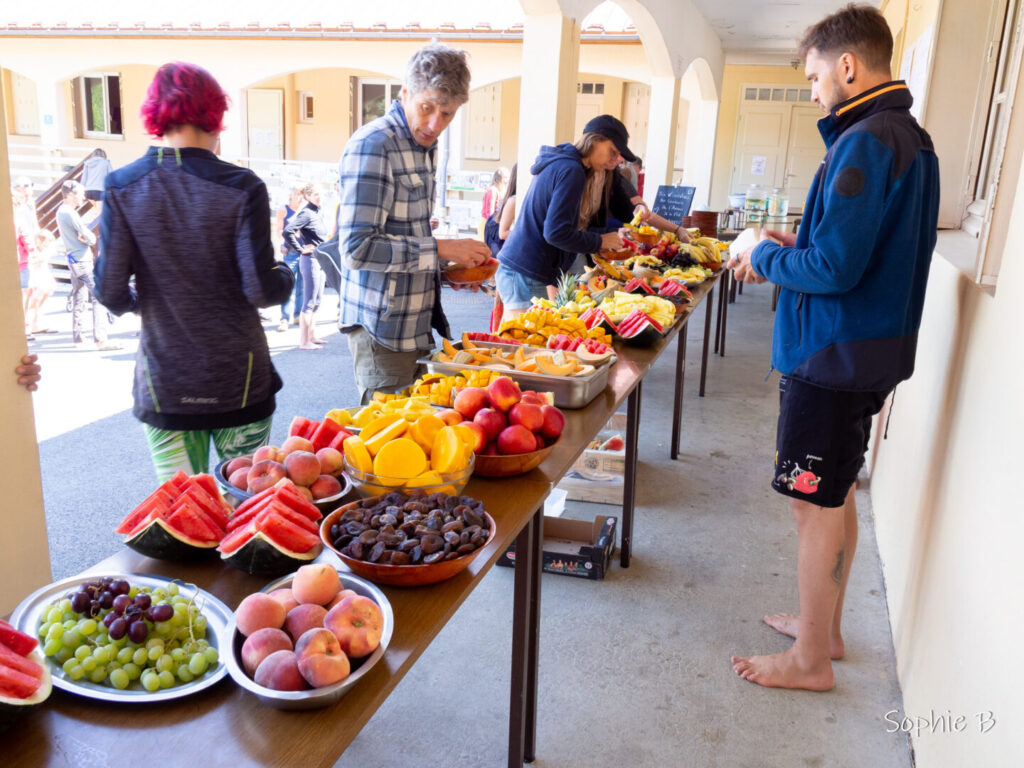
“I believe that insidious metabolic damage occurs, even with only very slight deficiencies in micronutrients, and that they will increase the risk of cancer, cognitive dysfunction, and other aging-related diseases.” Dr. Bruce Ames, biochemist “It is known that plants directly draw from the air, water, and earth the elements necessary for sustaining life, particularly carbon and nitrogen: they take them in their mineral form. In contrast, animals can only seize these same elements if they have already been fixed for them in organic substances by plants or by animals that, directly or indirectly, owe them to plants, so that ultimately it is the plant that feeds the animal.” Henri Bergson in his book “Creative Evolution” Vital nutrients The vital elements we absorb through food are classified into two categories: Macronutrients: proteins, lipids, and carbohydrates. Micronutrients: minerals, vitamins, enzymes, and antioxidants. “There are about 40 vitamins or quasi-vitamins, minerals, and amino acids essential for health. If you are deprived of one or the other, you will die.” Dr. Bruce Ames, biochemist In this article, we will therefore focus on the issue of mineral and vitamin deficiencies that affect the majority of the population. The most common mineral deficiencies are in iron, magnesium, calcium, zinc, selenium The most common vitamin deficiencies are those of groups B, C, D, and E The presence of minerals is essential to activate the many enzymes that play a key role in the body ranging from nutrient absorption to energy production, as well as controlling hormonal, muscular, nervous, and immune systems. Furthermore, minerals are antioxidants and alkalizing agents. As for vitamins, they are also involved in many biological functions: antioxidant, body building (growth, skeleton development…), functioning and maintenance of the body (transformation and use of macronutrients, vision, blood coagulation, muscular, nervous, immune systems, DNA production, …). Diagnosing a deficiency is not straightforward. Indeed, it is important to distinguish between extracellular minerals (those that circulate in our biological fluids like blood or interstitial fluid) and intracellular minerals (those that manage to penetrate the heart of the cells). This is why the characteristic disorders of deficiencies can manifest in individuals who, otherwise, show completely satisfactory blood test results. This is explained by the fact that not all minerals and vitamins are bioavailable (that is to say, usable by the body). If they cannot penetrate the cells or if they are not usable (which is the case when micronutrients are not organic), they will be eliminated through hepatic and urinary pathways, which will only result in adding extra work for the body. Some micronutrients and associated deficiencies An internet search provides the following information: Magnesium It is one of the most abundant body minerals. Half of the magnesium present in the body is located in the bone tissue. It is also a regulator of carbohydrate and lipid metabolism in muscle, cardiac, and nervous tissues. It participates in more than 300 metabolic reactions in the body, hence its importance. The symptoms of a magnesium deficiency: physical and mental fatigue, chronic anxiety, irritability, insomnia, muscle cramps, tremors. Calcium The main function of calcium is the well-known one of building and renewing the skeleton. Additionally, calcium participates in muscle and cardiac contraction, blood coagulation, cellular exchanges, membrane permeability, hormone release, and nerve impulse transmission. The symptoms of a calcium deficiency: dry and scaly skin, brittle nails, and dull hair, frequent cramps in the back and leg muscles. Vitamin C It is an immune stimulant that activates the formation of antibodies. Its antioxidant effect protects against the acceleration of cellular aging and contributes to the healing of skin wounds and burns. It also has a significant anti-fatigue effect. The symptoms of a vitamin C deficiency: fatigue, immune fragility (recurrent infections), irritability, fragility of capillaries (bruises), healing problems. Vitamin D It is essential for the bone fixation of minerals (notably calcium and magnesium), hence its direct impact on bone strength. Vitamin D also acts at the muscular level (for contraction) and cerebral level (it is a protective agent for neurons). It also modulates the activity of the immune system, stimulating it in case of infection and calming it in case of autoimmune reaction. The symptoms of a vitamin D deficiency: bone disorders (notably osteoporosis), muscle weakness, immune fragility, stress sensitivity, depression. Deficiencies are, paradoxically, one of the causes of obesity. Indeed, if our diet provides macronutrients but not enough micronutrients (as is the case with processed food), then as soon as the meal is digested, even if it was very caloric, hunger returns very quickly. A hunger not for calories but for essential vitamins and minerals. And if in response to this hunger we again provide food deficient in bioavailable micronutrients, then we enter a vicious cycle that can lead to weight gain. Why are we deficient? The reasons are multiple and interdependent: Insufficient consumption of raw fruits and vegetables, which are the best source of vitamins and minerals. Fruits and vegetables poor in micronutrients due to cultivation on depleted soil or off-soil (hydroponics). Lack of sun exposure to produce vitamin D, which has the collateral effect of disrupting the absorption of other micronutrients. Too high a proportion of cooked foods in the diet. Heat (beyond 42°) destroys the enzymes naturally present in raw foods that are responsible for the assimilation of minerals and vitamins. Increased levels of stress and pollution (pesticides, nanoparticles, waves, etc.) that raise the level of free radicals. This leads to an exaggerated consumption of micronutrients for defense. Excessive consumption of animal proteins and stimulants (tea, coffee, alcohol, tobacco, etc.) that acidify the environment and force the body to use its mineral reserves to restore acid-base balance. Excessive consumption of refined sugars and flours. These empty calories of micronutrients deplete mineral reserves because the use of these sugars requires minerals that are normally provided by food (as is the case with fruits). Mood, these 45 L of liquids in which cells are bathed, too clogged for micronutrients to reach the cells. This is why fasting is sometimes the best way
Living Nutrition and Food Combinations
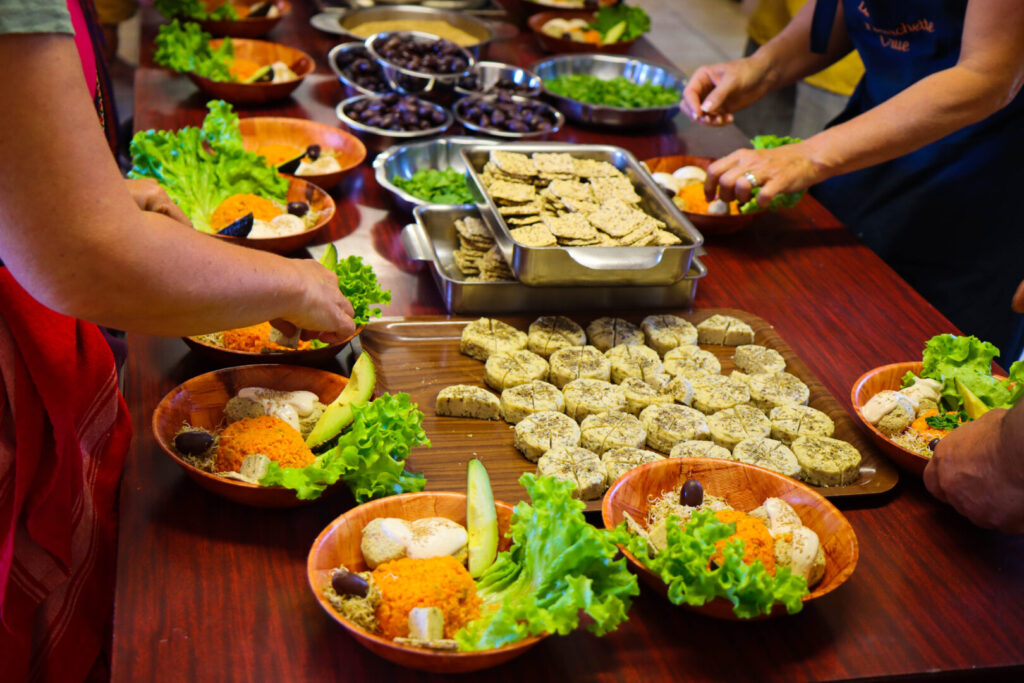
Is it good to mix raw foods? Ideally, we would only eat raw and unmixed foods, just like a great ape would when going from tree to tree. However, after decades of traditional eating, switching to this ideal diet would be too intense for the body, for two reasons: Eating is also a pleasure, and when one is used to certain textures and tastes, it can be difficult to do without them. Eating only raw fruits and vegetables will lead to intense detox crises that will be hard to manage, especially if you do not understand their origin and do not have the appropriate naturopathic tools to navigate them. Like any major change in life, it is realized step by step by setting priorities or stages. Avoid making too many mixtures: Our body is equipped with many sensors in the ORL area and in our intestines that allow us to measure the nutritional quality of a food. In response to this very complex and almost instantaneous bodily analysis, our body gives us a response: If we like it, it means our body needs it. If we don’t like it, it means our body does not need it or that it is inappropriate. The catch is that our instinct can deceive us when the food is cooked (a part of the information contained in the food is destroyed, especially when cooking is done at high temperatures) and/or when there are too many mixtures (even raw) and the sensors are, therefore, confused. Moreover, not all foods require the same digestive juices in the stomach, which hinders the proper absorption of nutrients and burdens digestion, particularly mixtures with fruits which, themselves. Why are fruits eaten before meals or between meals? Because fruits are digested only in the intestines and not in the stomach. If you eat them while your stomach is in full digestion, or if you eat them with other types of foods, the fruits will not be able to go directly to the intestines and will be exposed to acids that may potentially make them indigestible. It is therefore better to eat your fruits at the beginning of a meal (wait 20 minutes to an hour for their complete digestion) or between meals. Note: If you consume a heavy meal high in fats (based on oilseeds, for example) or proteins, it can remain in the stomach for up to 10 hours! If you consume fruits before digestion is completely finished, you may experience heartburn, but the fruits will not be directly responsible. However, some food combinations are very well tolerated by the body and it is wise to know the principles illustrated in the diagrams below: Click on the image above to download it. Here are my recommendations: First stage: Eat as much living food as possible! In my view, it is better to do CRUsine (even if the combinations are not very physiological) than to eat cooked foods or animal products. As long as it is plant-based and alive, go for food combinations (without worrying if it is physiological or not) that you enjoy as long as you digest them well. However, it is preferable to not mix more than three or four different foods (condiments aside) in the same recipe. Second stage: Once you are well invested in the process and if your vitality allows it, practice naturopathic detox techniques to deeply detoxify your body. You will then see, month after month, year after year, that your food cravings will lighten. You will then naturally and effortlessly move towards an increasingly raw diet without involving the mind, simply by reconnecting to your feelings. But this can only happen if you release layer after layer of accumulated toxins. Some tips to avoid digestive discomfort: Avoid eating your fruits at the end of the meal. Avoid any mixture containing both fats and carbohydrates (like nuts – sweet fruits). Avoid mixing acidic fruits with sweet fruits (like dates – lemon). Avoid consuming more than 20% of fats (in caloric ratio) in a day. To learn more about fats, read: “What are our needs for fats ?” Suggested reading for further exploration: The article: What about Sensory Nutrition? The article: What are our needs for fats ? « Food Combining Made Easy », by Herbert M. Shelton « The Detox Miracle Sourcebook: Raw Foods and Herbs for Complete Cellular Regeneration », by Robert Morse, N.D
Seawater and its benefits
https://www.youtube.com/watch?v=rPVEMeFPYec In bath: Seawater has been used in thalassotherapy since Antiquity for its numerous therapeutic properties. Seawater is rich in minerals and trace elements, which is good for the skin and hair. A simple fifteen-minute sea bath each day is enough to recharge the body. Its benefits: It revives tired organisms. It promotes healing and improves skin quality. It effectively repairs a fracture. It decongests the respiratory tract. It prevents many diseases. It cleanses the scalp. It also cleanses the body of accumulated emotional tensions and negative energies. Internally: History: In 1897, the French biologist René Quinton highlighted similarities between the mineral composition of seawater and that of the interstitial medium and blood plasma. He deduced that the human body would certainly respond well to treatments and preparations containing substances derived from the sea. Definitions: The term “Quinton” or “hypertonic Quinton” refers to seawater that has been collected from vortices, far from any source of pollution, and in an environment rich in phytoplankton. This water is then cold-filtered and without radiation before being bottled. The term “Quinton Plasma” or “isotonic Quinton” refers to seawater brought to the molecular concentration of blood plasma by dilution with distilled water. Quinton versus seawater: Due to the high cost of Quinton (20 euros per liter), one can more simply buy seawater as long as it has been collected from an environment rich in phytoplankton (otherwise the minerals are less well assimilable), far from pollution sources, several meters below the water surface, and then filtered at 0.22 microns cold and without radiation. Seawater harvested under these conditions can be consumed orally. If it is for injection use, it is preferable to use filtered seawater (0.22 microns) then ultra-filtered (0.01 microns) and collected at a depth of 25m with tests to verify the water quality. Seawater collected under these conditions is called marine plasma and is of equivalent quality to Quinton water except that it does not have certification. These favorable conditions for the collection and filtration of seawater are met at naturitas.co.uk Seawater versus freshwater: Contrary to what one might think, it is very beneficial to drink seawater or Quinton. It contains, in a form assimilable by the body (thanks to the presence of phytoplankton), all the minerals and trace elements present on Earth, unlike freshwater whose minerals are less diverse and not bioavailable. This is why, in bottles, spring waters (low dry residue rate) are preferred over mineral waters (high dry residue rate) which can cause calcifications and kidney stones. If you collect your own seawater, do so at some distance from pollution sources and at least one meter below the surface (to avoid floating oils). Before consuming it, this water must first be filtered to eliminate micropollutants. Drinking seawater has many benefits, it: Stimulates metabolism Prevents chronic constipation Limits adrenal fatigue Detoxifies, remineralizes, and revitalizes the body Strengthens the nervous system due to the presence of magnesium Reduces inflammatory states Regulates estrogen production Reduces nasal congestion and cleanses the sinuses (to be used in aerosol or with a neti pot) Contains vitamin B12 What quantity to consume? Seawater is an alkaline food particularly recommended in cases of body acidification or deficiencies. Moreover, it improves kidney function. You can drink it every day as much as you want by diluting it to your liking, so that you find it pleasant to taste. Seawater is a living food, and therefore your taste, and only it, can indicate the daily quantities your body needs. Refined salt versus seawater: The salt contained in seawater is very different from refined salt, which has lost all its beneficial properties and is harmful to health, just like refined sugar. Refined salt causes: inflammation of tissues and water retention (due to its high chlorine content), damage to blood vessels, thickening of the blood, and increased blood pressure, stomach irritation (directly linked to stomach cancer) and an imbalance in intestinal flora, overeating, calcium loss, and dehydration, kidney fatigue, and promotes the development of kidney stones. On the other hand, magnesium and potassium, which are abundant in seawater, are hypotensive agents. This is why avoiding good salt (seawater or unrefined salt) is not good for your health, as the body needs the minerals it provides for the proper functioning of the kidneys and heart. Unrefined salt versus seawater: Even though seawater tastes salty, it does not contain salt (NaCl, sodium chloride) but minerals in ionic form, which makes all the difference because the body can more easily use or eliminate them as it sees fit. In addition, seawater contains more volatile minerals such as iodine than unrefined sea salt (such as Guérande or Himalayan salt). Personally, I am very sensitive to salt, whether refined or unrefined, as it causes water retention and unpleasant sensations in my body, whereas seawater does not cause me any problems, even though my body requires about 1 liter per week. It should be noted: To properly absorb vitamins, the body needs to be adequately mineralized. If there is a single mineral missing in the body, then certain vitamins will not be absorbed. And if there is too much of one mineral, it blocks the absorption of other minerals. For example, too much calcium blocks the absorption of phosphorus, which is why calcium supplementation may not improve bone quality since they also contain phosphorus). The advantage of seawater is that it will harmoniously remineralize (in quantity and quality) the body better than any supplement. Minerals are bioavailable to humans only if we absorb them through an animal, a plant, a fungus, or an alga. The minerals in seawater are bioavailable because they are contained in phytoplankton, hence the importance of collecting seawater where there is a sufficient concentration of phytoplankton. Long before we were humans or even primates, we were marine organisms (think of the different stages of human fetal evolution), moreover, it is in the sea that the first forms of life appeared. It is a primordial liquid! Seawater is a living food, and if heated, it
Hormesis: Intermittent Fasting and Its Limits
Intermittent fasting is a common practice today. It consists of only eating within an 8-hour window on average. Many choose to skip breakfast and have their first meal of the day at noon. Others prefer to have breakfast but do not eat in the evening. Intermittent fasting is not strictly speaking a fast. But it has the virtue of providing a window of a few hours where the body, in a state of digestive rest, initiates detoxification mode, as at the beginning of a fast. The benefits Increase in growth hormones. It helps to increase the number of cells in our body, to grow, but also to develop our muscles and bones. They act as a barrier against cellular aging by accelerating the production of new cells.- Weight loss and increased life expectancy. By reducing the eating window, and even by having larger meals, we eat less. This reduces the amount of calories consumed. Moreover, several scientific studies have proven that this leads to a better life expectancy. The other observed benefits of intermittent fasting Reduction of inflammatory phenomena. Improvement of intellectual functions. Reduction of cholesterol, diabetes, and cardiovascular diseases. My opinion on intermittent fasting Intermittent fasting is certainly a way to organize meals that promotes detox and digestive rest. However, according to my expertise, it is not wise to prioritize this practice over Living Nutrition. Indeed, many people will practice intermittent fasting (often by skipping breakfast) but eat everything, which greatly limits its benefits. The mistake would be, for example, to eat heavy and in large quantities in the evening to last until noon the next day. I rather advise you to prioritize a maximum proportion of living foods in your day, even if it means eating within a wider time frame than 8 hours. One of the principles of Living Nutrition is to listen to your needs again. So, if your body asks for living food, give it what it needs rather than imposing arbitrary schedules that will disrupt your food cravings and delay this reconnection to the body’s intelligence. It is important to realize that your mind is not competent to tell you when and what to eat! Only your body, through feeling, can provide you with this information. One of the great virtues of Living Nutrition, combined with naturopathic detox practices that help detoxify deeply, is precisely to gradually reconnect you to your instinct. An instinct that works in reverse when cells are poisoned and they crave non-physiological foods. What we observe, after a certain time of predominantly eating living foods, is that we are not hungry in the morning upon waking and that we avoid meals after 6 PM (to not disturb sleep). Thus, as we gradually reconnect to the body’s intelligence (which happens progressively over several years), intermittent fasting sets in naturally, not necessarily every day of the week but when it suits the body.
Hygienism: Dental Hygiene

Introduction Do you know what the most widespread disease in the world is despite all our efforts to eradicate it? The one that can perforate the hardest part of the human body and cause intense pain? The one that can disfigure our smile and make it difficult for us to eat? You probably guessed it, it is dental caries, a disease that can have significant negative consequences on health if we do not intervene to treat them. But it is not the only one; between malocclusion issues and gum recession, our dentition suffers more and more ailments even though technologies are increasingly developed and omnipresent. What if we put words to these ailments? It is all the more legitimate to take an interest in them when we realize that teeth are a reflection of our iDENTity. When did this process of dental degeneration begin and why? It is to these questions that we will attempt to respond in this article. Personally, this is a subject I have closely examined following dental problems that arose after 10 years of hygienism. Not that my hygienist practices are responsible for my dental issues (which I would have had sooner or later anyway) but simply to clarify that it would be a mistake to believe that a good lifestyle protects us from all ailments. From this unpleasant surprise, which was a source of questioning, I have drawn rich lessons that I am pleased to share here so that you take care of your teeth as best as possible and do not relax your dental hygiene even if you eat better than before. Nature as a Model Observing nature has much to teach us about dental problems because animals have no issues without having to brush their teeth or worry about not eating between meals. If we observe the animals closest to us, those that make up the great ape family, they eat (according to specialists who have studied them) between 95 and 100% raw fruits and vegetables without any specific dental hygiene while maintaining healthy and aligned teeth. Yet, in the face of the global public health problem that caries represent, our healthcare system simply warns us against excessive sugar consumption. That’s it. An astonishing conclusion when one thinks of the frugivorous diet of chimpanzees (99.4% of genes in common with humans). But give refined sugar, cereals, sodas, cookies, etc., to any animal, domestic or wild, and it is highly likely that problems will arise… The Origin of Caries Indeed, not all sugars are equal (I will discuss this further below) and the true cause of caries is not directly related to the mere presence of sugar. For proof, they appeared roughly in the Neolithic (the advent of agriculture about 12,000 years ago), when humans began to consume large quantities of cooked cereals or starches. Whereas among gatherers (who primarily consume fruits) and hunter-gatherers, no dental problems have been detected. (Note: this link leads to a website in French. To read it in English or another language, simply copy the URL and paste it into Google Translate https://translate.google.com/?sl=fr&tl=it&op=translate) The various dental problems increasingly encountered in modern humans: Caries (the largest source of infection in the world) Occlusion problems (misaligned teeth) Periodontal diseases (receding gums) Although I am neither a doctor nor a dentist, I have conducted my own investigation into oral health. The personal conclusions below are informed by various readings (see our sources at the bottom of the page), personal reflections, and experiences shared with dentists and hygienists. The origin of dental problems viewed from a biological angle 1. Regarding caries The terrain is everything This bacterial infection that can even perforate tooth enamel and create cavities cannot, as we mentioned earlier, have its sole origin in sugar consumption; otherwise, great apes would have caries, and anthropologists would have found caries on the skeletons of humans before the Neolithic (or before humans began to consume large quantities of cooked starches). The other, more plausible hypothesis put forward by some holistic dentists is that it is an excessive acidity in the oral sphere (oral flora + saliva + biofilm on the teeth) that creates a favorable environment for the development of certain bacteria (Streptococcus mutans) responsible for caries. Parenthesis: From a hygienist’s point of view, there are no good or bad bacteria. The bacteria we call “pathogenic” can only develop when the terrain is unbalanced. Moreover, an overly acidic terrain forces the body to draw from certain mineral reserves (notably calcium and magnesium) stored in the skeleton, which will serve as a buffer system to neutralize acidity and thus rebalance the pH of the blood and cells. Consequently, acidification of the body can indirectly lead to demineralization of enamel (and the entire skeleton), making teeth more sensitive to attacks from these Streptococcus mutans, which, it is true, feed on sugar but can only act on weakened teeth (by the acidity of saliva and/or demineralization) and in an acidic environment. This reasoning explains why more and more children have decayed baby teeth even before they have erupted from the gums. It also explains why some caries start from inside the tooth. This is merely a reflection of an acidified body. There is “sugar” and “sugar” In this case, why do so many studies demonize sugar and conclude that it is responsible for caries? For several reasons, the first being that the distinction is not made between the sugar in fruits and refined sugar in all its forms: white, brown, in white flours (since starch is a chain of glucose, thus sugar), fructose syrup, etc. All these refined sugars, devoid of (or almost) minerals, enter the blood too quickly compared to the sugar from fruits (which are mixed with fibers, water, vitamins, enzymes, antioxidants, minerals, etc.), creating a harmful blood sugar spike. Another problem with refined sugars: The body needs minerals to convert sugars into energy. If these minerals are absent from the consumed food (which is the case in so-called refined food but not
Hygienism: Optimal Health
“Nine-tenths of our happiness depends on health. With it, everything becomes a source of pleasure.” Arthur Schopenhauer “Is there a greater good for man than health?” Socrates What is health? Health is a poorly defined concept because it refers to a physical state that no one knows today. Yet it is the natural state of all living beings, regardless of age, as long as they are not weakened by a lifestyle that is unsuitable for their physiology, whether in terms of physical, mental, emotional, or dietary habits. “Every so-called disease is constructed in the mind and body, due to habits causing fatigue of the nervous system. Fasting, bed rest, and the abandonment of bad habits, whether mental or physical, will allow the body to eliminate accumulated toxins. Then, if bad habits are abandoned and replaced with reasonable lifestyle habits, health will return and stabilize. This concept applies to all so-called diseases.” Dr. John Tilden, Toxemia: The True Cause of Diseases (La toxémie : véritable cause des maladies) Because we all have decades of cooked and animal-based food behind us, our bodies have accumulated, since the fetal stage, a significant amount of toxins (notably acids and glues) that only continue to increase if one does not improve their lifestyle with more physiological foods, hormesis, time spent in nature, sufficient rest, good breathing, naturopathic detox techniques, etc. This is why, for the average person, aging too often rhymes with decline, as the majority of organisms continue to accumulate more toxins throughout their lives unless they compensate with enough hygienic practices. What is the life expectancy of a human? Moreover, some peoples of the planet, like the Houzna in northern India, who once lived in the wild, without a medical system and with a diet primarily raw and vegetarian, had a life expectancy of 120 years. It is therefore not far-fetched to believe that a life in harmony with the laws of living gives centenarians who are neither bedridden nor senile and die in good health. And if we notice that the life expectancy of mammals is between 6 and 7 times the growth time of their longest bones, we can conjecture that the life expectancy of a human, who would live under ideal conditions, would be between 120 and 140 years. Dog 2 years of growth 12 to 14 years of life Lion 4 years of growth 24 to 28 years of life Horse 4 and a half years of growth 25 to 30 years of life Camel 7 years of growth 40 years of life Elephant 25 years of growth 100 to 150 years of life Human 20 years of growth 120 to 140 years of life (theoretical) Source: A healthy mind in a healthy body. Roger Le Madec (Un esprit sain dans un corps sain) “The frugivore diet, as described in Genesis, represents the best type of diet for man. To establish the ideal diet, we must first dispel the fear of undernourishment in people’s minds. If we all must restrict our food intake and partially or completely eliminate bread, meat, eggs, milk, etc., it must be proven and demonstrated by examples of individuals illustrating that not only can one live by eating only fruits, but that this Edenic and natural diet of man was the most just and perfect and can still be today.” Arnold Ehret, Mucousless Diet Healing System (Le régime sans mucus) Discovering our full potential Humans, by nature, consider all behaviors and habits they observe around them since childhood as normal. This is why we have so much difficulty imagining what our true nature and potential could be, both physically, mentally, and emotionally, if we did everything necessary to feel well. We lack models in this area to inspire us. And as Coluche said: “Just because many are wrong doesn’t mean they will eventually be right!” In people’s minds, being healthy simply means not having a degenerative, chronic, or genetic disease. But it is so much more than that! True health, which we will call Optimal Health to avoid semantic confusion, is a stable state (independent of age) in which an individual knows no deficiency and no disease on the physical, mental, and emotional levels. It is a natural state for every human being and can only be disrupted by diseases if the body contains poisons, what is called the terrain. “Health, well-being, and youth are the fruits of applying natural health methods, understanding the laws of life, and the meaning of disease.” René Bickel, The Enslaved Patient (le malade enchaîné) “True health is having a happy heart, the joy of living, clear and creative ideas, the energy to realize them, and a solid and harmonious body.” Irène Grosjean Having vision problems, skin issues, allergies, feeling tired for no reason, depression, pessimism, pain, etc., all these seemingly trivial (because so common) disorders in our societies precisely indicate that we are not in optimal health. “The more you are freed from all kinds of waste and poisons, the more you will feel and believe this truth, the greatest of all: This Edenic diet is not only sufficient, but it also elevates you higher and higher into physical and mental conditions never reached before.” Arnold Ehret, Mucousless Diet Healing System (Le régime sans mucus) A heavy legacy But it must be understood that optimal health is a theoretical state that we cannot currently achieve due to our toxic legacy (the one received at birth), several decades of conventional eating (for most of us), pollution (air, water, and food), and our difficulty in managing our “negative” emotions (sources of toxins and dysfunctions within the body itself). This is why hygienic techniques can only claim to optimize our health by providing more energy to our organism, improving the quality of our fluids and organic tissues, strengthening our immune system, and enhancing our eliminatory functions. It is true that humans have consumed meat and cooked foods for two million years, but we must not forget that before becoming hunter-gatherers, we
Definitions of Hygienism
Have you ever heard of hygienism? It is a natural approach to health based on the principle of living and healing in accordance with the laws of nature. Hygienism is not limited to prevention, and its observed beneficial effects are not confined to the placebo effect. On the contrary, it is a holistic approach to health that restores vitality to the body so that it has the means to achieve true healing. Humans and nature To optimize our health and well-being, hygienism considers that the right way of living must align with our primate physiology. And those who practice or recommend behaviors that mimic the life we would have if we were released into nature, as in the past, claim to be hygienists. This makes sense since our primate genetics have adapted over the last 65 million years to our environment and modern life has radically changed our living conditions. The debate about the ‘right’ way to live dates back to antiquity, and some influential figures in recent centuries, such as American health educator Herbert Shelton (1895-1985) and philosopher Jean-Jacques Rousseau (1712-1778), understood the health and well-being benefits we could gain from observing nature and its laws. Nowadays, scientific evidence* abounds in this regard, and we realize that our contemporary theories and sciences can only bow to the intelligence of life. *On this subject, read: The Derivative Bath by France Guillain, Does Disease Have a Meaning by Thierry Janssen, Everything That Doesn’t Kill Us by Scott Carney, The Story of the Human Body by Daniel Lieberman, Intelligence in Nature by Jeremy Narby, Rebirth Through Breath by Désiré Mérien. Attempt at a definition Etymologically, the term ‘Hygienism’ originates from Greek mythology, Hygie or Hygée (in ancient Greek Ὑγιεία /Hugieía or Ὑγεία /Hugeía, ‘health’), daughter of Asclepius, the god of medicine, and Epione, is the goddess of health, cleanliness, and hygiene. She represents preserved health and also symbolizes preventive medicine. Here is my definition: Hygienism is an approach to health based on the observation and practice of natural laws. Through the study of physiological needs and healing mechanisms, it teaches how to develop a proper listening to oneself and thus intuitively regain good hygiene of life. Hygienism is a science of health whose foundations were laid by American doctors. It was a precursor to modern naturopathy, and its goal is to make optimal health accessible to humanity. But according to reference dictionaries, this word, ‘hygienism’, has not yet gained recognition… The only definition found for ‘hygiene’ is the following:‘A set of measures, processes, and techniques implemented to preserve and improve health.’(source: to CNRTL: “Centre National de Ressources Textuelles et Lexicales” (National Center for Textual and Lexical Resources)). In my opinion, there are several reasons contributing to this confusion around the definition of hygienism: The still predominant Pasteurian thought wrongly incriminates microbes in the occurrence of diseases while forgetting the determining role of the ‘terrain’ (constitution + temperament + toxemia). The modern world makes a return to nature impractical. There are effective natural health means that primates do not have access to. And its corollary: hygienists do not agree among themselves on the right behaviors suitable for our nature, particularly regarding purges and vegetable juices. It is possible to propose a definition that has the merit of circumventing these obstacles, which is as follows:‘Hygienism: a set of all ‘natural’ or ‘artificial’ practices adaptable in daily life that aim to improve human health on physical, emotional, mental, and spiritual levels.’ A definition in line with its etymological roots and the vision of health educator Herbert Shelton, who advocated self-healing, fasting, raw foodism, and naturopathy. Concretely, in our daily lives, the combination of these so-called ‘hygienic’ practices must respond in a balanced way to our two vital needs: to accumulate vital energy and to reduce energy leaks. These leaks will be sealed using ‘natural’ or ‘artificial’ antidotes. By ‘artificial’, I mean all the solutions provided by Wisdom and ancestral Knowledge to compensate for the artificialization of our environment and our lives. The term ‘Interventionist’ could also have been used instead of ‘Artificial’. This accumulation of vital energy in our bodies will allow the intelligence of life to manifest and gradually effect possible healings on all levels. The principles of hygienism To be in optimal health on all levels, it is essential (a necessary but not sufficient condition!) to have sufficient vital energy, or else to develop it and limit energy leaks. It does not change based on the last meal you ingested because it is always present, and it is what keeps you alive. It is also what supports you in your daily activities, heals you from an illness, or helps you manage stress. Here is the energy input/output balance represented in a diagram: Energy leaks As can be seen, to feel good and lead a fulfilling life, it is necessary to develop everything that brings us vital energy and to limit leaks. The diagram below details these energy leaks and the associated antidotes that allow for (partially) recycling this lost energy by reconnecting with oneself and with life. Life of primates VS life of humans Hygienism would consist (according to the definition established at the beginning of this article) in reconciling in our daily lives practices that aim to recreate, naturally or artificially, the living conditions that prevailed at the dawn of humanity and for which our organism is made. Experience shows that the more one integrates hygienism into their daily life, the more well-being and joy spontaneously spring from our bodies. This happens without having to achieve high goals or needing to gather different parameters of an equation that would be that of happiness. We feel good here and now, and this, without any artifice. The reason is simple, hygienism brings us closer, through its antidotes, to the natural living conditions of the primates that we are! A logic that is presented in the following diagram: Natural vs artificial antidotes If natural antidotes are no longer sufficient in our time, it is
Hormesis: Hygienic Fasting VS Active Fasting

Please note: this video is currently in French, but you can activate YouTube’s auto-generated subtitles in English while we work on providing a dedicated English version. https://youtu.be/S1A0E73fqcs?si=D-1d1jYcMPR1o3OF In this article, we will try to better understand the advantages and disadvantages of hygienic fasting and active fasting. Hygienic fasting is a fast that is practiced in the greatest physical and mental rest. One remains mostly in bed during the day, with no physical activity other than a short daily walk, and without intellectual activity or distractions. Screens are therefore banned, and one finds oneself alone with oneself. Active fasting, on the contrary, is often done in groups with all sorts of gentle physical activities like walking and yoga. Activities to which one can add massages, games, treatments, cold showers, etc. The benefits of fasting Fasting is a universal healing method recognized for millennia but fallen into oblivion, just like its benefits: lymphatic cleansing, toxin elimination, cellular renewal, and autolysis (destruction of old, dysfunctional, or damaged cells). On an emotional level, what is repressed comes partially to the surface like the toxins in the body. On a mental level, mental conditioning has less hold, allowing for better access to the Self. And on a spiritual level, intuitions are stronger and clearer, which helps to become aware of a need, to take certain directions for the future, or to make important choices. To learn more: read this article on the benefits of fasting. The difficulties of fasting Fasting is the most effective and inexpensive healing method there is, a true gift from nature. So with so many benefits, it should be popular. This is not counting the difficulties it causes. To understand them, let us keep in mind that our modern living conditions are very far from the ideal living conditions in which we could thrive and access physical and psychological well-being. Currently, our bodies are clogged and weakened by poor nutrition (which since our birth should ideally consist mainly of raw fruits and vegetables). And our minds are polluted by conditioning, fears, negative thoughts, life scenarios, and limiting beliefs that have been propagated by our family (often unknowingly, believing they are doing well), school, and society. So, for most, we find ourselves in adulthood not knowing how to nourish ourselves and not knowing how to direct our lives and manage our emotions. Emotions most often repressed in a survival and conformity reflex towards the family and social sphere. Thus, during a fast, the natural comes back with a vengeance and the body will try to detoxify on all levels. On a physical level, it will bring out, layer by layer, the poisons stored in the fluids (blood and lymph, 45 liters combined) and the cells. In parallel, on an emotional level, traumas and wounds will try to rise to the surface of consciousness waiting to be fully experienced and then, ultimately, integrated as constructive experiences. Finally, on a mental level, negative thoughts, fears, and limiting beliefs will weigh down morale because they are true poisons and, more than ever, they will be felt as such. We then become more aware of the importance of having positive thoughts, breathing consciously, and meditating to reprogram ourselves (read the article “Breathe and Meditate”). Ultimately, due to our past being completely out of sync with our physiological needs (read the article “Definitions of Hygienism?”), we all come from very far away, which is why fasting can become an unpleasant experience and quickly discourage the uninitiated. Fasting in nature In nature, animals fast in two ways: If they are sick, they remain still and rest until healed. This corresponds to hygienic fasting. If they have no food left, they move to a better place. This corresponds to active fasting. The current context In addition to the difficulties already mentioned above, two obstacles will hinder the body in the eliminations it will attempt to make: The digestion of dairy products and cooked starches has accumulated in the body residues that naturopaths call “glues” or “colloidal waste” (read this article to be convinced). This is not a metaphor; casein from milk and starch are truly used in the industry to make glues. These digestion residues from cooked foods will hinder, sometimes greatly, the body in its eliminations, which can make fasting partially ineffective and particularly unpleasant. That is why some naturopaths recommend performing an enema and purging before fasting, then engaging in gentle physical activity during it, receiving massages, and practicing breathwork. There are blockages in the body at the physical, emotional, and energetic levels that will also hinder the body in its eliminations. For example, holding grudges, clinging to beliefs, principles, not wanting to change, preferring to stick to habits rather than renewing oneself can be the source of constipation. Hygienic Fasting VS Active Fasting It is common to hear that active fasting is not very useful and that only hygienic fasting truly allows the body to cleanse and regenerate. The argument put forward is that the body needs all its vital energy during fasting, and if it is dispersed in physical activity, then eliminations will be diminished, and thus, fasting is less effective. To stop at these considerations is to forget a bit too quickly the current context, namely that our body contains glues and that many blockages on different interdependent levels greatly slow down eliminations. It is important not to lose sight of the fact that if one feels unwell during a fast, it is because eliminations are difficult or blocked. We then have two ways of looking at things. Either we consider that the unpleasantness of the experience is a guarantee of effectiveness. There is often in us a Judeo-Christian tendency that enjoys associating suffering and effectiveness…Or we seek a way to relieve these eliminations through naturopathic detox techniques and/or active fasting. Hygienic fasting in practice If you suffer from an illness (which is not a contraindication to fasting) or a lack of vitality, the body needs to rest and regenerate. Hygienic fasting is
Cleansing, the keystone of hygiene!
Please note: this video is currently in French, but you can activate YouTube’s auto-generated subtitles in English while we work on providing a dedicated English version. https://youtu.be/y9-yiSl_Vq4 In practical terms, a purge consists of taking a product of plant or mineral origin after fasting for at least 6 hours, then waiting a minimum of 12 hours and having gone to the bathroom before refeeding. This therefore requires staying 18 hours without eating at a minimum. The most notable effect of these purges is to cause diarrhea that completely empties the intestines. There is nothing new in their use since in the Middle Ages, apothecaries offered more than a hundred different ones. “Purges help the body to clean the excretory organs that are responsible for the normal elimination of acids (kidneys), viscosities (liver and colon) and damaged cells. Moreover, they facilitate the cleaning of the lymph during the healing crisis. Undesirable pathogens will have nothing to feed on and will return empty-handed from where they came…” Nelly Grosjean & Miguel Barthéléry, The Zen Detox Cure Volume 1 I became acquainted with purges on the day of the departure of The Fasting Walk in the summer of 2018. I then defined myself as a “pure and hard” hygienist, meaning that I believed that by providing a diet suitable for my body (see the article “The Origins of Living Food”) with the right hygiene of life (see the article on the law of hormesis), my health would naturally tend towards an optimal state. So I didn’t want to hear about substances that trigger diarrhea on command; they seemed superfluous or even dangerous to me… Except that the team surrounding me in the preparation of The Fasting Walk insisted heavily that I purge before departure. I didn’t understand their arguments, but since they seemed to find it important and I, on the other hand, had nothing to argue except my idealistic vision of hygienism, I resigned myself… Can one sustainably eat 100% plant-based and raw without purges? Thus, I took my first purge and it was a revelation… For I found that entering a fast after a purge is much easier. After subsequently performing other purges, as another positive effect, I also noticed with astonishment that I was no longer affected at all by recurring periods of fatigue during which I was strongly tempted by animal products. Even though I had 4 years of living food behind me. And then, all doubt about their potential harmfulness was removed as I observed a peak in physical and mental fitness after each purge. I come to the conclusion that motivated me to write this article on purges: 100% living food does not work if one does not purge! I verified this around me and I also see it online with “vegan personalities” who one day change their tune by admitting that ultimately this diet does not work for them, to the dismay of their thousands of followers… For the purists of 100% raw plant-based eventually end up feeling weak if they do not consume animal products or cooked food again. Are we made for living food? Arriving at this crucial point, it is time to refocus the debate on solid foundations: – We are primates, a family 63 million years old, and more specifically we belong to the clade of hominids for 7 million years (which includes gorillas, orangutans, and chimpanzees) whose diet consists mainly of raw fruits and vegetables (between 99 and 95% depending on the species). Moreover, the metacarpals (these bones of the hand) which mean in Greek “behind the fruit” are more intended for gathering than for hunting. The example of the Inuit having a meat share close to 90% in their diet simply shows 1. the remarkable adaptability of the human body 2. that by practicing the 3F (see this article on the law of hormesis, because on the ice floe it is cold, we fast regularly and we do not spare our efforts, not much in common with the life of the average sedentary person today…) we manage to limit the deleterious effects of an inadequate diet. And no one envies the old age they had for those who know a bit of their history… If the Paleolithic diet produces results in the short term, it is mainly because it sets aside dairy products and cereals, which relieves the body of its digestive work without triggering the vital cleaning of the organism. – According to anthropologists, the first humans incorporated a meat share into their diet about 2 million years ago, then cereals (cooked) and dairy products about 10,000 years ago. It is therefore reasonable to think that genetic adaptations may have manifested to allow us, to some extent, to consume something other than raw vegetables. Nevertheless, our fundamental constitution is not really designed to digest anything else. Humans have shown themselves to be opportunistic and innovative at a certain point in their history to find calories in a context very different from ours today. It is now possible to return to our basic natural diet and it is a chance. The Universe provides us with its fruits everywhere on our planet. – There is nothing vital for humans that cannot be found in plants. This is a fact. By the way: proteins are not the exclusive domain of animal products (see table below) and the B12 we need is produced by our intestinal microbiota, provided it is healthy enough. To learn more about this, read:“Animal Proteins and B12”. – The consumption of animal products, due to the pollution generated, is threatening all life on the surface of our planet, including our own species. Furthermore, in terms of carbon footprint, it is preferable to consume fruits that arrived by boat than to consume animal products (on this subject, read the article:“The Impact of Living Food on the Environment”). Well beyond these factual considerations, what has always motivated me to move towards a 100% raw plant-based diet is simply the
The Limits of Hygienism
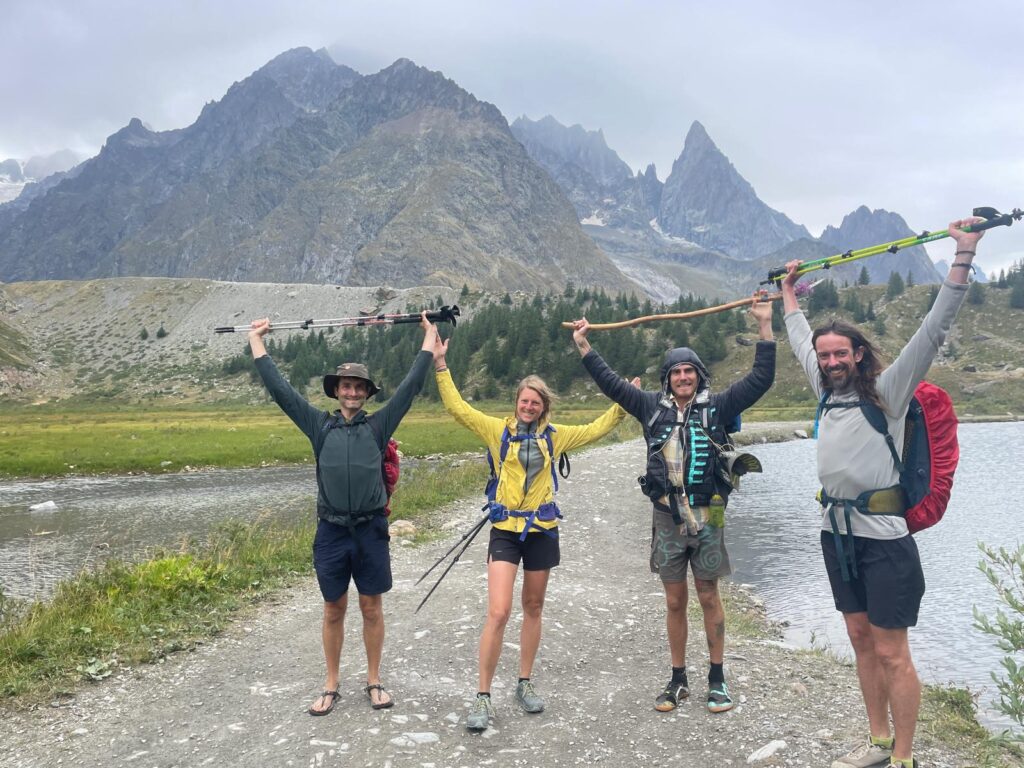
Please note: this video is currently in French, but you can activate YouTube’s auto-generated subtitles in English while we work on providing a dedicated English version. https://youtu.be/Q90Pu4swQgA?si=V6ZcVKglG0jSpHOy “If I have seen further, it is by standing on the shoulders of giants.” Isaac Newton “The only healing that matters, the true one, is the choice of love.” Florian Gomet In this article, I share my experiments and conclusions after 10 years of intensive practice of hygieneism. This has allowed me to form an idea of the benefits one can derive from this approach and also its limits. But before diving into the heart of the matter, it is important to define what I mean by hygieneism. What is hygieneism? It is a natural approach to health whose principle is to live and heal in accordance with the laws of nature. To optimize our health and well-being, hygieneism considers that the right way of living must align with our primate physiology. Those who practice or recommend behaviors that mimic the life we would have if we were released into nature, as in the past, claim to be hygieneists. Etymologically, the term “Hygieneism” derives from Greek mythology, Hygie or Hygée (in ancient Greek Ὑγιεία /Hugieía or Ὑγεία/Hugeía, “health”), daughter of Asclepius, the god of medicine, and Epione, is the goddess of health, cleanliness, and hygiene. She represents preserved health and also symbolizes preventive medicine. Personally, I define hygieneism as follows:“The art and manner of recreating in our modern life, naturally or artificially, the living conditions that prevailed at the dawn of humanity and for which we are made.” To learn more about the meaning I give to hygieneism, read this article on the definition of hygieneism. The hygieneist model Reality, in its most subtle forms, cannot be described by words or concepts, which is why it is important to be aware of the starting assumptions that underlie the paradigms or models we use. In mathematics, for example, we know that there are different types of geometry, depending on whether we adopt Euclid’s axioms or not. It is important to know the axioms (or starting assumptions) of the theoretical model we use; otherwise, it will be difficult to understand its limits, risking slipping into a dogmatic approach. From reading various treatises on hygieneism and the current forms this school of thought takes, the following axioms emerge: 1) The natural state for any organism is optimal health. 2) Toxemia is the origin of diseases. 3) The body has the ability to self-heal. 4) Functional diseases are healing crises that help the body restore health. Note 1: The toxins that cause diseases are of two types: endogenous (produced in excess by the body in cases of repeated stress or “negative” emotions) and exogenous (resulting from non-physiological food and pollution). Note 2: Functional diseases manifest as diarrhea, fevers, vomiting, bleeding, etc. These natural and beneficial manifestations indicate that the organism is expelling toxins. watch the movie (in french) The Grail of hygieneism: optimal health In people’s minds, being healthy simply means not having a degenerative, chronic, or genetic disease. But it is so much more than that! True health, which we call Optimal Health to avoid semantic confusion, is a stable theoretical state (independent of age) in which an individual experiences no deficiencies in physical, mental, emotional, and energetic aspects. It is a natural state of well-being and great energy where one allows their nature to express itself without being in duality; it is feeling alive and at peace, having faith in the life that expresses itself in us and beyond. It is health in its natural state as wild animals experience it when they are not confronted with civilization. The diseases that the body manifests when it contains excess toxins are there to restore balance and bring us closer to this theoretical state of Optimal Health. To learn more about this notion of optimal health, read this article on optimal health. In summary According to the hygieneist theoretical model I have defined, if we bring vitality to the organism (to strengthen the nervous system and the immune system), detoxify the emunctories (organs responsible for filtering and eliminating toxins) and the humors (the fluids in which our cells bathe) through hygieneist practices, naturopathic detox techniques, and a physiological diet, then optimal health will manifest naturally and progressively through necessary healing crises to expel excess toxins. My experience with hygieneism From 2008 to 2014, before my dietary transition Diet: Over these 6 years, I gradually moved towards a diet that is exclusively organic, local, and homemade. I produce half of my food (vegetable garden, orchard, and chicken coop) and prepare all my meals. As a “good student,” I do not consume alcohol (nor any drugs), sodas, cold cuts, chocolate, or industrial food. Lifestyle: Intensive triathlon practice, living in the countryside, no stress. Physical health status: I wear glasses (myopia and astigmatism), I suffer from allergies to cat hair and pollen (getting stronger each year), I have increasingly severe and tiring colds (even in summer), skin problems (acne, cysts, and excessive sweating), and I suffer from sciatica that is also getting more intense each year. Psychological health status: I suffer from an unidentified latent depressive state with a tendency towards outbursts of anger. I am very introverted and shy by nature, living closed off. Any form of spirituality is denied; only what is visible or measurable exists for me (a very Cartesian and materialistic approach). From 2014 to 2018, beginning of dietary transition Following a spontaneous fast (imposed by my body) that changed the course of my life, I modified my beliefs about food (paradigm shift). To learn more, read this article explaining why I changed my diet and took off my shoes. Diet: Plant-based and raw (to learn more: read this article on the origin of living nutrion) about 80% with the desire to eat only living food but unable to put it into practice. Obsessive and recurring cravings for industrial food that
How to choose wild plants?
One of the most frequent questions I get after the screening of the film The Footprint is: “When you didn’t have enough to eat, why didn’t you gather wild plants to feed yourself?” I take the time to develop an answer in this article because I believe that often, behind this seemingly innocuous question, lies the belief that we could rely on them to survive… Is that realistic or not? What parts of plants can we consume? From spring to the end of summer, all parts of wild plants are potentially nutritious: roots, leaves, flowers, and seeds. But it is especially in spring, when the roots and leaves are tender and green, that we can fully benefit from their nutritional value. Seeds are the most caloric, and it might be tempting to consume them in large quantities in survival conditions. This is probably a bad idea because seeds, although very rich in nutrients, contain phytates and lectins (among others) whose role is to trap certain minerals (like iron, magnesium, calcium, zinc, etc.) to have them in reserve for the next germination. These molecules, called anti-nutrients, if consumed in large quantities, can disrupt digestion (even causing vomiting or discomfort) by preventing the proper functioning of digestive enzymes and the absorption of nutrients by the intestinal membranes. Almost everyone knows the sad end of Christopher McCandless, the hero of the film “Into The Wild.” What is less known is that the end of the film, when we are led to believe that Christopher dies after mistakenly eating a toxic plant, is not true to reality. This corresponds to a Hollywood ending and a misleading shortcut compared to the end of his life as reported by his biographer Jon Krakauer in his book “Into the Wild”. According to the author, Christopher was in an advanced state of malnutrition when he consumed a large quantity of seeds that were classified as edible. It was the large amount of anti-nutrients ingested in a malnourished body that caused his demise. A healthy and properly nourished body could have neutralized these substances without risk; Christopher, however, probably no longer had the necessary mineral resources and died of indigestion. By comparison, the alkaloids in a large cup of coffee could have caused his death in the same way. But that might not have been a bankable ending for the film industry, unlike the one chosen, which reinforces our primal fears of nature. We could therefore consider that anti-nutrients are substances that are also produced by plants to protect themselves from predators. Moreover, we do not have a digestive system adapted to massive consumption of seeds like granivores such as squirrels and certain birds. However, knowing that germination destroys most of these anti-nutrients, seeds can nourish us without drawbacks after germination. In summary, tubers and seeds are the most caloric and nutritious parts of plants, but they are also the least accessible in space and time. Leaves, although less caloric, are much more accessible while being rich in proteins, minerals, vitamins, enzymes, chlorophyll, and antioxidants. To what extent can we feed ourselves with wild plants? The leaves of wild plants contain between 15 (lamb’s lettuce) and 50 (nettle) Kcal per 100g. A human with low daily physical activity expends about 2000 Kcal per day. If they only eat wild plants, they will need to consume at least 4 kilos of plants (eating the most caloric ones) per day. In the context of The Print, with perhaps 3500 Kcal expended per day, that raises the ration to 7 kilos of plants per day… A mass that should probably be increased in summer when plants become more fibrous and their nutritional value decreases. Furthermore, we must not lose sight of the fact that almost all edible wild plants are medicinal plants (they are called simples) with strong detoxifying power. So I can hardly imagine the purge that consuming several kilos of dandelions would cause in my body, for example… Moreover, I don’t think my body would allow me to consume such a quantity of wild plants because every living plant food we consume produces a sensory stop when we exceed the amounts that the body can assimilate beneficially. I even think that if I forced myself to consume large quantities of dandelion (or any other edible wild plant), it would eventually make me vomit or cause diarrhea. Not to mention the intense digestive work that this would require. The qualities of wild plant leaves: They contain many active substances that heal and detoxify (expectorant, diuretic, digestive, laxative, anxiolytic, stimulating, antipyretic, anti-inflammatory, etc.). They are very rich in proteins, minerals, vitamins, enzymes, chlorophyll, and antioxidants that far exceed (up to 10 times more) all commercially available fruits and vegetables. (Example: I no longer want to consume 3 tablespoons of spirulina per day if I drink the equivalent of a large bowl of wild plants processed in a juicer.) They are free and abundant. While the leaves are nourishing (in micronutrients) and provide healthy fibers for the intestinal microbiota (a healthy microbiota is necessary for good digestion and nutrient absorption), they provide very few carbohydrates compared to sweet fruits or fats compared to oilseeds. We are not like herbivores that have the ability to break down plant cellulose directly into sugars, nor can we consume large quantities of plants to extract sufficient fats. In a survival context where there are no sweet or fatty fruits, it would be possible to consume, in addition to the leaves, sprouted wild seeds (when in season and taking the time to collect them…) and tubers (edible only in spring, otherwise they are too tough, and taking the time to dig them up). It is in this survival context that cooking plants presents its unique advantage, making plant fibers more tender for chewing and increasing the caloric value of leaves and tubers (because soluble fibers under the effect of heat transform into sugar). Cooking thus allows for the consumption of more plants and extracting more energy from
What is the ideal % of Living Nutrition for everyone?
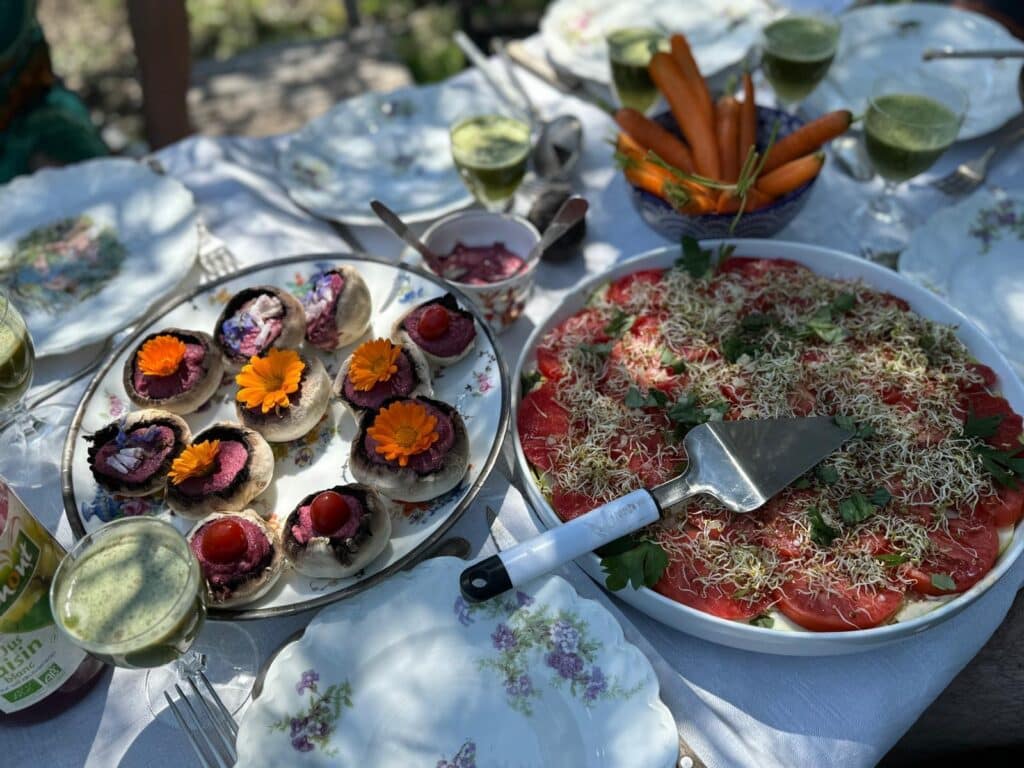
“The majority of people do not seek the truth. They primarily want their beliefs to be validated as the truth.” Osho Between raw foodism, fruitarianism, the paleolithic diet, macrobiotics, micronutrition, Living Nutrition, etc., not to mention their variations depending on who is talking, it can be quite confusing, especially if one believes that nutrition will be the solution to all our ills as it is sometimes presented… or sold! Yet, after reading about fifty books on the subject, experimenting with Living Nutrition for 10 years, and accompanying several hundred clients (cf hygienist support), I feel I have uncovered some unprecedented keys to understanding that I want to share! For there exists an original approach that neither condemns nor endorses any of its various dietary currents while providing a guiding thread to transition from one to another over time and according to needs. But before presenting to you, in the last paragraph, what I call “THE good nutrition,” I propose to share the logical journey that led me there and gives it credibility. In search of Living Nutrition, 1st attempt Twenty years ago, when I was 20, I became passionate about endurance sports (cycling, running, and swimming) and modified my diet to limit injuries and improve my performance. Thus, I gradually adopted an organic, local, homemade diet without sodas, cold cuts, chocolate, or industrial food. Then, a few years later, to gain autonomy and improve the quality of my food, I started raising my own poultry (chickens, ducks, turkeys, rabbits) and cultivating a vegetable garden and an orchard. This allowed me to produce half of the food I needed for my consumption. At that time, I ate everything (except industrial food) and was even followed by a dietitian to prepare for my expeditions. I lived in the countryside, stress-free, my diet was healthy, and my lifestyle ideal, at least according to the criteria of Femme Actuelle and the WHO. To learn more, I detail this initial transition in this article on local and organic. Despite my commendable efforts, my health deteriorated, and year after year, my myopia, allergies to cat hair and pollen, skin problems, and sciatica worsened inexorably. Yet, I did not see how to take better care of myself since I was already following all the official recommendations! Why did I set the goal of eating 100% plant-based and living? At the time, I had a vegetarian friend, and I remember finding the idea absurd. As I reached the limits of the “organic, local & homemade with love” model, life disrupted my habits through the experience of a spontaneous fast (an experience described in this article on the reason for my dietary change) which led me, step by step, to read the bestseller “What if we stopped eating from time to time…” by Bernard Clavière, where I learned with astonishment that there are people in the world (Gandhi was one of them, cf his autobiography) who live very well by exclusively consuming plant-based and living food. My intuition, which has saved my life more than once even when what it whispers to me is not always acceptable to the mind (cf this video on the role of intuition — please note: this video is currently in French, but you can activate YouTube’s auto-generated subtitles in English while we work on providing a dedicated English version), urged me to wholeheartedly adopt Living Nutrition and to establish it at the center of my life. It was then that, within a few years, unexpectedly, I shed almost all of my health problems that had been escalating until then. Why do I no longer consume animal products at all? Initially, my dietary changes were not motivated by the animal cause but by the search for optimal nutrition for human beings. If animal proteins were good for health, I might be the first to eat them. If I have not touched them at all for 10 years, it is primarily because I scrupulously follow my intuition, which clearly and distinctly tells me: “Animals, now, we leave them in peace!” As I needed to intellectually understand the message of my intuition regarding animal proteins, I extensively researched the subject. Today, I am led to believe that the less we consume, the better it is, for the many reasons I enumerate below: From reading Bernard Clavière’s book, I became aware that there are human beings who live in good health without consuming any animal protein. The genetic difference between two human beings being at most 0.6%, this is a strong argument for asserting that the consumption of animal proteins is not a need but simply survival food when fruits, vegetables, and nuts are lacking. For if it were truly a need, no vegan person could live in good health. The superiority of animal proteins over plant proteins has no scientific basis (cf this report on the protein myth and the work of Dr. Morse in his book “The Miracle of Detoxification”). Moreover, every protein must be broken down into amino acids before being assimilated by the body and recomposed into protein. Furthermore, the foods richest in protein are plants (cf the report on the protein myth). The body is capable of producing its own vitamin B12 provided that its intestinal microbiota is healthy and well-maintained (cf this article on B12). From a biochemical perspective, there is no scientific evidence of any nutrient that is essential to humans and that can only be found in animal products. However, some studies are deliberately biased to influence public opinion. In truth, our actual needs for amino acids, vitamins, minerals, fats, etc., are not well defined; they are only, at best, estimates based on samples of people who eat everything, when they are not simply unfounded claims (as with the supposed superiority of animal proteins). Moreover, these official estimates do not take into account all the capabilities of the intestinal microbiota (when it is healthy) nor the transmutations of elements. To learn more about this, read this article on
Why do I not eat only organic, local, and seasonal?
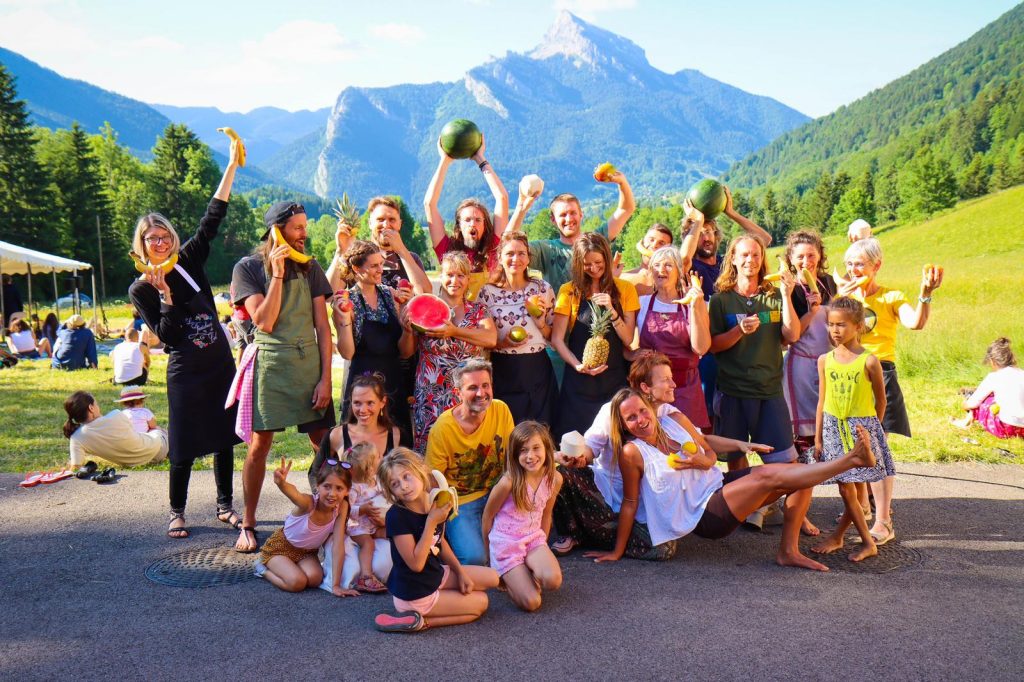
“As problematic as the synthetic chemical substances present in your environment and food may be, they are not the main cause of cancer.” T. Colin Campbell “The Campbell Report” I started my dietary transition about fifteen years ago to move towards an exclusively local and organic diet. A few years later, I embarked on the adventure of food autonomy by producing almost half of my food through a vegetable garden, an orchard, and poultry. And by cooking everything at home. At the same time, my lifestyle was impeccable (according to commonly accepted criteria) with a physical outdoor job, sports, country living, and no stress. I ate nothing industrial, no soda, no alcohol, no cold cuts, but plenty of fruits, vegetables, and only homemade dishes with organic products. Yet, it was during this time that my health deteriorated. I had allergies to cat hair, pollen, sciatica, skin problems, and sweating issues. This showed me that organic, local, and homemade does not prevent illness. I experimented with this dietary mode for years, which I considered top-notch until an experience changed my life (see article “Why I Changed My Diet?”) and I discovered the principles of Living Nutrition. Since I have been eating exclusively living foods (see article “The Origins of Living Nutrition”) my aforementioned health problems have almost all disappeared, and my relationship with food has evolved. I no longer see it merely as a means to fuel my body but also as a way to detoxify and regenerate it. Gradually, I observed that Living Nutrition transformed me on all levels: physical, mental, emotional, and spiritual. Thanks to it, I feel more aware and connected to my intuition than ever, which has greatly contributed to improving my quality of life and bringing me closer to the state of Optimal Health (see article “Hygienism: Optimal Health”). My relationship with taste pleasure has also transformed with Living Nutrition. The food addiction caused by refined sugars, fats & salts, and Maillard molecules has been replaced by the indescribable joy of listening to my body and giving it what it truly needs. This is a unique experience that can only be understood by living it and transcends the pleasures of traditional cooking. Feeding exclusively on living foods is such an incomparable experience of regeneration and reconnection to nature and the Self that any backward step is unthinkable. This revolutionary experience led me to consume only organic and local products. Reasons why I no longer consume exclusively organic: When transitioning to Living Nutrition, one buys much more fruits and vegetables than before, which significantly impacts the budget if the fruits and vegetables are organic. One can end up with a very high food budget (200 euros per person per week, or more). The conclusion is clear: either we also buy foods from conventional agriculture, or we start eating inexpensive cooked foods like cereals and legumes again. Most exotic fruits like avocados, mangoes, pineapples, etc., are generally not treated, except sometimes for preservation, which is why putting an organic label on these foods often makes no sense. Indeed, exotic fruit trees are naturally robust, so they require little or no treatment, unlike those from our temperate regions, which are remnants of the last glaciation and must be grafted to produce sweet fruits. Some fruits from conventional agriculture are sometimes of equivalent quality to organic. Simply because some producers practice organic farming without having the label to avoid administrative constraints. Moreover, the value of the organic label should be relativized due to all the harmful treatments allowed and all the exemptions granted for the use of phytosanitary products. Not to mention organic products coming from outside the European Union, for which there is no control. According to studies conducted by American doctor Norman Walker, who wrote “Fresh Fruit and Vegetable Juices”, pesticides that are hydrophobic mostly cling to insoluble fibers (made of cellulose that we do not digest) and are therefore not absorbed by the body, provided that these plants are consumed raw. I believe that the main poisons impacting health are the acids and glues generated by cooked or animal-derived foods (see article “Cleansing, the keystone of hygiene!”) and not pesticides. In light of the previous considerations, cooked or animal-derived foods sold as organic are, in my view, more harmful to health than fruits and vegetables from conventional agriculture. In conclusion Experience shows that with Living Nutrition, even if the fruits and vegetables are not organic, the body regenerates. This is not the case with only organic but a large share of cooked foods. Furthermore, the organic market has become a lucrative business (especially for large retailers who make larger margins than with conventionally produced foods) that drives up prices without necessarily ensuring consumers have quality products. Even if organic is almost always better (at all levels) than conventional, I do not think it is the future. The ideal is to eliminate intermediaries and go directly to the producer, or to use ethical intermediaries. This is the best way to benefit from a reasonable price and to be informed about the agricultural methods used. I am convinced that these methods will evolve willingly or by force towards “organic” practices, whether a label is present or not for verification. Reasons why I no longer exclusively prioritize local: When one understands and feels how much we are made to primarily eat fruits, every meal becomes a great celebration where pleasure and health finally align. After years of deprivation of living foods, our body then demands the best fruits. And it is often the exotic fruits that we appreciate the most since we are made to live in the tropics. There is then a dilemma between listening to the needs of my body (which has been quite mistreated until now) and limiting the transport of goods. If one confines oneself (when living in a temperate environment) to eating only local fruits (like apples, pears, and oranges), one will quickly feel frustrated. Already, the dietary transition to plant-based and living is
The impact of living food on the environment
https://youtu.be/UsigH2Skfdg?si=qGcvSR7l_yAO15cr During conversations with the public during workshops or with people who contact me via the Internet, I noticed that many people believe that an omnivorous but local diet is more environmentally friendly than a living food diet (raw plant-based) which often favors imported fruits and vegetables from outside our regions. This is the purpose of this article: to determine, with reliable sources, the ecological footprint of these two types of diets, local omnivore vs. raw vegan, and to determine if they are compatible with a “sustainable” future for our species. One of the principles of a living food diet is to listen to your cravings as long as they guide you towards raw plants. Because the human body can identify (in the case of raw plants only) the nutrient content of what it is given, it can then guide us towards the fruits and vegetables that will heal us, fill our deficiencies, or simply nourish us best. By listening to one’s instinct, it is complicated (for now, as you will see at the end of this article) for a raw vegan to also be local under our latitudes (I am speaking for central France and those further north). This is why a raw vegan may consume bananas, dates, mangoes, avocados, pineapples, ginger, turmeric, cashews, Brazil nuts, etc., for a significant part of their meals. Especially at the beginning when they have deficiencies to fill, then this consumption of exotic fruits decreases. As I have already explained in the articles “Why did I change my diet?”, “Eating Living?” and “Cleanses, the Keystone”, my opinion, supported by experience, is that the diet best suited to humans is a predominantly plant-based and living diet (i.e., raw plant-based). If this viewpoint seems contradictory to you given that many centenarians have eaten “everything” during their lives, then I suggest you read this other article: “What is hygienism?”, and you will then see that the parameter “diet”, even if it is important, is not the only one. Indeed, a life in pure fresh air, without stress, with periods of fasting or restrictions (war or poor harvest) and with physical activity spares many diseases. The lives of all these centenarians are therefore not at all in contradiction with the principles of living food. And then, who tells you that under optimal conditions on all levels we wouldn’t live to 140 years? Diet and Carbon Dioxide But let’s get back to our topic and, despite these considerations, let us first calculate the GHG (Greenhouse Gas, sometimes noted CO2e for “carbon dioxide and equivalents”) balance of a local omnivore vs. a raw vegan. According to the ADEME (Agency for the Environment and Energy Management), the fact that it is under the supervision of a ministry guarantees that there is no bias towards vegans!), an omnivore consuming only natural products within a 200 km radius emits for: a meal with beef: 6290 g of CO2e (see appendix 1) a meal with poultry: 1350 g of CO2e (see appendix 2) a vegetarian meal: 510 g of CO2e (see appendix 3) According to this agency, the average GHG balance of the diet is currently 4.5 kg of CO2e per day per person. Official recommendations advocate for a more moderate, reasonable, and local diet (less than 200 km) called “flexitarian” (-31% meat, -40% wild fish, -69% processed industrial products, -46% refined flours, +95% vegetables, grains, and legumes) which would yield a balance of 2.8 kg of CO2e per day per person. This is therefore what can be achieved better from an omnivorous diet in terms of GHG balance. As for the “degrowth” advocates who would argue that one can live the old-fashioned way: feeding on grains, legumes (in this regard, read the article addressing the issue of starches) and poultry, know that according to the documentary film Cowspiracy and several independent studies conducted by specialists in agroecology and permaculture, they arrive at more or less the same conclusion (which all those who have tried to live in autarky will agree with): It takes an average of 700m2 to feed a vegan compared to 3500m2 for an omnivore who would consume very few animal products, which is 5 times more space. It should also not be forgotten that these additional spaces required for the omnivore are deforested to allow for grazing or to sow grains on soils depleted by plowing, monoculture, fertilizers, and pesticides. A source of pollution that adds to that of GHGs. A first conclusion must be drawn regarding the GHG balance (per day and per person) related to diet alone: Currently, an average French person emits 4.5 kg of CO2e. A flexitarian local French person (concerned about their health, the planet but omnivorous) consuming only foods produced within a 200 km radius emits 2.8 kg of CO2e (see appendix 4). An individual (if they exist) who is omnivorous and lives in autarky with organic production and consumes very few animal products would be responsible for a negligible share of GHG emissions but would need at least 3500 m2 of land. Now let’s assess the balance for a raw vegan: According to the software developed by eco2 initiative (This link leads to a website in French. To read it in English or another language, simply copy the URL and paste it into Google Translate https://translate.google.com/?sl=fr&tl=it&op=translate) in collaboration with ADEME, a raw vegan who would consume the following typical menu (2050 Kcal) in their day: 200g of avocado outside Europe 200g of local carrots (less than 200 km) 40g of cashews outside Europe 50g of olives from Europe and the Mediterranean 50g of vegetables outside Europe 60g of almonds Europe and Mediterranean 250g of bananas outside Europe 500g of local apples 300g of fruits outside Europe 25g of olive oil from France would be responsible for an emission of 1.9 kg of CO2e per day, which is 1.1 kg less than a flexitarian French person (over a year, the difference is equivalent to a flight from Paris to New York) and 2.6 kg
Vitamin B12 and Living Nutrition
“The only thing we have to fear is fear itself.” Franklin Roosevelt Here is the result of reflections on vitamin B12 deficiencies, summarized in 7 steps: Step 1: Let’s go back to basics with some reminders that are never superfluous about our origins Humans are primates belonging to the great ape family. This family also includes the bonobo, orangutan, chimpanzee, and gorilla. These species are frugivorous (between 95 and 99%) and occasionally eat small animals and insects. Except for bonobos and the gorilla, the largest of the primates, which is (almost) exclusively vegan (with a few insects). Considering the phylogenetic tree from which humans originated, it makes sense to consider that humans are also, at their core, frugivorous. The question is whether the small amount of animal protein consumed by bonobos, chimpanzees, and orangutans is a biological necessity for them or if it is merely an adaptive capacity left to these species to adapt in case of food shortages, for example due to climate change, thus increasing their chances of survival. From my point of view, all great apes can thrive on an exclusively vegan diet, and if they eat something else, it is simply out of opportunism. Two reasons suggest that this small amount of animal protein in great apes is not a necessity. On one hand, the example of the gorilla clearly shows that it is possible to live being (almost) exclusively vegan, moreover without being rachitic. On the other hand, there is nothing essential found in animal products that we cannot find in the plant kingdom or that is not produced by our microbiota. This raises the famous question of B12…. In the meantime, to summarize, if you are afraid of lacking protein and B12, seriously ask yourself where gorillas find theirs… You might object that humans are not like other animals and that they became hunter-gatherers about 2 million years ago. That is true, but their digestive system inherited from 65 million years ago (the appearance of primates) has retained all the characteristics of a frugivore. If we have been able to significantly modify our diet, it is solely through our technological inventions, the first being throwing weapons and stone tools. We can be proud of our ingenuity and great adaptability, but the dietary changes induced remain unnatural. The technology that alters our diet is therefore not a recent phenomenon; it dates back to the appearance of homo sapiens sapiens and not to the last industrial revolution. To learn more about this subject, read: “The Origins of Living Nutrition” Step 2: What is vitamin B12 and where is it found? B12 is a vitamin that contributes to the proper functioning of the nervous system and the production of red blood cells. It is therefore important but not more so than other vitamins. If it is so famous, it is because it is not found in significant quantities in plants and fruits, which leads to the belief that one will be deficient in B12 if one is vegan or even vegetarian. Small parentheses: Being vegan does not inform us about the quality of our diet and is not at all a guarantee of good health. Indeed, one can very well be vegan and survive on coffee, cigarettes, and starches (for example). That is why we talk here about plant-based and living nutrition. A vegetarian who still consumes dairy products and/or eggs will obtain their B12 exogenously through these foods that contain it. The only organisms capable of producing B12 are microorganisms. No known animal or plant has the enzymatic tools to produce it. It is only by ingesting bacteria, microscopic algae, and yeasts or by associating with them that animals and plants enrich themselves with B12. That is why we will mainly find B12 in animal products but also in algae. If the main source of this vitamin is found in animal proteins, it is simply because the animals themselves are supplemented with vitamin B12 through their diet and… their microbiota! And for good reason (let’s remember): the only living organisms capable of synthesizing B12 are microorganisms. There are 3 main natural forms of vitamin B12: methylcobalamin, adenosylcobalamin, and hydroxocobalamin. This detail is important because some supplements are not produced from the natural forms of B12 but with a synthetic form: cyanocobalamin. Step 3: The role of our microbiota It is estimated that our digestive system houses about 100 trillion bacteria, which is what we call the intestinal microbiota or gut flora. These bacteria that colonize us live in symbiosis with their host, that is to say, us. A symbiosis is a lasting biological association that is mutually beneficial between two living organisms. The deal established with them is that we provide them with a habitat to live in with food (the soluble and insoluble fibers from plants) and, in return, they contribute to the survival of their host by supporting our immune system and providing us with what we do not find in our preferred foods, namely, fruits. If we synthesize what has been written previously, we have a frugivore digestive system housing about 100 trillion bacteria, of which we know they are the only ones capable of producing something vital for us: B12. Do you think they have forgotten what their host needs to survive? Unlikely! Moreover, it has been proven that the microbiota produces B12, but some “specialists” believe it is not absorbable because it is produced too far down the digestive system. How can one think for a second that a vital vitamin in the body could be produced and not absorbed? The body is not the type to do things for nothing… In summary, it is reasonable to think that a vegan obtains their vitamin B12 from the bacteria living in symbiosis in the digestive system. Step 4: B12 deficiencies Currently, B12 deficiencies mainly concern farm animals (fed grains and flours) and humans who eat “everything.” This deficiency is absolutely not the exclusive domain of vegans! In both humans and animals,
The Law of Hormesis
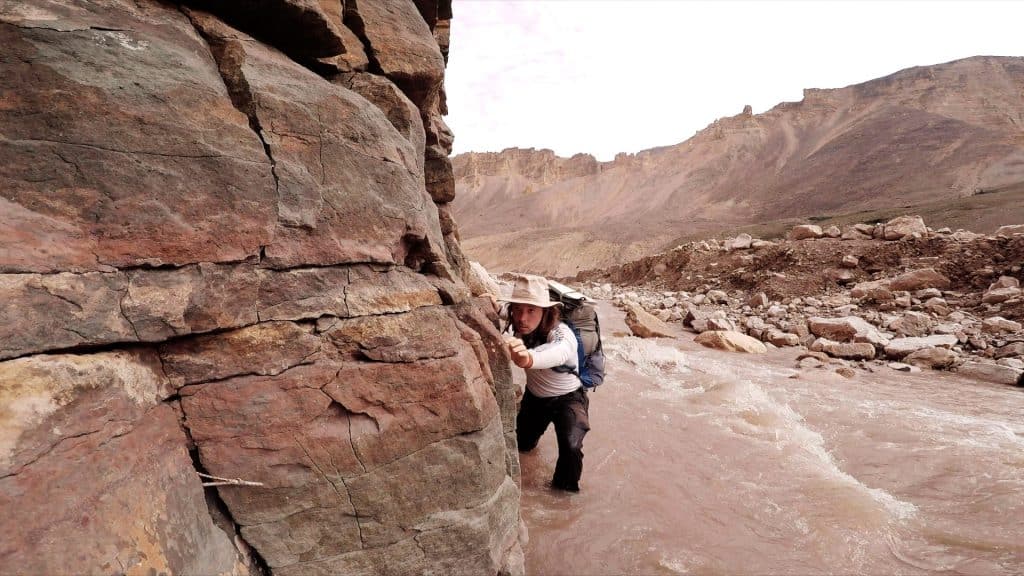
Please note: this video is currently in French, but you can activate YouTube’s auto-generated subtitles in English while we work on providing a dedicated English version. https://youtu.be/hawhYaouZyk At first glance, it may seem absurd, stupid, or even masochistic to voluntarily expose oneself to the 3 F (Cold, Hunger, Fatigue) when humanity has spent most of its time protecting itself from them. In any case, it is clear that while technology allows us today to live without ‘facing’ the 3 F, this is not a guarantee of health. Rather, it would be the opposite, as explained by Daniel Lieberman, professor of evolutionary human biology at Harvard, in his bestseller: The Story of the Human Body. The growing mismatch between our genetics and our lifestyle With the acceleration of innovation, especially since the advent of agriculture, we have developed or adopted an ever-growing list of new cultural practices that have had contradictory effects on our bodies. On one hand, many relatively recent developments have been beneficial: agriculture has increased food resources; sanitation, modern health systems, and scientific medicine have reduced infant mortality and increased longevity. On the other hand, many cultural changes have altered the interactions between our genes and our environment, to the extent that they have contributed to a wide range of health problems. These pathologies are mismatch diseases, defined as diseases resulting from the fact that our Paleolithic body is poorly or insufficiently adapted to certain modern behaviors and conditions. Whether it is sedentariness, the comfort of our homes, lack of physical activity, or our denatured diet, humanity is experiencing an unprecedented gap between its biological nature inherited from evolution and its artificial daily life that leads to both physical and psychological dysfunctions. The presumed mismatch diseases include: Alzheimer’s disease, cancers, dental caries, depression, diabetes, fibromyalgia, hypertension, Crohn’s disease, insomnia, low back pain, myopia, osteoporosis, flat feet, psychoneurosis, multiple sclerosis, carpal tunnel syndrome, and many others. A good stress is necessary To build and maintain good health, the human body needs to interact with its environment or risk deteriorating. For there is a universal principle of energy economy: anything that is not used degrades or disappears. Hence the interest in submitting to stimuli that strengthen our innate adaptive capacities, this is the principle of hormesis. “The ability of bodies to adjust their observable characteristics (their phenotype) in response to environmental constraints is called phenotypic plasticity. All organisms need phenotypic plasticity to function, and the more biologists expand their research, the more new examples they discover. […] Relying on these interactions with the environment, however, has drawbacks that can potentially lead to mismatches when critical environmental signals are absent, attenuated, or aberrant.” Daniel Lieberman in “The Story of the Human Body” The adaptation phenomena to Fatigue, Hunger, and Cold have shaped our biology over millions of years, to the extent that they have become the guarantors of our good physical and mental health. This is why, it is important to artificially recreate these stresses in our daily lives in order to align with our biological needs that are no longer naturally met in our modern environment. “In summary, we have truly evolved to use certain traits, or risk losing them. As the human body is not a product of engineering but grows and evolves, your body anticipates and even requires certain constraints during your growth in order to develop properly.” […] Equally important interactions characterize other systems that actively interact with the outside world, such as your immune system and the organs that help you, for example, digest food or maintain a stable body temperature.” Daniel Lieberman in “The Story of the Human Body” Towards a change in customs Thanks, in particular, to Pierre de Coubertin, sports activity has entered the school system and more generally into customs. No one now questions the benefits, or even the pleasure that can be derived from it. However, there is nothing natural, for example, about going for a run. What is natural is to rest as much as possible when one has the opportunity. But our society now recognizes the necessity of voluntarily fatiguing oneself in an environment where opportunities for physical exertion are rare. This awareness will also come with Hunger and Cold; it is only a matter of time… Beyond these down-to-earth considerations, what I find beautiful about the 3 F is that seemingly hostile elements like cold, hunger, or fatigue can have so many positive effects on our health and well-being. This paradigm shift occurs when one takes the time to listen to their body and feel. There is, I believe, a spiritual message here: Life is so well made that even cold, hunger, and fatigue want good for us…Do not forget that the only thing we can lose is our illusions. It is these that make us suffer, not the vicissitudes… 5 types of hormetic exposures Hormesis through physical activity Hormesis through physical activity consists of exposing the body to different forms of stress by practicing resistance exercises, brief but intense exercises, or intermittent efforts. They cause: thermal stress, metabolic stress, hypoxic stress, mechanical stress, and oxidative stress. The goal here is to challenge the body in order to increase the level of oxidative stress in the muscle. A stress against which we generally fight to delay aging, but which is vital for muscular adaptation during exercise. To learn more: Read this article on the benefits of hormesis through physical activity. Hormesis through cold Its purpose is to enhance the body’s resistance to stress caused by cold. This is to no longer suffer this element as an enemy, both physically and mentally, but to perceive and use it as a true ally of health. The stimulus consists of exposing one’s body to a cold environment (generally water or air), even icy, in order to provoke a marked decrease (but within physiological possibilities and outside of severe hypothermia) in body temperature. In response, the organism in a stress situation will develop a set of physiological adaptation reactions to maintain
Hygienism: The Benefits of Barefoot Running
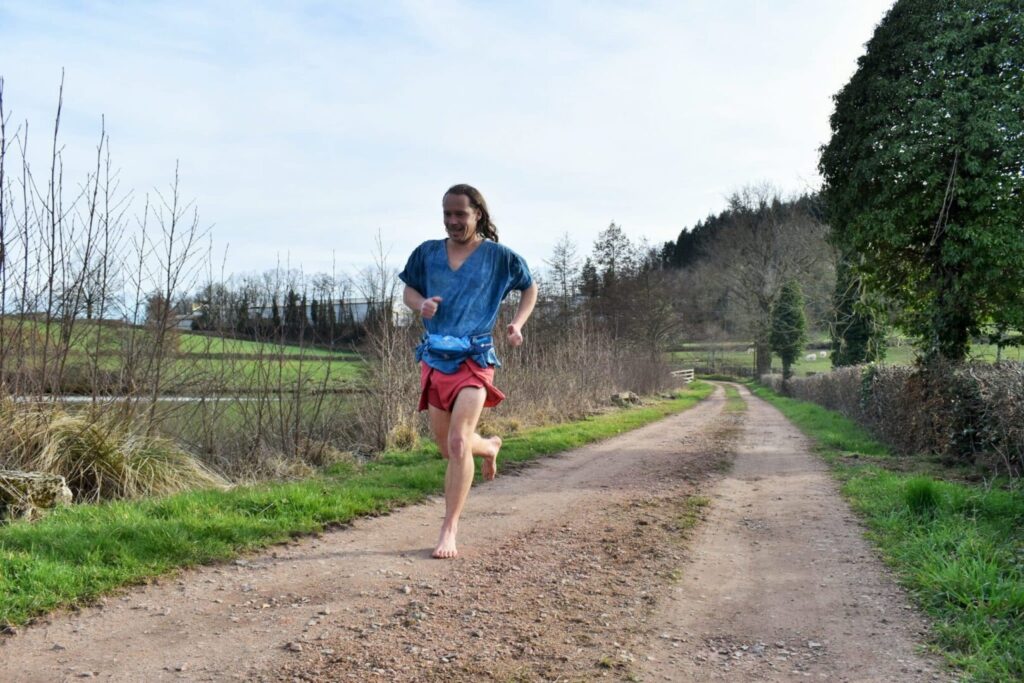
https://www.youtube.com/watch?v=TTrpuDquawY&t=3008shttps://www.youtube.com/watch?v=NRkXWAm7_PA&t=3189s Please note: these videos are currently in French, but you can activate YouTube’s auto-generated subtitles in English while we work on providing a dedicated English version. “The human foot is a masterpiece of engineering and a work of art.” Leonardo da Vinci Running Injuries In June 2013, while participating in the ascent of Poupet, a 17.7 km race with a positive elevation gain of 666 meters in the Jura, I was at the peak of my form and finished 21st out of 916. But for a year, sciatica had forced me into daily stretching and enforced rest for several weeks, punctuated by visits to the osteopath. In this unfavorable context, I could barely maintain my level and kept getting injured, always in the same spot: sciatica in my left leg. Running injuries take on the appearance of fatality since it is the fate of the majority of runners to be an eternal injured person on probation…. So much so that in the locker rooms of a running club, everyone’s “aches” are a natural and unavoidable topic, much like the weather. Viewed from this angle, it is hard to argue with the funny individuals in white coats who claim, in a tone that brooks no reply, that the human being is not made to run… In any case, I had not come into the world to be reasonable, so instead of allowing for a two-day recovery phase after Poupet, motivated by the good time from the weekend that hinted at imminent progress, I did a heavy track session. A fatal mistake that truly awakened the sciatica, which from then on never left me, whether during training in running, cycling, climbing, and kayaking, in the car to disengage, or, worse, at work in the woods. The stretches I practiced self-taught no longer relieved me, and I did not yet know an effective movement (see the last paragraph) to stretch the piriformis. I was living a real ordeal to the point of deciding to stop running for six months. Instead, I ran to osteopaths, physiotherapists, and healers who only managed to temporarily release the piriformis that was squeezing the sciatic nerve in an involuntary and permanent contraction. Deep down, I did not believe in this masquerade of “medicine men” and their manipulations, which over time represented a financial cost, not to mention that it was absurd that my health depended on all these people who clearly did not hold the cure-all. I had faith in my body and knew it would find the solution one day; I just needed to be patient and listen attentively to it. In April 2014, almost a year after Poupet, a simple jog still caused me pain for several days. Natural and Physiological Running I had probably suffered enough to be ready to receive “Born to Run” by Christopher McDougall, an American bestseller handed to me by a fellow runner from the Roannais athletic club. A magical book with a strong persuasive power that rehabilitated the human body to its rightful place as the most evolved organism on the planet, something no medical manual could do. At the end of this book, read in one go, propelled by the power of the theory presented, I permanently put my shoes away and set off for my first barefoot training, excited at the idea of embarking on a new exciting adventure. And ten days later, I ran the 10 km of Montceau les Mines (71), on a terrain alternating small pebbles and rough asphalt. The “ten” of Montceau was symbolic to me because I had run my first ten there in 2006 (in 46’42’’), so in 2014, I wanted to run my first ten barefoot (in 45’10’’). Certainly, I was far from my best time (34’58”) on this distance, but it was just the beginning… As of today, April 2017, my best barefoot time on a ten-kilometer is 38’23’’. With this ridiculous training of ten days to get my feet used to embracing the ground, I crossed the finish line with several blisters the size of a thumb and full of blood before slowly returning, almost groping, to my car where I could sit down with relief. The pain in my heels was such that I worked a week on tiptoes with a brushcutter in hand on the treacherous slopes of Beaujolais. I do not have a bad memory of it; on the contrary, the fresh exhilaration sparked by the start of a new challenge overshadowed everything else. Pain is just information like a red light on a dashboard; I had a mind of iron but feet of clay… There was a beautiful reward at the end that justified everything: I could once again live without suffering from this stubborn sciatica, suddenly and definitively gone. The message had been received, and this liberation was priceless. Certainly, it was now my feet that hurt, but that pain was temporary and understandable, thus acceptable. All things considered, since suffering is an integral part of this world, I would even say it is one of the main engines of evolution, just like love; we might as well choose it to serve our aspirations and goals, while bringing a touch of madness that adds color to life. Isn’t that wisdom itself? Suffering is like the wind on the ocean; if the rigging is used wisely, it helps to move forward; otherwise, we drift or capsize… Before going further, I will first answer the question posed at the beginning of the chapter. The Logic of Barefoot Running Here is an overview of the theory, fully developed in “The Story of the Human Body” by Daniel E. Lieberman, professor of evolutionary human biology at Harvard, and recounted in “Born to Run” by C. McDougall: Our feet have as many sensory receptors as our hands and as many sweat glands as our armpits. In short, nothing in principle condemns them to be inside a sock lined with a shoe. Then, and this is the essential
Are we guided by life?
« And whatever you do Love is everywhere you look In the slightest corners of space In the slightest dream where you linger Love as if it were raining Naked on the pebbles » Francis Cabrel « One sees clearly only with the heart. What is essential is invisible to the eye. » Antoine de St-Exupéry « God does not play dice. » Albert Einstein I present to you here an essay on my vision of humanity’s place in the Universe, in which I put forward arguments that are my own and are not based on any scientific proof. This essay’s sole pretension is to present you with an appealing way of seeing life that opens the door to spirituality. That said, it is not purely an exercise of the imagination; all the scientific data that follows is verifiable. According to scientists, the characteristics of the universe in which we live depend on about fifteen physical constants. Among them are the mass of the proton, the speed of light, and the gravitational constant. It seems that a variation, even a slight one, in some of these fundamental constants would not have allowed life to emerge in the universe. LIFE IS A PERMANENT MIRACLE For example, life cannot develop if the cosmological constant or dark energy have values that are too high, as they would then prevent the mechanism of gravitational instability and, consequently, the formation of galaxies and stars. And whether it’s the mass of the proton, the density of the universe, or the ratios between the 4 fundamental forces, scientists conclude that minute modifications to their values would prevent the elements essential for life (such as hydrogen, carbon, or heavy elements) from forming. This is what in physics is called the fine-tuning of the universe: if it were not exactly as it is, we would not be here to observe it. This observation gave birth to the anthropic principle, according to which the fundamental parameters on which the Universe depends are set so that it allows for the birth and development of observers within it at a certain stage of its development. To these considerations necessary for the appearance of life in the universe are added the conditions necessary for the appearance of life in a solar system. The size of the star, the size and composition of the planets, their distance from the star, and sufficient distance from a harmful source of gamma rays all come into play. When we try to go into the details (read this article) to better understand the role of each of these parameters, we realize just what a high-precision mechanism it is. For example, the presence of water on Earth (considered indispensable for life) is thought to have been brought by multiple “random” collisions with comets (which contain water) during the formation of the solar system. And the moon, which stabilizes the Earth’s axis of rotation, makes the climate more stable, which favors the emergence of life. Etc, etc. INTELLIGENCE IS EVERYWHERE IN NATURE Let’s zoom in a little more on the life that unfolds on Earth. Recently (from a scientific point of view, at least) we have learned that trees, although devoid of neurons, are nevertheless capable, among other marvels, of communicating, defending themselves from predators, and helping each other. Not to mention that they know exactly where to grow their branches to capture the maximum amount of light. Where does this intelligence come from, do you think? From a simple algorithm selected by nature? Then what about the experiment by Toshiyuki Nakagaki (this link leads to a website in French. To read it in English or another language, simply copy the URL and paste it into Google Translate https://translate.google.com/?sl=fr&tl=it&op=translate) which showed that amoebas (microscopic single-celled creatures consisting essentially of a drop of protoplasm enveloped in a flexible, porous membrane) were capable of finding the shortest path out of a maze? And at an even more ‘simplistic’ stage, we don’t even know how proteins (these basic structures of our DNA) form amid all the possible combinations to obtain the correct structure that allows for proper functioning. To learn more about intelligence in nature, I recommend this wonderful book. In summary, the progress of science does not so much allow us to better understand life as to bow before its complexity, which far surpasses our intellectual faculties. This improbable complexity favoring life amid all these parameters finds an intellectually acceptable explanation only by considering that an intelligence manifests itself through all that lives, whether there is a brain or not. Moreover, at our human level, anyone can observe that the important choices in our lives are in no way the fruit of cerebral agitation, any more than the intuition that guides us in the vital moments of our existence. There is, in passing, a comforting conclusion to be drawn: living one’s life in good harmony does not depend on our intellectual faculties. THE MYSTERY OF ENTROPY Furthermore, it seems (this is at least what we observe on Earth, and I will hypothesize from there) that life manifests itself as soon as the conditions are right. From a primordial soup, molecules form, single-celled beings appear, and, progressively, life organizes itself and moves inexorably towards complexity. It is as if there were an energy that allows matter to structure itself to become alive. In other words, we can consider that an energy endowed with intention accompanies life in all its processes (from the formation of proteins to DNA mutations) to allow it to adapt to living conditions and pursue its designs towards the emergence of an ever-greater consciousness. For matter to structure itself and go against the natural evolution of entropy, it is necessary to bring energy into the system. An energy that would be abundant, everywhere in the universe, and about which we know nothing because it is invisible to our eyes and our instruments. Wouldn’t the ideal candidate be this dark energy that has been the subject of so much ink
The transition to living nutrition
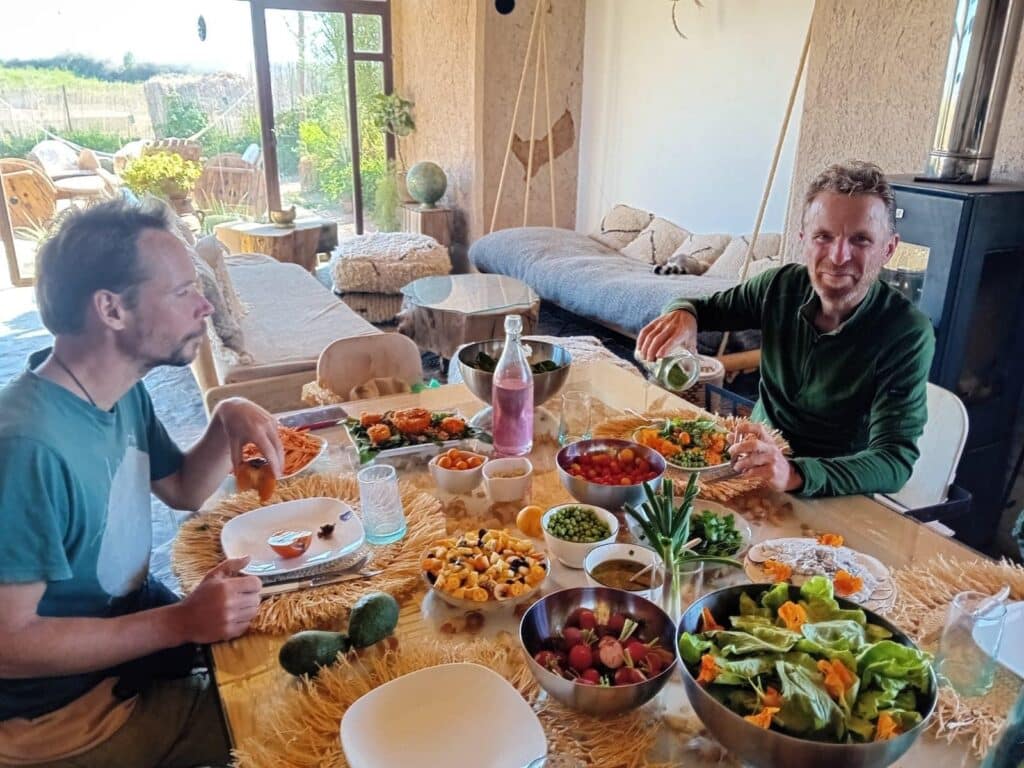
https://www.youtube.com/watch?v=onUFfCeofHw Please note: this video is currently in French, but you can activate YouTube’s auto-generated subtitles in English while we work on providing a dedicated English version. “Moderation? It’s mediocrity, fear, and confusion in disguise. It’s the devil’s reasonable deception. It’s the compromise that satisfies no one. Moderation is for the weak and the fearful, for those who are unable to take a stand. It is for those who are afraid to laugh or cry, for those who are afraid to live or die. Moderation is lukewarm tea, the drink of the devil!” The Peaceful Warrior, Dan Millman To better understand what follows, I suggest you read beforehand: ” Eating Live?” and ” What is Hygienism?“. In our current society, there is no one who eats 100% plant-based and live because we are all led, even if only occasionally and in small quantities, to consume cooked or heated foods at some point or another. This is inevitable because live food is not yet widespread enough for us to nourish ourselves as we wish whenever we are away from home. Even without that, some foods sold as “raw” are not. However, when I am questioned on the subject, I take the shortcut of claiming that I eat exclusively plant-based and live because my exceptions in this matter are rare and in small quantities. That said, it is possible for some people to reach a balance where they do not crave anything other than raw fruits and vegetables. Mental strength does not come into play here; it becomes natural because it corresponds to an optimum of pleasure and well-being. This may seem surprising at first, but the best proof of this assertion is to observe that once the body is accustomed to eating live in large proportions: cooked food, and even more so industrial food, becomes significantly less appealing when it does not provoke disgust. To achieve this result, we have two decisive tools: naturopathic detox techniques and the CRUsine (which is done with a blender, a food processor, and a dehydrator) that allows us to recreate all the flavors and textures of traditional cooking, making any potential frustration forgotten. These two tools can be used for several years before the body settles for raw or minimally mixed foods. The motivations At the starting point, there is dissatisfaction (weight issues, fatigue, decreased sports performance, etc.), an illness, a mystical experience (spontaneous fasting, a vision, a dream, etc.), or an awareness (ethical, ecological, the suffering of a loved one, etc.). It is this need to give meaning, without playing the victim, to the situations we live or go through that leads us to change our beliefs to adopt others that will make us happier, as they are closer to our reality. We then seek information on another way of eating: we surf the internet, read, and discuss the subject with experienced or inexperienced people. And there, we quickly realize that existing diets are varied and often contradictory. To better understand these apparent contradictions between different approaches, it is important to present some notions of physiology : The human body is composed of about 40 liters of lymph (read the definition on Wikipedia) of which 5 liters is called “circulating” lymph because it circulates throughout the body with the role of cleaning it of toxins. Due to decades, for most of us, of traditional eating, the lymphatic fluids in which our cells bathe are saturated with toxins and our immune system, whose role is to clean these fluids and our cells, is overwhelmed. Animal products consumed in excess as well as all cooked foods tend to weaken the immune system and clog the body. When we start eating plant-based and live in large proportions, the immune system is boosted and a major cleaning begins. A cleaning that, over several years, will load the circulating lymph faster than it can eliminate waste through the emunctories (liver, kidneys, intestines) because these are most often weakened by several decades of non-physiological eating that produces waste. Hence the appearance of elimination crises and the need to relieve the body with practices that help lymph to circulate (sports, movements, massage, etc.) and naturopathic detox techniques that will greatly facilitate evacuations. Otherwise, cravings for non-physiological food will loop, sometimes obsessively. The difficulties The difficulties in giving up cooked or animal-derived foods are mainly related to the symptoms of withdrawal and detoxification of the body. It has even been known for a short time that the lymphatic system passes through the brain, which is one reason, among others, why our food cravings and moods are influenced by the toxic load of the entire body. The same goes for the nature of our gut microbiota composed of 10 trillion bacteria and viruses (it’s no coincidence that the intestines are nicknamed the second brain) which influences our food cravings and has a direct impact on our health. On the other hand, what is rarely discussed, and which I consider a major difficulty, are the energetic and emotional changes brought about by living nutrition. Everything in LIFE is Vibration, Information, and Energy, which is why changing (sometimes radically) one’s diet has repercussions on all levels of our being. This plant life that we ingest strongly disrupts our energetic structure (made up of our beliefs, emotional state, thought patterns, etc.) and it may simply be that we are not ready to experience too radical changes, or that it is not the right time! The subtle art of managing detox Faced with these uncontrolled and endured detoxes (physical, emotional, and energetic), some come to think that we need cooked food or animal products to be in shape when in reality it may simply be that our bodies (physical, emotional, and energetic) are not ready to welcome and live this transformation with serenity. Hence the necessity to reconnect with one’s feelings and assess what is right for oneself without strictly following recommendations. That said, I believe it will be beneficial in most cases to introduce (gradually) at
The frequency of meals in living nutrition
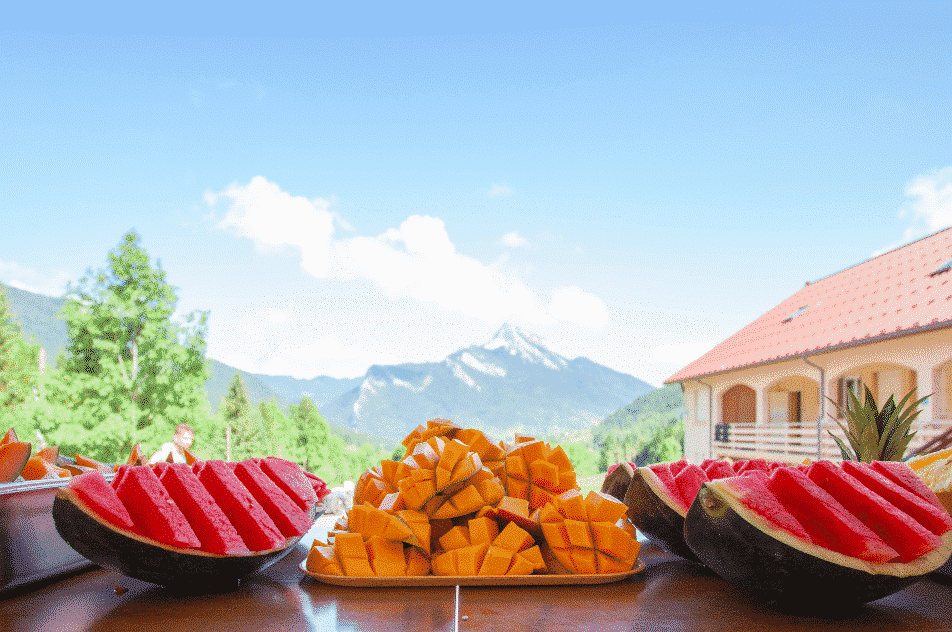
“I see only one way to know how far we can go: it is to set out and walk.” Henri Bergson, “The Perception of Change” (1911), collection: “The Creative Mind”. “A quarter of what we eat nourishes our body, the rest nourishes the doctor.” Inscription engraved on an Egyptian pyramid, 3800 BC. “To reach the Truth, one must, once in their life, rid themselves of all the opinions they have received, and rebuild anew, from the foundation, the entire system of their knowledge.” René Descartes ” As long as there are men who will not obey their reason alone, who will receive their opinions from a foreign opinion, all the chains would have been broken in vain.” The Marquis de Condorcet Chronic hunger Skipping a single meal is generally uncomfortable, and for good reason, the ritual of three fixed meals hides a dependency. Let us take a closer look at the origin of this food addiction unknown to the general public. Let us turn our gaze inward, to our intimacy, when our body tells us “I am hungry.” Cereals were introduced, along with dairy products, at the beginning of the Neolithic, about 10,000 years ago. It is during this period that we observe the frequent appearance of dental caries, whereas they were almost non-existent among hunter-gatherers. Moreover, life expectancy dropped among these pioneers of agriculture, whose average height decreased from 1.73m (in the Paleolithic) to 1.63m (in the Neolithic), signs that living conditions were less favorable during the agricultural era. It took until the 1970s for humans to regain their initial stature and exceed it by 3 cm today, undeniably thanks to improved living conditions, the development of medicine and agronomy, without ignoring the collateral effect of growth hormones given to livestock. While cereals are a boon to free humanity from its carbohydrate needs, the flip side is that the starch (a chain of glucose) from refined cereals (the famous white bread) and even more so industrial sugar (the average daily consumption of industrial sugar per person in France is currently 100 grams, whereas in the 19th century, it was only 5 grams), not to mention fruit juices (there is a parallel between the consumption of added fructose or fruit juices and the frequency of obesity), cause blood sugar levels to rise too quickly. Unlike fruits and vegetables, whose presence of fiber and water changes the game by slowing down absorption, which occurs gently. The hypoglycemia epidemic In common language, the term “sugar” can refer to any sugar. On a nutritional label, the term “sugars” refers to all carbohydrates with a sweetening power, mainly fructose, sucrose, glucose, maltose, and lactose. White sugar (or sucrose) contains 50% glucose and 50% fructose, while fruits mainly contain fructose. Fructose, which has a sweetening power superior to sucrose, by 20 to 40%, does not cause sudden hyperglycemia in sedentary individuals consuming it through fruits. However, the rapid increase in blood sugar levels causes hyperglycemia, which, if repeated daily, is particularly harmful to body tissues. This is why our pancreas reacts with a strong and urgent production of insulin, often in excessive amounts, which will store these excess sugars in the form of fats, triglycerides, to the detriment of liver health. This high production of insulin, in response to the consumption of foods that release sugar too quickly, can, in the long term, fatigue the pancreas and, in the short term, it causes hypoglycemia that occurs about 4 hours after eating. This coincides with clock-like precision with the time of the next meal or snack. Here is the first of three mechanisms that encourages eating multiple times throughout the day: hypoglycemia due to a diet containing refined cereals and industrial sugar. In addition, there is the body’s self-cleaning process that kicks in as soon as digestion is finished, a process that can hardly function except at night when one eats three times a day. Read about this in “What if we stopped eating a little… from time to time” (original title: Et si on s’arrêtait un peu de manger…de temps en temps) by Bernard Clavière for more information on the mechanisms of fasting and its effects on the human body. The side effects of detox This cleaning has undesirable side effects, particularly in individuals who have never fasted, especially as the body is intoxicated by poor eating habits. Confused mind, lack of energy, anxiety, bad mood, blurred vision, coated tongue, acne, bad breath, need to blow one’s nose, swollen face, stiffness, dizziness, general fatigue, etc., are symptoms familiar to billions of human beings upon waking, those who believe they are favored by progress. Breakfast, by temporarily stopping this cleaning with undesirable effects, appears as the savior. That is why, contrary to what popular wisdom claims, breakfast would rather be the most harmful meal of the day since it interrupts a beneficial cleaning process that should be allowed to function a little each day. For what strange reason, after a night of sleep, would we need stimulants to start a day? Moreover, it is observed that a healthily nourished body is not hungry in the morning. Besides, the entire animal kingdom sleeps or rests after eating; it is unnatural and even counterproductive to go to work with a full stomach, as athletes well know. Science has largely demonstrated that caloric reduction accelerates neurogenesis. It is generally believed that adults no longer produce neurons, but this is false. And this process is accelerated when you fast. More neurons are produced in the hippocampus. This even led a California startup to have its employees fast for 36 hours to boost productivity. If the ends are debatable, the method has once again proven its effectiveness. The psyche The last mechanism that conditions us operates in the psychological domain. During the fetal stage, the placenta that nourished us was rich in carbohydrates, just like breast milk (or substitutes). That is why we have, beyond our physiological needs, a great appetite for sweetness, especially in times of stress. By stimulating
The Origins of Living Nutrition
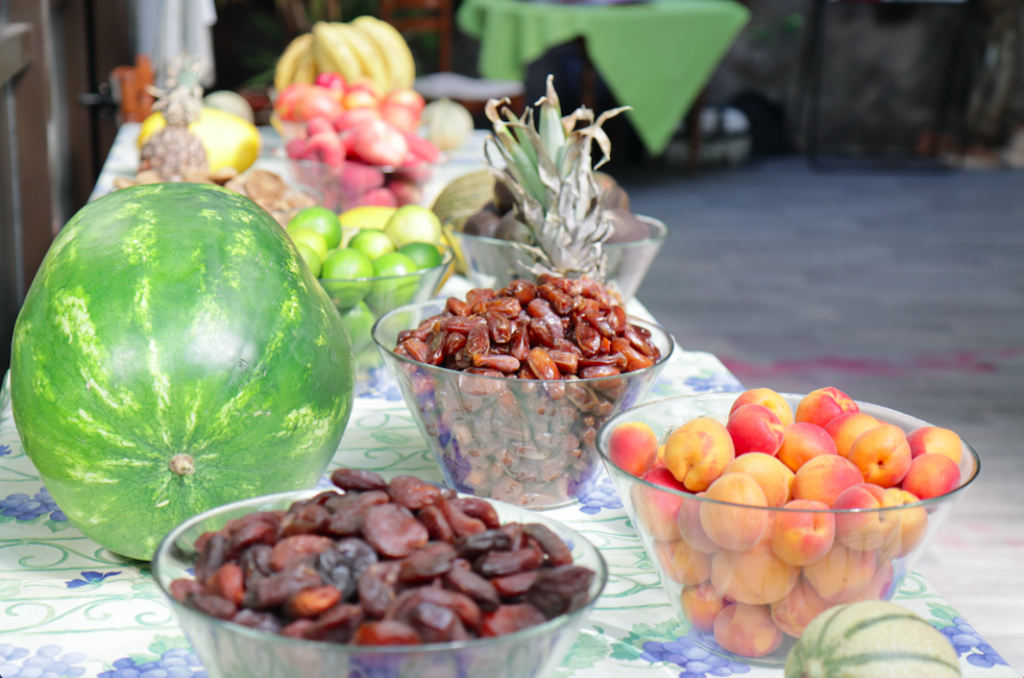
https://www.youtube.com/watch?v=y9-yiSl_Vq4&t=4003s Please note: this video is currently in French, but you can activate YouTube’s auto-generated subtitles in English while we work on providing a dedicated English version. “Look at the birds of the air: they neither sow nor reap, nor gather into barns; and your heavenly Father feeds them. Are you not of more value than they?” Gospel of Jesus Christ according to Saint Matthew, chapter 6, verse 26 “I teach men a new will: to consciously want the path that man has blindly walked, to judge it good and no longer to stray furtively from it, as the sick and the dying do.” Thus spoke Zarathustra, Nietzsche “In the past, believing that people of color were truly human and should be treated humanely was considered madness. Today, it is seen as exaggerated to claim that one of the duties imposed by rational ethics is to respect what lives, even in its lower forms. But one day, it will be surprising that it took humanity so long to admit that careless depredations caused to living beings are incompatible with ethics.” Albert Schweitzer (1875 – 1965), Alsatian physician and philosopher, Nobel Peace Prize laureate in 1952 When I returned from the Loire journey, I urgently read the book by Bernard Clavière, which had the effect of an electric shock on me. On a whim, as I know I can have, I permanently purged from my cupboards all animal-derived foods (meat, fish, dairy products, eggs), cereals, and legumes, and of course, refined sugar; all suddenly and irrevocably fallen from grace. According to this new paradigm that I wished to embody, only fruits, vegetables, nuts, and sprouted seeds remained at my disposal, which I also decided to eat exclusively raw. This is what is called a plant-based and living diet because nothing is cooked and everything is of plant origin. The funny people who eat this way, sometimes called “raw vegan,” lead a simplified life: nothing to cook and very few packages to manage. The logic underlying this revolution was quite simple and took its origins far back, to the origins of humanity, before regrettable centuries of culinary traditions obliterated our instinctive knowledge of the laws of life. At the dawn of humanity Let us remember: The evolutionary history of human beings is still far from being fully established, but the oldest fossil found of the genus Homo dates back 2.8 million years with Homo habilis, named for its skill in handling and creating its own tools. As for modern humans, Homo sapiens, they are believed to have appeared 200,000 years ago. We are part of the great family of hominids, which appeared 7 million years ago, encompassing animal species such as bonobos, chimpanzees, gorillas, and orangutans, not to mention all the extinct species including Neanderthal. Excluding humans, all members of our family have maintained a diet based on fruits, vegetables, and seeds (between 95 and 99%) with a marginal consumption of insects and small animals (between 1 and 5%). This does not prevent them, by the way, from having canines much more developed than ours. Emerging humanity, before the advent of Homo habilis, was therefore raw foodist (eating only raw foods) and consumed almost exclusively fruits, tubers, young shoots, and leaves. Then, about 2.5 million years ago, the proportion of meat in our diet gradually increased, leading some to say that the Paleolithic diet, which favored meat, is the ideal diet for contemporary humans. This ability acquired during evolution to digest more meat than their constitution initially allowed was crucial in the emergence of modern humans and their emancipation across the planet. Alongside this change in dietary habits, early humans developed weapons for hunting and became exceptional runners (see “The Story of the Human Body” by Lieberman). 600,000 years ago, a new string to their bow was added to ancestral techniques with the domestication of fire (some estimates place this domestication at 1.7 million years ago) and cooking, particularly of vegetables. Contrary to popular belief, cooking meat was not essential, as evidenced recently by the Inuit (or “Eskimos”), who consumed raw meat. Richer in vitamins than cooked meat, this raw foodism was essential for survival near the polar circle, where 80 to 90% of the diet was carnivorous. In contrast, cooking leaves, roots, and tubers facilitated their digestion and allowed for a large consumption of plants from which maximum glucose was derived (soluble fibers turn into sugars when heated), this fuel being essential for the brain. In our modern world, the decrease in our caloric needs as well as the selection of many tender cultivars (fruits and vegetables) with an incomparable sugar richness compared to the wild flora of the Paleolithic makes cooking food inappropriate because it decreases, among other disadvantages, the bioavailability of micronutrients. From gatherer to gatherer-hunter We then had the means to leave the tropics and set out to conquer our beautiful planet. For this, it was essential to ensure a sufficient supply of meat, the only food available in all seasons at all latitudes. Humans then clearly distinguished themselves from other hominids, becoming nomadic and hunter-gatherers. From the equator to the Arctic Circle, the share of carnivorous food went from a quarter to almost totality, a latitudinal gradient still marked today. Hunting, with the cooperation, analysis, and abstraction skills it requires, has been a determining catalyst for intelligence. Bipedalism, tool use, and hunting have favored the development of the human brain, both by stimulating our cognitive abilities, cooperation, and inducing an increased food intake. The brain, which runs exclusively on glucose, is indeed the organ that consumes the most energy (one-fifth of daily metabolism in an adult). The colonization of Europe by Homo sapiens, which occurred late, only 40,000 years ago during the Ice Age, is indicative of the resilience and intelligence of our distant ancestors who actually had a larger brain than ours. The brain of modern humans is indeed 15 to 20% smaller than that of Cro-Magnon who lived 30,000 years ago. Put yourself in
Hygienism: Why I Changed My Diet and Took Off My Shoes?

Please note: these videos are currently in French, but you can activate YouTube’s auto-generated subtitles in English while we work on providing a dedicated English version. https://www.youtube.com/watch?v=NRkXWAm7_PA&t=3189shttps://www.youtube.com/watch?v=hawhYaouZyk&t=30s “Life is a mystery to be lived, not a problem to be solved.” Mohandas Karamchand Gandhi “In certain situations, the language of the body and illness proves to be the most acceptable way to talk about one’s suffering.” Anne Harrington Until the beginning of July 2014, while I was descending the Loire in a packraft, I had never questioned fundamental aspects of nutrition. Strange questions like: “Is it normal to eat three or four times a day every day at fixed times?” or, “Why do I eat meat?”. This questioning began with an episode of fever that lasted two days, following a heat stroke, during which I could not swallow anything. Once recovered, fasting continued more or less because as soon as I tried to eat something, I felt like vomiting. Only raw fruits and vegetables could somewhat pass. For two weeks, I experienced a significant decrease in appetite while paddling 9 hours a day and being in great shape. All of this was incomprehensible to me, the omnivore used to gargantuan meals. In search of the ideal diet For several years, I had been keen on eating locally and producing my own food. I cultivated a vegetable garden, picked fruits from the surroundings, and raised poultry; the idea that everything we need is found around us, in its natural state, was already taking root. I simply supplemented my production with regional dairy products, cereals (a lot of wheat), and coffee. I almost never consumed cold cuts, chocolates, sweets, sodas, pizzas, prepared meals, canned goods, etc. I embodied in practice the famous “everything in moderation”. A convenient two-cent wisdom since everyone sees noon at their door, which has probably made it popular despite its emptiness. I had a gargantuan appetite that I believed was justified by the practice of many sports in addition to my work as a lumberjack and all the outdoor activities related to my lifestyle. Moreover, I was thin, full of energy, and proud of my nearly self-sufficient lifestyle, disregarding chemical products. Intellectual self-sufficiency also made me completely impervious to what I could hear about the harms of meat, cereals, legumes, milk, and coffee, unfortunately too often justified without the scientific rigor needed to penetrate my Cartesian mind… Thus, over the years, I accumulated vision problems (myopia and astigmatism), skin issues (cysts, acne, sweating), allergies (cat hair and pollen), and increasingly severe and frequent colds. But since these vicissitudes were the lot of many, I paid no attention, thinking it was part of life, that it was certainly not well made for human beings but that we had to deal with it and fortunately, science was there to save us. You know the litany! It is probably out of pessimism or, dare I say, lack of faith, that so many people consume medications, these drugs that I have always viewed with suspicion, and live in sanitized environments with fear of the nasty microbe. Seeing all these people become strangers to their own biotope, protecting themselves from the sun, insects, bacteria, cold, etc., the image of aliens in suits often came to my mind. Suffering as a driver of change Since I still did not understand the message that life was sending me through health problems, it was ultimately a sciatica that came to signify more strongly that something was wrong and that it needed to change. I inevitably consulted doctors: general practitioners, osteopaths, physiotherapists who only relieved the pain. I was subjected to those seemingly innocuous phrases that undermine self-confidence, like: “It’s normal, you’re doing too much!” or “We’re not made to run!”, not to mention the most famous one, “You’re getting older, that’s all!” when I wasn’t even 30… Since I took no medication and did not consider surgery, the only thing that allowed me to cope was the daily stretching session I performed after work or sports. I did this without method, as a self-taught individual, which is why I was surprised, a few years later, to find that it was quite close to Hatha Yoga. The stretches were not enough to overcome the sciatica, but I had absolute confidence in my body and I knew that sooner or later it would find the solution to heal. For more than two years, I endured this sciatica daily in all the activities I performed; it sometimes turned into an obsession. That is why, when a colleague from the running club lent me “Born to Run” by Christopher McDougall, it was the trigger. I finally understood that running shoes were the source of my pain. Returning to nature The real remedy was the obvious one; I just needed to run barefoot. It hurt me too, but it was just a transition, and I could understand that pain. Shoes have made us disabled (just look at someone walking barefoot on small pebbles to be convinced), so how could I have emerged unscathed from thirty years of mistreatment towards my feet? In short, I needed to learn to walk and run, for real this time. Thanks to this radical method, I got rid of that sciatica as one wakes from a bad dream, definitively, almost miraculously. This experience strengthened my faith in the human body and its incredible capabilities that we are just beginning to (re)discover, it seems to me. That is why, a few months later, when I landed from my packraft in Chambilly (71) on the banks of the Loire, bewildered by this experience of fasting naturally imposed by my body, I was ripe for another trigger. That evening, I was invited for a stopover at friends’ who aptly lent me, “What if we stopped eating a bit… from time to time” by Bernard Clavière. For over 30 years, the author has only eaten once a day, only fresh fruits, raw vegetables, and nuts. I only had